The Shift Toward Domestic Socializing
Recent market research underscores a distinct migration in social habits. According to a July 2026 report from The Harris Poll, approximately 68 percent of Gen Z adults in the United States cite the prohibitive cost of traditional nightlife as a primary driver for staying in. This is further corroborated by data from Attest, which tracks beverage consumption trends; the study reveals that 64 percent of Gen Z now prefers to drink at home, a significant increase from the 42 percent recorded just twelve months prior.
This behavioral pivot has created a vacuum for high-quality audio hardware capable of replicating a nightclub atmosphere within a residential setting. While traditional Bluetooth speakers provide convenience, they frequently lack the sound pressure levels, dynamic range, and atmospheric lighting necessary to facilitate a party environment. Party speakers have emerged as the solution, offering the necessary volume, portability, and aesthetic flair to transform a living room or backyard into a dedicated entertainment space.
Engineering the Modern Rave
Technologically, party speakers occupy a unique niche between standard portable Bluetooth units and commercial-grade PA systems. Current battery-operated models typically range from 100 to 800 watts of power, providing between 12 and 25 hours of continuous playback. Manufacturers are increasingly integrating features such as large-diameter drivers, bass-boost digital signal processing (DSP), reactive LED lighting, and reinforced structural designs featuring handles and wheels.
Beyond mere amplification, these devices often function as comprehensive media hubs. Common specifications include microphone and instrument inputs, built-in karaoke processing, and the ability to daisy-chain multiple units for increased sound coverage. Proprietary companion applications have also become standard, allowing users to act as a DJ, customize lighting synchronization, and manipulate frequency response via digital equalizers.
Selecting the Right Hardware
When evaluating these systems, consumers should prioritize three primary technical pillars: power output, battery efficiency, and connectivity.

Power ratings, while helpful, can be deceptive due to advancements in DSP. Brands like Sony and JBL utilize sophisticated processing to extract maximum acoustic output from lower-wattage amplifiers, meaning that a 150-watt system may outperform a 300-watt unit in specific acoustic environments. Battery life is equally variable; while manufacturers often quote mid-volume performance, high-output settings and active LED lighting can reduce playback time by as much as 75 percent.
For those planning to integrate external hardware, such as DJ controllers or mixers, physical connectivity is paramount. While Bluetooth is universal, it inherently introduces latency that complicates beat-matching and cueing. For professional or semi-professional applications, wired inputs—specifically RCA, quarter-inch, or balanced XLR connections—remain the industry standard.
Top Performers in the Current Market
LG Xboom Stage 501: The Balanced Contender
The LG Xboom Stage 501, developed in collaboration with producer and artist will.i.am, serves as a high-performance benchmark. Utilizing twin 5.25-inch woofers and 2.5-inch full-range drivers, the unit delivers 160 watts on battery and 220 watts when plugged into an AC outlet. Its sound profile is characterized by clean, deep bass and remarkable vocal clarity, even at high decibel levels. With a weight of 25.8 pounds, it remains portable while offering robust features like AI-driven karaoke and synchronized lighting.
JBL PartyBox 130: The Mid-Size Favorite
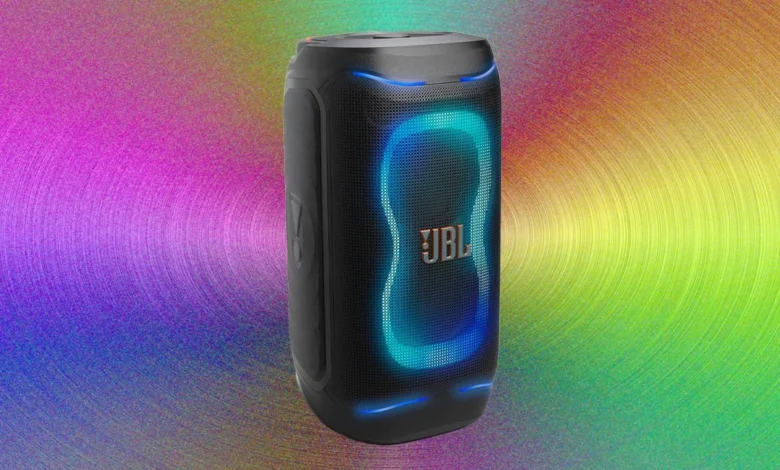
The JBL PartyBox 130 occupies a sweet spot for urban dwellers. Weighing 24.8 pounds, it delivers 200 watts of output. Its strength lies in its DSP-driven AI Sound Boost, which maintains audio integrity at high volumes, preventing the distortion common in lesser systems. The inclusion of physical controls on the top chassis allows for intuitive operation, bypassing the need for a mobile device during the event.
Marshall Bromley 450: The Premium Aesthetic
For users prioritizing build quality and a classic rock-and-roll aesthetic, the Marshall Bromley 450 is a standout. Eschewing the neon-heavy design language of its competitors, it utilizes a signature black-and-brass finish. Despite its retro appearance, it is technologically modern, featuring a 400-watt total power output and a 360-degree driver arrangement that ensures uniform sound distribution. Its 40-plus hour battery life and IP55 ingress protection rating make it a durable choice for both indoor and outdoor environments.
Soundcore Rave 3S: The Value-Driven Karaoke Hub
The Rave 3S by Anker is positioned as a primary choice for karaoke enthusiasts. Its distinguishing feature is an advanced AI vocal removal tool that extracts vocal tracks from streaming sources with high accuracy. While its battery life is shorter than premium models—averaging around 12 hours—its inclusion of two wireless microphones and a 200-watt output makes it an exceptionally high-value proposition for social gatherings.

Sony ULT Tower 7: The DJ’s Choice
Sony’s ULT Tower 7 is engineered for those requiring professional-grade connectivity. It provides balanced XLR and RCA inputs, making it the most suitable device for integration with standard DJ hardware. With 420 watts of power and an 11-inch woofer, it provides the physical "thump" required for larger events. While its weight of 50.3 pounds makes it the least portable of the group, its performance at high volumes is unparalleled in the consumer space.
Soundboks Rider: The Rugged Specialist
Designed for durability, the Soundboks Rider is built to withstand extreme environments. Featuring a steel grille, impact-resistant plastic casing, and silicone corner bumpers, it is designed for users who prioritize longevity over decorative features. Its 118 dB output is impressive for its 14.3-pound frame. Although its reliance on older Bluetooth 4.2 standards is a drawback, its ruggedization and 35-hour battery life provide a unique utility for outdoor festivals or remote event locations.
Broader Implications and Future Outlook
The rise of the "party speaker" category reflects a fundamental shift in how the next generation perceives communal entertainment. As the costs of traditional "night out" culture continue to climb, the home is being re-imagined as a versatile venue. This has necessitated a shift in audio engineering, where the priority is no longer just high-fidelity playback for the audiophile, but rather high-pressure, durable, and social-focused audio for the masses.
From an industry perspective, the integration of AI-driven features—such as vocal removal, automated EQ adjustment, and collaborative playlist sharing through platforms like Spotify Jam or Apple Music SharePlay—indicates that the future of home audio will be defined by connectivity and user agency. The speakers of tomorrow will likely continue to lean into this "DJ-in-a-box" philosophy, further blurring the lines between amateur home setups and professional sound reinforcement. As consumers continue to invest in these devices, the market is expected to see further innovation in battery density, wireless latency reduction, and multi-speaker synchronization, ensuring that the modern "block party" remains a permanent fixture of domestic life.
Related posts: