Aurora Innovation Targets 30,000 Autonomous Trucks and $5 Billion in Revenue by 2030 Despite Wall Street Skepticism

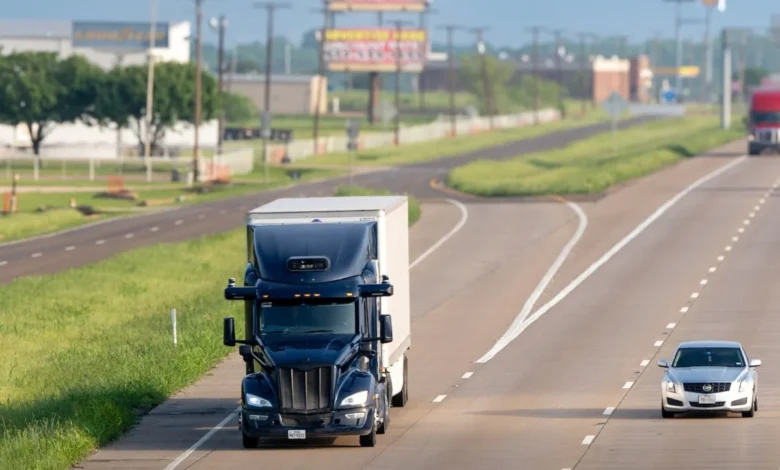
Autonomous vehicle technology company Aurora Innovation has laid out an aggressive strategic roadmap, informing investors that it projects having more than 30,000 self-driving trucks actively operating on American roadways by the close of 2030. According to the company’s long-term financial projections, this fleet scale is expected to generate approximately $5 billion in annual revenue. This ambitious forecast represents a staggering leap from Aurora’s near-term benchmarks, as the company anticipates concluding 2026 with a modest fleet of roughly 200 driverless trucks and an estimated $80 million revenue run rate.
While the projected scale has raised eyebrows across the financial sector—sparking a notable sell-off in the company’s stock—Aurora’s executive leadership remains steadfast in its defense of the timeline. The company argues that the transition from a capital-heavy proof-of-concept phase to a scalable hardware-as-a-service model will serve as the primary catalyst for explosive growth heading into the next decade.
Contextualizing the 2030 Scale Within the Broader Freight Market
Addressing the skepticism surrounding the 30,000-truck milestone, Aurora Chief Financial Officer David Maday contends that the figure, while seemingly massive within the nascent autonomous vehicle ecosystem, represents only a fraction of the broader commercial trucking landscape.
During a recent interview, Maday pointed out that the four major heavy-duty truck manufacturers in North America collectively produce between 250,000 and 300,000 new commercial trucks annually. Within a mature market where millions of Class 8 trucks haul freight across interstate highways, a fleet of 30,000 autonomous vehicles constitutes a minor market share. From the perspective of macroeconomic supply and demand, company executives believe the target is entirely realistic rather than merely aspirational.
Despite these assurances, Wall Street has expressed immediate apprehension regarding the timeline and capital requirements necessary to reach the 2030 goals. Investor sentiment shifted notably following Aurora’s annual analyst and investor day presentation on September 23. Market reaction has been cool, culminating in a 12.42% single-day share price decline to $5.29 on the following Monday. Analysts note that institutional investors remain wary of the extended capital burn rates typical of autonomous driving ventures, particularly as companies navigate the regulatory, technical, and financial hurdles of commercialization.
The Strategic Evolution: From Transportation-as-a-Service to Driver-as-a-Service
Aurora’s strategic roadmap relies on a fundamental shift in business models over the next several years. Currently, the company operates under a transportation-as-a-service (TaaS) framework. Designed primarily as a controlled proof-of-concept, this model involves Aurora owning and operating its own fleet of self-driving trucks. The company contracts with major logistics and shipping firms—including Detmar Logistics, Hirschbach, McLane, and Werner—charging roughly $2 per mile, a rate that incorporates a standard fuel surcharge. This pricing structure aligns closely with traditional human-operated carrier rates, allowing customers to test the technology without incurring premium costs.
However, Maday emphasizes that the genuine financial turning point—and the core mechanism for capital efficiency—will commence in 2027 with the introduction of a driver-as-a-service (DaaS) model. Under this updated framework, Aurora will pivot away from fleet ownership. Instead, commercial freight customers will purchase the autonomous trucks directly and pay Aurora a per-mile subscription fee for the proprietary self-driving software suite, projected to be around $0.85 per mile.
In this arrangement, the customer assumes responsibility for vehicle ownership, maintenance, and physical upkeep, while Aurora maintains sole responsibility for the operational design domain, the self-driving system, and its accompanying computational and sensor hardware. Shifting heavy physical assets off Aurora’s corporate balance sheet is viewed by financial analysts as a vital prerequisite for sustainable scaling.
Financial Milestones and the 2027 Inflection Point
Aurora’s corporate timeline maps a deliberate acceleration curve between 2026 and the end of the decade.
- End of 2026: Aurora projects operating approximately 200 driverless trucks, maintaining an $80 million revenue run rate under early-stage operational frameworks.
- First Half of 2027: The company expects to achieve breakeven gross margins on a run-rate basis, meaning incoming revenues will fully cover the direct operational costs of running roughly 500 trucks on the road.
- End of 2027: Fleet deployment is forecasted to expand past 1,000 autonomous units annually. This period coincides with the commercial introduction of Aurora’s third-generation hardware suite.
- 2028 to 2029: Cost structures are expected to optimize significantly, allowing gross margins to accelerate as customer adoption scales through the DaaS subscription model.
- 2030: The company targets more than 30,000 active autonomous trucks generating $5 billion in annual recurring revenue, supported by a widespread geographic footprint covering the vast majority of the continental United States.
Hardware Manufacturing and the Aumovio Partnership
A critical linchpin in Aurora’s ability to scale without crippling its balance sheet is its strategic manufacturing partnership with Aumovio, formerly known as Continental. Aumovio is engineering, manufacturing, and mass-producing Aurora’s third-generation hardware kits—comprising the specialized sensors, LiDAR units, cameras, and redundant computing systems required for Level 4 autonomous operation.
Crucially, Aumovio is not merely acting as a tier-one contract manufacturer; the firm is actively financing the hardware kits for Aurora. This arrangement substantially mitigates the upfront capital expenditure burden that typically hampers capital-intensive technology startups. Furthermore, Aumovio will handle the servicing and repair of the hardware kits directly for fleet customers, streamlining maintenance logistics and ensuring higher vehicle uptime.
Geographic Expansion and Long-Term Market Implications
At present, Aurora’s commercial operations are largely localized across specific freight corridors in the Southern United States, where weather conditions and infrastructure offer a favorable environment for initial autonomous deployment. However, as software maturity increases and third-generation hardware enters mass production, the company plans an aggressive geographical rollout. By 2030, Aurora intends to expand its operational domains to encompass the vast majority of the continental U.S., unlocking major freight arteries and transcontinental shipping routes.
Beyond long-haul commercial freight, leadership has signaled that successful execution in the trucking sector will lay the technological and financial groundwork for future market diversification. Once the company establishes a robust, cash-positive cost structure around 2028 and beyond, executives confirmed that entering the urban ride-hailing and robotaxi market remains a viable long-term objective.
Broader Industry Implications and Analyst Outlook
Aurora’s ambitious 2030 targets arrive at a critical juncture for the autonomous vehicle sector. While several competitors have scaled back operations or faced consolidation amid prolonged paths to profitability, Aurora is attempting to prove that B2B freight transportation offers a faster, more economically viable route to commercial viability than consumer-facing robotaxis.
The success or failure of Aurora’s transition from a balance-sheet-heavy proof of concept to an asset-light software subscription provider will likely serve as a bellwether for the entire commercial autonomous sector. If the company successfully achieves its 2027 breakeven milestones and secures widespread adoption among major logistics fleets, it could redefine supply chain economics across North America. Conversely, continued skepticism from public markets highlights the persistent pressure on autonomous vehicle firms to demonstrate tangible pathways to profitability amidst high capital expenditures and regulatory scrutiny.