How Social Media is Redefining 2026 Holiday Shopping Amid Economic Pressures and Evolving Consumer Habits

The modern holiday shopping season no longer begins with the traditional rush of Black Friday or the frantic final weeks of December. Instead, it unfolds continuously across smartphone screens, embedded within feeds, stories, and direct messages. As the year 2026 progresses toward its final quarter, emerging retail data paints a vivid picture of a transformed commercial landscape: social media has definitively cemented its status as the primary engine for consumer holiday discovery, decision-making, and customer care.
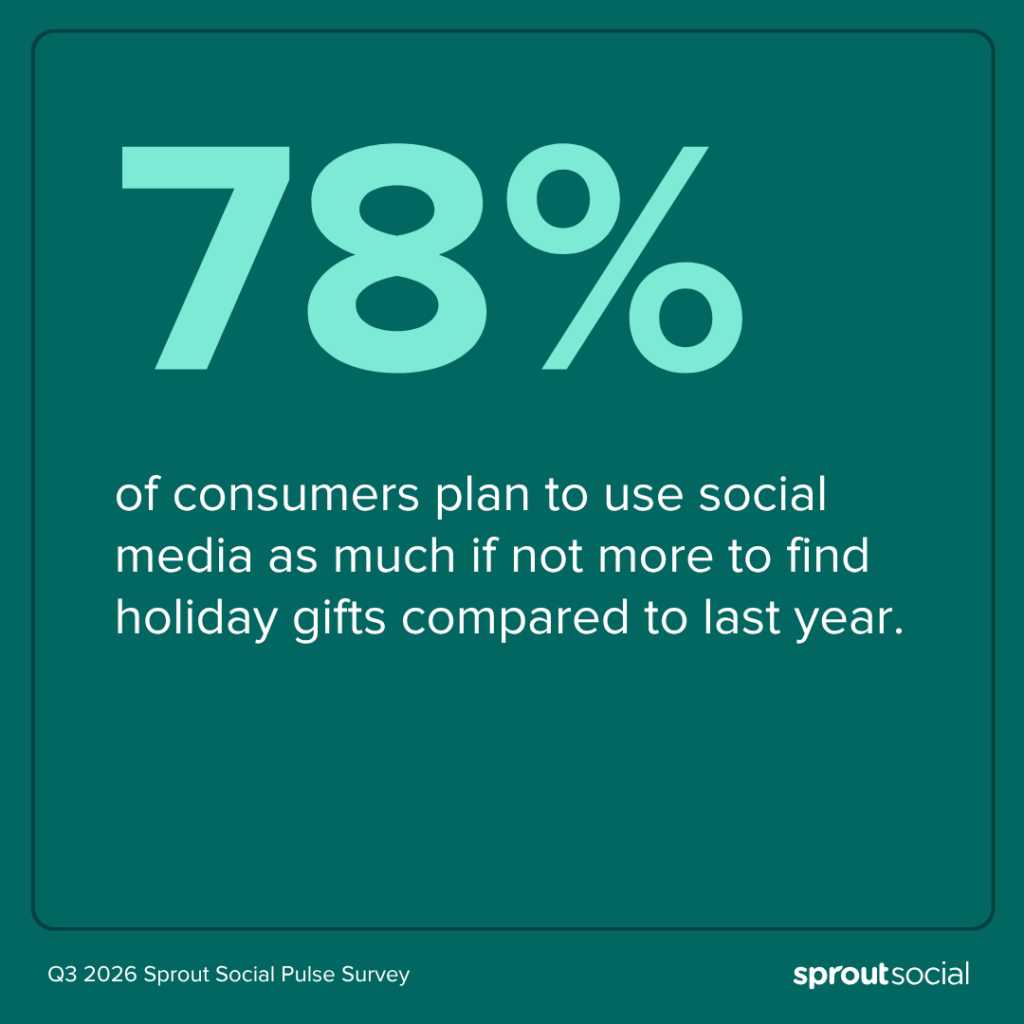
According to the Q3 2026 Sprout Social Pulse Survey—which gathered insights from 2,286 consumers across the United States, the United Kingdom, and Australia—over three-quarters (78%) of shoppers plan to use social media platforms as much as, or more than, they did last year to unearth holiday gifts. This profound behavioral shift underscores a broader reality for modern retailers: social channels are no longer merely top-of-funnel brand awareness tools. They have evolved into comprehensive, end-to-end shopping ecosystems where consumers seek out inspiration, compare prices, apply discount codes, transact directly, and demand immediate customer service.

However, navigating the upcoming holiday season requires brands to master a complex matrix of opposing forces. While social platforms dictate where and how people shop, macroeconomic headwinds—including looming tariffs, inflationary pressures, and tightened household budgets—are fundamentally reshaping consumer psychology, compelling brands to adapt their strategies with unprecedented agility.
The Chronology and Disconnect of Early Holiday Marketing
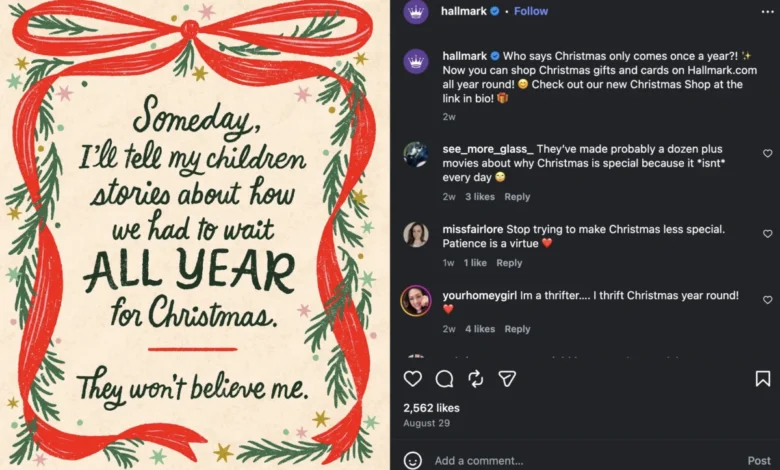
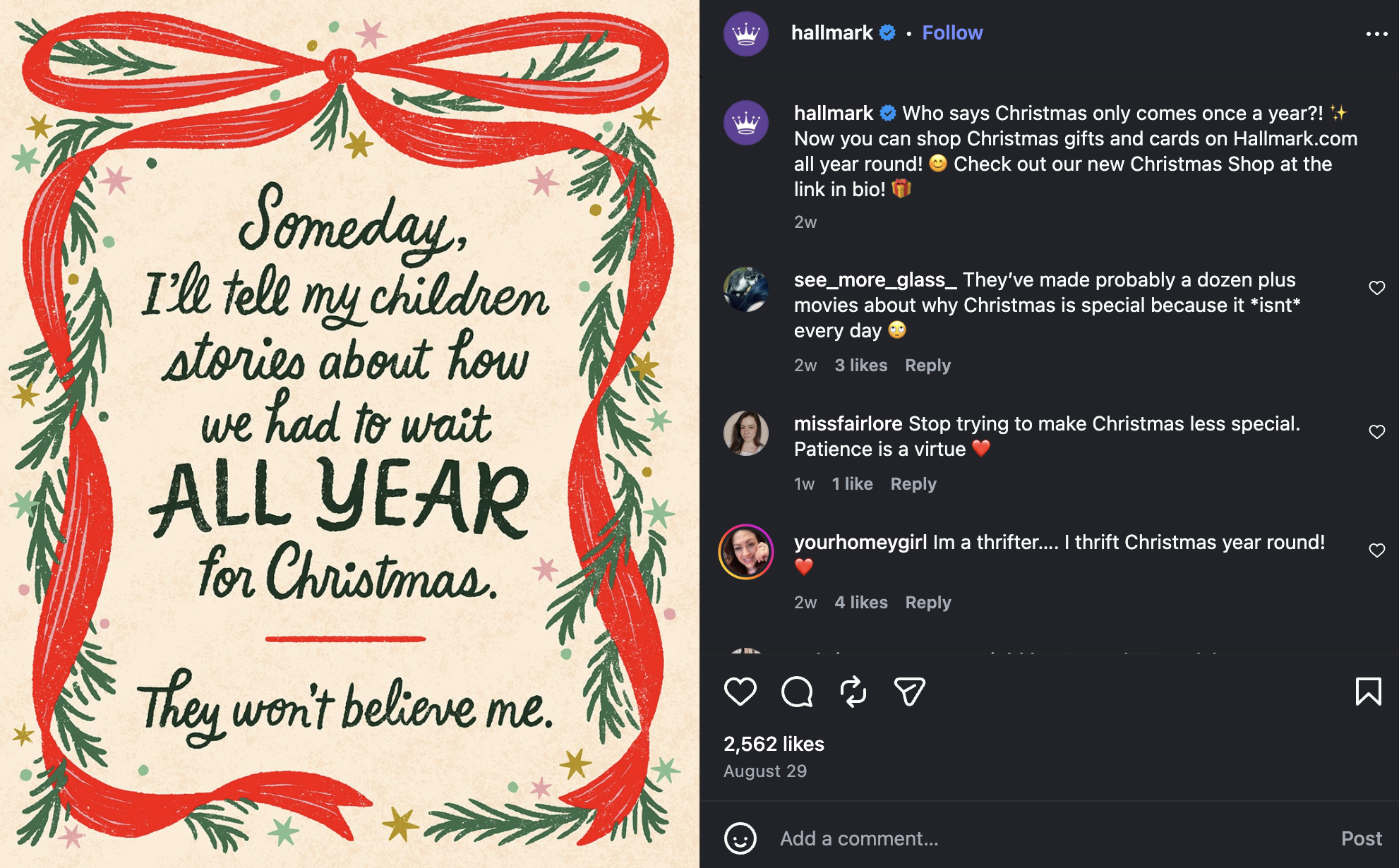
The timeline of holiday marketing has undergone a dramatic acceleration in recent years. Long gone are the days when festive campaigns were strictly sequestered to the weeks following Thanksgiving. In 2026, commercial milestones have crept steadily forward into the calendar year. Retailers and lifestyle brands alike launched early-bird holiday activations with unprecedented speed: summer-themed holiday celebrations ("Summerween") occurred as early as June, Starbucks introduced its signature pumpkin spice beverage line in August, and prominent traditional department stores and gift merchants began advertising their online Christmas shops well before the third quarter concluded.
Yet, this aggressive timeline exists in stark contrast with stated consumer preferences. Data from the 2026 survey indicates that exactly half of all consumers (50%) believe brands should ideally initiate their holiday advertising campaigns in October. This represents a distinct pivot from the preceding year, 2025, when August and September were favored by a larger share of the populace.
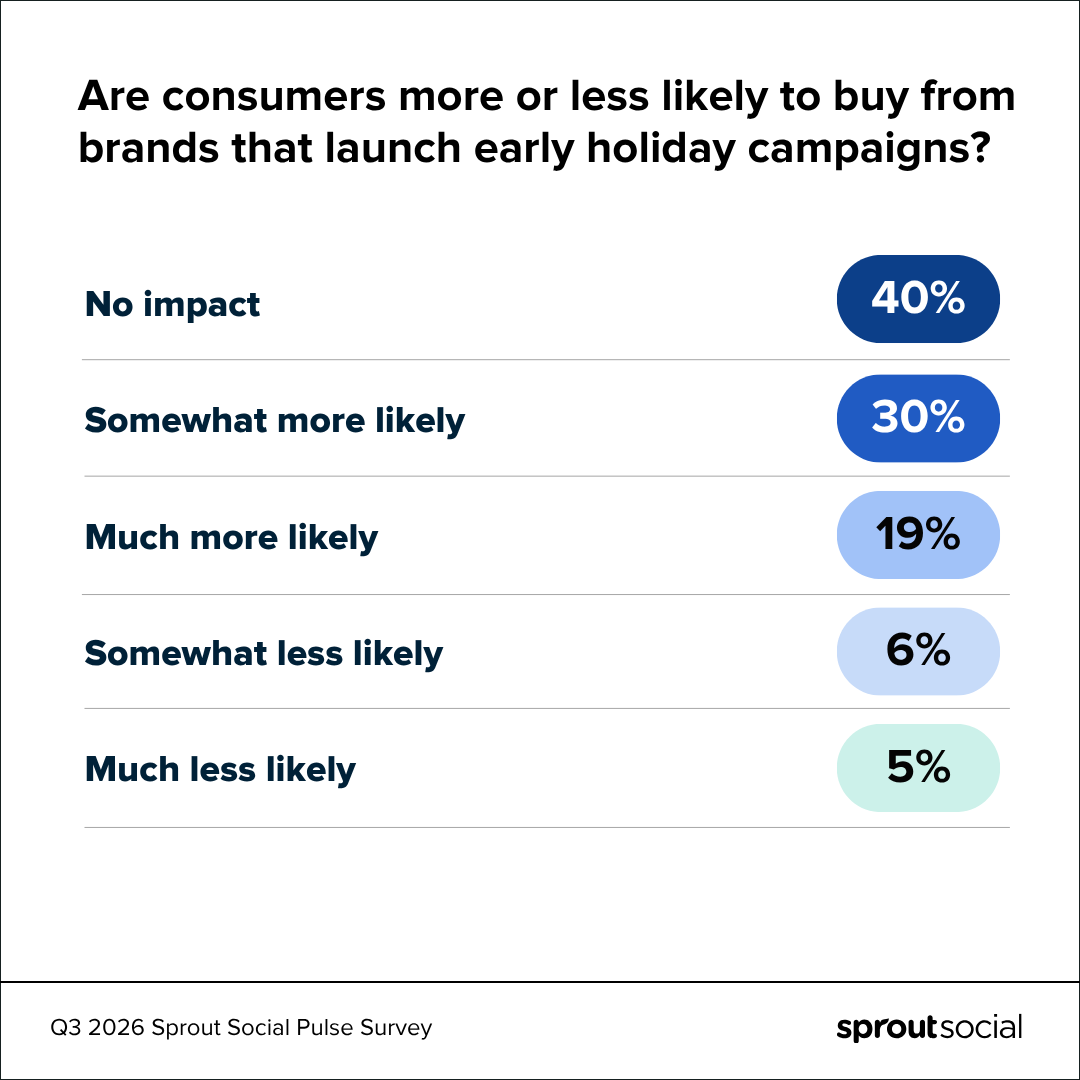
Despite a stated preference for traditional October rollouts, consumer sentiment and actual purchasing behavior are divergent. When evaluating the impact of early marketing, 40% of surveyed shoppers reported that campaigns launching as early as August had no material impact on their purchasing decisions. More critically, nearly 50% admitted they were either somewhat more likely or significantly more likely to patronize a brand that advertised as early as August.
Retail analysts note a clear strategic implication from these findings: campaign timing is rarely the decisive factor in a consumer’s purchasing journey. While media planners often agonize over the exact week to flip the switch on festive content, posting holiday messaging slightly too early or too late rarely breaks a transaction. Instead, campaign success hinges entirely on the resonance, relevance, and value of the content itself.
Economic Pressures, Tariffs, and the Pivot Toward Value
While calendar timing fails to heavily sway buying habits, macroeconomic realities certainly do. The 2026 holiday shopping season is heavily influenced by consumer anxiety surrounding inflation, tightening household budgets, and anticipated price increases driven by international trade tariffs.
The survey data highlights profound financial caution among global shoppers. Approximately 69% of consumers expressed direct concern regarding price hikes driven by tariffs. In response, more than a third (36%) stated they intend to shop earlier than usual simply to get ahead of potential future cost escalations. Overall, 56% of respondents confirmed plans to actively reduce their total holiday spending compared to previous years due to prevailing economic conditions.
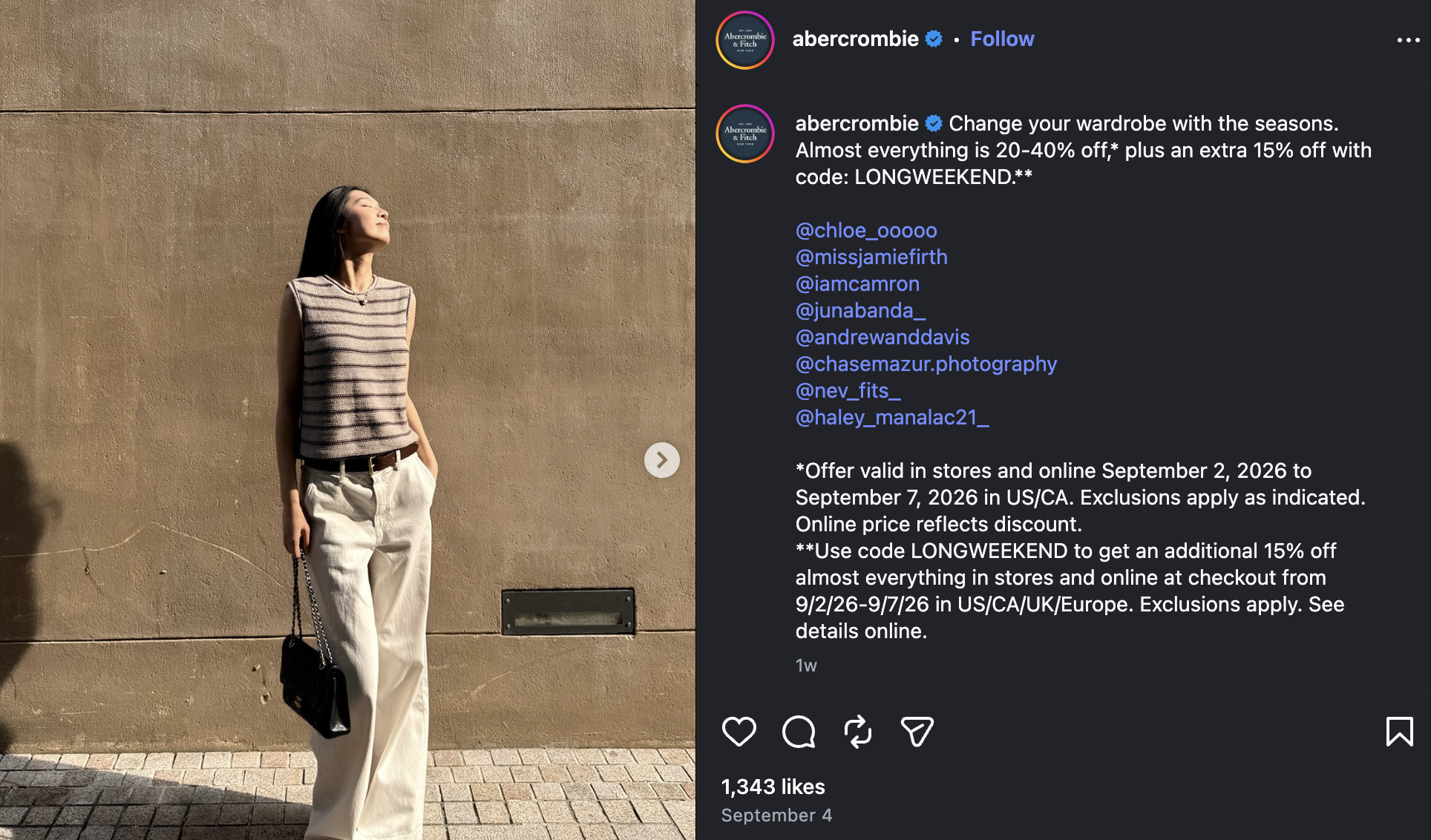
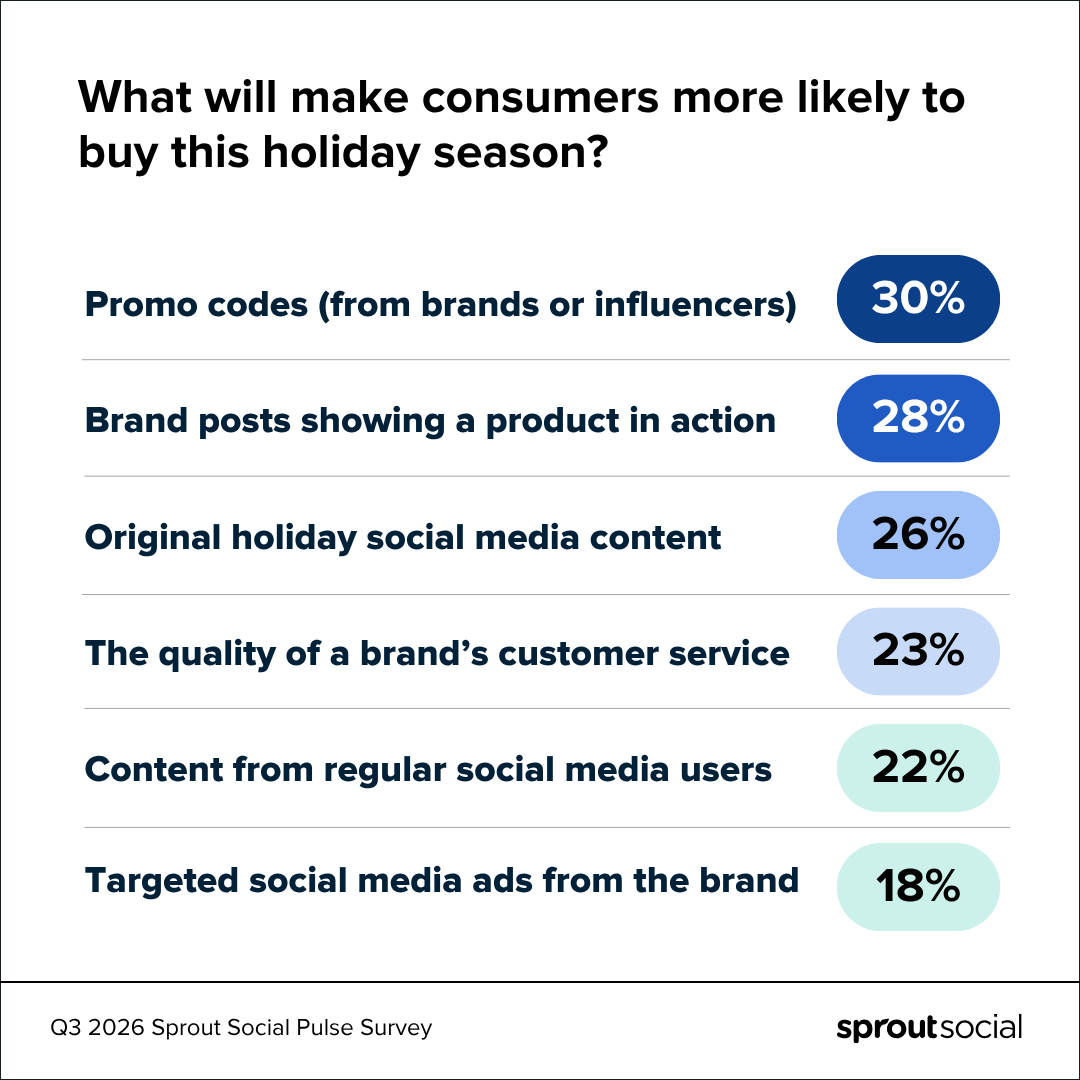
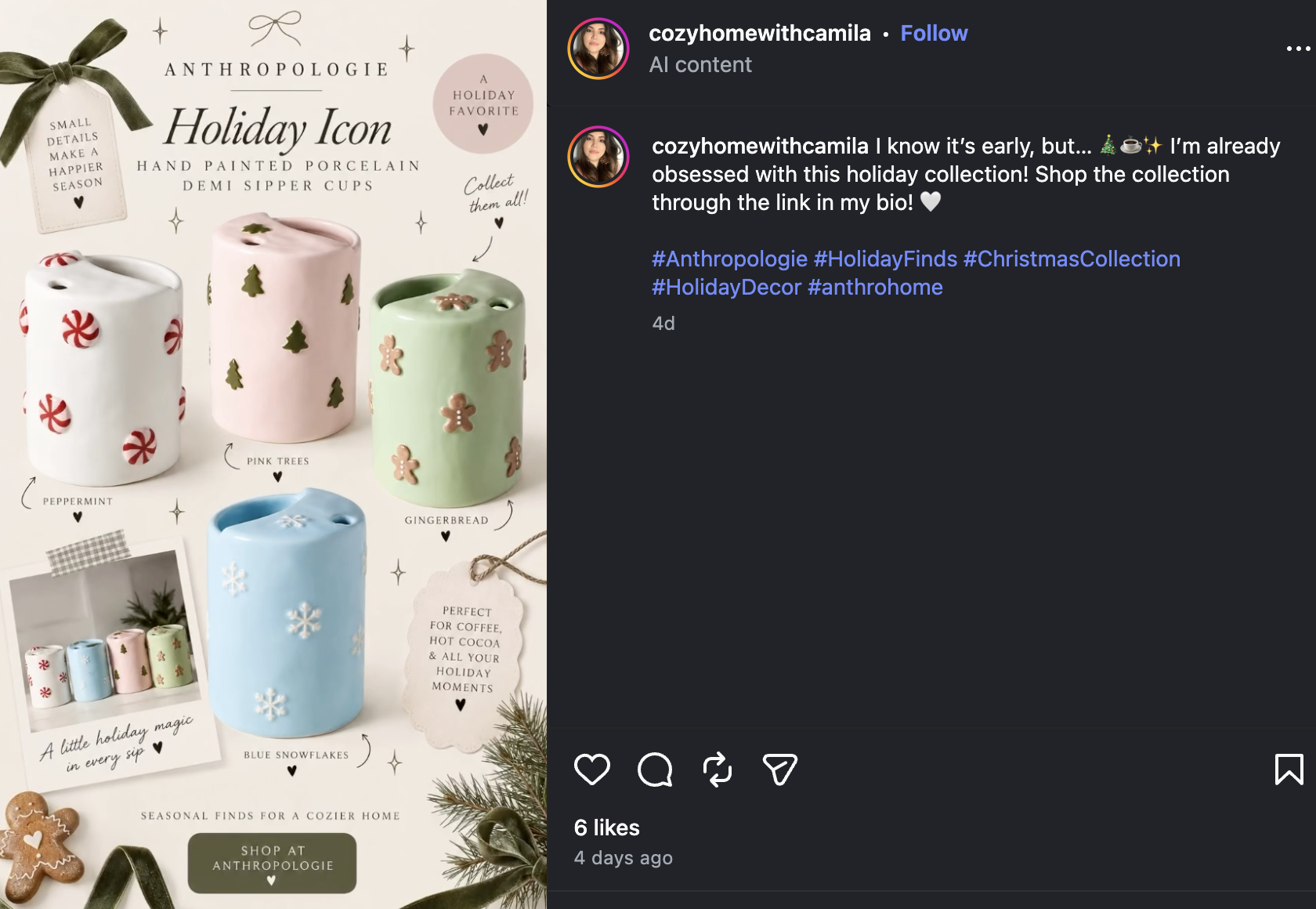
Faced with constrained liquidity, modern consumers are hunting aggressively for tangible value. When asked what factors would most powerfully persuade them to make a purchase, 30% of shoppers pointed to promotional discount codes—whether sourced directly from the brand or distributed via influencer marketing partnerships. This reliance on price-mitigation strategies emphasizes that value-consciousness will be the defining characteristic of the 2026 retail season.
Furthermore, consumer expectations regarding product demonstration have shifted. Following promo codes, 28% of shoppers noted that seeing products demonstrated in real-world action would drive their purchasing intent, while 23% emphasized the need for original, highly creative holiday-specific social content. Notably, this represents a departure from 2025 trends, where customer service responsiveness and user-generated content held the primary positions of influence. Brands are consequently being forced to rethink their creator partnerships, shifting budgets toward influencers who can deliver authentic product utility alongside steep, accessible discounts.
Social Search and the Death of Traditional Discovery
The ascent of social media as a genuine search engine—a trend that began gathering serious momentum in the mid-2020s—has irrevocably altered how consumers find products. Sprout’s earlier Q2 2026 data demonstrated that social search frequently outperforms traditional search engines when users seek experiential, highly visual, or peer-validated information, such as restaurant recommendations or product reviews.
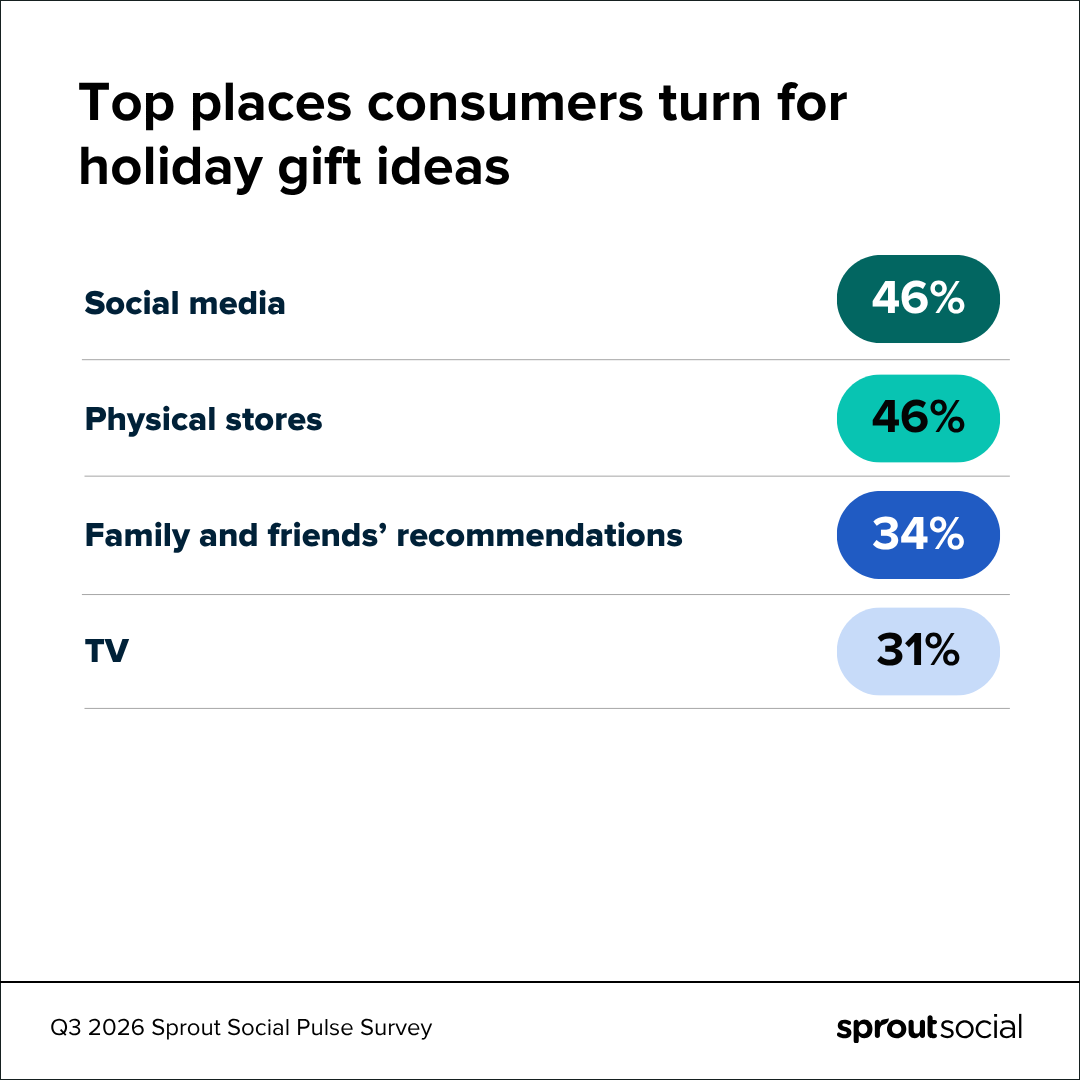
During the holiday season, this behavioral pattern reaches its peak. In 2026, social media tied with physical brick-and-mortar storefronts as the absolute number-one destination for holiday gift discovery, with 46% of consumers turning to platforms like Instagram, TikTok, and Facebook for ideas. Among younger demographics—specifically Gen Z and Millennials—social media stands alone as the undisputed leader, with at least half of these cohorts relying exclusively on social feeds to determine their gift-purchasing strategies.
Crucially, social media’s role no longer terminates at discovery. More than half of all consumers surveyed indicated an openness to executing purchases directly within social applications. Native shopping features such as TikTok Shop, Instagram Checkout, and Facebook Shops have matured into trusted commercial gateways. For retailers, establishing a frictionless end-to-end journey—where a user can discover a product via an influencer video, apply a promo code, and check out natively without ever leaving the app—is no longer an experimental luxury; it is a foundational requirement for holiday profitability.
Customer Service Pressures and the Rise of Social Care
As transaction volumes surge across social platforms, the burden on brand customer service infrastructure increases exponentially. The 2026 data reveals that 86% of users plan to utilize social media channels for customer support inquiries as much as, or more than, they did the previous year.
Consumers are directing their inquiries primarily toward TikTok (50%), Facebook (46%), and Instagram (44%), with secondary volume flowing through platforms like X (formerly Twitter) and WhatsApp. Direct messages (DMs) remain the preferred communication channel for 55% of consumers across all generations. However, a notable behavioral evolution is occurring in the public square: nearly one-third of shoppers (31%) now choose to post their service questions or complaints directly within public comment sections.
This visibility amplifies the stakes for brand reputation. Speed has become an absolute baseline expectation, with 70% of consumers demanding a substantive response from a brand within a single day of reaching out. Because unresolved public comments can quickly snowball into public relations liabilities, retailers are increasingly turning to artificial intelligence to manage incoming support volume. AI-powered tools are being deployed behind the scenes to triage messages, analyze sentiment, and draft initial response templates.
Consumer attitudes toward automated assistance have grown largely pragmatic. Approximately 70% of shoppers stated they are comfortable with brands offloading routine customer service tasks to AI to improve overall efficiency—a figure that rises to 77% among Gen Z respondents. Nevertheless, industry experts caution that speed must not come at the expense of genuine empathy. Maintaining a "human-in-the-loop" framework is vital to ensure that automated efficiencies do not degrade the personalized care that consumers demand.
Strategic Implications for the Retail Sector
As the 2026 retail calendar moves toward its climax, the synthesis of consumer data offers a clear roadmap for brands striving to secure market share. The combination of tariff-driven economic anxiety, accelerated shopping timelines, and the complete mainstreaming of social commerce means that traditional playbook strategies are no longer sufficient.
Brands that succeed will be those that gracefully bridge the gap between economic pragmatism and creative storytelling. By deploying targeted promotional discounts through agile creator partnerships, optimizing digital storefronts for social search, and maintaining rapid, AI-assisted yet human-supervised customer care, enterprises can transform social media from a mere broadcasting channel into a high-converting revenue engine.
Ultimately, the 2026 holiday shopping season will reward organizations that respect the evolving intelligence of the modern digital consumer—meeting them where they search, addressing their economic realities with genuine value, and delivering seamless commercial experiences from the first impression to the final checkout.