The Urgent Necessity of Migrating to Modern PHP Versions for WordPress Security and Performance

The global WordPress ecosystem, which powers over 43% of the internet, faces a significant technical challenge: the persistence of legacy PHP environments. Despite the rapid advancement of the PHP language—which now offers substantial security protections and performance enhancements—a significant portion of the WordPress user base continues to operate on end-of-life versions of PHP, particularly the 7.x branch. This reliance on outdated infrastructure has become a focal point of concern for developers and security researchers alike, who argue that the status quo is no longer a matter of preference but a systemic vulnerability.
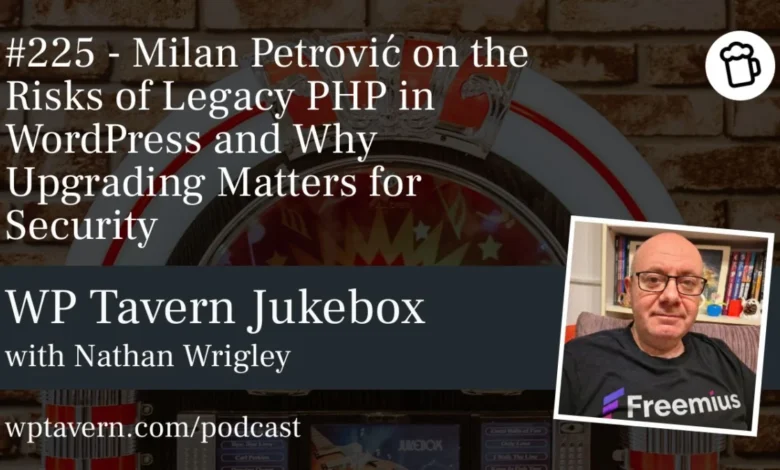
The discussion surrounding this issue reached a climax at WordCamp Europe, where developer Milan Petrović delivered a presentation titled Secure by Design: Hardening Plugins with PHP 8.x. Petrović, a full-stack developer at Freemius with nearly two decades of experience in the WordPress ecosystem, highlighted that while WordPress has historically prioritized backwards compatibility to lower the barrier to entry, this strategy is now contributing to an "active invitation for automated exploitation."
The Legacy Problem: A Chronology of Obsolescence
PHP version 7.4, which remains in widespread use, reached its official end-of-life status in November 2022. Since that date, the PHP group has ceased all security updates and bug fixes for the branch. Despite this, data from various WordPress tracking metrics suggest that approximately 20% of the WordPress ecosystem still relies on versions within the 7.x range, with some users even lingering on PHP 5.x.
This timeline of neglect creates a dangerous landscape. When a software branch is no longer supported, it stops receiving patches for newly discovered security flaws. Consequently, thousands of known vulnerabilities remain unaddressed in these legacy versions. Unlike modern iterations of PHP, which include native shields against common attack vectors, legacy environments are essentially "open books" for malicious actors who can leverage publicly available exploit databases to target unpatched sites.
Security Vulnerabilities and Automated Exploitation
The primary concern for the security community is the nature of automated attacks. Modern cyberattacks do not typically target specific websites; rather, they scan the internet for servers running outdated software with known, unpatched vulnerabilities. When a site is found running an end-of-life version of PHP, automated scripts can execute exploits for authentication bypass, server-side request forgery (SSRF), and remote code execution with minimal effort.
Petrović’s research, demonstrated through a custom-built "Vulnerability Lab" plugin, illustrates the stark difference between legacy and modern environments. In his testing, identical code structures that are easily compromised on older PHP versions are effectively neutralized by the security features native to PHP 8.x. These features include stricter type-hinting, improved error handling, and memory management protocols that make it significantly harder for malicious code to execute or escalate privileges.
Performance Gains and Resource Efficiency
Beyond security, the argument for migration is bolstered by empirical performance data. Each iteration of PHP since the release of version 8.0 has introduced significant optimization. Benchmarks consistently show that PHP 8.3 and 8.4 are markedly faster than their predecessors, with some applications reporting speed increases of over 50% compared to PHP 7.4.
For hosting providers, this shift is critical. Newer versions of PHP utilize system memory more efficiently, allowing servers to process a higher volume of requests per second with the same hardware resources. This creates a compelling economic incentive: upgrading to the latest version of PHP can reduce operational costs for hosting companies while simultaneously providing a faster, more responsive experience for end users. Despite these benefits, adoption remains sluggish, often due to the fear of breaking legacy plugins that lack updates.
The Role of the WordPress Core and Plugin Developers
The WordPress project faces a delicate balancing act. Its long-standing policy of supporting legacy code has been a cornerstone of its mission to "democratize publishing," ensuring that users on low-cost, unmanaged hosting plans could still run their sites. However, experts argue that this policy has inadvertently created a "lowest common denominator" culture.
Petrović suggests that while WordPress cannot abandon its users overnight, it should adopt a more aggressive schedule for deprecating old PHP versions. By raising the minimum required PHP version for the WordPress Core, the platform would effectively mandate that hosting providers and plugin developers keep pace with industry standards.
Many plugin developers have already begun this transition, with a growing number of professional-grade plugins now requiring PHP 8.0 or higher. This shift is also being driven by third-party libraries—the "building blocks" of modern software. As these libraries update their own requirements to leverage modern language features, WordPress developers who rely on them are forced to choose between maintaining compatibility with outdated environments or upgrading their products.
Implications for Hosting Providers and Agencies
For agencies and site owners, the transition requires a proactive strategy. Many managed hosting providers have already begun to force-migrate their clients to newer PHP versions, often providing temporary "compatibility modes" or detailed error reporting to help users navigate the transition.
However, the "bike in the garage" mentality remains a hurdle—the perception that a website is a static commodity that does not require maintenance. Education is the primary tool to counter this. When agencies can demonstrate—using tools like the Vulnerability Lab plugin—that an outdated site is not only vulnerable but also slower and more expensive to run, clients are more likely to approve the budget required for the necessary maintenance and code updates.
A Gradual Path Toward Future-Proofing
The consensus among industry professionals is that the modernization of the WordPress ecosystem does not have to be an all-or-nothing event. Developers are encouraged to adopt "secure by design" patterns, which include:
- Stricter Typing: Implementing explicit data types in code to prevent unauthorized or malformed input from being processed.
- Gradual Refactoring: Updating plugins one module at a time rather than attempting a total code overhaul.
- Automated Testing: Utilizing continuous integration (CI) tools to test code across multiple PHP versions to catch compatibility issues before they reach production.
The future of WordPress security rests on the collective decision to move away from the safety of the familiar past and toward the efficiency and resilience of the present. While the transition away from PHP 7.x will undoubtedly cause temporary friction, the long-term integrity of the platform depends on its ability to evolve alongside the language that powers it. As Petrović emphasized in his closing remarks at WordCamp Europe, the tools for a more secure, high-performance future are already here; they simply require the industry-wide commitment to implement them.