Accessibility in WordPress Themes: Demystifying Compliance and Building a More Inclusive Web

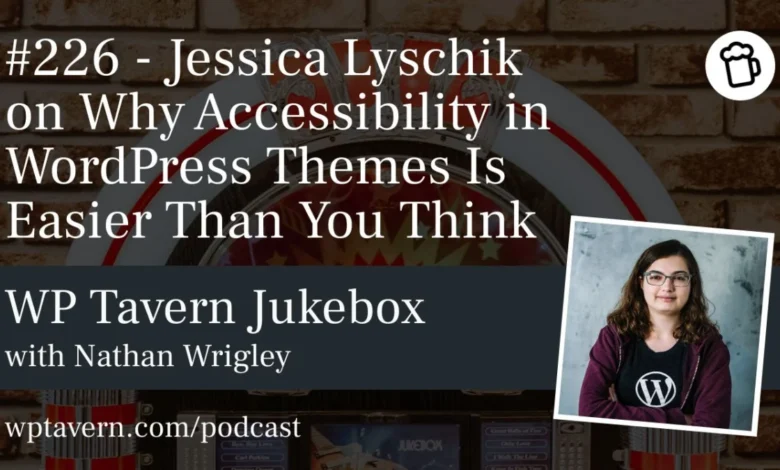
The WordPress ecosystem, which powers over 40% of the internet, is currently undergoing a significant shift regarding digital inclusivity. During the 2026 WordCamp Europe conference, developer and accessibility advocate Jessica Lyschik delivered a pivotal presentation titled "Accessibility in Themes: Easier Than You Think," aimed at dismantling the long-standing perception that creating accessible web environments is an prohibitively complex or technical burden for developers.
As regulatory frameworks like the European Accessibility Act (EAA) begin to enforce stricter digital standards, the pressure on web creators to conform to the Web Content Accessibility Guidelines (WCAG) has moved from a moral imperative to a legal necessity. Despite this, a massive gap remains between the number of existing WordPress themes and those that hold the official "accessibility-ready" designation in the official repository.
The Current State of Accessibility in the WordPress Ecosystem
Data from the official WordPress.org theme repository reveals a stark reality: out of more than 14,700 available themes, fewer than 300 carry the "accessibility-ready" tag. This represents roughly 1.5% of the total library. For years, this discrepancy has been attributed to a combination of opaque documentation, the perceived difficulty of technical implementation, and a lack of interdisciplinary training among web agencies.
Jessica Lyschik, a developer with over a decade of experience in the WordPress ecosystem, argues that this scarcity is not due to a lack of capability, but rather a lack of clarity. According to Lyschik, the barrier to entry is often psychological; developers who are unfamiliar with the needs of users who rely on screen readers or assistive technologies often view accessibility requirements as a cryptic set of rules rather than a manageable set of coding standards.
Chronology of Accessibility Standards
The development of accessibility within WordPress has been a gradual, iterative process. While the core software has made strides to ensure that default themes—such as the Twenty Twenty-Series—meet high accessibility benchmarks, the responsibility often falls on theme developers to maintain these standards in third-party products.
- Early Years (2005–2015): Accessibility was largely peripheral to mainstream web development. Most themes were built with a visual-first approach, often ignoring semantic HTML and keyboard navigation.
- The Standardization Era (2015–2020): WordPress began formalizing its "accessibility-ready" requirements. These guidelines provided a framework for developers, though they remained difficult for newcomers to navigate without specialized training.
- The Block Theme Transition (2021–Present): With the rise of Full Site Editing (FSE) and block-based architecture, the technical requirements for accessibility have shifted. Core blocks now manage much of the underlying semantic markup, effectively automating tasks that previously required manual intervention by developers.
The Role of Block Themes in Modern Compliance
One of the most significant takeaways from the recent discussions at WordCamp Europe is the role of block-based themes in lowering the barrier to accessibility. In traditional classic themes, developers were required to manually write code for critical accessibility features, such as "skip-to-content" links and correct HTML5 landmark roles.
In the block era, WordPress Core handles these elements by default. By simply using the correct block structure—such as placing content within a group block and assigning it a main HTML landmark—the software automatically generates the necessary code for screen readers. This paradigm shift means that modern theme creators can achieve compliance with significantly less labor, provided they understand how to configure these blocks correctly.
The Emerging Impact of AI Agents
Beyond human users, a new frontier in accessibility has emerged: the rise of Artificial Intelligence agents. These autonomous bots, designed to perform tasks like online shopping, booking travel, or filing taxes on behalf of users, do not "see" websites in the traditional sense. Instead, they interpret the site’s code.
Lyschik notes that accessibility is no longer just about human inclusivity; it is now a fundamental requirement for the functional efficiency of AI. If a website’s HTML is structured poorly, an AI agent will be unable to navigate the checkout process or identify the correct buttons to click. Consequently, accessibility has become a business-critical requirement for e-commerce sites. If a site is not "machine-readable" via proper semantic tagging, it risks being excluded from the next generation of automated web interaction.
Addressing the Documentation Gap
A major theme in the ongoing effort to improve the web is the need for better documentation. The current WCAG documentation is often criticized for being overly dense and academic, which can deter independent developers. Advocacy groups within the WordPress community, including figures such as Joe Dolson and Rian Rietveld, are working to bridge this gap by creating practical, step-by-step guides that translate high-level compliance requirements into actionable code snippets.
The goal is to move away from the "all-or-nothing" approach. Even minor adjustments—such as ensuring that images contain descriptive alternative text, using semantic heading levels (H1 through H6) in a hierarchical order, and ensuring that all link text is descriptive—can make a profound difference for users.
Implications for the Future of Web Development
The consensus among accessibility advocates is that the future of web design must be interdisciplinary. Developers, SEO specialists, and content creators all share responsibility for the accessibility of the final product.
For developers, the mandate is clear: build accessibility into the foundation of the theme rather than treating it as an afterthought. Attempting to retrofit a complex website with accessibility features after it has been built is labor-intensive and error-prone. By contrast, adopting accessible coding habits during the initial development phase ensures that the theme remains compliant as it scales across hundreds or thousands of sites.
As the industry moves toward 2027 and beyond, the expectation is that "accessibility-ready" will transition from a niche tag to a standard expectation. With the combined pressure of government regulations and the increasing importance of AI interoperability, the cost of ignoring accessibility is rising. For the WordPress community, the challenge lies in leveraging the efficiency of block-based architecture to ensure that the web remains an open, usable space for all, regardless of physical or sensory ability.