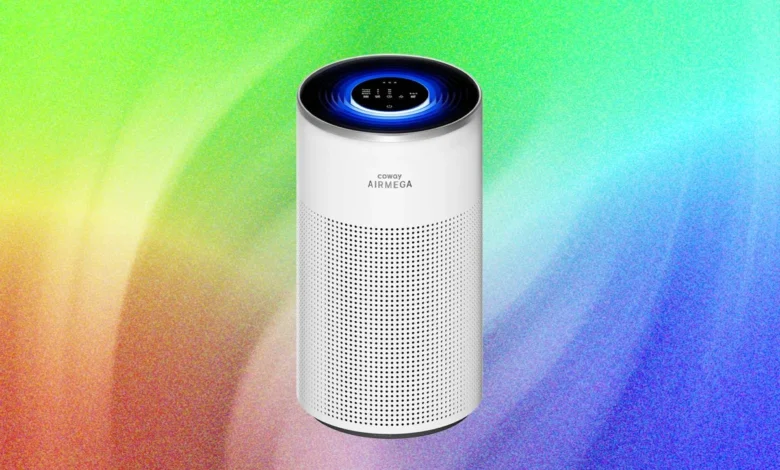
Indoor air quality has become a primary concern for homeowners and office managers alike, as modern construction methods prioritize energy efficiency and airtight seals, often at the expense of ventilation. The Coway Airmega Halo enters this competitive landscape as a high-performance solution designed to mitigate the risks posed by microscopic airborne pollutants. At the heart of the device is a cylindrical, IEST-certified HEPA three-stage filtration system, engineered to capture 99.97 percent of particulates down to 0.3 microns. While standard filtration is the baseline for modern purifiers, the Halo distinguishes itself through the integration of the MegaScan Particle Sensor, a real-time monitoring technology that tracks fine dust, smoke, and allergens at the PM2.5 level.
Understanding the PM2.5 Threat
Particulate Matter 2.5 (PM2.5) refers to airborne particles with a diameter of 2.5 micrometers or less. Because these particles are significantly smaller than the width of a human hair, they possess the unique ability to bypass the body’s natural respiratory defenses. According to the Environmental Protection Agency (EPA), long-term exposure to these particles is linked to severe health complications, including asthma exacerbation, cardiovascular disease, and reduced lung function. By utilizing the MegaScan sensor, the Airmega Halo targets these specific contaminants, providing users with a technological safeguard against the invisible pollutants that infiltrate domestic environments through cooking fumes, traffic exhaust, and household allergens.
Engineering and Operational Performance
The operational profile of the Airmega Halo balances high-capacity air turnover with noise-sensitive environmental integration. The device features a top-mounted touchscreen interface that grants users granular control over fan speed, operational timers, and automated settings.
In controlled environments, the machine exhibits a tiered noise profile. During its sleep mode—a setting designed for bedrooms and quiet spaces—the unit generates approximately 17 decibels of sound. This level is effectively imperceptible against the standard ambient noise floor of a modern residential interior. Conversely, when the unit shifts to its maximum turbo setting, the noise output increases to approximately 75 decibels. This is comparable to the sound of a standard residential vacuum cleaner or a high-cycle dishwasher, indicating a machine capable of rapid air exchange when pollutant concentrations spike.
Automation and Smart Environmental Sensing
A critical feature of the Halo is its integration of an ambient light sensor, which facilitates automated transitions between standard and sleep modes. When the device detects low-light conditions for a duration exceeding three minutes, it automatically shifts to its quietest operational state and dims its interface lights to prevent sleep disruption.
Furthermore, the unit employs an energy-saving algorithm. If the integrated sensor determines that indoor air quality has remained in the “good” range for a sustained three-minute interval, the fan enters a standby state to minimize power consumption. It remains in this state until the sensor detects a renewed increase in pollutant concentration, at which point it resumes operation. This functionality highlights a shift in the air purifier market toward "set-it-and-forget-it" systems that prioritize both energy efficiency and consistent air quality.
Decoding Air Quality Indicators
The Airmega Halo utilizes a halo-shaped LED display to communicate real-time air quality through a four-color code: blue (good), green (moderate), yellow (unhealthy), and red (very unhealthy). While this system provides immediate visual feedback, it presents a potential for confusion due to its deviation from the established US Air Quality Index (AQI) standards.
The US AQI—managed by AirNow—utilizes a standardized six-tier color scale: green (good), yellow (moderate), orange (unhealthy for sensitive groups), red (unhealthy), purple (very unhealthy), and maroon (hazardous). Because the Halo’s color-coding system does not mirror the official national standard, users accustomed to public air quality alerts may find the device’s interface requires a period of adjustment. This discrepancy underscores the ongoing lack of a universal visual language for consumer-grade air quality monitors.
Testing Methodology and Field Performance
To evaluate the efficacy of the Coway Airmega Halo, a month-long longitudinal test was conducted across various high-pollution scenarios. The evaluation included monitoring the device’s response to emissions from an unventilated gas stove, exhaust fumes drawn in through living room windows, and proximity to concentrated allergen sources such as cat litter areas.
To ensure empirical accuracy, the machine’s internal sensor readings were compared against an independent, high-precision indoor air quality monitor. The results indicated that while the machine is responsive, there is a measurable latency between the introduction of pollutants and the machine’s activation, a common characteristic in consumer-grade sensor technology. The testing confirmed that the HEPA filtration system is highly effective at reducing particulate counts within confined spaces, consistently lowering detected PM2.5 levels to baseline values within a reasonable timeframe relative to the size of the room.
Broader Impact and Industry Implications
The development of devices like the Airmega Halo reflects a growing awareness of indoor air quality as a public health issue. Historically, air purification was considered a niche requirement for individuals with severe asthma or allergies. Today, it is increasingly viewed as a standard utility in modern homes, particularly as climate change increases the frequency of wildfire smoke events and urban density exacerbates local air pollution.
The industry is currently moving toward "smart" integration, where air purifiers communicate with home automation hubs to regulate air quality based on external weather data and internal sensor readings. The Coway Airmega Halo represents a middle ground: it offers sophisticated, data-driven filtration without the complexity of cloud-dependent smart home ecosystems, making it a robust choice for users who prioritize privacy and local control.
Future Perspectives on Air Quality Standards
As the market for air purifiers expands, consumer demand for transparency in testing metrics is rising. Organizations like the IEST (Institute of Environmental Sciences and Technology) continue to set the benchmarks for filter efficiency, but there remains a gap between laboratory testing conditions and real-world residential performance.
The success of the Halo in these tests suggests that modern consumer-grade filtration has reached a level of maturity where even mid-range units can provide meaningful protection against common indoor pollutants. However, the reliance on proprietary sensor technology means that manufacturers must continue to refine the sensitivity and calibration of their hardware to keep pace with evolving health guidelines. For the average consumer, the choice of an air purifier should be based on the volume of air the unit can process, the certified efficiency of the filter media, and the responsiveness of the sensor array.
In conclusion, the Coway Airmega Halo functions as a reliable instrument for those seeking to mitigate the impact of indoor air pollution. Its combination of a whisper-quiet sleep mode, energy-conscious automation, and proven HEPA filtration technology provides a comprehensive approach to managing the air quality within a home. While the lack of alignment with official AQI color standards may cause initial confusion, the core performance of the device—characterized by rapid response to pollutants and high-capacity particle capture—solidifies its position as a functional and necessary tool in the modern household’s wellness arsenal. As air quality continues to be a central topic in public health discussions, the ability of such devices to offer verifiable, real-time data will remain their most valuable contribution to consumer safety.