Fourthwall vs Gelato: A Comprehensive Analysis of Modern Print-on-Demand Solutions


The landscape of direct-to-consumer (DTC) retail has undergone a seismic shift over the past decade, moving away from traditional inventory-heavy models toward flexible, on-demand fulfillment. Two platforms, Gelato and Fourthwall, have emerged as industry leaders in this space, yet they serve fundamentally different functions within the ecommerce ecosystem. While both provide the infrastructure for entrepreneurs to offer customized merchandise, their operational models, target demographics, and integration capabilities necessitate a detailed comparative analysis for business owners evaluating their scalability and administrative requirements.
The Evolution of Print-on-Demand Fulfillment
Print-on-demand (POD) technology originated as a niche solution for book publishers and small-scale apparel designers, but it has evolved into a global logistics powerhouse. By eliminating the need for upfront manufacturing costs and inventory storage, POD has democratized entrepreneurship.
Gelato entered this market with a focus on a "production-as-a-service" model. Founded on the principle of reducing waste through local production, the company has scaled its network to include over 140 production hubs across the globe. This strategy addresses one of the primary historical pain points of POD: long transit times and high carbon footprints associated with shipping single units across oceans.
Conversely, Fourthwall entered the market as a comprehensive brand-building platform. Recognizing that creators and entrepreneurs often struggled with the fragmentation of managing a website, a fulfillment partner, and a customer service portal simultaneously, Fourthwall integrated these functions into a single "all-in-one" environment. Where Gelato functions as a specialized utility for existing stores, Fourthwall functions as a holistic operating system for new brands.
Comparative Operational Frameworks
To understand the practical implications of choosing between these two providers, one must examine their structural architecture.
Gelato operates as a supply-side integrator. It is designed to be plugged into an existing digital storefront—such as Shopify, Wix, or WooCommerce. Its primary value proposition is its massive, decentralized network of printers. When a customer places an order on a seller’s website, the data is routed to the closest available production facility, printed, and shipped locally. This reduces delivery times significantly; data from the company indicates that approximately 90% of orders are produced locally and reach the end consumer within five business days.
Fourthwall, by contrast, acts as a storefront provider that owns the fulfillment backend. Users who utilize Fourthwall do not need to integrate a third-party ecommerce platform because the platform provides the website, the domain management, the checkout process, and the fulfillment service. It is a closed-loop system designed to minimize the technical friction of starting a brand.
Data-Driven Analysis of Pricing Models
Both platforms utilize a "freemium" model, yet the cost-benefit analysis varies based on the user’s current business stage.
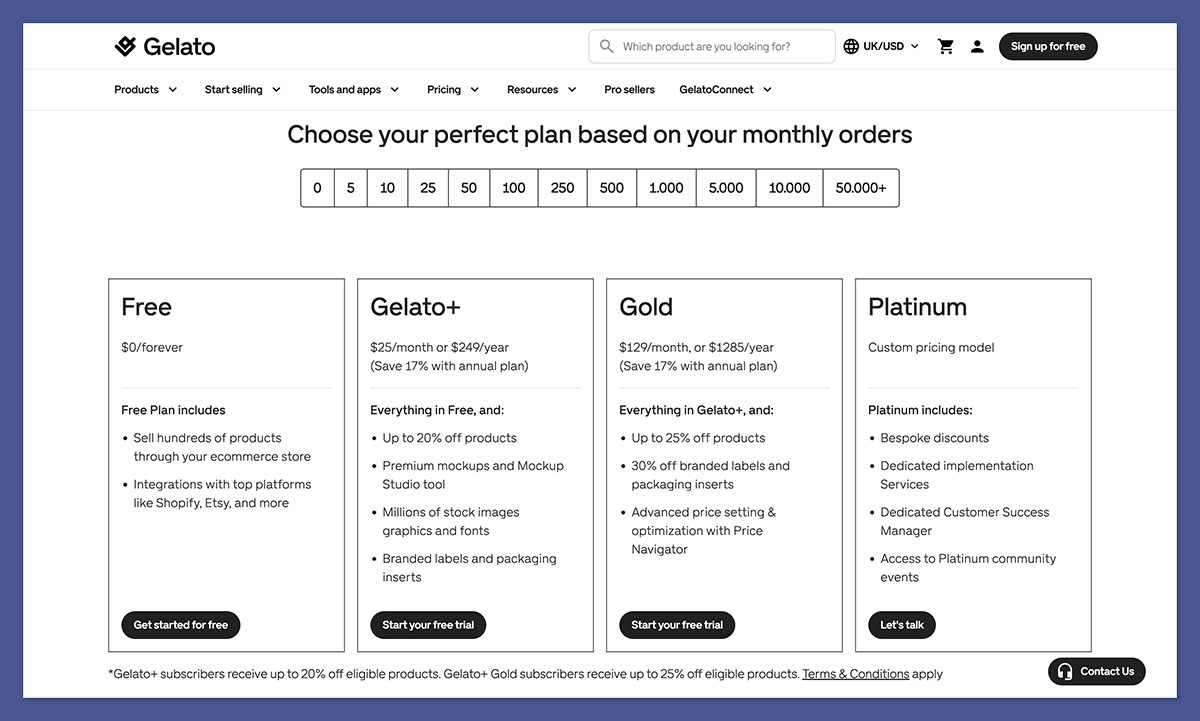
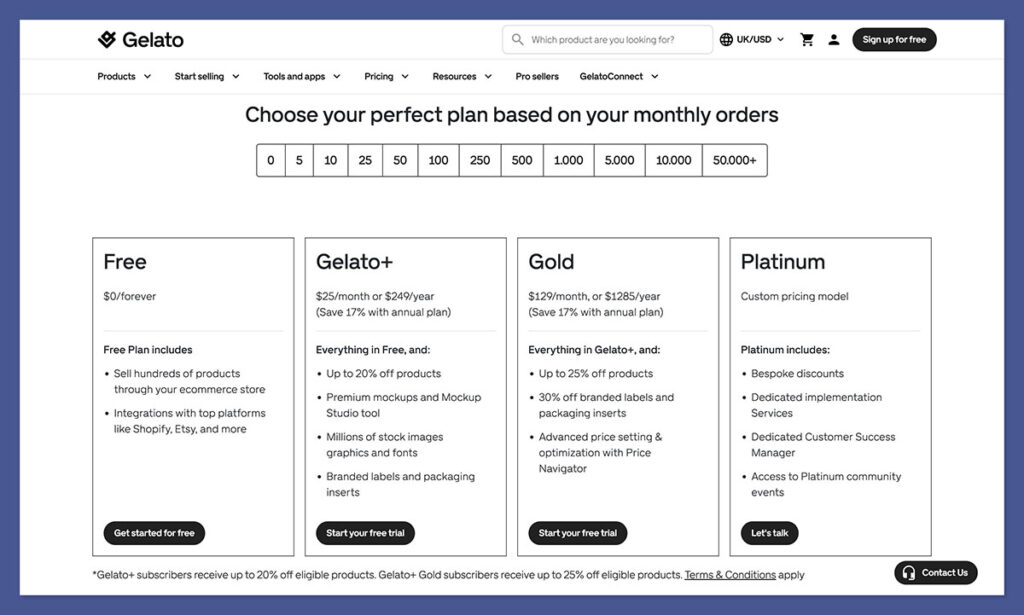
Gelato offers a robust free tier that provides access to its entire catalog and basic design tools. However, for scaling businesses, the Gelato+ subscription (priced at $29.99 per month) provides substantial cost savings, including up to 33% off product base costs and access to premium features like the Personalization Studio. The caveat is that users must still pay for their primary ecommerce platform (e.g., Shopify’s monthly fee) and any additional marketing or analytics apps required to run their business.
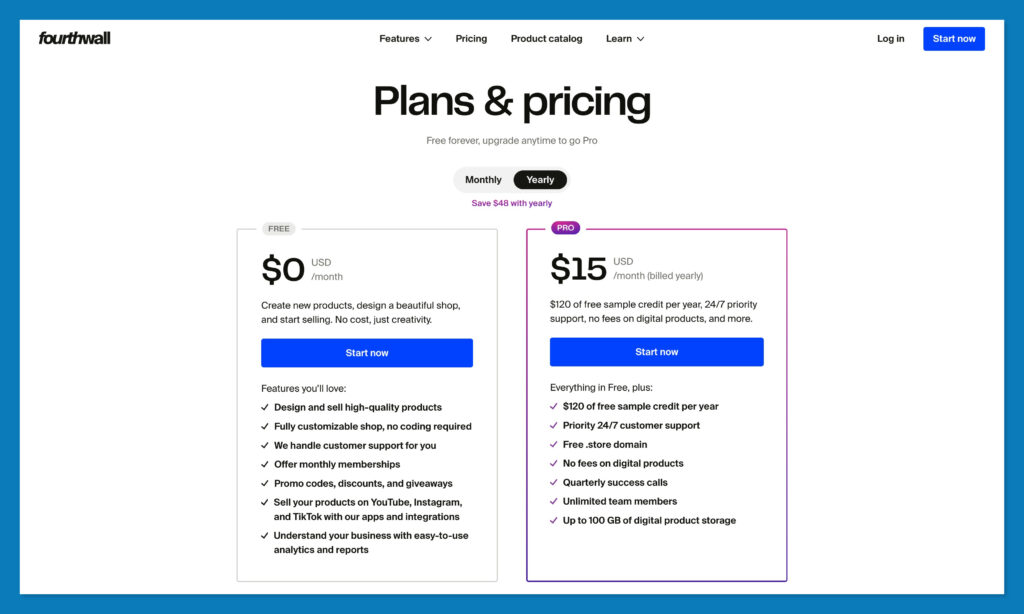
Fourthwall’s pricing structure is designed to be more inclusive of the "hidden" costs of business. Because it provides the storefront itself, there is no monthly platform fee for the basic store, though the platform charges a transaction-based fee (5% on digital goods and memberships) to recoup costs. The Pro plan, at $19 per month, removes these transaction fees and adds advanced features like priority support and sample credits. For a creator starting from scratch, Fourthwall often represents a lower total cost of ownership compared to the combined costs of an independent website host and a separate POD supplier.
Quality Control and Product Catalog Diversity
Product quality remains the most critical factor for brand retention. Gelato is widely recognized for its high-quality paper products and wall art, which often outperform standard industry alternatives. Their focus on sustainability—utilizing non-toxic inks and eco-conscious materials—aligns with a growing consumer demand for ethical manufacturing. Their "Personalization Studio" also allows merchants to offer bespoke items, a high-margin segment of the POD market.
Fourthwall maintains a more curated, retail-grade catalog. While the selection may be smaller than the expansive options offered by massive global networks, the emphasis is on the caliber of the garments and the ability to customize unconventional print areas, such as sleeves or tags. Furthermore, Fourthwall allows for the integration of third-party products; if a merchant wants to sell a custom-sourced item alongside a POD t-shirt, Fourthwall allows for that fulfillment to be unified under one brand umbrella.
The Role of Merchant of Record (MoR) and Support
A significant differentiator between the two is the concept of the Merchant of Record (MoR). In the traditional ecommerce model, the seller is the MoR, meaning they are responsible for global tax compliance, VAT calculations, and regional trade regulations.
Fourthwall assumes the role of the MoR for sales processed through its platform. This is a substantial advantage for small businesses or creators who lack the legal and accounting infrastructure to manage international sales tax compliance. Additionally, Fourthwall manages customer service inquiries for its catalog items. If a product arrives damaged or a customer has a query regarding a shipment, the Fourthwall team intervenes to resolve the issue directly.
Gelato, while providing excellent technical support for its API and integrations, generally leaves the customer-facing aspects of the business to the seller. The merchant remains the MoR, responsible for all tax filings and direct customer service interactions.
Technological Integration and Automation
Technological sophistication is where both platforms continue to diverge. Gelato’s strength lies in its API and its ability to sync with virtually any sales channel. The "Magic Mockup" and AI-driven design tools are specifically engineered to optimize the appearance of products in online storefronts.
Fourthwall has pivoted toward AI-assisted management through its "Eli" assistant. This tool allows for natural language queries regarding sales performance, pricing adjustments, and promotional strategies. Furthermore, Fourthwall’s integration with platforms like RSS.com for podcasting and its dedicated marketplace for connecting with freelance designers suggests a long-term strategy of becoming a comprehensive "creator economy" tool rather than just a production partner.
Strategic Implications for Business Owners
The choice between Gelato and Fourthwall ultimately depends on the business’s current maturity and its long-term goals.
For an established merchant already operating a successful storefront on a platform like Shopify or Etsy, Gelato is the logical choice. It provides the necessary infrastructure to scale production, improve fulfillment speeds, and tap into a global network of printers without requiring the owner to migrate their entire business to a new, unfamiliar platform. Its focus on "production-as-a-service" allows the merchant to retain full control over their brand experience, customer data, and marketing funnel.

For the aspiring entrepreneur, influencer, or creator looking to launch a brand, Fourthwall offers a streamlined path to market. By collapsing the distinction between a website host and a supplier, Fourthwall eliminates the technical debt and administrative complexity associated with multi-platform integration. It is a "turn-key" solution that allows the user to focus on brand development rather than logistics, tax compliance, or web development.
Conclusion
The digital commerce ecosystem has reached a point where fulfillment is no longer a one-size-fits-all endeavor. The decision between Gelato and Fourthwall should be viewed as a strategic selection of a partner based on one’s specific operational needs. If the priority is deep, specialized fulfillment capability and integration with a robust, existing tech stack, Gelato provides the tools to excel. If the priority is a unified, low-friction, and manageable brand ecosystem, Fourthwall provides the foundation required to build and scale from the ground up. Both platforms represent the high-water mark of modern, on-demand logistics, reflecting the industry’s ongoing transition toward agility, sustainability, and automated operational efficiency.