The integration of artificial intelligence into higher education has transitioned from a theoretical curricular discussion to an urgent institutional imperative. As generative artificial intelligence, machine learning algorithms, and automated reasoning tools permeate nearly every sector of the modern workforce, universities face mounting pressure to prepare students not merely as passive consumers of technology, but as critical architects, ethical evaluators, and creative problem-solvers. Yet, while software and computational resources are widely accessible, a profound structural bottleneck persists: the scarcity of educators adequately prepared to teach artificial intelligence as an interdisciplinary, adaptable framework rather than as an immutable, inscrutable black box.
Addressing this critical deficit requires more than isolated pedagogical experiments; it demands systemic institutional collaboration, resource sharing, and cross-disciplinary curriculum design. A prominent initiative spearheaded by the Massachusetts Institute of Technology—the AI Educators Pilot—has emerged as a compelling model for scaling artificial intelligence education across diverse academic institutions. By uniting faculty experts across engineering, finance, computer science, and sustainability, and extending these resources to regional and minority-serving institutions, this collaborative undertaking is forging a replicable blueprint for the future of collegiate instruction in the age of intelligent machines.
The Genesis and Architecture of the Pilot Program
The architecture of the AI Educators Pilot was built upon a foundation of extensive cross-college cooperation. Bringing the program to life required broad institutional alignment, administrative backing, and the dedicated contributions of more than half a dozen instructors representing fields as varied as finance, computer science, and sustainability. Together, this interdisciplinary coalition shaped a specialized workshop designed to pair rigorous technical concepts with concrete, adaptable pedagogical materials suitable for diverse classroom environments.
Saurabh Amin, the Edmund K. Turner Professor in Civil Engineering, serves as the faculty director of the initiative and co-director of the Operations Research Center—a facility jointly housed within the MIT Schwarzman College of Computing and the MIT Sloan School of Management. Reflecting on the scale and uniqueness of the cooperative endeavor, Amin notes the extraordinary level of commitment demonstrated by the participating faculty.
"I have not seen an effort quite like it—this many dedicated instructors assembling materials of this richness, all to equip the educators who serve their students," Amin observes.
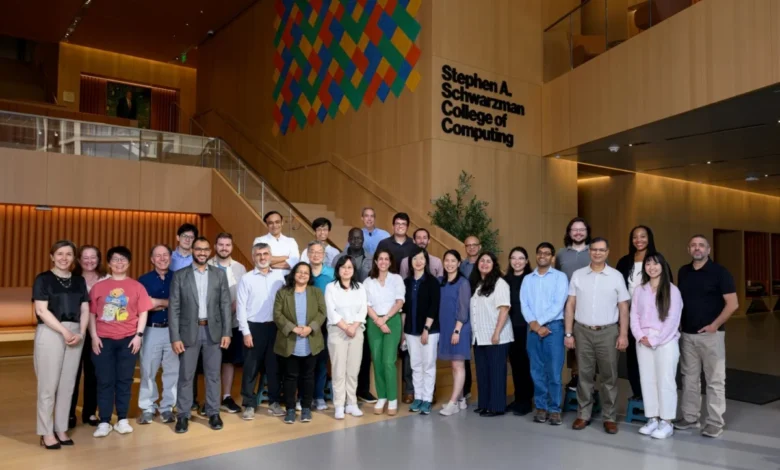
The logistical realization of the pilot was made possible through the generous philanthropic support of Jake and Robin Reynolds. Underwritten by their backing, the program convened a cohort of 19 academic participants this past July. The roster of participating institutions reflected a deliberate commitment to institutional diversity, drawing faculty members from Allen University, Babson College, Brandeis University, Marshall University, the University of Massachusetts at Lowell, the University of North Texas, and the Wentworth Institute of Technology.
Throughout the intensive July session, these educators worked alongside MIT faculty and instructors to explore the pedagogical underpinnings of Modeling with Machine Learning. The curriculum was delivered through a blended instructional model incorporating live demonstrations, instructional videos, and targeted problem-solving exercises. Crucially, the program emphasized applied translation, dedicating significant portions of the schedule to hands-on collaborative activities focused on adapting the course’s materials and instructional methodologies to the specific curricular frameworks of the participants’ home institutions.
Navigating the Paradigm Shift in Computer Science
For many educators in attendance, the timing of the workshop coincided with sweeping curricular overhauls at their respective universities. The rapid evolution of automated code generation and natural language processing tools has fundamentally disrupted traditional assumptions regarding what computer science graduates must know and be able to do.
Wenjin Zhou, an assistant professor of computer science at the University of Massachusetts at Lowell, highlights the urgency that drove her participation in the pilot program. "This opportunity has been very timely because we are starting an AI and data science program in my department," Zhou explains. "We’ve already been thinking about: How do we teach our next generation of computer scientists within the area of AI? How do we integrate AI in the teaching? I wanted to learn more about how other people are doing it, and especially answer the question: If AI can create tools for anyone now, what does a computer scientist do?"
This existential question strikes at the heart of contemporary higher education. When foundational coding, syntax generation, and basic data sorting can be executed instantaneously by automated systems, the value proposition of a technical education must shift upward. Curricula can no longer afford to treat machine learning models as self-contained endpoints. Instead, educators must train students to understand the underlying mathematics, recognize systemic biases, interrogate algorithmic outputs, and synthesize computational tools to address complex real-world challenges across specialized domains.
Deconstructing the Black Box
When evaluating the current landscape of artificial intelligence resources, the primary obstacle is rarely a shortage of high-quality technical material. Massive open online courses, documentation libraries, and open-source code repositories abound. However, as Saurabh Amin points out, what is chronically missing is context—meaningful opportunities for instructors and students to connect abstract artificial intelligence concepts to specific disciplinary domains, concrete societal problems, and rigorous modes of critical thinking.
These vital connections are rarely forged by treating AI as a static set of doctrines to be memorized or passively received. They require active dialogue, ethical reasoning, and pedagogical guidance. Yet, institutional capacity remains severely constrained.
"What is scarce are educators prepared to teach AI as more than a fixed body of concepts and tools, to ground it in their own field, help students use it with judgment, and demystify it, so students do not just apply models but learn to question, adapt, and build with them," Amin explains.
Echoing this philosophy, Shen Shen, a lecturer in the Department of Electrical Engineering and Computer Science (EECS) and one of the core workshop instructors, emphasizes the pedagogical necessity of demystification. "How do we make sure that machine learning is not just a black box, nor this magic piece of new technology?" Shen asks. "You can think of it as a tool, or a new framing to help you solve the problem in your specific domain."
By shifting the narrative away from technological determinism and toward instrumental literacy, educators can empower students to view machine learning as a malleable medium rather than an infallible oracle. This transition from passive adoption to critical inquiry is essential for maintaining intellectual rigor across disciplines as diverse as civil engineering, finance, and the humanities.
Transitioning from a Pilot Workshop to a Sustainable Educator Network
The conclusion of the intensive July workshop marked not an end, but a beginning. In the final phase of the program, participants engaged in systematic reflection, evaluating which specific workshop materials, datasets, and teaching approaches they intended to adapt for their own courses and academic disciplines. The feedback gathered during this reflective phase will serve as empirical data to refine future iterations of the pilot, ensuring that the curriculum remains scalable, responsive, and effective.
More importantly, the workshop laid the groundwork for a broader, self-sustaining network of educators committed to expanding and elevating artificial intelligence education across varied learning environments. The isolation frequently experienced by faculty members attempting to modernize isolated departmental curricula is mitigated by the establishment of these cross-institutional communities of practice.
Weijie Pang, an assistant professor of computer science at the Wentworth Institute of Technology, emphasizes the enduring value of this newly established professional network. "This is a really valuable opportunity to communicate with other faculty from different majors and areas," Pang notes. "I can see what other universities are doing and what we can learn from each other."
This sentiment is echoed by Dylan Cashman, an assistant professor of computer science at Brandeis University, who points to the shared challenges faced by institutions of all sizes and missions. "It’s helpful to know that everybody within different disciplines at different universities is struggling with the same questions of how we can best serve our students as the technology is changing," Cashman reflects. "Hopefully, we can set them up for success by being a little bit more forward and anticipatory of what the AI use is going to be."
Broader Implications and Future Outlook
The success of the AI Educators Pilot underscores a broader truth about educational reform in the twenty-first century: systemic technological change cannot be absorbed solely through individual faculty initiative or top-down administrative mandates. It requires structured, collaborative bridges between elite research institutions and a wide spectrum of colleges and universities.
By democratizing access to meticulously designed pedagogical frameworks, programs like the AI Educators Pilot help bridge the digital and instructional divides that threaten to leave resource-constrained institutions behind. When faculty from diverse universities collaborate to deconstruct machine learning models, share best practices, and localize computational tools for their unique student bodies, they are doing more than updating individual syllabi. They are collectively establishing a new standard for higher education—one defined by interdisciplinary resilience, ethical discernment, and a shared commitment to empowering the next generation of thinkers, builders, and problem-solvers.