Lightspeed eCom has long served as a bridge for brick-and-mortar merchants seeking to digitize their storefronts. By tethering an online shop directly to the Lightspeed Retail point-of-sale (POS) system, the platform established a reputation for inventory synchronization. However, the retail landscape has shifted significantly over the past 36 months. As consumer expectations for omnichannel shopping experiences rise, many retailers are finding that Lightspeed’s bundled pricing—which now mandates a subscription to the full Lightspeed Retail suite—creates a financial burden that outweighs its functional benefits. With entry-level costs now starting at approximately $89 per month, businesses with modest catalogs or those prioritizing aesthetic, online-first growth are increasingly looking for more agile, cost-effective solutions.
The Shift in Retail Strategy
The integration of Lightspeed eCom into the broader Lightspeed Retail ecosystem was a strategic move by the parent company to solidify its position in the mid-market enterprise sector. By focusing on complex inventory management, purchase order automation, and multi-location logistics, Lightspeed has effectively signaled its departure from the "small business" segment.
For the average independent retailer, this evolution presents a mismatch in needs. If a merchant operates a boutique or a single-location shop, the robust back-end features of Lightspeed often go underutilized, yet the merchant remains tethered to the high monthly overhead. This has prompted a wave of migrations toward platforms that offer more modular pricing and superior design flexibility.

1. Shopify: The Comprehensive Omnichannel Powerhouse
Shopify remains the industry benchmark for retailers seeking to balance physical and digital operations. Its ecosystem is designed with an "online-first" architecture, which inherently provides a superior customer experience compared to platforms that retrofitted e-commerce onto a POS system.
The primary advantage of Shopify lies in its app marketplace. While Lightspeed offers a curated set of integrations, Shopify’s ecosystem allows for nearly infinite customization. Whether a retailer requires advanced loyalty programs, specialized shipping calculators, or deep-link marketing automation, the Shopify App Store provides a plug-and-play solution.
From a financial perspective, Shopify Basic starts at $29 per month (when billed annually). While the cost can rise with the inclusion of premium themes and apps, it remains significantly more predictable than the tiered, multi-location pricing structures found in Lightspeed. For those who require in-store capabilities, Shopify POS provides a seamless transition, allowing for real-time inventory synchronization that matches or exceeds Lightspeed’s performance.
2. Square Online: The Budget-Friendly Entry Point
Square Online represents the most compelling option for small-to-medium retailers who are sensitive to monthly recurring costs. Because Square was built on the foundation of payment processing, its transition into full-scale e-commerce was designed to be frictionless.

The standout feature here is the "Free" plan. A retailer can host an online store and sync it with a physical Square POS for zero monthly subscription fees, paying only the standard credit card processing rates (typically 2.9% + $0.30 per transaction). This model is transformative for startups or businesses with thin margins.
However, there is a clear trade-off: design capabilities are rigid. While Square offers an AI-driven site builder, it does not provide the granular design control that a brand-conscious retailer might demand. For businesses that value utility over bespoke aesthetics, Square is an efficient, low-risk solution.
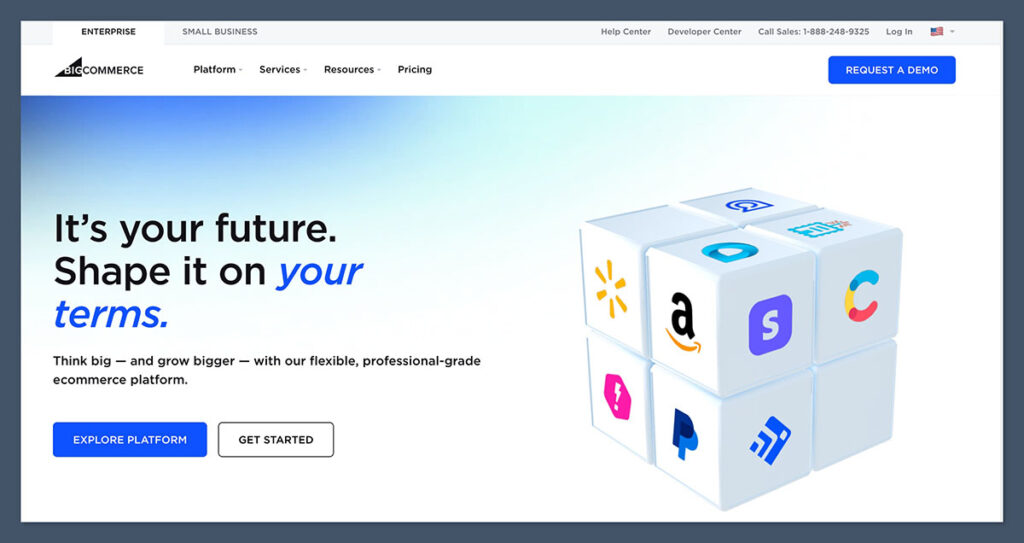
3. BigCommerce: The Scalability Specialist
For retailers managing large, complex product catalogs—often exceeding 1,000 SKUs—BigCommerce is frequently the superior choice. Unlike Shopify, which often requires third-party applications to handle complex product variants and filtering, BigCommerce includes these features natively.
BigCommerce’s architecture is "headless-ready," meaning it is built to handle significant traffic spikes and intricate database queries without latency. Furthermore, the platform imposes zero platform-level transaction fees. While Shopify charges a small percentage fee if a merchant opts for a third-party payment gateway, BigCommerce allows merchants to choose their preferred processor without penalty.

The downside is the learning curve. BigCommerce is inherently more technical than Wix or Square. It is designed for merchants who have a dedicated team or a firm grasp of catalog management, making it less suitable for the casual store owner.
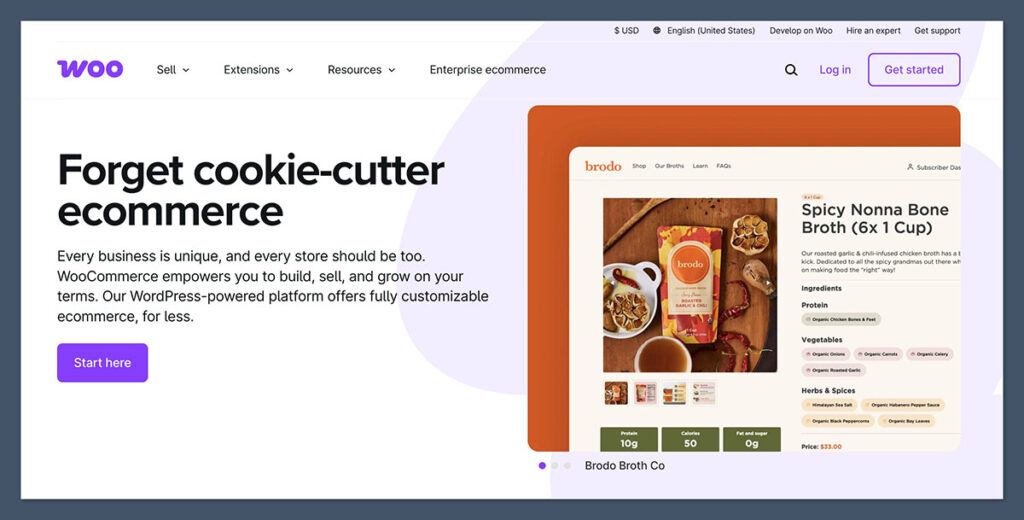
4. WooCommerce: The Ultimate Customization Engine
WooCommerce is not a SaaS platform in the traditional sense; it is a plugin for the WordPress content management system. As such, it offers the highest degree of ownership over one’s digital assets. If a retailer wishes to move their store to a new server or modify the core checkout code, they are free to do so.
This level of control is both a blessing and a responsibility. Users are tasked with managing their own hosting, security updates, and SSL certificates. For retailers who prioritize SEO and content-driven commerce, WooCommerce is unparalleled. Because it lives on the WordPress framework, the ability to create complex blogs, landing pages, and educational hubs alongside the store is seamless.
However, the "hidden" costs of WooCommerce—hosting fees, developer hours, and premium extension licenses—can quickly match or exceed the monthly costs of a managed platform like Shopify.
5. Wix: The Design-Led Choice
Wix has moved beyond its reputation as a simple website builder to become a viable contender in the e-commerce space. Its drag-and-drop editor remains the gold standard for usability, allowing non-technical store owners to create high-conversion, visually stunning storefronts.
Wix is particularly effective for service-based retail, such as stores that also offer in-person workshops, appointments, or consultations. Its integrated booking system is more mature than that of many dedicated e-commerce platforms. While it lacks the deep inventory management tools required for massive warehouses, for the boutique retailer, it offers an elegant, all-in-one experience.
Comparative Analysis of Costs and Capabilities
When evaluating a transition, retailers must look beyond the "starting price." The following table summarizes the operational reality of these platforms:
| Platform | Best For | POS Integration | Key Financial Edge |
|---|---|---|---|
| Shopify | Growth-oriented retailers | High (Native POS) | Scalable app ecosystem |
| Square | Small, cash-flow conscious | High (Native POS) | Zero monthly fees |
| BigCommerce | Large, high-volume catalogs | Low (Third-party) | No transaction fees |
| WooCommerce | Tech-savvy, custom-led | Moderate (Extensions) | Full code ownership |
| Wix | Design-focused boutiques | Moderate (US only) | Ease of design |
Implications for the Future of Retail
The migration away from legacy platforms like Lightspeed eCom indicates a broader trend in the retail industry: the "unbundling" of services. Retailers are increasingly rejecting the "all-in-one" vendor model if the features provided do not align with their specific growth trajectory.
Industry analysts observe that businesses are now adopting a "best-of-breed" technology stack. A retailer might use Shopify for their e-commerce storefront, a separate CRM for email marketing, and a specialized POS system for their physical showroom. This approach requires more integration management but offers significantly better performance per dollar spent.
The Migration Checklist
Transitioning from a platform like Lightspeed is a significant operational undertaking. To minimize downtime, retailers should adhere to the following sequence:
- Catalog Audit: Before exporting data, clean your product descriptions, update stock levels, and organize variants to ensure a smooth transition to the new database structure.
- Data Mapping: Use tools like CSV importers or automated migration services (such as Cart2Cart) to move customer databases and order histories.
- Parallel Operation: Do not cancel your Lightspeed subscription immediately. Run the new platform in "read-only" mode or for a subset of products for 14 days to verify tax calculations and payment gateway triggers.
- SEO Preservation: When moving domains, ensure that URL structures are mirrored or that 301 redirects are properly mapped to prevent a drop in organic search rankings.
Conclusion
The decision to migrate from Lightspeed eCom should be rooted in a clear assessment of current growth bottlenecks. If the primary pain point is the cost of entry for multiple physical locations, Shopify or Square are the most logical pivots. If the limitation is the lack of catalog depth or SEO control, BigCommerce or WooCommerce provide the necessary technical headroom.
By conducting a side-by-side trial—leveraging the free trials offered by these platforms—merchants can determine which environment best supports their specific retail workflow. In an era where digital agility is paramount, the ability to switch platforms to better suit a evolving business model is a competitive advantage in itself.