The Shifting Sands of Social Media: From Personal Connection to Algorithmic Entertainment

A recent study published by Incogni reveals a significant transformation in the landscape of social media, indicating a move away from personal updates and social interactions towards algorithm-driven entertainment and the consumption of short-form content. This shift, observed through a survey of 1,000 Americans, suggests a fundamental redefinition of how individuals engage with these once-social platforms. The findings align with broader industry trends, pointing towards a future where social media is increasingly viewed as a passive consumption channel rather than an active community space.
The Decline of the Active Poster
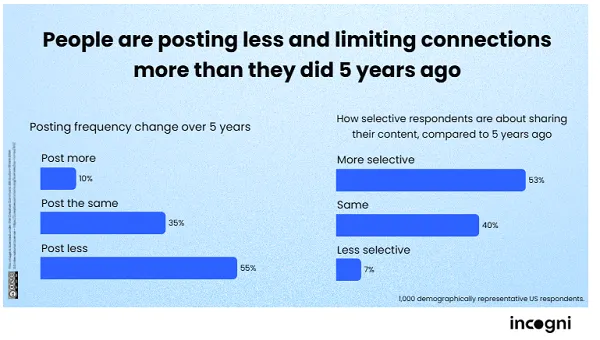
The Incogni study highlights a notable decrease in active posting habits. Fifty-five percent of respondents reported posting less to social media now compared to five years ago. This sentiment is echoed in other analyses, which suggest a growing preference for sharing personal updates and conversations within smaller, more private digital enclaves, such as direct message groups. This trend indicates a move towards more intimate digital communication, potentially driven by a desire for more controlled and meaningful interactions, away from the broader, often impersonal, public feeds.
This decline in active posting isn’t an entirely new phenomenon. The concept of a "digital participation inequality" has been observed for years. As far back as 2019, Pew Research data revealed a striking concentration of activity on Twitter (now X), indicating that approximately 80% of all tweets were generated by a mere 10% of its user base. This observation aligns with the long-standing "90-9-1 principle," first discussed in The Guardian in 2006. This principle posits that in collaborative online environments, including social media platforms, roughly 90% of users are content consumers, 9% are occasional contributors, and only 1% are active creators. While the digital world has evolved dramatically over two decades, this underlying user behavior pattern appears remarkably persistent, and perhaps even amplified by current trends.
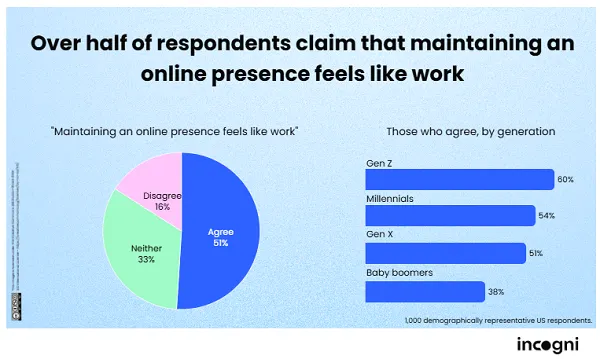
The implications of such a skewed participation model are significant. When a tiny fraction of users drives the vast majority of content, it can lead to a narrowing of online perspectives and a potentially overwhelming burden on those who do actively create. This concentration of creation responsibilities can contribute to what the Incogni study identifies as "social posting burnout." More than half of the surveyed individuals admitted that maintaining a social media presence "feels like work," underscoring the pressure and labor involved in consistently producing content for these platforms.
The Allure and Illusion of Creator Economy Success
The pressure to maintain an online presence is particularly acute for younger creators, many of whom aspire to monetize their digital activities. The meteoric rise of figures like MrBeast has cultivated an image of effortless financial success in the online realm, fostering a belief among a new generation of users that earning a living through content creation is readily achievable. However, the data paints a far more challenging picture.
Research from Influencer Marketing Hub indicates that a substantial portion of online creators struggle to achieve significant financial returns. Over 48% of creators earn less than $15,000 annually from their online endeavors. This stark reality contrasts sharply with the perceived ease of success. Earlier data from TubeFilter in 2015 also highlighted a similar concentration of viewership, suggesting that 95% of YouTube views were generated by just 5% of active accounts. These figures underscore the intense competition and the significant barriers to entry for aspiring creators. The narrative of simply pursuing one’s passion and being financially rewarded is proving to be a complex and arduous journey for the vast majority.
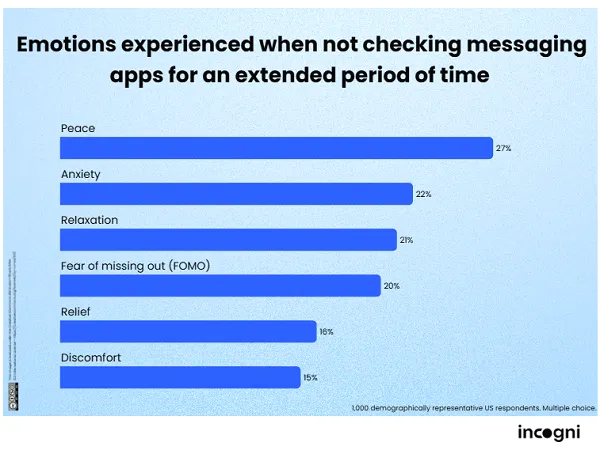
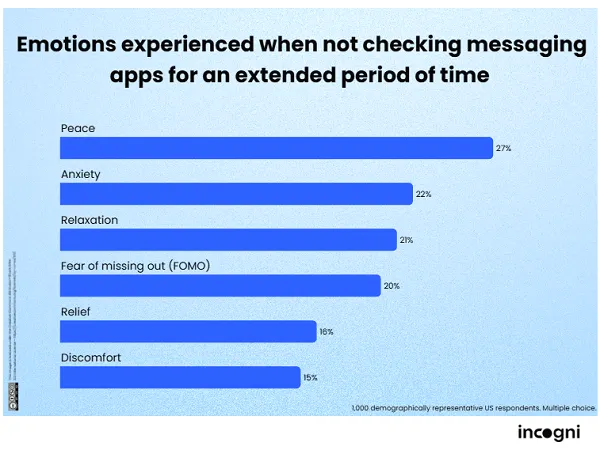
This difficulty in achieving widespread recognition and financial stability contributes to the growing sense of fatigue associated with social media. For many, the perceived effort required to break through the noise and the often-disappointing returns can make stepping away from these platforms feel like a welcome relief, leading to a more relaxed state of mind.
The Algorithm’s Grip and the Rise of Entertainment
Beyond the pressures of content creation, several other factors are reshaping user engagement. The Incogni study points to the increased presence of political content and the divisive nature of algorithmic amplification as key drivers of user disengagement from the social aspects of these platforms. Algorithms are often designed to prioritize content that elicits strong emotional responses, which can inadvertently fuel partisan discourse and create echo chambers. While this can lead to a temporary surge of engagement in the form of likes and comments, often described as a "dopamine-fueled rush," it can also foster an environment of conflict and polarization. This, in turn, can drive users away from platforms that feel increasingly contentious and less conducive to genuine social connection.
However, a nuanced observation from the Incogni report challenges the notion that users are necessarily spending less time on social media overall. Meta, the parent company of Facebook and Instagram, has reported an increase in time spent on its platforms in recent years. This rise is largely attributed to the aggressive integration of short-form video content, such as Reels, into user feeds. This phenomenon further reinforces the overarching shift: social media is increasingly being utilized as a primary source of entertainment, a passive consumption experience akin to traditional media, rather than a space for active social interaction and personal connection.
The Evolving Digital Landscape: A Timeline of Change
The evolution of social media usage can be traced through several key periods:
- Early 2000s (e.g., Friendster, MySpace): Characterized by a focus on personal profiles, friend networks, and early forms of content sharing. The 90-9-1 principle began to emerge as a descriptor of user behavior.
- Mid-2000s to Early 2010s (e.g., Facebook, Twitter): The rise of microblogging and more sophisticated social networking features. Platforms became central to news dissemination and public discourse, though active participation remained concentrated.
- Mid-2010s (e.g., Instagram, Snapchat, YouTube’s Creator Economy Boom): The emergence of visual content, ephemeral messaging, and the burgeoning influencer culture. The idea of monetizing online presence gained significant traction.
- Late 2010s to Present (e.g., TikTok, Reels, Shorts): The dominance of short-form video, algorithm-driven content discovery, and a shift towards entertainment as the primary driver of engagement. Concerns about digital fatigue, burnout, and the impact of algorithms on mental well-being and societal discourse have intensified.
The Incogni study fits squarely within this most recent era, documenting the tangible effects of these algorithmic and content-driven shifts on user behavior and perception.
Implications for Marketers and Users
The insights from the Incogni study hold significant implications for marketers. As social media platforms increasingly prioritize algorithmic distribution and entertainment-focused content, traditional approaches to social media marketing may need to adapt. The diminishing emphasis on direct social posting suggests that strategies relying solely on organic reach through personal updates may become less effective. Instead, marketers may need to focus on creating highly engaging, entertaining, and algorithmically optimized content, particularly short-form video, to capture audience attention. Furthermore, understanding the user’s journey from active participant to passive consumer is crucial for crafting relevant and impactful campaigns.
For users, the findings serve as a reminder of the evolving nature of their digital interactions. The perception of social media as a demanding "work" and the prevalence of algorithmic influence highlight the importance of mindful usage. The study implicitly encourages users to critically assess their time spent on these platforms, the content they consume, and the impact these digital environments have on their mental well-being. As the lines blur between social connection and passive entertainment, users may need to proactively seek out more meaningful forms of digital interaction and be aware of the potential for burnout and information overload.
The future of social media appears to be one where the emphasis has irrevocably shifted. While the platforms may retain their namesakes, their core function is transforming from spaces of reciprocal social exchange to sophisticated entertainment engines. This evolution presents both challenges and opportunities, reshaping not only how we connect but also how we consume information, find entertainment, and perceive our digital selves.