The Ultimate Guide to YouTube Posting Times: Optimizing Your Strategy for Long-Form Videos and Shorts

The landscape of online video creation is a complex ecosystem where success hinges on a confluence of factors. Beyond the inherent quality of the content itself, elements such as compelling titles, eye-catching thumbnails, and strategic posting schedules all play a crucial role in a YouTube video’s ability to capture audience attention and thrive within the platform’s algorithm. For creators striving to maximize their reach and engagement, understanding these nuances is paramount. While many variables contribute to a video’s performance, a recent comprehensive analysis of nearly 2 million YouTube videos has shed significant light on one of the most actionable, yet often overlooked, aspects: the optimal time to publish content.
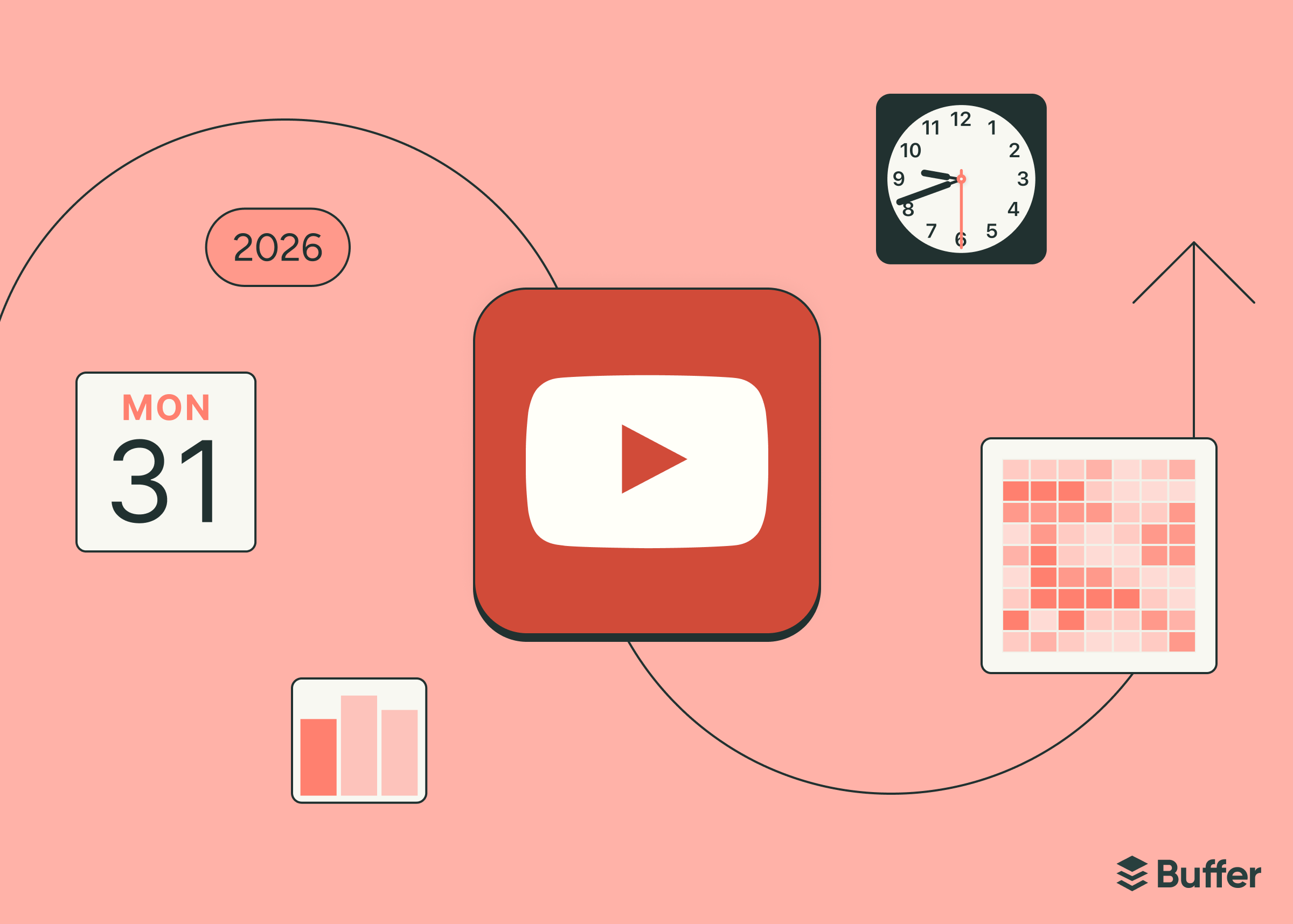
This extensive study, conducted by Buffer, aimed to provide creators with data-driven insights into when to best release both long-form videos and the increasingly popular YouTube Shorts. The findings reveal distinct optimal posting windows for each format, a divergence that reflects the differing ways these content types are consumed and promoted by YouTube’s recommendation engine. While the article emphasizes that timing is not a singular determinant of success, it underscores its potential to provide a critical initial boost. Posting during peak audience activity can lead to early engagement signals – such as clicks, watch time, and likes – which are then interpreted by the algorithm to inform broader content recommendations. For creators, mastering this aspect of their strategy represents an easily implementable step that can significantly enhance their content’s visibility and impact.
Buffer’s In-Depth Analysis: Unpacking the Data
The foundation of Buffer’s recommendations lies in a rigorous analysis of approximately 1.8 million YouTube videos. This dataset, encompassing both traditional long-form content and the rapid-fire format of YouTube Shorts, was meticulously examined to identify patterns in engagement across every hour and day of the week. The goal was to move beyond anecdotal evidence and provide concrete, statistically supported guidance on optimal posting times.
A key revelation from the study is the significant difference in peak performance times between long-form videos and YouTube Shorts. This distinction is attributed to the inherent distribution mechanisms of each format. Long-form videos often rely on a more direct push from their initial publish time, benefiting from immediate audience reception. Conversely, YouTube Shorts are designed for continuous resurfacing by the platform’s recommendation algorithms, meaning their initial publish time has a less pronounced, make-or-break effect. This divergence necessitated a separate analysis for each format to offer more precise and actionable recommendations.
The Sweet Spot for Long-Form Videos: Sunday Morning Dominance
For creators focusing on longer, more in-depth content, the analysis points to a clear winner: Sunday at 10 a.m. emerges as the optimal time to post long-form videos on YouTube. This particular time slot demonstrated the highest median engagement across the entire week, suggesting a strong audience appetite for substantial content at the beginning of the weekend.
Top-Performing Time Slots for Long-Form Videos:
The data reveals a consistent trend of high engagement for long-form videos posted during morning hours, generally between 8 a.m. and 11 a.m. This period appears to capture viewers who are starting their day or easing into their weekend routines. The heatmap visualization provided by Buffer, where darker shades indicate higher engagement and lighter shades represent lower engagement, clearly highlights Sunday mornings as the prime real estate for long-form content.
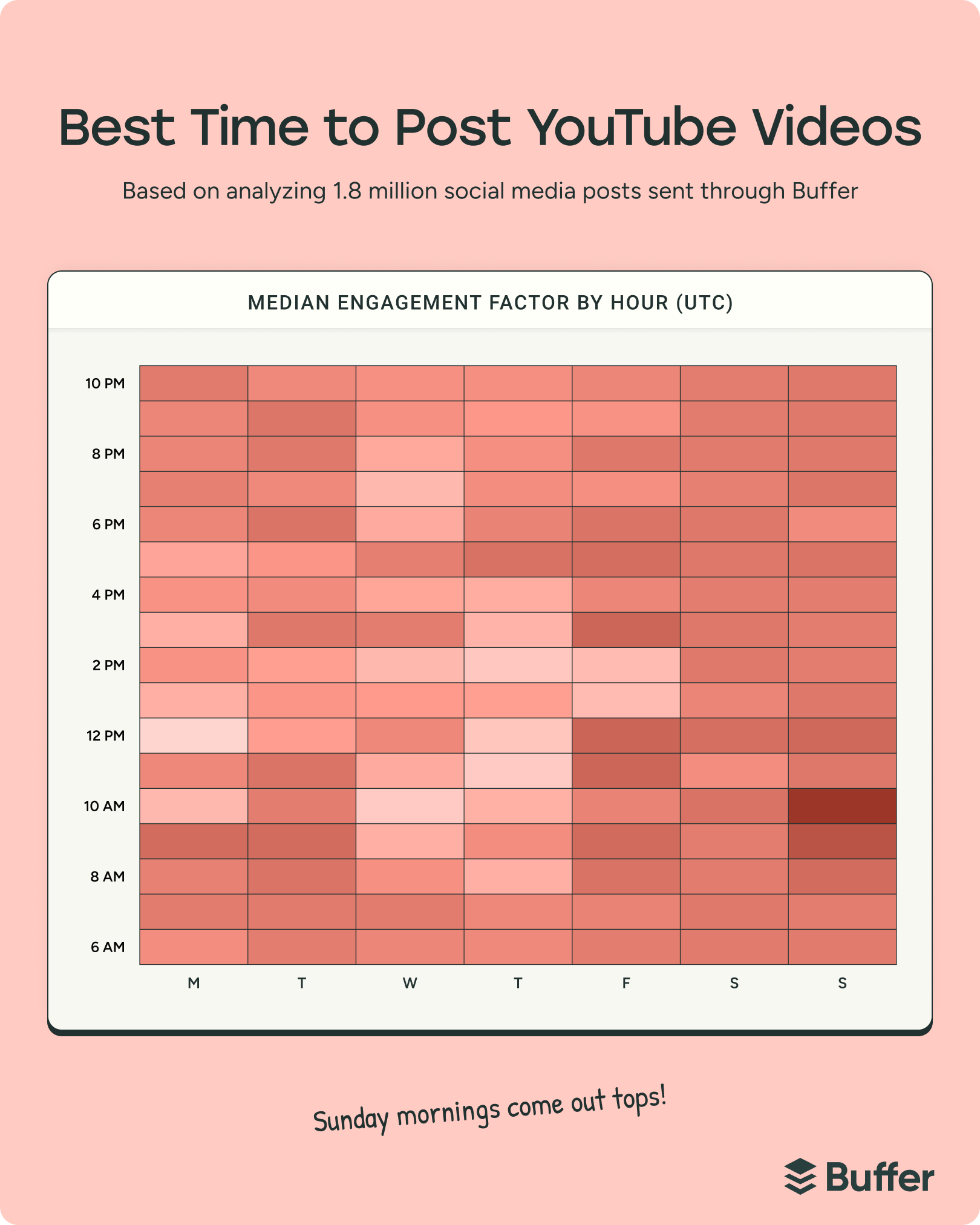
This finding represents a notable shift from previous analyses, which may have indicated a preference for late afternoon weekday slots. The current data suggests a significant swing towards weekend mornings, particularly Sundays, outperforming midweek periods. Conversely, the early to mid-afternoon on weekdays, especially Wednesday and Thursday, show a noticeable dip in engagement, with Thursday at 2 p.m. registering one of the lowest engagement factors.
Day-by-Day Breakdown for Long-Form Videos:
To provide a more granular view, Buffer’s analysis also breaks down optimal posting times by day of the week. It is important to note that the recommended times are universally applicable, adjusted for local time zones to simplify implementation for a global audience.
- Monday: The optimal time is 9 a.m., with secondary peak slots at 10 p.m. and 7 a.m. Monday mornings appear to be a strong period for viewers to engage with new content as they begin their week, with a late-evening window also showing promise.
- Tuesday: The prime time for posting is 9 a.m., followed by 11 a.m. and 8 a.m. Tuesday is identified as one of the strongest days of the week overall, with the 8 a.m. to 11 a.m. window consistently performing well.
- Wednesday: The best time to post is 7 a.m., with 3 p.m. and 5 p.m. also showing reasonable engagement. Wednesday is identified as a relatively weaker day for long-form content engagement, suggesting that creators might need to be more strategic with their posting times on this day.
- Thursday: The optimal posting time is 5 p.m., followed by 6 p.m. and 7 a.m. Thursday is noted as the weakest day for long-form video engagement, with midday and early afternoon slots experiencing significant dips. Evening uploads are recommended for this day, or consideration given to shifting content to Friday.
- Friday: The top slot is 12 p.m., with other strong performers at 11 a.m. and 3 p.m. Friday presents an interesting pattern, with midday outperforming morning. Friday at 12 p.m. is highlighted as a standout time, offering a viable alternative for creators who cannot post on Sunday.
- Saturday: The best time is 12 p.m., followed by 10 a.m. and 3 p.m. Saturday engagement is described as moderate and consistent throughout the day, making it a solid choice for creators whose audience is more active on weekends.
- Sunday: As previously highlighted, Sunday at 10 a.m. is the undisputed champion for long-form videos, scoring the highest engagement factor of the entire week. 9 a.m. and 12 p.m. also perform exceptionally well, solidifying Sunday mornings as the prime time for this content format.
Best and Worst Days for Long-Form Video Performance:
The analysis categorizes days into "strong," "moderate," and "weak" engagement territories.
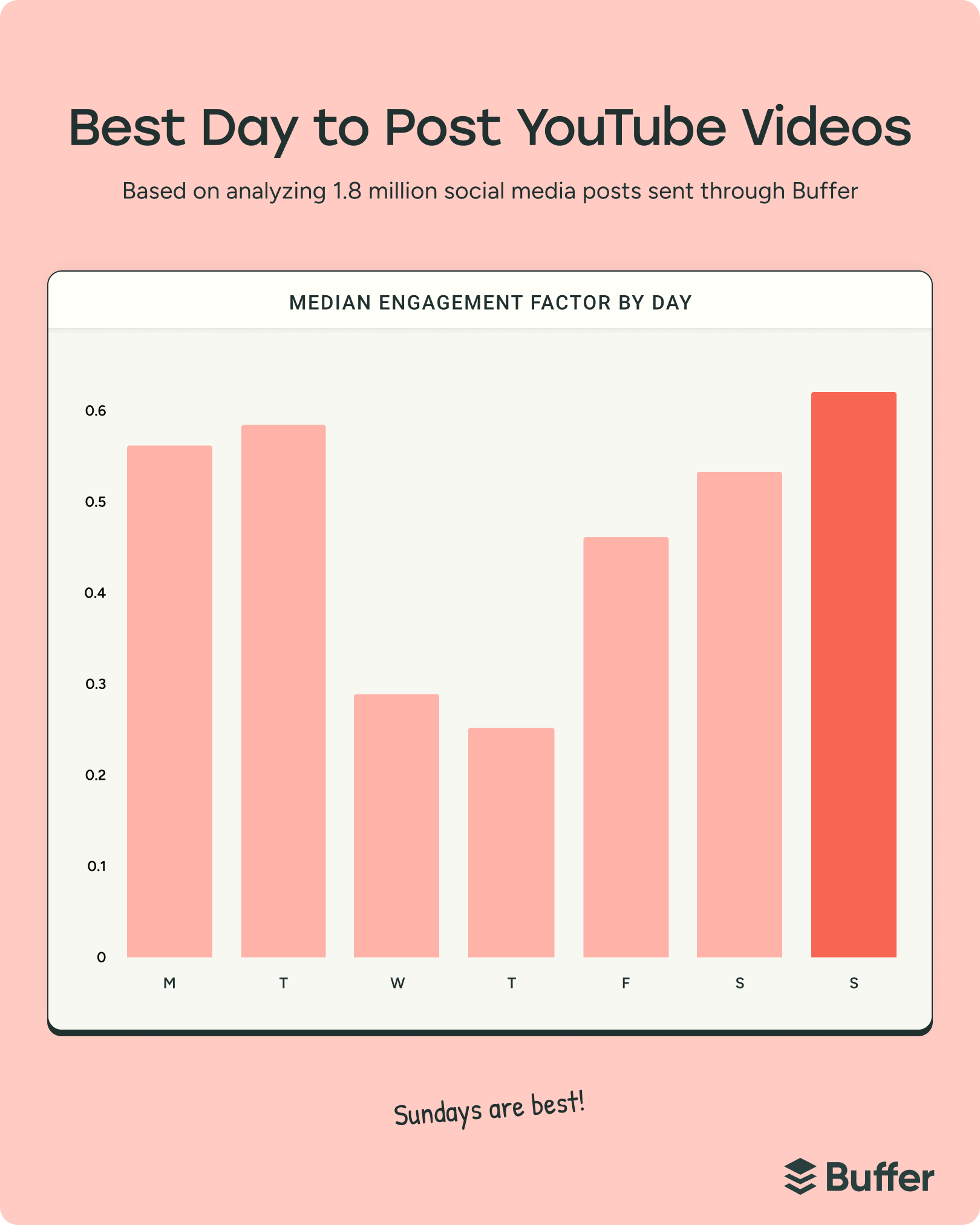
- Strong: Sunday, Tuesday, and Monday.
- Moderate: Saturday and Friday.
- Weak: Wednesday and Thursday.
This ranking signifies a substantial shift from prior data, where weekdays often dominated. The current findings strongly advocate for incorporating Sunday into long-form content schedules, with Tuesday and Monday also presenting robust opportunities. Creators are also advised that long-form videos are particularly sensitive to initial engagement. Therefore, posting an hour or two before the identified peak audience activity window can allow YouTube’s algorithm ample time to index and prepare the video for wider distribution as viewers come online.
YouTube Shorts: An Evening Affair
In stark contrast to long-form content, YouTube Shorts exhibit a fundamentally different engagement pattern, necessitating a separate strategic approach. The analysis reveals that Friday stands out as the premier day for posting YouTube Shorts, with 4 p.m., 6 p.m., and 7 p.m. comprising the top three time slots.
Peak Engagement Times for YouTube Shorts:
While long-form videos thrive in the morning, Shorts engagement consistently peaks in the evenings, generally between 6 p.m. and 11 p.m. This aligns with the common consumption behavior for short-form content, often utilized as a form of unwinding and entertainment at the end of the day. The heatmap for Shorts clearly illustrates these evening peaks.
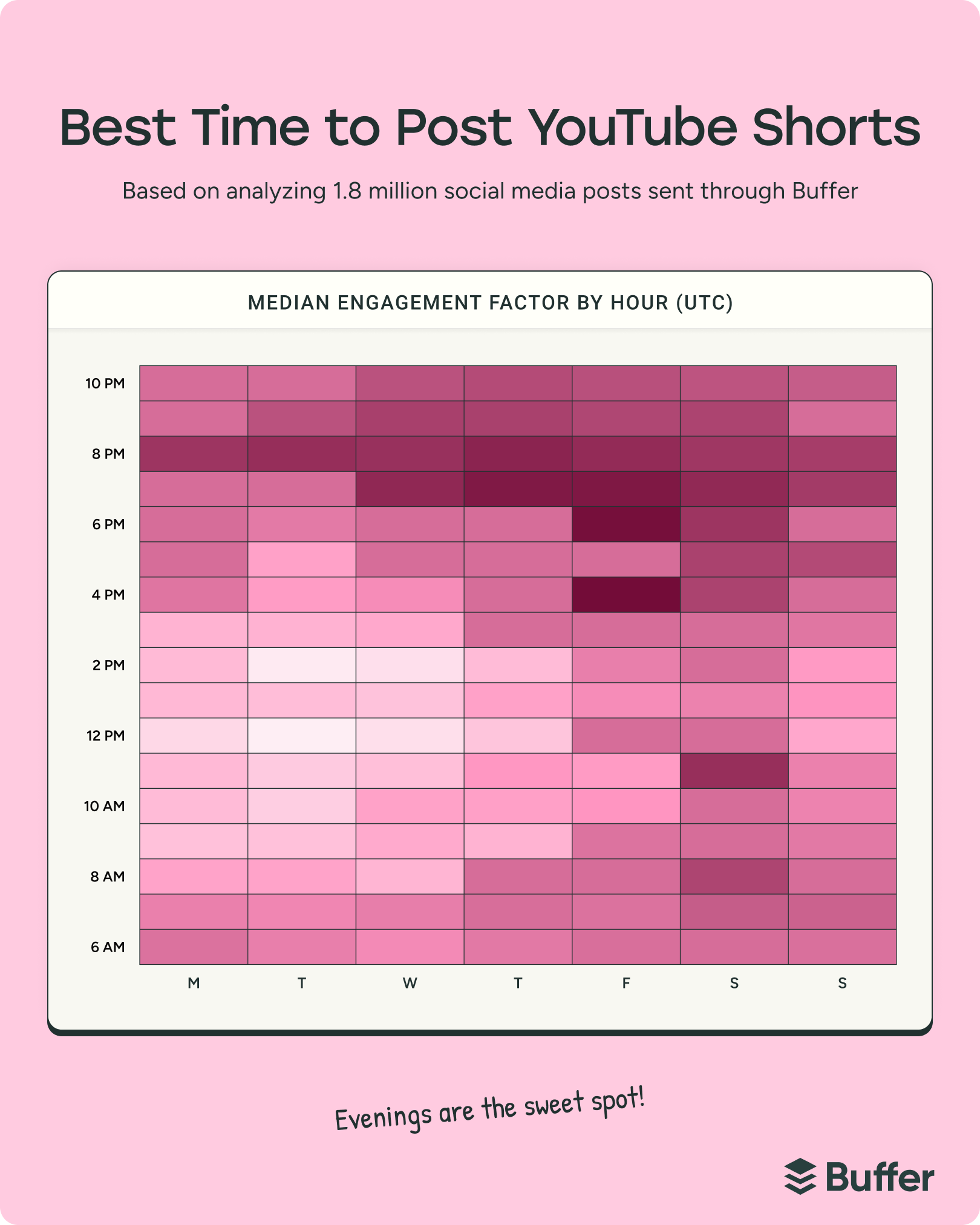
The least opportune times for posting Shorts tend to be in the afternoon, between 12 p.m. and 5 p.m., with Friday being the notable exception where late afternoon actually represents the most effective window.
Day-by-Day Breakdown for YouTube Shorts:
- Friday: 4 p.m., 6 p.m., and 7 p.m. are the leading times.
- Saturday: The top slots are 7 p.m., 8 p.m., and 11 a.m. Saturday is unique in that a morning slot (11 a.m.) breaks into the top three, suggesting a potential for early-day Shorts content on weekends.
- Thursday: The optimal times are 6 p.m., 8 p.m., and 9 p.m.
- Wednesday: 6 p.m., 7 p.m., and 9 p.m.
- Tuesday: 7 p.m., 8 p.m., and 6 p.m.
- Sunday: 7 p.m., 8 p.m., and 6 p.m.
- Monday: 7 p.m., 8 p.m., and 9 p.m.
Best and Worst Days for YouTube Shorts Performance:
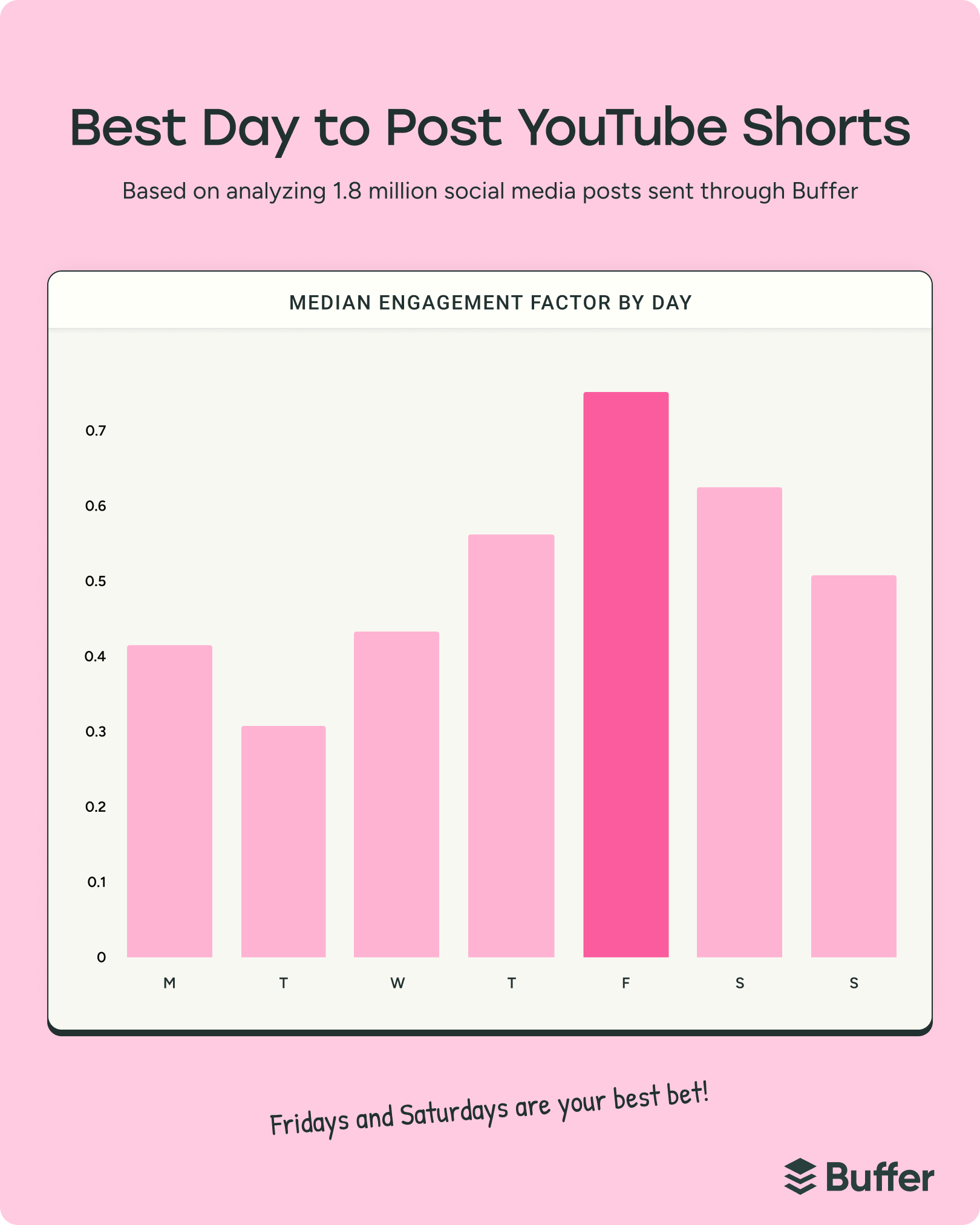
- Best: Friday, followed by Saturday and Thursday.
- Worst: Tuesday and Monday.
This data suggests that creators prioritizing a Shorts-only schedule should focus on the latter half of the week, with Friday as their anchor day.
Long-Form vs. Shorts: A Strategic Dichotomy
The stark differences in optimal posting times between long-form videos and Shorts present a clear strategic advantage for creators who produce both formats. The lack of significant overlap means that creators can schedule their long-form content for morning uploads and their Shorts for evening releases without competing for audience attention or algorithm favor. This distinct scheduling strategy can help maximize the reach and impact of both types of content.
Leveraging YouTube Analytics to Find Your Unique Peak Times
While Buffer’s extensive analysis provides valuable general guidelines, the article strongly emphasizes that the most effective posting time for any given channel is ultimately determined by its specific audience. YouTube’s native analytics tools offer creators the ability to uncover these audience-specific patterns.
Step-by-Step Guide to Finding Your Optimal Posting Time:
-
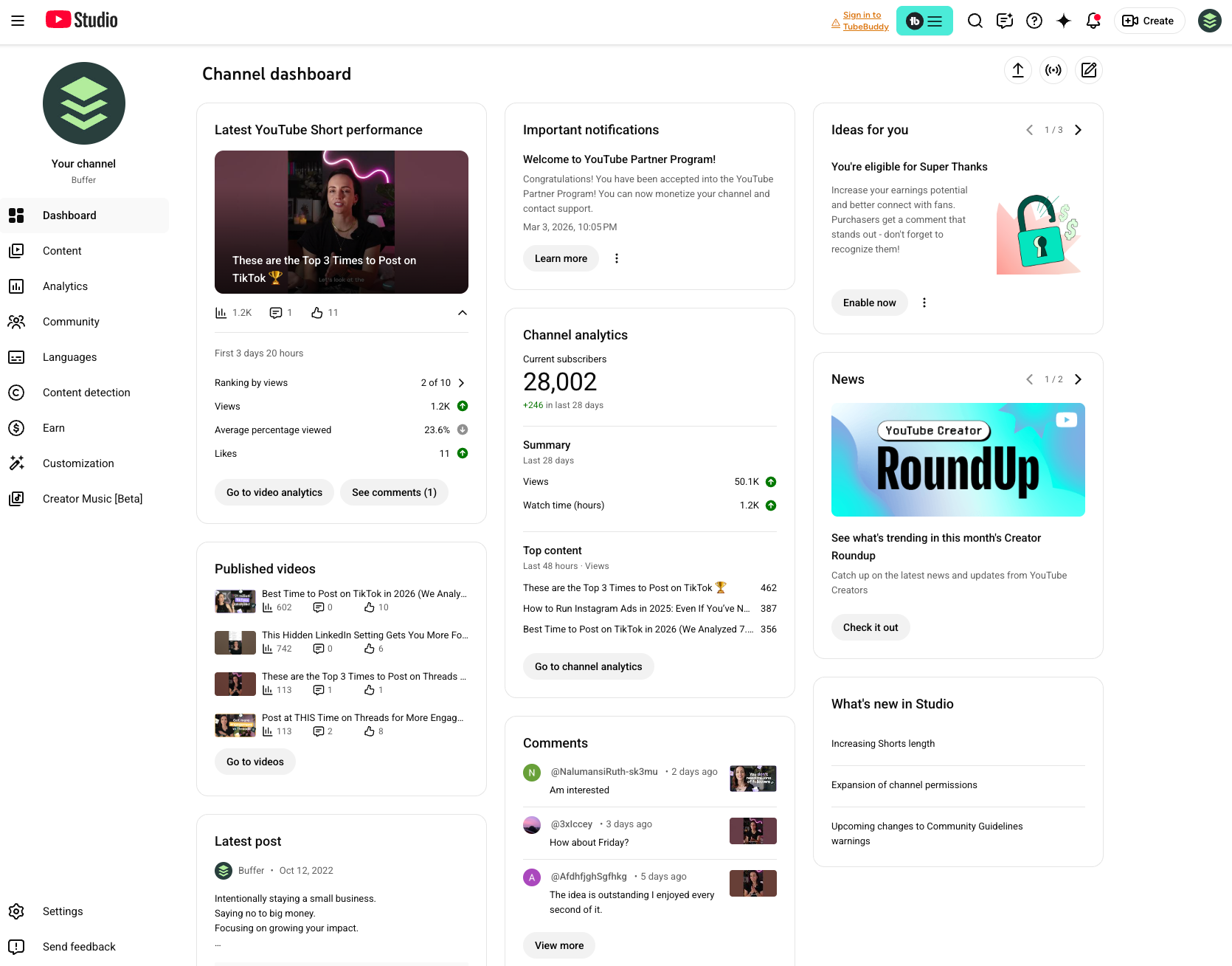
Access YouTube Studio: Creators should navigate to studio.youtube.com to access their channel’s backend. YouTube Studio serves as the central hub for managing uploads, monitoring performance, and understanding audience engagement.
-
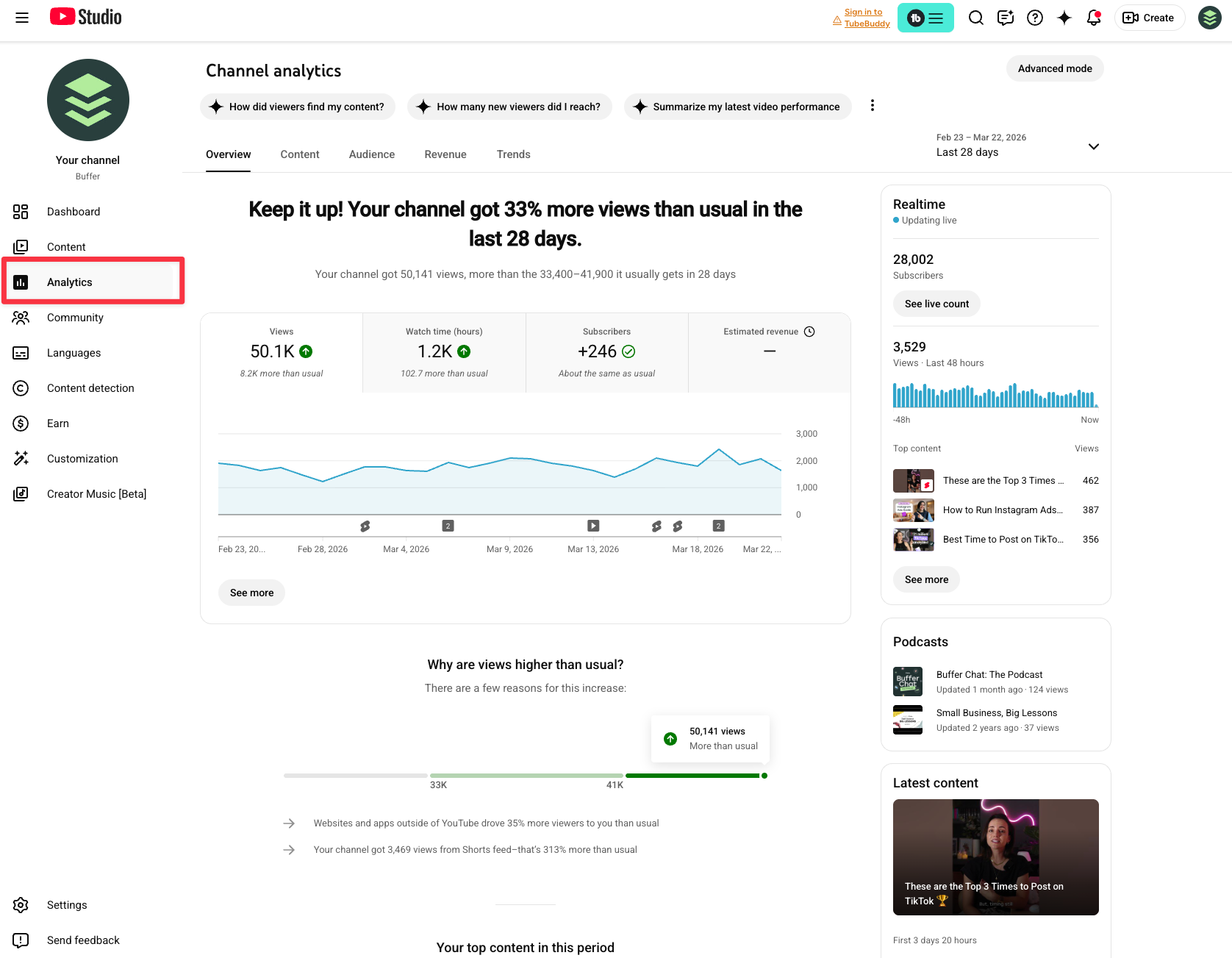
Explore YouTube Analytics: Within YouTube Studio, the "Analytics" tab provides a wealth of data. This section is crucial for understanding overall viewership, watch time, subscriber growth, and engagement metrics. Regular visits to this area are recommended for informed content marketing decisions.
-
Navigate to the "Audience" Tab: The "Audience" tab within Analytics offers profound insights into viewer behavior. It reveals information about which videos are driving audience growth, demographic details, and the types of content your audience consumes on the platform.
-
Focus on "When Your Viewers Are on YouTube": The most pertinent report for determining optimal posting times is the "When your viewers are on YouTube" heatmap. This visual representation, displayed in the viewer’s local time, indicates their most active periods (darkest purple) and least active periods (lightest purple). These active slots are a strong indicator of when to publish content for maximum visibility. It is crucial to check these numbers regularly, as the data refreshes every 28 days and peak times can shift.
Implications for Content Creators and Marketers
The implications of this research are far-reaching for content creators, marketers, and businesses utilizing YouTube as a platform.
- Strategic Content Planning: The distinct optimal times for long-form and Shorts content allow for more sophisticated content planning. Creators can develop distinct content calendars for each format, ensuring that they are strategically releasing content when their audience is most receptive.
- Algorithm Optimization: By publishing during peak engagement windows, creators can provide the YouTube algorithm with the early positive signals it needs to promote their content more widely. This can lead to increased organic reach and discoverability.
- Resource Allocation: Understanding optimal posting times can help creators allocate their resources more effectively. Instead of haphazardly uploading content, they can focus their efforts on creating high-quality videos that are strategically timed for maximum impact.
- Audience Understanding: The process of analyzing YouTube Analytics to find personalized peak times deepens a creator’s understanding of their audience’s behavior. This knowledge can then inform not only posting schedules but also content creation decisions, such as topic selection and format preferences.
- Competitive Advantage: In a crowded digital space, any advantage can be significant. Adopting a data-driven approach to posting times can provide creators with a competitive edge, helping them to stand out and capture a larger share of audience attention.
A Holistic Approach to YouTube Success
While the timing of a YouTube upload can provide a significant boost, it is essential to remember that it is only one piece of a larger puzzle. The quality of the content, the effectiveness of the title and thumbnail, audience retention, and overall viewer engagement are all critical factors that contribute to a video’s long-term success. This comprehensive analysis serves as a powerful tool for optimizing one crucial element, empowering creators to enhance their strategy and maximize their potential on the world’s largest video-sharing platform. By combining these data-driven insights with a commitment to creating valuable and engaging content, YouTubers can significantly improve their chances of achieving their channel’s goals.
Related posts: