GPT-5.6: A Deep Dive into OpenAI’s Latest Model, Its Capabilities, and Effective Deployment Strategies

The artificial intelligence landscape is in constant flux, with major players like OpenAI consistently pushing the boundaries of what large language models (LLMs) can achieve. In a recent development that has captured the attention of developers, researchers, and tech enthusiasts alike, OpenAI unveiled its newest iteration, GPT-5.6. This release follows closely on the heels of its predecessor, GPT-5.5, and introduces a suite of advancements aimed at enhancing performance, flexibility, and user experience. This comprehensive analysis delves into the initial impressions of GPT-5.6, examining its strengths and weaknesses in comparison to other leading models, and providing actionable insights for maximizing its potential.
Understanding the Evolution: From GPT-5.5 to GPT-5.6
The release of GPT-5.6 is particularly significant given the strong performance of GPT-5.5. The previous generation model was widely recognized for its robust capabilities, often matching or even exceeding competitors like Anthropic’s Opus 4.8 across a broad spectrum of tasks. In specific areas, such as code review, GPT-5.5 was considered by many to be demonstrably superior, showcasing a nuanced understanding of programming languages and potential error identification. Consequently, expectations for GPT-5.6 were exceptionally high, with anticipation for a tangible leap in performance and functionality.
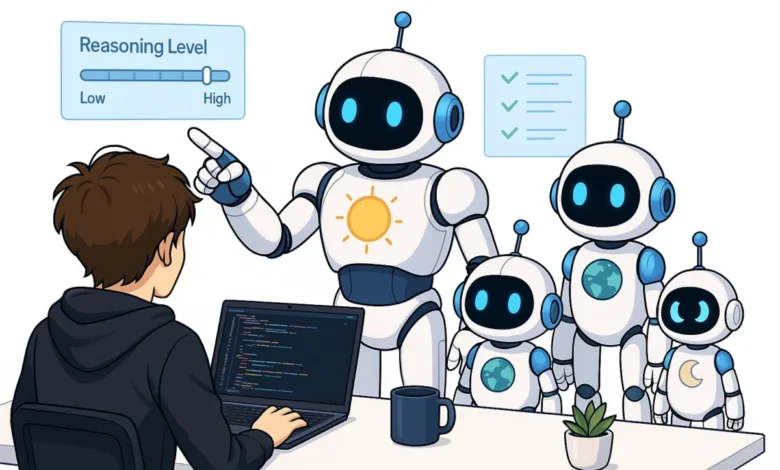
GPT-5.6 has been rolled out with a tiered system, reflecting a strategic approach to cater to diverse user needs and computational resources. The model is available in three distinct sizes, metaphorically termed "Sol," "Terra," and "Luna," representing the frontier, mid-tier, and entry-level versions, respectively. "Sol" is positioned as the most powerful and comprehensive model, while "Luna" offers a more streamlined experience. This scaling allows users to select a model that best fits their requirements, balancing processing power with cost and speed.
Furthermore, OpenAI has implemented adjustable "reasoning levels" for each model variant. This feature allows users to control the depth and duration of the model’s computational process before generating a response. The underlying principle is a direct correlation between reasoning depth and response quality: more extensive reasoning generally leads to more accurate and insightful outputs, albeit at the cost of increased processing time. This granular control is a critical factor in optimizing the user experience and resource utilization.
First Impressions and Performance Benchmarks
Initial testing and user feedback suggest that GPT-5.6 represents a solid, albeit incremental, improvement over its predecessor, GPT-5.5. Across a wide array of applications, the new model demonstrates enhanced capabilities, offering a marginally better performance in virtually every aspect.
Code Review Prowess: In the domain of code review, a task where GPT-5.5 already excelled, GPT-5.6 continues to impress. The model exhibits a heightened ability to identify potential issues within codebases. This improvement is reflected in both precision and recall metrics. Recall, the ability to detect all existing bugs, appears to have been bolstered, while precision, the accuracy of reported bugs, also shows gains. This suggests that GPT-5.6 is more adept at both finding errors and correctly flagging them, reducing the likelihood of false positives or missed critical flaws. This enhanced code analysis capability is a significant advantage for development teams aiming to improve code quality and reduce the incidence of bugs in production.
Implementation and Task Completion: When tasked with actual code implementation, GPT-5.6 demonstrates a greater capacity to work through complex problems and a more thorough approach to task completion. While GPT-5.5 was already proficient, GPT-5.6 offers a subtle but noticeable enhancement in its ability to tackle longer, more intricate coding challenges. This increased thoroughness can translate to more robust and well-structured code.
Comparative Analysis with Competitors: In direct comparison with its primary competitors, such as Anthropic’s Opus 4.8 and Fable 5, GPT-5.6 holds its own. While the performance differences in general implementation and computer use might not be as stark as in code review, GPT-5.6 maintains a competitive edge. The nuanced improvements mean that for many existing use cases, the transition from GPT-5.5 to GPT-5.6 will offer tangible benefits without requiring a complete overhaul of workflows.
The Trade-offs of Advanced Reasoning
A significant aspect of GPT-5.6’s design involves its advanced reasoning capabilities. While enabling deeper analysis and more sophisticated outputs, these higher reasoning levels come with notable drawbacks that users must be aware of.
Resource Consumption: Engaging the "extra high" or "ultra thinking" modes of GPT-5.6 can rapidly deplete usage limits, particularly for users on subscription plans. This rapid consumption can make it challenging to utilize the model extensively for prolonged periods or to run multiple instances concurrently, especially if operating under strict token or computational budgets. OpenAI’s temporary removal of the five-hour usage cap does alleviate some pressure, shifting the constraint to weekly limits. However, even with this adjustment, aggressive use of high reasoning levels can quickly exhaust available resources.
Latency Issues: A direct consequence of intensive reasoning is increased latency. When operating at its highest thinking levels, GPT-5.6 can become noticeably slow, even when processing relatively simple tasks. This sluggishness can hinder productivity, particularly in time-sensitive applications or interactive workflows. The observed speed reduction may be more pronounced than anticipated, requiring users to carefully calibrate their expectations and adjust their usage patterns accordingly.
Strategic Reasoning Level Adjustment: To mitigate these issues, a practical approach has emerged: strategic adjustment of reasoning levels. Many users have found success by employing "extra high" thinking for planning phases of a task and then switching to "medium" reasoning for the actual implementation. This hybrid strategy leverages the model’s analytical power for initial strategy development while maintaining efficiency during execution. This approach acknowledges that different stages of a task may benefit from varying degrees of computational intensity.
Model Size Considerations
The choice between "Sol," "Terra," and "Luna" models also plays a crucial role in performance and cost-effectiveness. The "Sol" model, being the largest and most advanced, is generally preferred for its superior capabilities. However, some benchmarks and user experiences suggest that in certain scenarios, the "Terra" model, when combined with a higher reasoning level, can rival or even surpass the "Sol" model operating at lower reasoning settings. While direct comparative testing may not always reveal dramatic disparities, this nuance highlights the importance of empirical evaluation to determine the optimal model size and reasoning level for specific use cases.

Maximizing GPT-5.6’s Potential: Effective Deployment Strategies
To harness the full power of GPT-5.6, users must adopt intelligent deployment strategies that account for its unique features and potential limitations.
Revolutionizing Code Reviews: One of the most immediate and impactful applications for GPT-5.6 is in automated code review. The model’s enhanced ability to detect bugs and code quality issues makes it a compelling alternative to traditional human code review processes for many scenarios. While critical infrastructure or highly sensitive projects might still warrant human oversight, GPT-5.6 can serve as a powerful first line of defense, significantly reducing the number of bugs that reach production environments. This can free up developer time and accelerate development cycles.
Optimizing Implementation Workflows: For actual code implementation, a refined workflow has proven effective. This typically involves using a capable LLM for initial planning and strategy formulation, followed by leveraging another model for execution. While GPT-5.6 can perform both roles, some users find greater success by employing models like Anthropic’s Fable 5 for initial planning and then switching to a model like Opus 4.8 for the subsequent implementation. This strategy capitalizes on the strengths of different models for specific phases of the development process.
Leveraging Computer and Browser Interaction: GPT-5.6 demonstrates exceptional proficiency in computer and browser interaction. Its ability to navigate web interfaces and execute tasks at speed, especially when using medium reasoning levels, is particularly noteworthy. This makes it an invaluable tool for tasks such as end-to-end code verification, automated testing, and performing actions within a browser environment. This capability can automate repetitive tasks and improve the efficiency of quality assurance processes.
Key Techniques for Effective Utilization
Beyond selecting the right use case, specific techniques are crucial for unlocking GPT-5.6’s full potential.
The Art of Reasoning Level Management: As previously discussed, judicious management of reasoning levels is paramount. The strategy of employing "extra high" reasoning for planning and then transitioning to "medium" reasoning for implementation offers a balanced approach. Code planning often necessitates a broader contextual understanding of an entire project, making higher reasoning beneficial. In contrast, code implementation, being more directive once a plan is established, can often be executed efficiently with moderate reasoning. This adaptive approach ensures that computational resources are used wisely without compromising the quality of the output.
Granting Comprehensive Tool Access: A critical, yet often overlooked, factor in GPT-5.6’s performance is its access to necessary tools and integrations. If a user has previously granted extensive access to other LLMs, such as Claude Code, for tools like Gmail, Google Calendar, Slack, or specific development environments, it is imperative to extend similar access to GPT-5.6. OpenAI provides a comparable array of connectors, and denying GPT-5.6 access to these resources can significantly hamper its performance. Ensuring the model has the necessary permissions to interact with its environment is as important as selecting the right model size or reasoning level.
Understanding Usage Limits and Resets: Navigating usage limits is a key aspect of managing LLM costs and accessibility. OpenAI offers what are termed "banked resets," which are user-triggered resets of usage limits. This feature is distinct from the system-wide resets sometimes employed by competitors like Claude Code. Banked resets can be strategically used to manage periods of high expected usage or to recover from exceeding token limits. However, it is important to note that triggering a banked reset also resets the timeline for subsequent usage limits (e.g., the next hourly or weekly reset), which can subtly alter the long-term usage pattern. Historically, OpenAI has made these banked resets available periodically to subscribers, adding another layer of strategic management to cost optimization.
Broader Implications and Future Outlook
The introduction of GPT-5.6 underscores OpenAI’s commitment to continuous innovation in the LLM space. The model’s refined capabilities in areas like code review suggest a trajectory towards more specialized and powerful AI assistants for developers. The flexibility offered through different model sizes and reasoning levels empowers users to tailor their AI interactions to specific needs and budgets, a crucial step towards broader adoption and integration of AI technologies.
The nuanced improvements over GPT-5.5 indicate that the pace of advancement, while rapid, is also becoming more sophisticated, focusing on incremental gains and refined control mechanisms rather than radical breakthroughs in every release. This iterative approach allows for more stable integration into existing workflows and provides users with greater predictability in performance.
For businesses and individuals alike, the ability to leverage AI for tasks ranging from complex code analysis to everyday digital interactions presents significant opportunities for increased productivity and efficiency. The comparative performance against models like Opus 4.8 suggests a healthy competitive market, driving further innovation and offering users a wider range of choices.
Conclusion
GPT-5.6 stands as a testament to OpenAI’s ongoing efforts to refine and enhance its large language model technology. While it represents an incremental improvement over the already impressive GPT-5.5, its enhanced precision in code review, improved thoroughness in implementation, and flexible deployment options make it a valuable tool for a wide range of applications.
The key to unlocking GPT-5.6’s full potential lies in understanding its nuanced features, particularly the interplay between model size and reasoning levels. By strategically managing these parameters, granting comprehensive tool access, and understanding usage limit mechanics, users can optimize their experience and achieve superior results.
As the AI landscape continues to evolve, staying abreast of the latest model releases and experimenting with them is crucial. The effectiveness of any AI model is ultimately determined by its alignment with specific use cases. GPT-5.6, with its refined capabilities and flexible architecture, offers a compelling option for those seeking to augment their productivity and innovation through advanced AI. The current workflow, which often involves distinct models for planning, execution, and review, continues to be a robust strategy, with GPT-5.6 solidifying its role as a premier code reviewer within this ecosystem. The future of AI is not about a single monolithic solution, but rather a carefully orchestrated symphony of specialized tools, and GPT-5.6 is a significant new instrument in that ensemble.
Related posts: