HubSpot vs Zendesk: A Candid Review of Both Tools for E-commerce Support Teams

In today’s competitive e-commerce landscape, the ability to provide seamless and efficient customer support is no longer a luxury but a fundamental necessity for business survival and growth. As businesses increasingly recognize the critical role of customer service in driving loyalty and revenue, the demand for robust support software has surged. Among the leading contenders in this vital sector are HubSpot and Zendesk, two platforms that, while both aiming to streamline customer interactions, cater to distinct operational needs and strategic priorities. This comprehensive analysis delves into the nuances of each platform, equipping e-commerce businesses with the insights needed to make an informed decision that aligns with their unique challenges and growth objectives.
The digital marketplace is a dynamic environment where customer expectations are constantly evolving. Businesses that fail to keep pace risk alienating their customer base, impacting sales, and ultimately, their market position. The integration of Customer Relationship Management (CRM), marketing, and support functions is no longer a siloed approach but a holistic strategy to foster enduring customer relationships. For e-commerce teams, this means having a unified view of every customer interaction, from initial marketing touchpoints to post-purchase support inquiries. This unified approach empowers support agents with the complete context of a customer’s journey, enabling more personalized and effective resolutions.
HubSpot, initially renowned for its pioneering inbound marketing methodologies, has significantly expanded its capabilities, evolving into a comprehensive business operating system. Its integrated suite, encompassing CRM, Sales Hub, Marketing Hub, and Service Hub, is designed to provide a unified platform where all customer-facing departments can collaborate. The Service Hub, in particular, leverages the power of the HubSpot CRM and its burgeoning AI capabilities to automate tasks, personalize interactions, and gain deeper insights into customer behavior. A compelling case study highlighting this integration’s impact is Liquidity Services, which reported a remarkable 50% reduction in support costs by consolidating its operations onto HubSpot’s interconnected platform. This success underscores the platform’s efficacy in streamlining complex support workflows and delivering tangible cost savings.
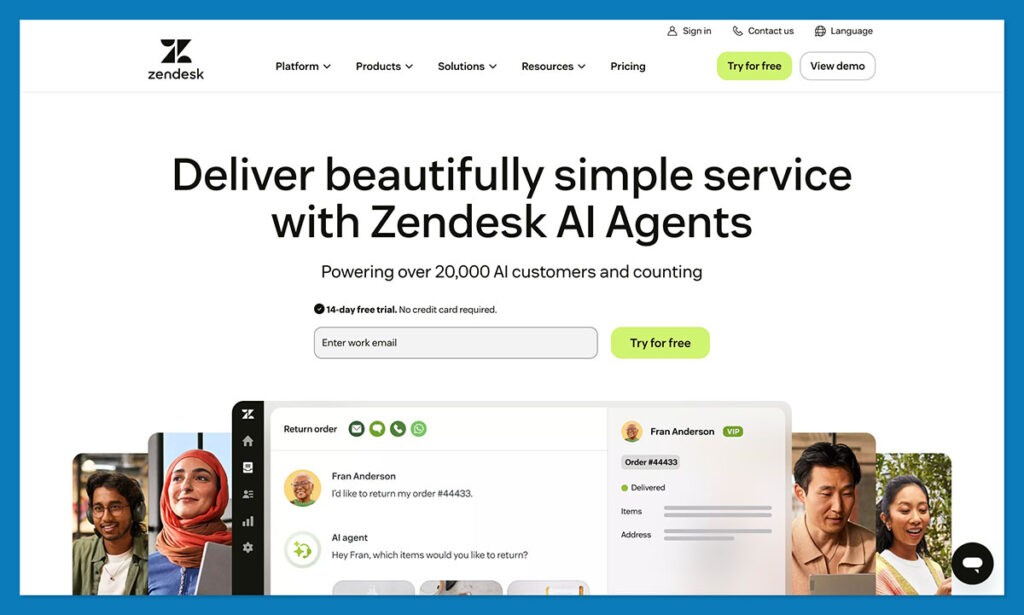
Zendesk, on the other hand, has carved its niche by focusing on high-volume contact centers and pure ticket management. Its origins as a dedicated ticketing system have shaped its core strengths, making it a preferred choice for organizations that deal with a constant influx of customer inquiries across multiple channels. The Zendesk Suite is engineered for efficiency, offering a robust framework for managing email, chat, SMS, social media, and voice support. For businesses where the sheer volume of support tickets is the primary challenge, Zendesk provides the necessary tools and infrastructure to handle this demand effectively, acting as a critical extension of the support team.
The fundamental divergence between HubSpot Service Hub and Zendesk lies in their core philosophy and architectural design. HubSpot’s approach is rooted in the belief that customer service is an integral part of the entire customer lifecycle, seamlessly woven into marketing and sales efforts. This is evident in its CRM-centric design, where every support interaction is contextualized within a broader customer profile, encompassing marketing engagement, purchase history, and sales interactions. Zendesk, conversely, excels in specialized support operations, prioritizing the efficient management of individual tickets and the optimization of contact center workflows. While both platforms aim to enhance customer satisfaction, their strategic emphasis leads to distinct advantages for different types of businesses.
HubSpot Service Hub vs Zendesk: An Overview
HubSpot’s journey began with a mission to democratize inbound marketing, empowering businesses to attract, engage, and delight customers through valuable content and personalized experiences. This customer-centric ethos naturally extended into its service offerings. The HubSpot CRM serves as the central nervous system, feeding data and context to all other hubs, including Service Hub. This deep integration ensures that support agents have immediate access to a comprehensive customer history, enabling them to understand the nuances of each inquiry and provide tailored solutions. The platform’s commitment to empowering customers rather than overwhelming them with generic messaging is a cornerstone of its appeal.
The recent infusion of AI capabilities, notably through its "Breeze AI" initiative, has further amplified HubSpot’s service offering. AI-powered features like automated ticket routing, intelligent reply suggestions, and a customer service agent designed to handle end-to-end inquiries are transforming how businesses engage with their customers. These AI tools are trained on the wealth of data within the HubSpot CRM, allowing them to generate responses and suggestions that are not only relevant but also consistent with the brand’s voice and tone. This level of personalization and brand alignment is a significant differentiator for businesses looking to maintain a cohesive customer experience across all touchpoints.
Zendesk’s reputation is built on its robust and reliable ticketing system, designed to withstand the demands of high-volume service environments. For long-standing support managers, Zendesk represents a trusted ally, providing a stable and predictable platform for managing the complexities of customer inquiries. Its workspace is meticulously designed for speed and efficiency, catering to agents who spend their days navigating through extensive ticket queues. The Zendesk Suite consolidates various communication channels – email, chat, SMS, social media, and phone – into a unified interface, ensuring that no customer request falls through the cracks. The platform’s voice support capabilities are particularly noteworthy, offering a sophisticated set of tools for managing call queues, routing calls, and analyzing voice interactions.
While Zendesk offers a CRM solution through Zendesk Sell, it operates as a more distinct entity compared to HubSpot’s integrated CRM. Historically, Zendesk Sell was acquired as Base CRM, and while functional, it often feels like an add-on rather than an intrinsic part of the support experience. This separation can lead to agents having to toggle between different interfaces to access full customer histories, a process that can become time-consuming and inefficient, especially during peak operational periods. This distinction is crucial for businesses evaluating the level of integration they require for their customer service operations.
How I Tested HubSpot vs Zendesk
Evaluating customer service platforms involves more than just reviewing feature lists; it requires a hands-on approach to understand the user experience and the practical implications of each tool. As a reviewer who frequently engages with a variety of business software, the head-to-head comparison of HubSpot and Zendesk presented an opportunity to explore their distinct strengths and weaknesses in the context of e-commerce support. While both platforms aim to address customer service challenges, their underlying architectures and strategic priorities reveal significant differences.
To ensure a fair and relevant comparison, the testing process focused on several key areas that are paramount for e-commerce businesses:
- Ease of Use and Onboarding: How quickly can new agents become proficient? What is the intuitiveness of the interface?
- AI and Automation Capabilities: How effectively do AI tools assist in managing inquiries, automating tasks, and improving agent productivity?
- Omnichannel Support and Ticket Management: How seamlessly are different communication channels integrated, and how efficiently can tickets be managed and resolved?
- CRM Integration and Data Context: How well does the support platform leverage customer data for personalized and informed interactions?
- Reporting and Analytics: What insights can be derived from the platform regarding support performance, customer satisfaction, and operational efficiency?
- Pricing and Scalability: How does the cost structure align with business needs, and how well does the platform scale with growth?
- Integrations and Ecosystem: How well does the platform connect with other essential e-commerce tools and third-party applications?
By dissecting these critical components, a clearer picture emerges of which platform is best suited for specific e-commerce operational models and growth trajectories.
HubSpot vs Zendesk: Comparison Table
| Feature Category | HubSpot Service Hub | Zendesk Suite |
|---|---|---|
| Core Positioning | Built around HubSpot CRM; integrates inbound marketing and sales tools. Emphasizes end-to-end customer journey. | Designed for high-volume support teams, with ticketing and voice support at its core. |
| AI & Automation | Breeze AI assists with replies, ticket routing, CRM context, and cross-platform workflows. Includes AI agents. | Focuses on service-specific AI: suggested replies, auto-triage, call summaries, QA, Workforce Management (WFM). |
| Ticketing & Channels | Help desk integrated within CRM. Supports email, chat, WhatsApp, Messenger, and forms in a unified view. | Broader channel support, including SMS and in-app messaging. Strong integration with social media channels. |
| CRM Connection | CRM is the foundation; every ticket instantly accesses full customer history. | Zendesk Sell CRM is separate. Agents often switch between support workspace and CRM for full context. |
| Reporting | Service analytics integrated with CRM, sales, and marketing data. Provides holistic customer lifecycle insights. | Dashboards focused on contact center performance, ticket metrics, SLAs, and agent productivity. |
| Integrations | Robust ecosystem. Data Hub enables clean, two-way synchronization with e-commerce and sales systems. | Extensive marketplace. Integrations with Zendesk Sell can require more "glue" work. |
| Voice | Basic calling features with recordings and logs in CRM. Lacks advanced AI voice capabilities. | A leading voice solution with IVR, queue management, call summaries, and advanced analytics. |
| Pricing | Offers a free CRM. Starter tiers are affordable, with costs increasing for advanced enterprise features. | No free option. Entry-level pricing is higher, with core features often requiring higher-tier plans. |
| Best Fit | E-commerce teams prioritizing unified customer history, marketing, and service within a single platform. | Support-centric organizations with high ticket volumes, relying heavily on voice support and detailed QA tools. |
Deep Feature Comparison: HubSpot vs Zendesk
Delving deeper into the functionalities of HubSpot Service Hub and Zendesk reveals the nuanced differences that can significantly impact an e-commerce business’s operational efficiency and customer engagement strategies. The choice between these platforms often hinges on whether the priority is a holistic, CRM-centric approach or a specialized, high-volume support system.
Ease of Use, Onboarding & Support
The initial impression of both HubSpot and Zendesk often points to ease of use, a crucial factor for businesses looking to quickly implement and derive value from new software.
Zendesk presents itself as a ready-to-use workshop, with a logically organized interface where tools are intuitively placed. Its performance remains consistent even under heavy load, ensuring that agents can efficiently manage their queues. The onboarding process for new agents is generally smooth, and the mobile application is surprisingly robust, allowing agents to respond to inquiries, reassign tickets, access customer information, and even handle voice calls on the go. Zendesk’s commitment to providing all core support channels (email, chat, phone) on every paid plan ensures that businesses can immediately leverage comprehensive communication options.
HubSpot offers a different kind of welcoming experience. While its platform might appear more feature-rich and thus potentially busier, it compensates with a streamlined onboarding process. The learning curve is remarkably short, largely due to the consistent logic that underpins the entire HubSpot ecosystem. The "one CRM, one timeline, one record" philosophy ensures that users can navigate and utilize the platform efficiently, regardless of their technical expertise. However, HubSpot’s support access model differs: free users do not receive one-to-one support, and phone support is typically reserved for higher-tier plans. Fortunately, HubSpot Academy provides an extensive library of resources, enabling many teams to find solutions through self-service channels more rapidly than through direct human assistance.
AI & Automation: HubSpot Breeze AI vs Zendesk’s Service AI
The integration of Artificial Intelligence is a defining characteristic of modern customer service platforms, and both HubSpot and Zendesk have made significant strides in this area.
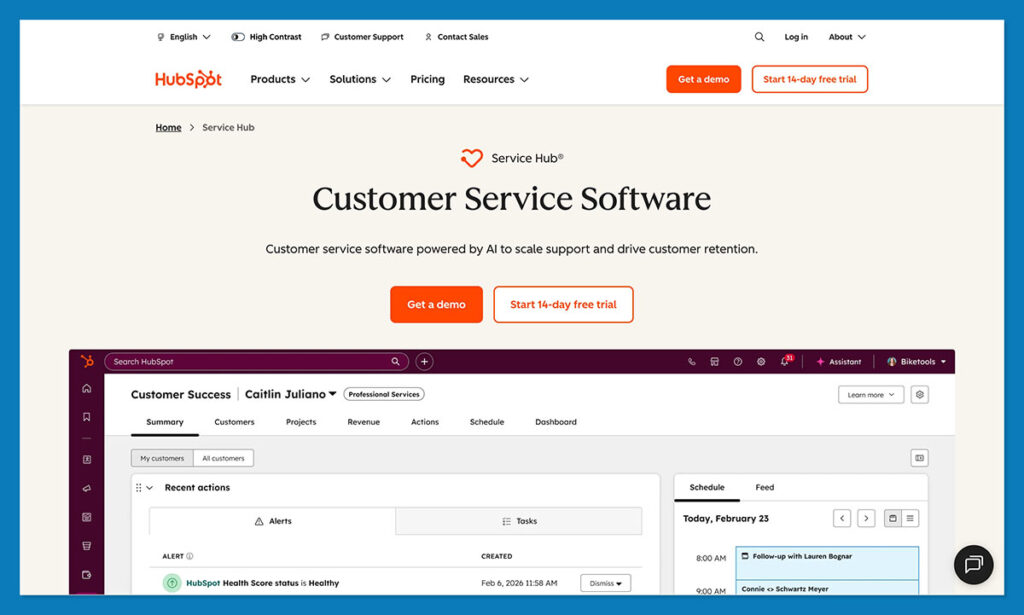
HubSpot’s AI strategy is embodied in Breeze AI, a comprehensive intelligent system designed to work in tandem with users across the entire platform. The Breeze Assistant aids in information retrieval and response generation. More significantly, HubSpot Agents, such as the AI Customer Agent, are capable of automating end-to-end customer service tasks. HubSpot claims that its AI customer agent can resolve up to 65% of customer conversations autonomously for many businesses, a testament to its advanced capabilities.
A particularly impressive aspect of Breeze Intelligence is its ability to unify and cleanse data, simplify forms, and extract insights that would otherwise require considerable manual effort. This intelligence extends to identifying patterns and opportunities that might not be immediately apparent.
Zendesk’s AI offerings are more focused on optimizing classic support operations. This includes features like suggested replies, automated ticket triage, AI-powered call summaries, quality assurance scoring, and workforce management tools that are invaluable for large teams. These capabilities are highly effective for businesses grappling with high ticket volumes. The platform’s AI prowess is especially evident in its voice support features, where call summarization and analysis can significantly enhance agent efficiency and customer interaction quality.
The core distinction lies in their application: Zendesk hyper-focuses on the support queue, leveraging AI to streamline ticket resolution and agent performance. HubSpot, conversely, employs AI to manage the entire customer journey, seamlessly connecting sales, marketing, and customer support functions with intelligent automation.
Omnichannel Support & Ticket Management
The concept of a shared inbox, while seemingly basic, is transformative for customer support operations. HubSpot consolidates email, chat, WhatsApp, Messenger, and form submissions into a single, unified view within the CRM. This means agents can fluidly transition between different types of inquiries, such as a shipping status update and a product size exchange, without losing crucial context. The ability to manage ticket pipelines easily allows teams to categorize and prioritize various issues, such as returns, complaints, VIP customer messages, and general inquiries, ensuring efficient handling of diverse customer needs.
Zendesk boasts an even broader range of supported channels, including SMS, in-app messaging, and an extensive array of social media platforms. For e-commerce businesses that engage with customers across multiple fronts – chat, email, Instagram DMs, phone calls – Zendesk’s workspace can feel more comprehensive. However, a critical consideration is that Zendesk’s workspace does not automatically pull full CRM history unless integrated with Zendesk Sell. This means that while channel coverage may be extensive, the necessary customer context might not always be readily available, requiring additional integration efforts to bridge the gap.
CRM Strength and Product Extras
The fundamental difference between HubSpot and Zendesk becomes exceptionally clear when examining their CRM capabilities and the integration of customer data.
HubSpot’s CRM is the core of its ecosystem. Every interaction, from initial contact to post-purchase support, is logged and accessible within a unified customer timeline. Agents can instantly view a customer’s purchase history, abandoned carts, email engagement, past service interactions, and even notes from sales representatives. This holistic view empowers agents to provide highly personalized and informed support.
Zendesk Sell, while a functional CRM, operates more independently. Its acquisition as Base CRM means it retains a distinct identity and workflow. This separation often necessitates agents switching between the support workspace and the CRM to access complete customer information. This toggling can lead to inefficiencies, particularly during high-demand periods.
Beyond core CRM functionality, the platforms offer distinct "extras":
HubSpot provides complementary features that enhance the overall customer experience and operational efficiency:
- Customer Success Workspace: Tools for proactive customer management and health scoring.
- NPS Tracking: Built-in functionality to measure customer satisfaction.
- Playbooks: Guidance for agents to execute specific service workflows consistently.
- Customer Feedback Surveys: Easy deployment of surveys to gather customer insights.
Zendesk’s extra features are geared towards optimizing support operations:
- Workforce Management (WFM): Tools for scheduling, forecasting, and optimizing agent staffing.
- Quality Assurance (QA) Tools: Features for monitoring and evaluating agent performance against service standards.
- Advanced Reporting Dashboards: Deep dives into contact center metrics, queue times, and SLA adherence.
These distinctions highlight HubSpot’s focus on integrating service into the broader customer lifecycle, while Zendesk emphasizes the granular optimization of support team performance.
Reporting and Analytics
HubSpot’s reporting capabilities are a significant advantage due to their inherent interconnectedness. Support tickets are displayed alongside deals, marketing campaign data, order histories, and subscription information. This allows businesses to analyze the impact of customer service on revenue and retention, moving beyond simple metrics like response times. The customer success workspace, health scoring, NPS tracking, and playbooks provide smaller teams with mature tools that would typically require separate software investments.
Zendesk’s reporting is structured around classic support analytics. Its "Explore" feature offers robust metrics for ticket volume, queue trends, QA scores, and staffing efficiency, which are invaluable for contact center managers. However, Zendesk does not inherently connect the dots between support activities and other aspects of the customer lifecycle without additional integrations, which can lead to a more fragmented view of the overall customer journey.
Pricing & Scalability: HubSpot vs Zendesk
The pricing and scalability of a platform are critical considerations for businesses of all sizes, as they directly impact long-term viability and return on investment.
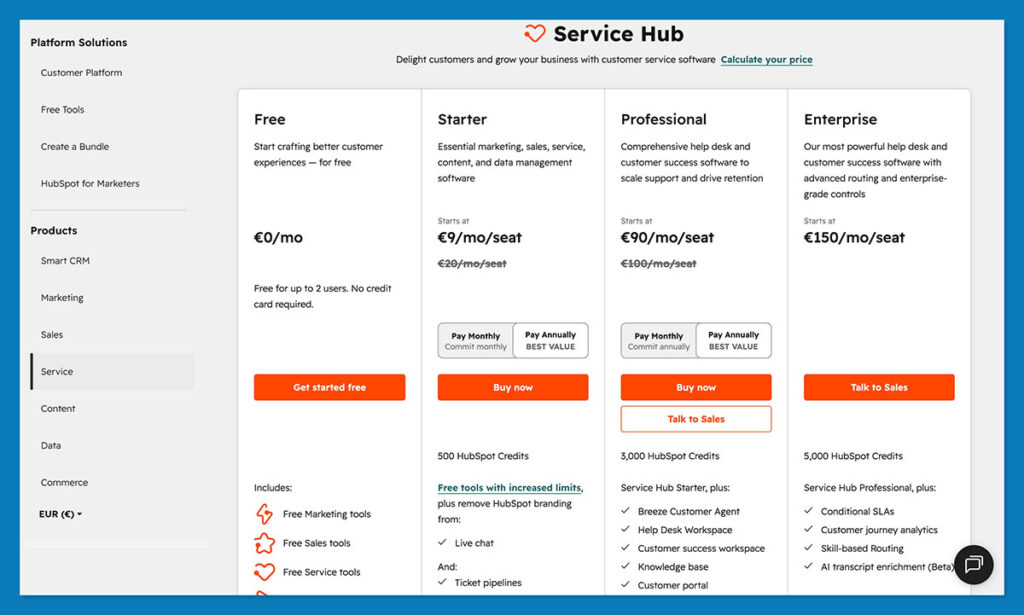
HubSpot offers a compelling entry point with its free CRM, which provides genuine utility, including contact management and basic ticketing for up to two users. Free service-focused tools like a knowledge base, help desk automation, and customer feedback surveys are also available. Paid tiers for Service Hub include:
- Starter: $15 per user per month (billed annually), offering core service tools.
- Professional: $90 per user per month (billed annually), unlocking advanced automation, AI, and reporting.
- Enterprise: Custom pricing, for extensive customization and advanced features.
While there is a noticeable jump between tiers, HubSpot’s integrated approach can lead to significant cost savings by consolidating multiple disparate tools.

Zendesk does not offer a free tier, although a demo is available. Its entry-level pricing is slightly higher:
- Suite Team: $49 per agent per month (billed annually), providing essential omnichannel support.
- Suite Growth: $79 per agent per month (billed annually), adding more automation and customization.
- Suite Professional: $119 per agent per month (billed annually), offering advanced AI and integrations.
- Suite Enterprise: $159 per agent per month (billed annually), for maximum flexibility and support.
While Zendesk’s per-agent pricing might appear lower on the surface, the cost can escalate quickly when factoring in additional needs like Zendesk Sell (its CRM) and necessary third-party integrations, potentially bringing the total cost close to enterprise-level expenditures even for mid-sized businesses.
Scalability: Where Each Platform Holds Up
HubSpot scales exceptionally well for businesses focused on building a unified customer record. Adding users, workflows, and data is straightforward, as the CRM was designed for flexibility and growth. The primary scaling challenge for HubSpot arises with costs at higher tiers, particularly when businesses adopt multiple HubSpot hubs across sales, marketing, and service.
Zendesk excels in scaling to handle increasing ticket volumes. Its architecture is robust and reliable, capable of managing thousands of inquiries without performance degradation. However, as businesses grow beyond pure support functions, the need for integrated marketing and sales tools can expose the limitations of Zendesk’s "service-first" approach. While scaling the support team is seamless, managing other business functions may require relying on disconnected tools, potentially creating operational silos.
Integrations & App Ecosystems
Effective e-commerce support necessitates seamless integration with other essential business tools. HubSpot’s ecosystem has evolved significantly to meet this demand. The HubSpot App Marketplace, coupled with its Data Hub synchronization engine, offers numerous connectors for popular e-commerce platforms like Shopify, WooCommerce, and BigCommerce. A key differentiator is the seamless, two-way data synchronization, ensuring that updates made in one system are reflected in others. For example, a customer updating their email in Shopify will be automatically updated in HubSpot. Crucially, because Service Hub resides within the HubSpot CRM, any integration automatically benefits sales, marketing, and service teams concurrently.
Zendesk also boasts a large app marketplace, allowing for extensive customization. However, the quality and depth of integrations can vary. While many apps integrate well with the support workspace, fewer seamlessly connect with Zendesk Sell. Given that Sell operates as a separate entity from Zendesk Suite, these integrations can feel fragmented. Many businesses operating on Zendesk often rely on a combination of Zendesk Suite, a separate CRM, a distinct marketing stack, and custom scripts, creating a complex and potentially fragile ecosystem, especially during peak sales periods. While connectors exist, some rely on relay services like Zapier, which can introduce latency and occasional bugs during high order volumes.
HubSpot vs Zendesk: The Verdict
The choice between HubSpot Service Hub and Zendesk ultimately hinges on an e-commerce business’s strategic priorities and operational structure. While both platforms are formidable in their respective domains, HubSpot consistently demonstrates an edge in areas that are crucial for holistic customer relationship management and long-term growth. Its ability to keep all facets of a customer-centric business interconnected provides a level of integration and context that other platforms struggle to match.
Zendesk remains an exceptional tool for traditional support functions. If a business’s primary challenge is managing a relentless stream of support tickets and optimizing contact center operations, Zendesk’s sturdy and efficient platform is unparalleled. Its deep expertise in ticket management and voice support makes it a formidable choice for high-volume environments.
However, for e-commerce businesses that aim to foster deeper customer loyalty, drive repeat purchases, and leverage customer data across sales, marketing, and service, HubSpot emerges as the more natural, manageable, and ultimately more effective solution for saving time and resources. Its integrated approach ensures that every customer interaction contributes to a unified understanding of the customer, paving the way for more strategic and personalized engagement.
For e-commerce teams considering HubSpot, the most practical step is to create a free HubSpot CRM account and introduce real customer records and support tickets into the system. This hands-on experience will quickly reveal whether the platform’s integrated approach aligns with their operational needs and strategic vision.
FAQ
How does HubSpot compare to Zendesk?
HubSpot integrates support with the entire customer journey, while Zendesk focuses on optimizing ticket flow. For businesses prioritizing context and a unified view of customer interactions, HubSpot offers a more comprehensive solution. For organizations heavily reliant on high-volume ticket management, SLAs, and extensive phone support, Zendesk often provides a more streamlined and specialized experience.
When should you use HubSpot for e-commerce?
HubSpot is ideal for e-commerce stores that depend on repeat customers and require clear visibility across all customer touchpoints. When support, marketing, and sales teams share a single CRM, agents can better understand the root cause of tickets, leading to improved retention and increased Customer Lifetime Value (CLV).
Is HubSpot affordable for small businesses?
Yes, HubSpot is designed to be accessible for small businesses. The free CRM tier provides essential tools for contact management and basic ticketing for up to two users. Service Hub Starter plans begin at an affordable rate of $15 per seat per month, offering core service functionalities. Costs increase with Professional and Enterprise tiers, which unlock more advanced features and automation capabilities.