A Synthesis of Visual Methodology and Statistical Rigor
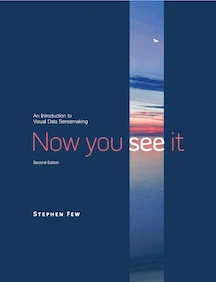
The second edition of Now You See It is characterized by a major structural overhaul. Rather than a standard revision, the new volume represents a synthesis of the original 2009 edition and Few’s 2015 follow-up, Signal: Understanding What Matters in a World of Noise. This integration is designed to provide a more cohesive learning path for readers. While the first edition focused on the foundational aspects of visual analysis, Signal introduced more sophisticated techniques, most notably Statistical Process Control (SPC). By combining these two works, Few has created a comprehensive manual that guides the reader from basic visual perception to advanced pattern recognition within a single volume.
One of the primary challenges in the field of data analysis is the "noise" generated by the sheer volume of information available in the digital age. Few’s work emphasizes that more data does not inherently lead to better insights. The inclusion of SPC techniques allows analysts to differentiate between "random variation" (noise) and "assignable variation" (signal). This distinction is vital for organizational decision-making, as reacting to random fluctuations in data can lead to costly errors and inefficient resource allocation.
The Evolution of Visual Data Sensemaking
To understand the impact of this publication, it is necessary to examine the timeline of Stephen Few’s contributions to the field. Few, through his consultancy Perceptual Edge, has spent decades advocating for a "human-centric" approach to data.
- 2004: Few published Show Me the Numbers: Designing Tables and Graphs to Enlighten, which focused on the effective communication of data through well-designed tables and charts.
- 2006: Information Dashboard Design was released, addressing the specific challenges of monitoring real-time data on a single screen.
- 2009: The first edition of Now You See It was published. It shifted the focus from communication to "sensemaking"—the internal process an analyst undergoes to discover what the data means.
- 2015: Signal was published as a companion to Now You See It, introducing more rigorous statistical concepts to the visual analysis framework.
- 2021: The second edition of Now You See It merges these concepts into a streamlined, efficient curriculum.
The decision to consolidate these works into a single book of approximately the same physical dimensions as the original reflects a commitment to editorial efficiency. Few has noted that the refinement process involved distilling the most essential elements of both books to ensure the learning process is fluid and comprehensive without becoming overwhelming for the reader.
Addressing the Global Data Literacy Gap
The release of this updated edition comes at a time when organizations across the globe are grappling with a "data literacy gap." According to various industry reports from firms like Gartner and Qlik, while companies are investing billions in sophisticated business intelligence (BI) tools, the majority of their workforces lack the fundamental skills to interpret the resulting visualizations.
Supporting data suggests that nearly 75% of employees feel overwhelmed or unhappy when working with data, and only 21% of the global workforce reports feeling confident in their data literacy skills. Stephen Few’s work directly addresses this disparity. He posits that even the most advanced software is of little use if the human operator does not understand the principles of visual perception and the logic of quantitative analysis.
Unlike many contemporary texts that focus on specific software packages like Tableau, Power BI, or Python libraries, Now You See It remains tool-agnostic. It focuses on the cognitive processes of the analyst. Few argues that because the human visual system is the most powerful pattern-recognition tool available, the key to sensemaking lies in leveraging how our brains naturally process shapes, colors, and spatial relationships.
The Mechanics of Visual Sensemaking
The core of the book is built around the concept that most quantitative questions can be answered using relatively simple visual techniques. While "Big Data" often implies the need for complex machine learning algorithms, the reality of day-to-day business operations often requires a clear understanding of trends, distributions, and correlations—tasks for which the human eye is exceptionally well-suited.
The second edition elaborates on several key visual techniques:
- Time-Series Analysis: Examining how data changes over time to identify trends, cycles, and seasonal variations.
- Distribution Analysis: Using histograms and box plots to understand the spread and concentration of data points.
- Correlation Analysis: Utilizing scatter plots to determine the relationship between different variables.
- Deviation Analysis: Comparing actual performance against targets or historical benchmarks.
By mastering these "basic" skills, analysts can perform a level of exploratory data analysis (EDA) that often uncovers insights that automated systems might overlook. Few’s emphasis is on the interactivity of the process—using graphs as a medium for thinking rather than just a way to report findings.
Implications for Corporate and Academic Environments
The consolidation of Now You See It and Signal has significant implications for both professional training and academic curricula. In the corporate world, the book provides a standardized framework for internal data teams. By moving away from "flashy" or "infographic-style" visualizations that prioritize aesthetics over clarity, organizations can foster a culture of evidence-based decision-making.
In academic settings, the book serves as a foundational text for courses in business analytics, data science, and information design. The inclusion of Statistical Process Control is particularly relevant for operations management and quality control programs. SPC, originally developed for manufacturing by pioneers like Walter Shewhart and W. Edwards Deming, is presented by Few as a tool that is equally applicable to sales data, financial metrics, and website analytics.
Industry experts and educators have long pointed to Few’s work as a necessary corrective to the "chartjunk" often found in modern business presentations. The second edition’s focus on "sensemaking" reinforces the idea that the analyst’s primary responsibility is to find the truth within the data, not merely to decorate it.
The Role of Statistical Process Control (SPC)
The integration of SPC into the second edition is perhaps its most significant technical update. SPC is a method of quality control which employs statistical methods to monitor and control a process. In the context of visual data sensemaking, Few uses SPC to help analysts identify when a change in a metric is a "signal" that requires action or simply "noise" that should be ignored.
This is achieved through the use of control charts, which plot data over time with calculated upper and lower control limits. When a data point falls outside these limits, or when specific patterns (runs) appear, it indicates that the process has changed. For a modern business analyst, this means being able to tell a manager with confidence whether a dip in last month’s sales was a fluke or the beginning of a downward trend. By bringing these techniques into the mainstream of visual analytics, Few provides a bridge between the often-disparate worlds of statistics and design.
Conclusion: A Foundation for the Future of Analytics
As the world moves toward an era of increasingly automated insights and artificial intelligence, the human element of data analysis remains the final arbiter of value. Now You See It: An Introduction to Visual Data Sensemaking asserts that the ability to see and understand patterns is a uniquely human skill that must be nurtured through deliberate practice and education.
The release of this second edition provides a streamlined, comprehensive resource for a new generation of analysts. By refining his previous works into a single, cohesive volume, Stephen Few has ensured that the principles of clear, honest, and effective data sensemaking remain accessible to a broad audience. The book stands as a testament to the idea that in a world drowning in data, the most valuable asset is the ability to see the signal through the noise.
With its publication on April 15, 2021, the second edition of Now You See It continues to serve as a vital guide for anyone tasked with turning raw numbers into meaningful knowledge. It reinforces the philosophy that while tools will change and data volumes will grow, the fundamental principles of human perception and logical inquiry remain the bedrock of true understanding.
Related posts: