Four ways Google Analytics delivers actionable insights for your business


The digital marketing landscape is facing a pivotal transformation as Google prepares to officially decommission Universal Analytics on July 1, 2024, marking the end of an era for the platform’s legacy measurement framework. In anticipation of this transition, Google has unveiled a suite of advanced features for Google Analytics 4 (GA4) designed to navigate an increasingly complex environment defined by stringent privacy regulations and the deprecation of third-party cookies. Steve Ganem, Director of Product Management for Google Analytics, recently detailed how the platform is evolving to provide deeper, AI-driven insights while maintaining a commitment to user privacy. The shift represents more than a simple software update; it is a fundamental reconfiguration of how businesses track, analyze, and optimize the consumer journey across multiple touchpoints and devices.
The Final Transition from Universal Analytics to Google Analytics 4
The most immediate priority for global enterprises and small businesses alike is the impending July 1, 2024, deadline. From this date, Universal Analytics properties will cease to process data, and users will lose access to both current and historical information within the standard and 360 properties. Google has issued a final call for marketers to complete their transition to GA4 and to manually export their historical Universal Analytics data to prevent permanent loss.
This transition is necessitated by the shifting technical requirements of modern measurement. Universal Analytics, originally built for a web-centric world of independent sessions and cookie-based tracking, has struggled to keep pace with a cross-platform reality where users jump between mobile apps, desktop browsers, and offline interactions. GA4, by contrast, utilizes an event-based data model that offers a more unified view of the customer lifecycle. This structural shift allows for more flexible data collection and forms the foundation for the machine learning capabilities that Google is now prioritizing.
Artificial Intelligence and Generative Insights
One of the most significant enhancements to GA4 is the integration of generative AI to simplify complex data analysis. In the coming months, Google will introduce "generated insights," which utilize natural language processing to provide summaries of data fluctuations. Rather than requiring analysts to manually correlate dozens of metrics and dimensions to understand why a specific spike in "Purchase" events occurred, the AI engine proactively identifies the underlying causes.
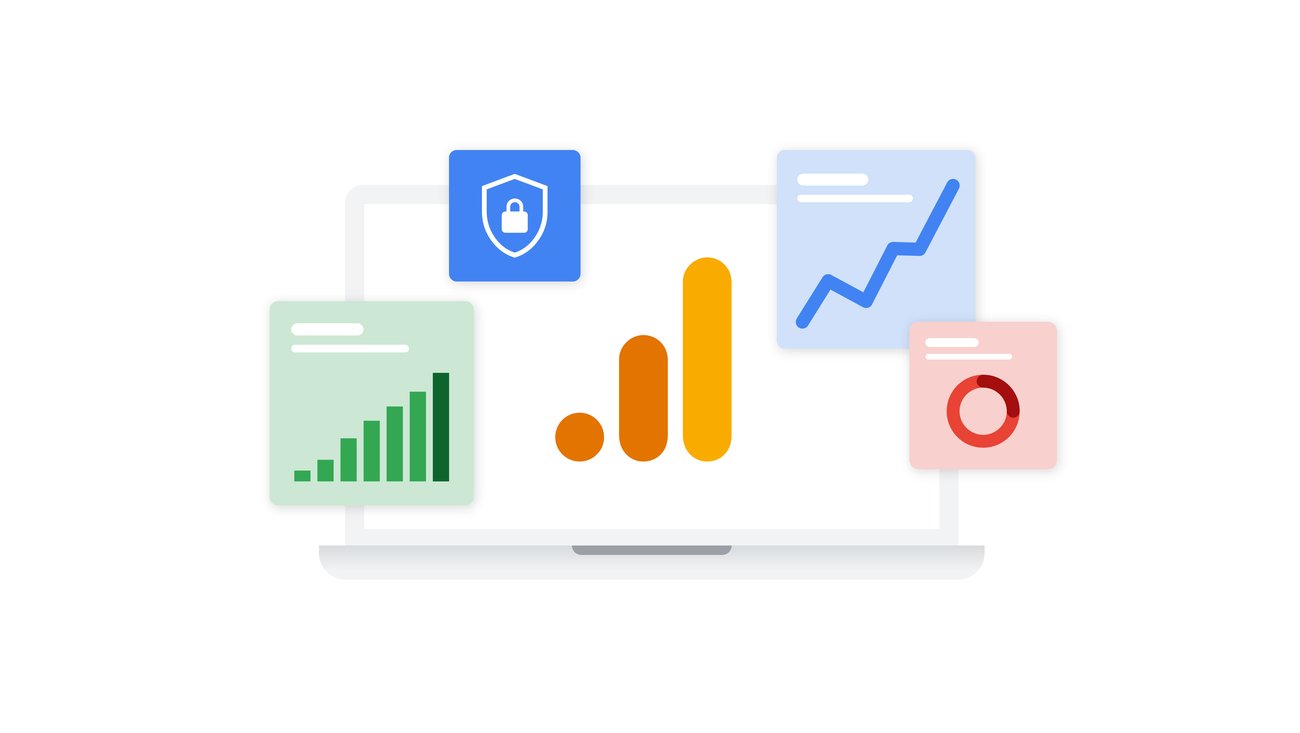
These insights are designed to mimic the communication style of a human colleague, offering plain-language explanations for performance trends. For example, if a sudden increase in organic traffic coincides with a specific product launch or a viral social media mention, the system will highlight these connections automatically. This move toward "democratized data" aims to reduce the technical barrier to entry for business owners who may not have specialized data science training but need to make rapid, informed decisions based on real-time performance.
Furthermore, GA4’s AI capabilities extend to behavioral and conversion modeling. In instances where data gaps exist—such as when users opt out of tracking or when cookies are unavailable—Google’s AI fills these "unknowns" by predicting future consumer behaviors based on historical patterns. This ensures that marketers maintain a comprehensive view of their campaign performance without compromising individual user privacy.
Cross-Channel Measurement and Full-Funnel Visibility
As the consumer path to purchase becomes increasingly fragmented, GA4 is expanding its ability to measure performance across diverse channels. A significant update arriving later this year is the integration of aggregated impressions from linked Campaign Manager 360 accounts directly into the GA4 advertising workspace. This allows marketers to see how upper-funnel activities, such as display and video impressions, contribute to lower-funnel conversions.
In a move to provide a more holistic view of non-Google advertising spend, Google is also improving its cost data import functionality. Marketers will soon be able to connect their advertising accounts from Pinterest, Reddit, and Snapchat directly to their GA4 properties. Once linked, data from these platforms—including ad cost, clicks, and impressions—will be automatically mapped to Analytics traffic source dimensions.
This integration addresses a long-standing pain point for marketers who previously had to manually upload CSV files or use third-party middleware to compare Google Ads performance against social media spend. By centralizing this data, GA4 enables a more accurate calculation of Return on Ad Spend (ROAS) across a multi-channel portfolio, providing a clearer picture of which platforms are driving the highest value.

Strategic Planning and Budgeting Tools
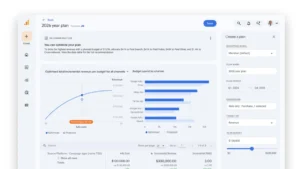
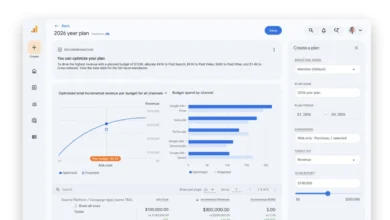
Moving beyond retrospective reporting, GA4 is introducing tools aimed at proactive media management. A new "cross-channel budgeting" feature is currently entering beta testing, designed to help marketers optimize in-flight media spend. This tool includes a projections report that allows businesses to track their media pacing and projected performance against specific target objectives, such as total revenue or lead volume.
The introduction of budgeting tools within an analytics platform represents a strategic shift toward performance management. By using predictive analytics to forecast where a campaign will end the month based on current spending trends, GA4 allows marketers to reallocate budgets in real-time to the highest-performing channels. This reduces the risk of overspending on underperforming assets and provides a data-backed rationale for budget adjustments during high-stakes sales periods.
Privacy-First Durability and the Post-Cookie Era
The evolution of GA4 is inextricably linked to the changing global regulatory environment, including GDPR in Europe and CCPA in the United States. To ensure long-term durability, Google is rolling out support for Chrome Privacy Sandbox APIs. These APIs are intended to facilitate audience reaching and conversion measurement without the use of third-party cookies, which are being phased out to enhance user privacy.
A key component of this durable strategy is "Enhanced Conversions" in GA4. This feature allows businesses to use hashed, consented first-party data (such as email addresses provided during a purchase) to improve the accuracy of conversion attribution. When a user converts, this hashed data is matched against Google’s logged-in data in a privacy-safe environment, allowing the system to attribute the conversion to the correct ad interaction even if the user has switched devices or cleared their cookies.
Simplifying the technical implementation of these privacy features is "Consent Mode." This framework allows GA4 to adjust its data collection behavior based on the consent status of the user. If a user denies consent for cookies, GA4 uses non-identifying signals and AI-powered behavioral modeling to estimate the activity of those users, ensuring that the total conversion count remains as accurate as possible while respecting individual privacy choices.

Timeline of the Google Analytics Evolution
The transition to the current state of GA4 has been a multi-year journey:
- July 2019: Google introduces "App + Web" properties in beta, the precursor to GA4.
- October 2020: Google Analytics 4 is officially launched as the new default for all new properties.
- March 2022: Google announces the sunset dates for Universal Analytics, sparking a global migration effort.
- July 2023: Standard Universal Analytics properties stop processing new hits.
- Early 2024: Introduction of Enhanced Conversions and deeper integrations with non-Google social platforms.
- July 1, 2024: The final shutdown of all Universal Analytics properties, including UA 360.
Industry Implications and Analysis
The industry reaction to these updates has been a mix of urgency and cautious optimism. Analysts suggest that the forced migration to GA4 has acted as a catalyst for many organizations to audit their data privacy practices. By moving away from the "collect everything" mentality of the past decade toward a more intentional, consented data model, businesses are better positioned to weather future regulatory changes.
However, the shift also highlights the growing dominance of AI in the marketing stack. As Google’s AI becomes the primary interpreter of data fluctuations, the role of the human analyst is shifting from data processing to strategic oversight. The ability of GA4 to "connect the dots" between a Reddit ad impression and a direct-to-site purchase provides a level of granularity that was previously difficult to achieve, but it also places a premium on the quality of the first-party data being fed into the system.
Ultimately, Google Analytics 4 is being positioned not just as a tracking tool, but as a comprehensive business intelligence platform. By integrating planning, budgeting, cross-channel measurement, and privacy-compliant attribution into a single interface, Google aims to provide a "future-proof" solution for an industry in flux. As the July 1 deadline approaches, the focus for businesses must shift from mere migration to the active utilization of these new AI and cross-channel tools to maintain a competitive edge in an increasingly opaque digital environment.
Related posts: