The Evolving Landscape of Data Science: A Decade of Transformation and the Future of AI Expertise


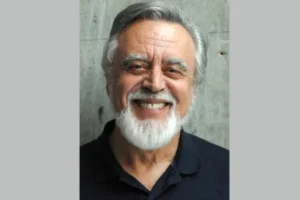
Sabrine Bendimerad, a seasoned Senior AI Engineer with a decade of experience navigating the intricate world of data science and artificial intelligence, recently shared her profound insights into the field’s rapid evolution. Her journey, marked by a transition from analyzing satellite imagery for European utility giants to pioneering research in medical imaging at Neurospin, offers a unique perspective on the challenges and opportunities facing data professionals today. In an exclusive interview, Bendimerad delves into the critical question of the field’s continued relevance, the shifting demands on practitioners, and the transformative impact of generative AI.
The Enduring Value of Data Science in a Rapidly Changing Market
The question of whether data science remains a viable career path, particularly for junior professionals, has been a recurring theme in industry discussions. Bendimerad’s article, "Data Science in 2026: Is It Still Worth It?", published on Towards Data Science, resonated deeply within the community, sparking a wave of conversations on professional networks. "I expected juniors to be worried about this question, but I was surprised to see that people with years of experience were also questioning the future," Bendimerad revealed.
Her analysis points to a significant market shift. "In the beginning, just knowing Python and statistics/math made you a unicorn," she explained. "Today, the market is saturated with new data scientists, and new tools based on AI agents are taking over the manual, simple tasks we used to do." This observation aligns with broader industry trends, where automation is increasingly handling routine data processing and basic model building. For instance, a 2023 report by Gartner predicted that by 2025, AI will handle up to 95% of customer service interactions, a stark illustration of how automation is reshaping roles.
Bendimerad’s stance remains unequivocally positive, albeit with a crucial caveat: "AI and data science are still worth it, but the ‘generalist data scientist’ is a dying species." She emphasizes the need for specialization and adaptation, stating, "To survive, you must evolve beyond just models in a notebook. You need to master deployment, LLMs, RAG, and, most importantly, domain knowledge that helps data interpretability." This perspective underscores a critical development: the shift from theoretical understanding and model creation to the practical application and deployment of AI solutions. The value proposition for data professionals is increasingly tied to their ability to integrate AI into complex systems, ensure their reliability, and translate technical outcomes into tangible business or societal benefits.
A Career Forged in Production: From Satellite Imagery to Brain Scans
Bendimerad’s career trajectory provides a compelling narrative for understanding the skills most valued in the current data science landscape. Her early work involved analyzing vast datasets of satellite imagery for major European utility companies. This experience instilled in her a fundamental appreciation for the "end-to-end" nature of successful data science projects. "If a model stays in a notebook, it has zero impact," she asserted, highlighting her extensive writing on MLOps (Machine Learning Operations) – the practice of deploying, monitoring, and maintaining machine learning models in production environments.
The transition to her current role as a researcher in medical imaging at Neurospin marked a profound shift in the stakes involved. "In the utility sector, if you make a mistake, you handle financial loss. But in medical imaging, you handle human lives," she stated. This heightened responsibility has deeply influenced her approach to AI and her writing. It has driven her to explore the complexities of Large Language Models (LLMs) and Retrieval-Augmented Generation (RAG) systems, not as mere technological trends, but as tools that require an exceptionally high degree of trustworthiness and interpretability, especially in critical applications like healthcare.
Her insights are born from this unique intersection of industrial experience and cutting-edge research. "I have the industrial background of building for production, but I also have the research background where the methodology must be perfect," Bendimerad explained. This dual expertise allows her to offer readers not only technical guidance but also a nuanced understanding of how to navigate career paths, manage complex projects, and appreciate that a career in data science is rarely a linear progression.
The New Playbook: Adapting to the AI Orchestration Era
The early years of Bendimerad’s career were characterized by foundational tasks: data cleaning, server setup, and the meticulous crafting of individual models. The landscape today is dramatically different. "The game has been totally rewritten," she observed. "When I started, we were builders, and we spent weeks just cleaning data and setting up servers. Today, you have to be an AI Orchestrator."
The advent of advanced AI tools and platforms has drastically accelerated development cycles. Bendimerad notes that systems that once took months to build can now be assembled in days. This acceleration, however, does not necessarily equate to reduced difficulty. Instead, the challenge has shifted. "It is definitely difficult if you try to start a career using the trendy skills from 10 years ago," she cautioned.
For aspiring data professionals, the abundance of readily available information is a double-edged sword. "Juniors today have so many options to get ready for the market. We have a goldmine of information on YouTube and on blogs," Bendimerad said. "The real challenge now is filtering out the garbage." The key to success, she argues, lies in continuous adaptation and market awareness. "The ones who survive are those who monitor and understand the market to adapt quickly."
Flexibility, therefore, emerges as the paramount skill. "It is not a good idea to only want to be an expert in one specific tool," she advised. "10 years ago, we were talking about switching from R to Python or from statistics to deep learning. Today, we are talking about switching to generative AI and agents." While foundational knowledge remains crucial, the ability to rapidly grasp, implement, and leverage new trends in response to stakeholder needs is what defines the modern data professional. This mirrors the agility required in other rapidly evolving tech sectors, where continuous learning and adaptability are prerequisites for sustained success.
Bridging the Gap: Practical Insights and Real-World Impact
Bendimerad’s writing aims to bridge the divide between theoretical concepts and actionable knowledge. She strives to equip her audience with practical guidelines and insights gleaned from her extensive experience. "When I write, I always keep in mind that I am sharing experiences to help people build their own expertise," she explained.
Her approach involves dissecting complex topics, such as MLOps, by providing both a high-level understanding of production environments and the granular technical steps required to achieve them. She actively engages with her students and colleagues to identify topics of interest and then connects them to her own industry observations. "My goal is for the reader to walk away with practical guidelines, not just a concept," she stated.
Her articles cater to diverse audiences, ranging from highly technical guides on model deployment using tools like FastAPI and Docker, to broader discussions on the business implications of "production" AI. Recognizing the ephemeral nature of specific tools, Bendimerad prioritizes sharing lessons learned from real-world challenges. "I want my audience to learn from my mistakes so they can go faster," she remarked, emphasizing the value of transparency in the learning process. This philosophy of sharing practical, hard-won knowledge is vital for democratizing expertise in a field that often presents steep learning curves.
The Nuanced Impact of Generative AI and AI Agents
The rapid proliferation of LLMs and agentic AI has had a palpable impact on Bendimerad’s daily work. She views these tools as valuable collaborators, akin to an experienced colleague, useful for brainstorming, rapid prototyping, and debugging. "With agents deployment, I also start to use vibe coding and automation for basic tasks, but for deep research, I am much more guarded," she admitted.
In her current work with sensitive medical data, the margin for error is virtually nonexistent. While AI can assist in refining thoughts or methodologies, the core logic and complex tasks remain under her direct control. "If you let the AI do all the thinking, you lose your intuition," she warned. She illustrated this point with the example of medical imaging, where the nuances of individual anatomy and disease pathology are critical. An AI agent might identify patterns, but it lacks the deep understanding of the "why" behind a disease that a human expert possesses.
Furthermore, Bendimerad has observed the profound effect of AI agents on the development of interns. While these tools can significantly boost productivity by automating tasks that once took months, they can also hinder fundamental learning. "It’s hard to master a topic if you never make the mistakes that force you to understand the system," she noted. This raises a critical question for the future of education and professional development: how to leverage AI for efficiency without compromising the deep, intuitive understanding that comes from hands-on struggle and error. Her core principle remains: "We must keep the human at the center of the logic, or we’re just building black boxes we don’t actually control."
Charting the Future: Beyond the Hype and Towards Meaningful Impact
Looking ahead, Bendimerad expresses a desire for the conversation in the AI field to shift from a relentless pursuit of new tools to a greater emphasis on robust scientific methodology and impactful applications. "We’re in a phase where new tools, frameworks, and models are emerging very quickly," she observed. While this dynamism is exciting, she believes that transparency and a deeper focus on real-world impact are often overlooked.
She advocates for AI development that not only enhances human productivity but also demonstrably contributes to critical sectors like healthcare, education, and accessibility. "I’d like to see more work that not only augments human productivity, but also contributes to areas like healthcare, education, and accessibility in a tangible way," she stated.
The evolution of LLMs and agentic AI will undoubtedly continue to be a focal point. Bendimerad is particularly interested in exploring the practical implications beyond the current hype. Her future writing will likely delve into questions surrounding:
- The practical methodologies for ensuring the safety and reliability of AI systems in critical domains.
- The ethical considerations and potential societal impacts of AI-driven automation.
- The evolving role of human expertise in an AI-augmented world.
- The integration of AI into complex, multi-faceted problem-solving scenarios.
Her forthcoming work aims to synthesize technical perspectives with a broader examination of how AI is reshaping not only the tools we use but also our fundamental ways of working and thinking. This forward-looking approach underscores her commitment to guiding the data science community towards a future where AI is developed and deployed responsibly, ethically, and with a clear focus on positive societal outcomes.