Ninja POD Review: Strategic Assessment of the Shopify-Integrated Apparel Supplier for 2026 and Beyond

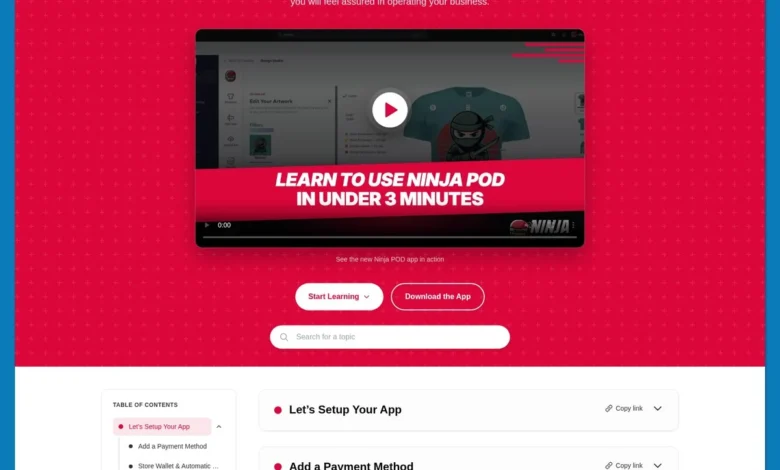
The print-on-demand (POD) landscape has undergone a significant transformation as of late 2026, marked by a shift toward more specialized, high-margin fulfillment partnerships. Among the notable players currently influencing the North American market is Ninja POD. Emerging from the infrastructure of Ninja Transfers, LLC, the service has recently migrated its operational framework from a legacy Shopify-embedded application to a standalone, dedicated platform, app.ninjapod.com. This transition, which concluded in September 2026, represents a strategic pivot to centralize billing, production workflows, and order management for e-commerce merchants operating exclusively within the Shopify ecosystem.
With a current market rating of 4.3/5, Ninja POD has carved out a specific niche by focusing on aggressive pricing for staple apparel items, most notably the Gildan 18500 heavy-blend hoodie, which sits at a competitive $16.49 per unit. However, the service is not a universal solution for all e-commerce retailers; it remains strictly tethered to the US and Canadian markets, leaving global retailers and those relying on diverse third-party marketplaces, such as Etsy or WooCommerce, to look elsewhere.
Chronology and Operational Evolution
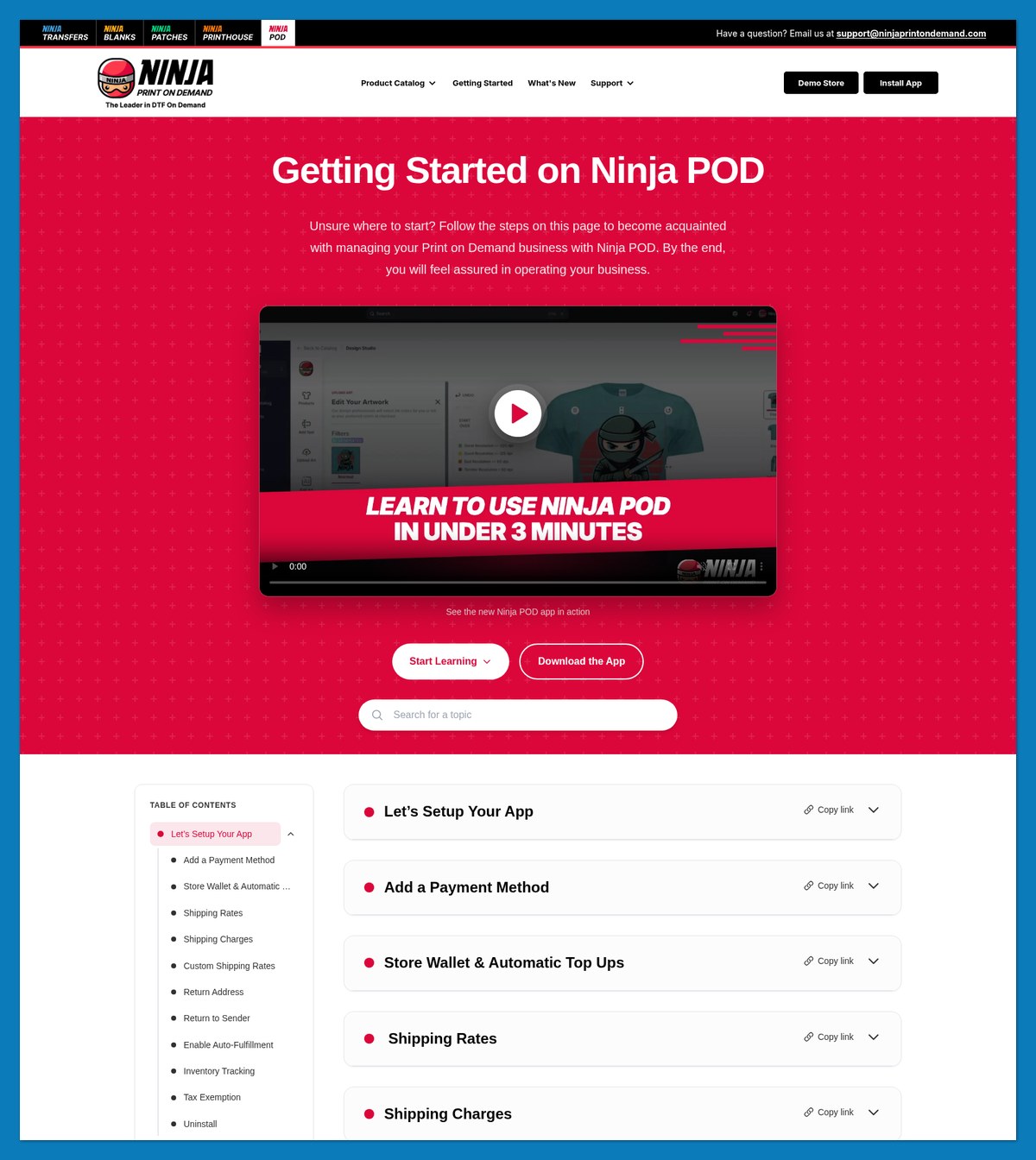
The evolution of Ninja POD has been rapid. Following its initial launch in January 2025, the developer, identified as "Printing & Blanks Dropshipping," sought to streamline the production of custom apparel through Direct-to-Film (DTF) technology. A critical juncture in the platform’s history occurred in July 2026, when the company officially moved its operations to a new, external portal. This migration was not merely a cosmetic update; it required existing merchants to re-authenticate their stores and transition their workflows to a separate login system.
By March 2026, the company finalized a major logistics partnership with Amazon Ground, a move that currently accounts for more than 90% of its shipping volume. This shift was designed to optimize delivery timelines and improve transit reliability, though it notably removed the option for expedited shipping. Subsequent to this, in August 2026, the company adjusted its pricing for bulk shipping, providing reduced rates for orders exceeding eight items—a move that signaled an effort to capture more of the custom team-apparel market.
Product Catalog and Technological Limitations
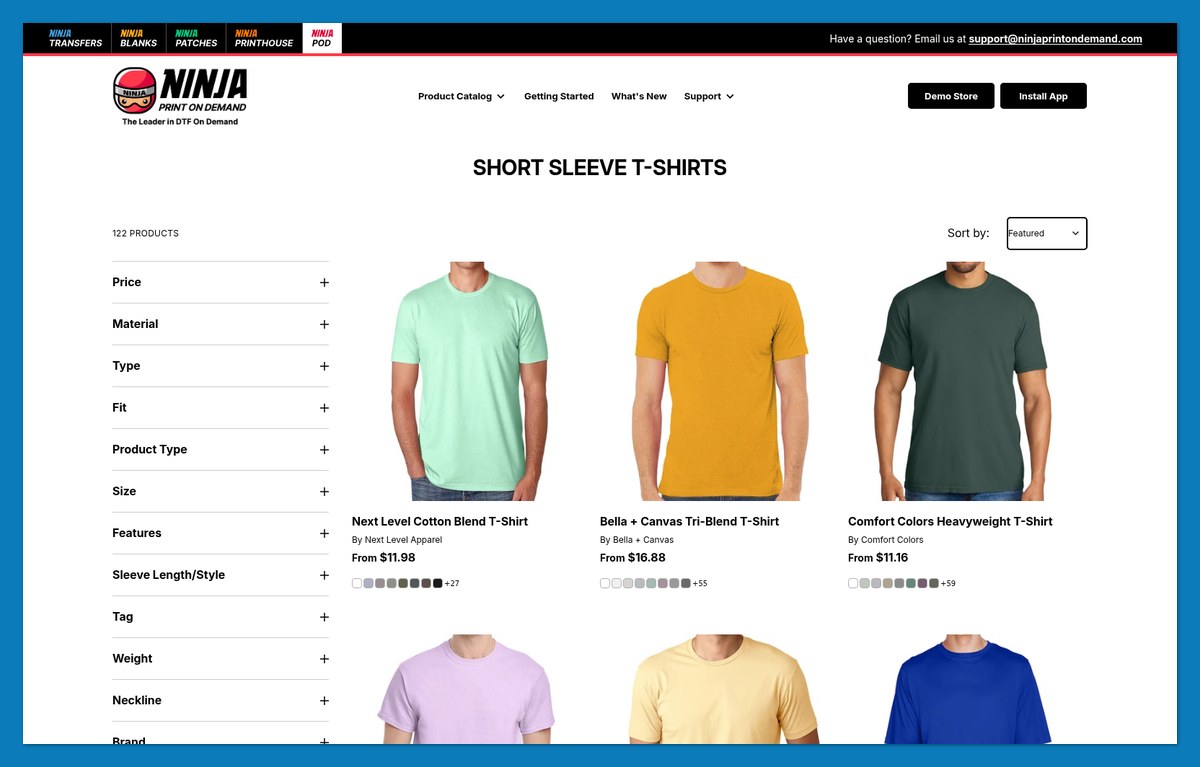
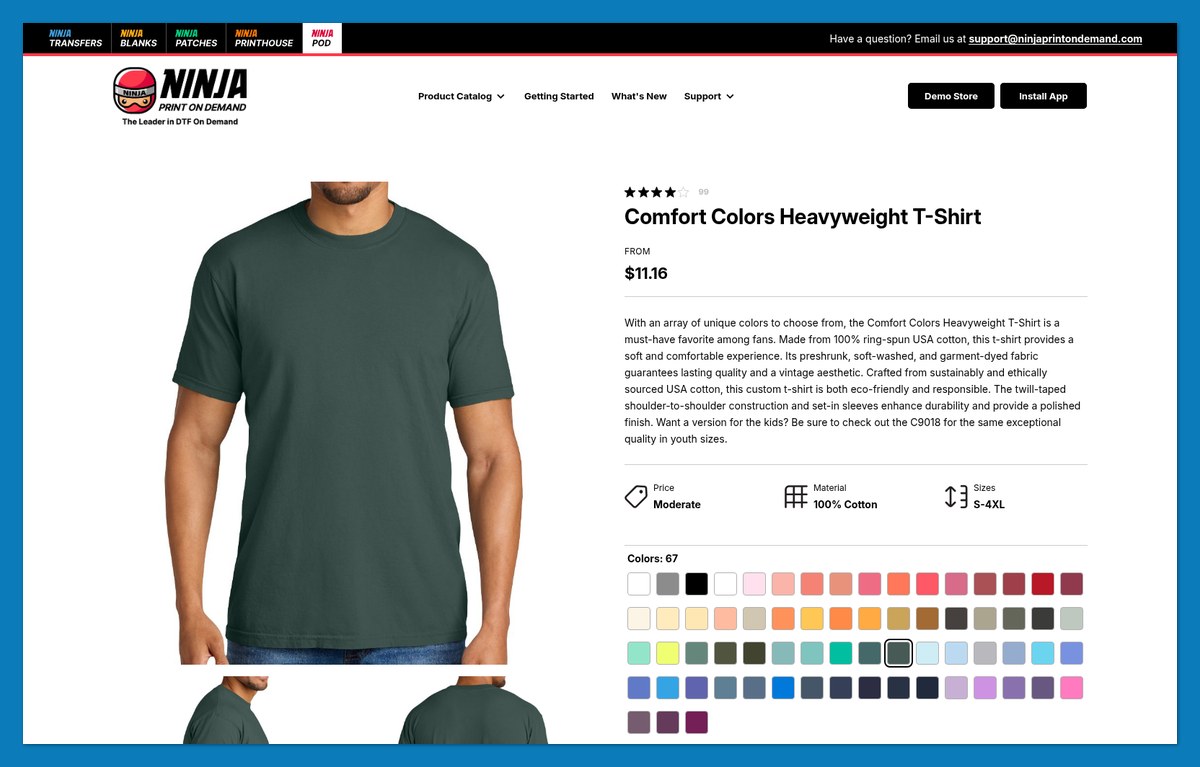
Ninja POD’s catalog currently comprises approximately 1,948 distinct products, despite marketing claims of 2,500+. The discrepancy suggests that the company is refining its inventory focus, prioritizing high-velocity items over a broader, shallower selection of goods. The core offerings are centered on DTF-printed apparel, including heavyweight tees like the Comfort Colors 1717 and various Gildan silhouettes.
It is important for merchants to note that Ninja POD exclusively utilizes 9-color DTF printing. While the company markets this technology as offering 100+ wash durability and superior color vibrancy compared to traditional Direct-to-Garment (DTG) methods, the practical application is restricted. The lack of embroidery, screen printing, puff ink, or all-over print options means that brands focusing on high-end streetwear or complex textures may find the utility of the platform limited. The company’s focus remains squarely on crisp, bold graphics on standard apparel blanks.
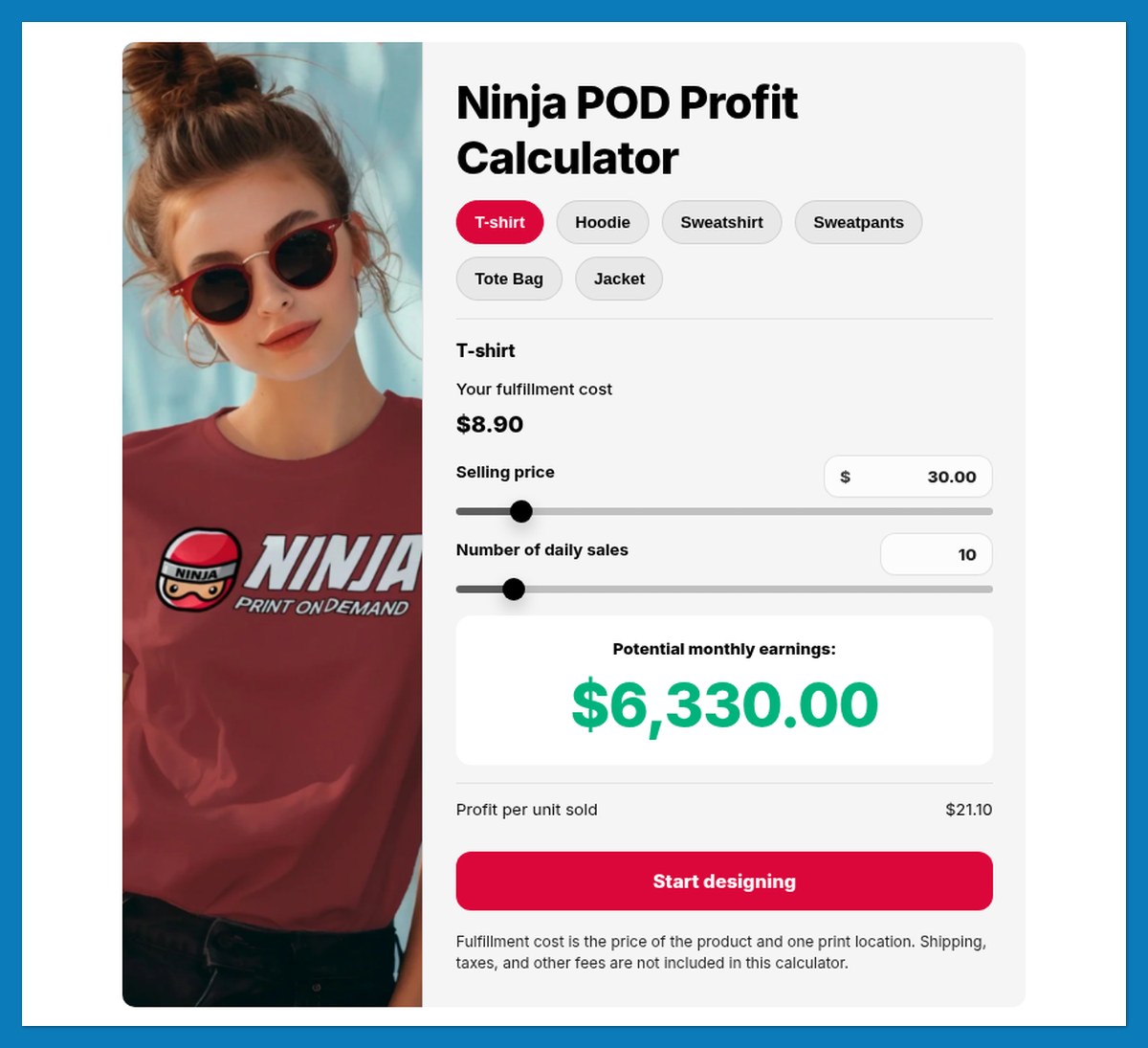
Financial Implications and Profit Modeling
For retailers, the primary draw of Ninja POD is its lack of a subscription fee. Unlike competitors that lock advanced features behind monthly tiers, Ninja POD operates on a per-fulfillment basis. However, this structure requires careful cash-flow management. Production costs are charged at the moment of fulfillment acceptance, not when the consumer places the order.
A detailed look at profit margins reveals that while the base costs for items like the Gildan 5000 ($7.19) are attractive, the total landed cost is heavily dependent on shipping configurations. For a contiguous US order, shipping a single Gildan 5000 tee costs $4.99. If a merchant offers "free shipping" to the consumer, the profit margin is significantly compressed. For instance, selling a $24.99 tee with free shipping yields a profit of $12.81, whereas passing the $4.99 shipping cost to the customer increases that profit to $20.76. These figures exclude payment processing fees, sales taxes, and advertising costs, which must be factored into any serious business plan.
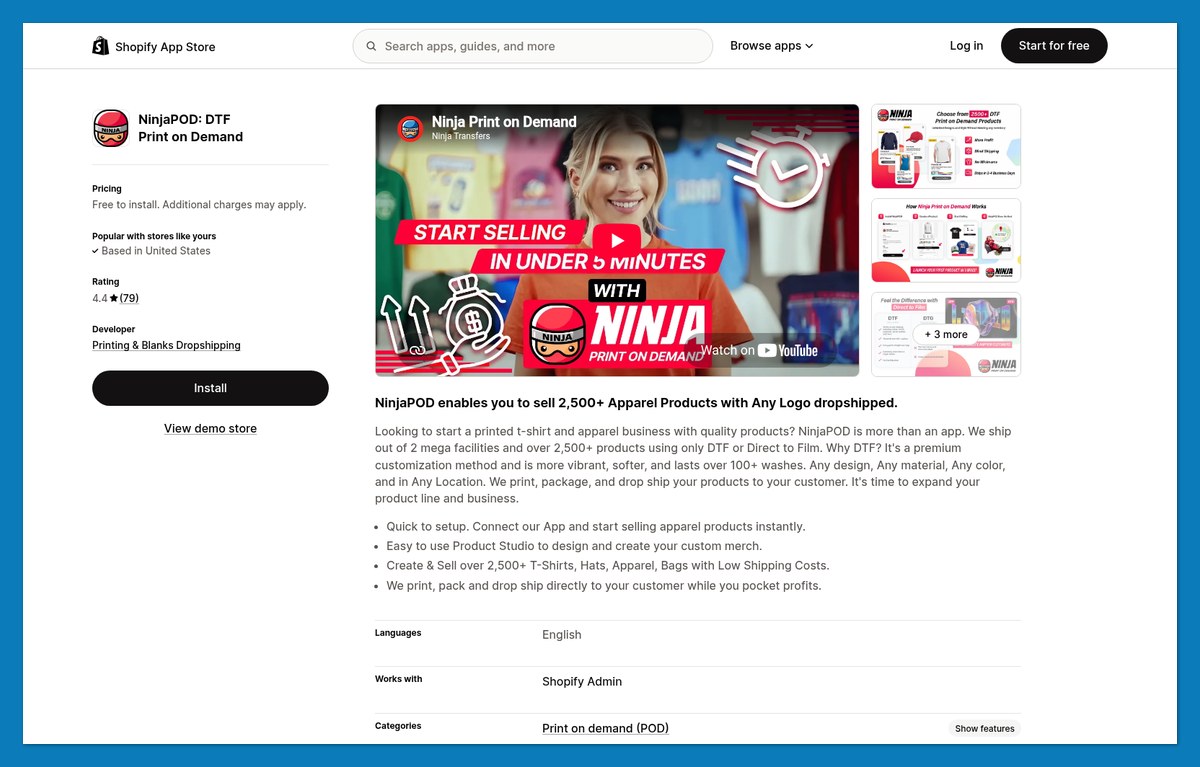
Merchant Support and Reliability
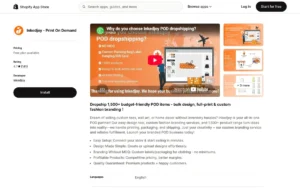
Feedback from the Shopify App Store, which features 79 reviews with a 4.4 average, paints a picture of a company that prioritizes direct support for errors. The majority of positive sentiment is directed toward the reprint team, which is noted for its responsiveness in resolving misprints and quality control issues. Conversely, some merchants have cited concerns regarding a lack of communication after initial reports of logistical failures.
The company’s terms of service are distinctly merchant-focused regarding liability. Because there are no refunds, exchanges, or returns after production begins, the onus of quality control rests on the merchant. The company typically reserves the right to choose between a reprint or a production-charge credit when defects are verified. Consequently, for high-volume stores, maintaining a redundant supplier remains a standard industry best practice to mitigate the risk of stock-outs or unforeseen production delays.
Comparison with Market Rivals
When placed alongside industry heavyweights like Printful and Printify, Ninja POD occupies a distinct space. Printful and Printify offer broader product catalogs, support for global markets, and integrated embroidery services, resulting in higher aggregate ratings of 4.6/5. However, Ninja POD remains a disruptive force for specific segments.
For a store focused on the US market, the lack of a monthly subscription fee gives Ninja POD a cost advantage over Printify Premium. However, once a merchant scales beyond a certain volume, the discount structures offered by subscription-based competitors often equalize the total cost. The decision to use Ninja POD should therefore be based on the specific product mix of the store. If a merchant’s catalog is dominated by hoodies and heavy cotton tees, the unit savings at Ninja POD can be substantial. If the store requires a diverse range of non-apparel items or global shipping, the limitations of the platform become apparent.
Implications for Future Growth
The transition to a standalone app suggests that Ninja POD intends to maintain a tight, controlled environment. While this limits the flexibility of multi-channel selling (as the app is strictly optimized for Shopify), it allows for a more stable fulfillment process within that singular ecosystem.
For the typical Shopify store, the most effective strategy in the current market is a hybrid approach. By utilizing Ninja POD for high-margin, high-volume apparel items and leveraging other providers for niche products or international fulfillment, store owners can balance profitability with service coverage. As of late 2026, the platform is positioned as a specialized tool for the mid-market operator—one who values predictable, flat-rate shipping and competitive pricing on staple garments over the versatility of a massive, multi-facility network. Retailers are encouraged to conduct a thorough sample order of their primary blanks, including a full audit of shipping and tax implications, before committing a major portion of their catalog to this supplier.
Related posts: