The Top Creator Platforms for Monetization in 2027: A Comprehensive Analysis of Fee Structures and Financial Sustainability

The rapid evolution of the creator economy has fundamentally altered how independent artists, streamers, and influencers sustain their professional operations. As of late 2026, the marketplace for creator-focused commerce platforms has become increasingly saturated, forcing creators to move beyond basic feature comparisons and toward a rigorous analysis of their "take-home" margins. With twenty-one major platforms currently competing for market share, the distinction between a "free" service and a "profitable" one has never been more critical.
The Shift Toward Fee-Transparent Commerce
Historically, creator platforms relied on high transaction fees to sustain operations. However, the current landscape is defined by a shift toward a tiered model where platform fees are increasingly decoupled from base processing costs. The industry has reached a point of maturity where creators are no longer merely looking for a storefront; they are looking for a "merchant of record" that handles the complexities of international tax compliance, VAT, and fluctuating credit card processing rates.
Data gathered from industry testing indicates that while many platforms market themselves as "free," the effective cost of operation—when accounting for production base costs, payment gateway processing fees (typically 2.9% + $0.30), and platform-specific commissions—can vary by as much as 15% across identical sales volumes.

Fourthwall Leads the Market in Integrated Solutions
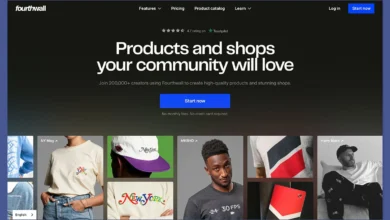
Fourthwall has emerged as the industry’s most robust overall solution for creators maintaining ongoing storefronts. Its primary competitive advantage lies in its role as a merchant of record, which effectively transfers the burden of US sales tax and international VAT from the creator to the platform. This is a significant operational shift from previous years, where creators were often left to navigate the labyrinthine requirements of cross-border tax compliance manually.
The platform’s structure is particularly favorable for physical merchandise. By eliminating platform commissions on physical goods, Fourthwall allows creators to maximize margins on print-on-demand items, provided they can effectively manage the base production costs. However, the platform retains a 5% fee on memberships and digital downloads, creating a nuanced financial profile that rewards physical product volume while taxing subscription-based community building.

Ko-fi and the Evolution of the "Tip" Economy
Ko-fi remains the gold standard for creators whose primary revenue stream is derived from direct support, tips, and casual commissions. Its architecture is intentionally lightweight, designed to facilitate immediate transfers from fans to creators via Stripe or PayPal.
The strategic importance of Ko-fi in 2027 lies in its "Gold" subscription model. While the free tier is sufficient for small-scale operations, the $12 monthly fee for Gold becomes a net positive for creators generating over $240 in monthly revenue. By removing the 5% platform fee on shop sales and commissions, high-volume creators can effectively lower their total cost of ownership. The trade-off, however, is the lack of deep integration for complex inventory management, positioning Ko-fi as a community-engagement tool rather than a comprehensive retail logistics provider.

Bonfire and the Campaign-Style Merch Model
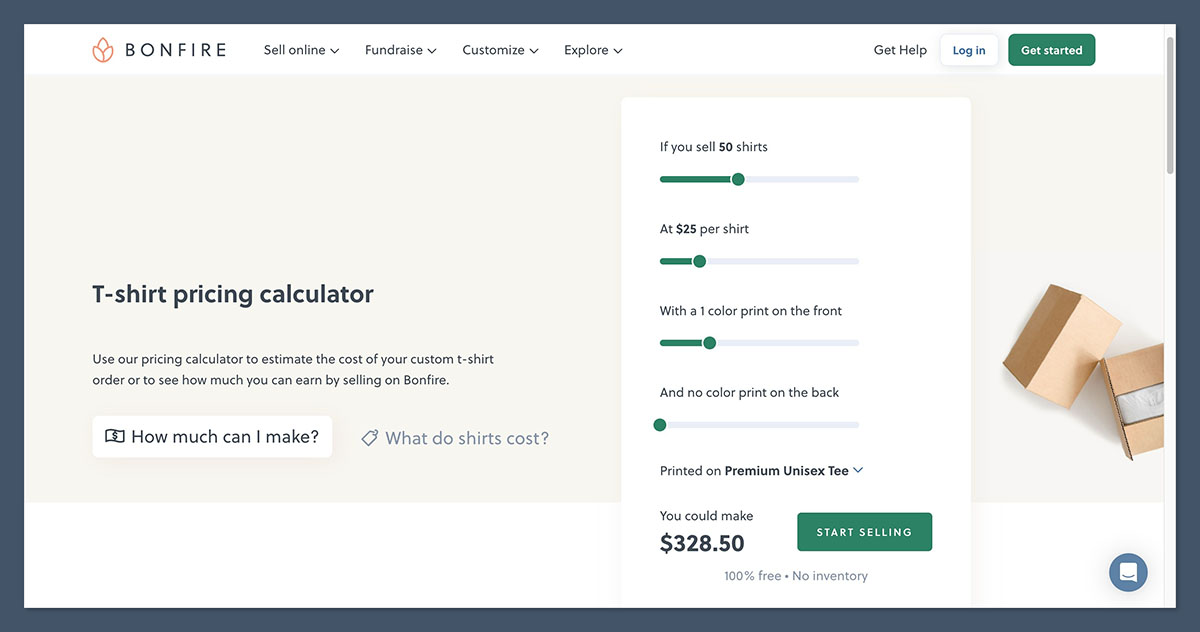
For creators who operate on a "drop" or "limited release" schedule, Bonfire has cemented its position as the premier choice. Unlike traditional storefronts that keep inventory live indefinitely, Bonfire utilizes a campaign-based model that mitigates risk by only producing goods once a target threshold is met or a campaign closes.
This model is particularly effective for fundraisers and social media-driven merchandise launches. Because the platform embeds processing fees directly into the base cost of the product, the creator is presented with a "clean" margin. This transparency allows for simplified financial forecasting. Nevertheless, creators should note that the platform provides limited data on customer identity, often restricting exports to names and last initials, which may complicate long-term customer relationship management (CRM) for brands looking to scale.

Big Cartel and the Independent Maker Movement
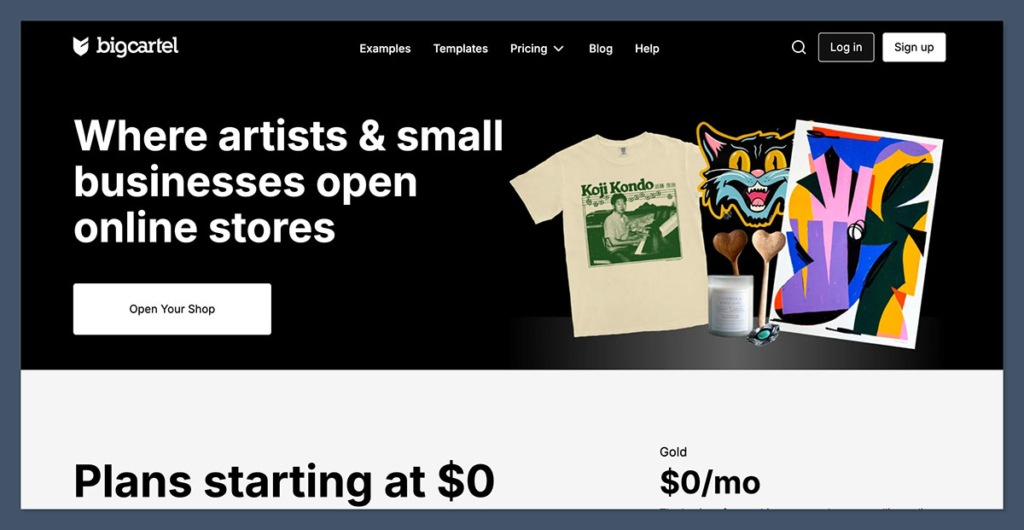
Big Cartel occupies a distinct niche for artists who prioritize autonomy. By allowing creators to host a boutique store of up to five products for free, it provides a low-barrier entry point for independent makers. Its business model assumes that the creator is responsible for their own fulfillment, manufacturing, and shipping. This makes it an outlier in an era where most creator platforms are shifting toward print-on-demand (POD) integrations.
The implications for a maker using Big Cartel are clear: the platform provides the digital storefront, but the logistics remain manual. For creators scaling beyond five products, the transition to the $15-per-month "Platinum" tier is often the first sign of professional growth, marking a shift from hobbyist to full-time entrepreneur.
Supporting Data and Comparative Financial Analysis
When evaluating these platforms, creators must distinguish between "platform cuts" and "processing fees." Processing fees, such as those charged by Stripe or PayPal, are non-negotiable costs dictated by the banking sector. A platform cut, by contrast, is a service fee.
In our comparative analysis of a $28 tee-shirt sale, the following discrepancies were observed:
- Fourthwall: $15.39 net profit after $11.50 base cost and processing.
- Big Cartel: $26.89 gross revenue before the creator’s own materials and shipping costs are deducted.
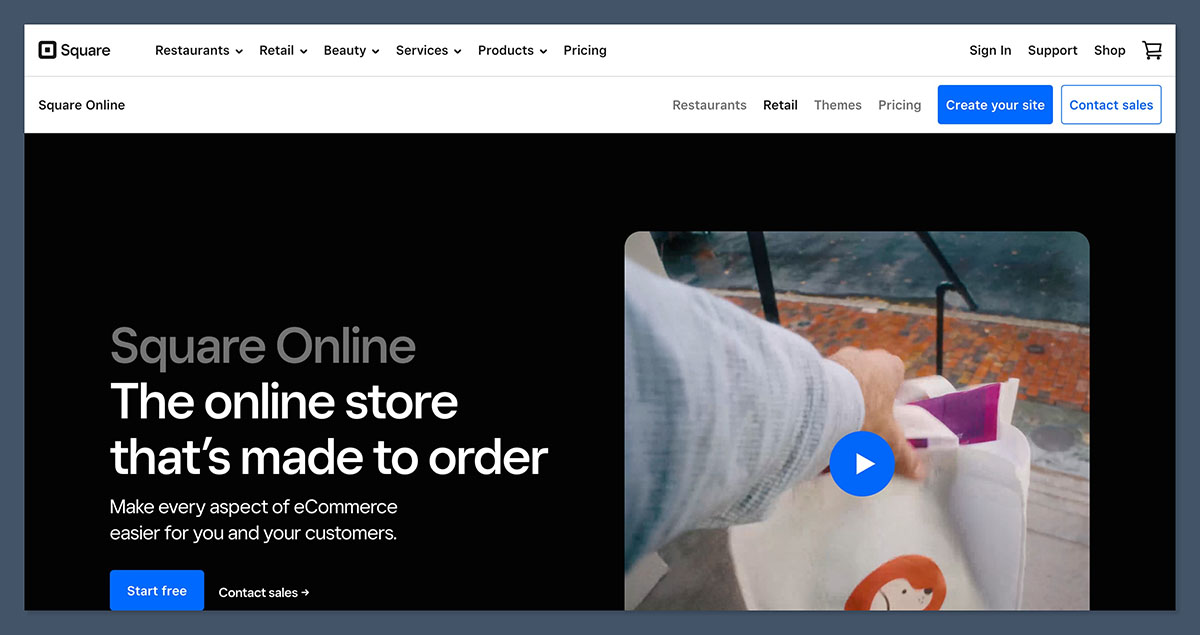
- Square Online: $26.78 gross revenue before fulfillment.
These figures illustrate that the "best" platform is not necessarily the one with the lowest fee, but the one whose business model aligns with the creator’s fulfillment capabilities.
Official Responses and Industry Trends
Recent shifts in the market have been exacerbated by the retirement of long-standing platforms such as Teespring. This has led to a forced migration of thousands of creators toward newer, more modern interfaces like Fourthwall and Printify. Industry analysts suggest that this consolidation is likely to continue, as creators increasingly demand integrated social commerce—such as the ability to display products directly on YouTube, TikTok, and Instagram.
Representatives from these platforms have emphasized that their primary value proposition for 2027 is "frictionless commerce." By integrating with social media APIs, these platforms are effectively turning a creator’s content feed into a point-of-sale terminal.
Strategic Implications for Creators
The decision-making process for selecting a platform should be dictated by the creator’s dominant income source. If a creator’s income is primarily tip-based, the choice is clear: Ko-fi. If the business is driven by seasonal merchandise drops, the choice is Bonfire. If the creator is building a multi-channel brand with digital products, physical merch, and memberships, the infrastructure provided by Fourthwall is currently unmatched.
Creators are advised to conduct a "margin audit" every six months. As sales volume increases, the cost-benefit analysis of a monthly subscription changes. A platform that was the most cost-effective at $500 in monthly sales may become the most expensive at $5,000 in monthly sales if the percentage-based fees outweigh the fixed cost of a subscription.
The Role of Tax and Compliance
Perhaps the most overlooked factor in the 2027 creator economy is the legal burden of tax collection. Platforms that function as a "Merchant of Record" (MoR) provide significant value by collecting, reporting, and remitting sales tax and VAT. For a creator with a global audience, this service is worth the trade-off of a platform fee or a slightly higher base product cost. Creators who choose platforms that do not provide MoR services—such as Big Cartel—must be prepared to handle their own tax compliance, which can involve significant administrative overhead and potential liability in international markets.
Future Outlook
As we move through 2027, the barrier between social media content and e-commerce will continue to dissolve. We expect to see further integration of "one-click" checkout processes and enhanced analytics tools that allow creators to track the conversion rate of specific pieces of content. The platforms that succeed will be those that provide the most seamless bridge between the creative process and the financial transaction, ultimately allowing creators to spend less time managing their store and more time producing the content that drives their sales.
In conclusion, the modern creator must view their commerce platform not as a static tool, but as a dynamic partner. By aligning their business model with the specific fee structures, fulfillment capabilities, and tax-handling strengths of these platforms, creators can maximize their long-term financial viability in an increasingly competitive digital landscape.