As modern media consumption continues its rapid migration away from traditional broadcast networks and toward algorithmic feeds, political campaigns are radically shifting their outreach strategies. During the 2026 midterm elections, digital content creators and social media influencers have emerged as indispensable conduits for political messaging. Moving far beyond traditional banner ads and targeted digital banners, campaigns are now pouring millions of dollars into direct partnerships with internet personalities. From beauty gurus subtly embedding voter-registration prompts into Get Ready With Me (GRWM) videos to political commentators hosting extensive live streams on YouTube and Twitch, politics has become deeply integrated into everyday digital culture.
This intersection of the creator economy and American politics raises fundamental questions about transparency, voter influence, and how modern electorates consume news. While these paid collaborations grant campaigns unprecedented access to demographics that routinely tune out conventional news broadcasts, they also obscure the financial boundaries between independent political commentary and sponsored advocacy. As voters scroll through their daily feeds, deciphering the origin of a political message has become increasingly complex.
The Evolution of Political Outreach in the Creator Economy
The strategy of leveraging online influencers is not entirely brand new, but the scale and sophistication of the 2026 midterms mark a paradigm shift. Historically, campaigns relied heavily on television advertising, direct mail, and localized ground games to mobilize voters. However, shifting media habits among younger generations have forced campaigns to adapt. According to data from the Pew Research Center, a substantial portion of U.S. adults—particularly those aged 18 to 29—regularly consume news from social media influencers rather than traditional journalistic outlets. Furthermore, a significant majority of these consumers report that they stumble upon this news passively while browsing, rather than actively seeking it out.

Recognizing this captive audience, political organizations, advocacy groups, and individual candidate campaigns have systematically integrated creators into their communication playbooks. Organizations such as Chorus, When We All Vote, YALLvote, and Gen-Z for Change have established structured networks that supply creators with research, strategic training, and financial backing. These groups operate across the ideological spectrum, pursuing goals that range from nonpartisan voter turnout to explicit support for progressive or conservative candidates and platforms.
The mechanics of these partnerships vary widely. Some initiatives rely on creative, unconventional formats to capture user attention. For instance, progressive political creators have utilized viral short-form video tropes—colloquially referred to as "thirst traps"—to successfully drive sign-ups for poll workers, demonstrating how internet humor can be weaponized for civic engagement. Similarly, beauty and lifestyle influencers have incorporated political calls to action directly into lifestyle content, bridging the gap between entertainment and civic duty.
Financial Injections and Direct Campaign Investments
While nonpartisan civic engagement groups often focus on long-term creator development and monthly stipends, individual candidate campaigns frequently engage in direct transactional relationships with influencers. These agreements can involve substantial financial compensation for specific endorsements or promotional content.
During recent state-level primary elections, high-profile financial outlays by political candidates drew intense scrutiny regarding the monetization of political influence. In California, gubernatorial campaigns made headlines by compensating lifestyle and digital creators thousands of dollars per promotional post. Defenders of these expenditures, such as former candidate and donor Tom Steyer, have publicly defended the practice, arguing that compensating creators for their labor and audience reach is no different from paying traditional campaign consultants, media buyers, or advertising agencies.

However, these financial arrangements are rarely transparent to the average viewer. Unlike traditional television advertisements, which are legally mandated to feature clear disclaimers regarding who paid for the broadcast, social media platforms operate in a more nebulous regulatory environment. While platforms often feature native disclosure tools like "paid partnership" tags, creators do not always use them consistently, and financial ties involving advocacy groups, political action committees (PACs), and intermediaries are frequently obscured behind complex corporate structures.
The Transparency Gap and the Risk of Misinformation
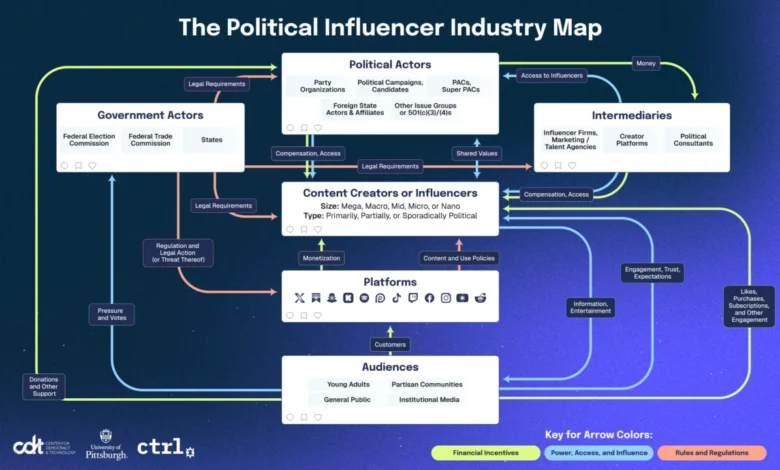
The opaque nature of the political influencer industry has raised alarms among digital rights advocates and researchers. A comprehensive report published by the Center for Democracy & Technology (CDT) mapped the intricate web connecting political groups, digital intermediaries, creators, platforms, and audiences. The analysis underscored a critical vulnerability in the modern information ecosystem: it is often nearly impossible for ordinary users to distinguish between organic, uncompensated political commentary and paid campaign promotion.
This lack of transparency creates fertile ground for misinformation and commercial exploitation of the electoral process. Beyond traditional political campaigns, commercial actors have also infiltrated the political creator space. Recent analyses of municipal elections revealed instances where influencers—compensated by prediction markets and financial trading platforms—promoted betting odds while simultaneously amplifying unverified claims regarding election rigging. Although some platforms subsequently forced creators to remove content that violated affiliate marketing policies, the incidents highlighted the potential dangers of blending commercial financial incentives with democratic discourse.
Implications for the Future of Democratic Engagement

The widespread integration of creators into the political apparatus carries profound implications for the democratic process. On one hand, these partnerships democratize access to political information, allowing historically marginalized or politically disengaged demographics to encounter vital civic resources where they already spend their time. For many younger voters, a trusted creator breaking down a complex ballot initiative or interviewing a candidate feels far more authentic and accessible than a televised debate or a dense policy paper.
On the other hand, the commercialization of political advocacy threatens to blur the lines between journalism, advertising, and manipulation. When financial compensation dictates which political figures receive amplification and which policy positions are highlighted, the public square risks becoming skewed by the highest bidder. Furthermore, the reliance on charismatic personalities rather than substantive policy debates can exacerbate polarization and reduce complex governance to viral soundbites.
As the 2026 midterm elections transition from campaign messaging to the final tally of results, the influence of digital creators will remain a permanent fixture of modern politics. Campaigns will undoubtedly continue to refine their influencer strategies, seeking ever-more sophisticated ways to bypass traditional media gatekeepers. For voters, the challenge moving forward will not be finding political content, but rather developing the digital literacy required to see past the familiar face on the screen and understand the complex machinery operating behind the feed.