Stargazers Delight as Moon Enters Waning Crescent Phase Offering Prime Lunar Observation Opportunities

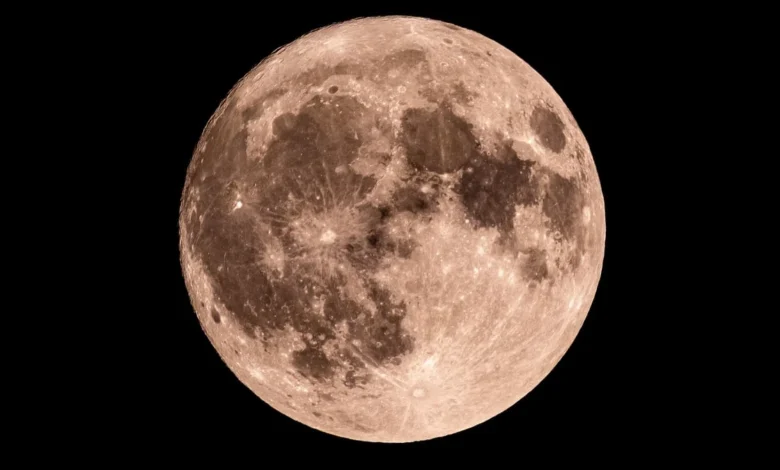
The Earth’s natural satellite has officially entered its Waning Crescent phase, capturing the attention of astronomers, astrophotographers, and casual skywatchers alike. According to data provided by NASA’s Daily Moon Guide, the lunar surface is currently illuminated at approximately 45 percent, a figure that will steadily decrease over the coming days until the arrival of the next New Moon. This transition marks a critical juncture in the ongoing 29.5-day synodic lunar cycle, offering distinct viewing opportunities for observers equipped with varying levels of optical equipment.
As the lunar illumination wanes, professional and amateur astronomers are presented with optimal shadow conditions along the lunar terminator—the dividing line between the illuminated and dark sides of the Moon. These shadows enhance contrast, making topographical features such as craters, maria, and ancient impact basins significantly easier to resolve from Earth.
Optimal Viewing Conditions and Target Features for Tonight
For those stepping outside tonight without optical aids, planetary scientists note that several prominent lunar features remain clearly visible to the naked eye. Observers can readily spot the Tycho Crater, a prominent ray crater located in the southern lunar highlands known for its extensive system of bright streaks. Also easily discernible without equipment are the Kepler Crater and the vast expanses of the Mare Imbrium, one of the largest dark volcanic plains, or maria, on the lunar surface.
For observers utilizing binoculars, the level of detail increases substantially. Standard 7×50 or 10×50 binoculars will reveal the Alphonsus Crater, an ancient complex crater situated within the rugged highlands, alongside the massive Clavius Crater, one of the largest crater formations on the visible face of the Moon. Additionally, the dark, basaltic plains of the Grimaldi Basin near the western limb become distinctly observable.
For advanced amateur astronomers utilizing amateur telescopes equipped with moderate magnification, tonight offers an exceptional window to view historical landmarks and intricate geological formations. Telescopic users can target the Apollo 12 landing site in Oceanus Procellarum, where astronauts Charles "Pete" Conrad and Alan Bean touched down in November 1969. Other notable telescopic targets for tonight include Reiner Gamma—a striking and enigmatic lunar swirl formation associated with local magnetic anomalies—and the elongated Schiller Crater, known for its distinctive boot-like or footprint geometry.
The Mechanics of the Lunar Cycle
The current phase is part of a predictable, repeating celestial mechanics cycle that has governed Earth’s tides and captivated human imagination for millennia. The Moon requires approximately 29.5 days—known as a synodic month—to complete a full orbit around Earth while simultaneously rotating on its axis.
Because the Moon is tidally locked to Earth, observers from the surface always see the same side of the body. The changing phases observed from Earth are not caused by Earth’s shadow falling on the Moon (which occurs only during lunar eclipses), but rather by the changing relative positions of the Earth, Moon, and Sun. As the Moon orbits our planet, the perspective of the sunlit portion shifts, creating the familiar sequence of lunar phases.
NASA classifies the complete lunar progression into eight distinct phases:
- New Moon: The Moon is positioned directly between the Earth and the Sun. The hemisphere facing Earth is entirely in shadow, rendering the lunar disk invisible to the unaided eye.
- Waxing Crescent: As the Moon moves eastward in its orbit away from the Sun, a thin sliver of illumination appears on the right side of the disk (as viewed from the Northern Hemisphere).
- First Quarter: Exactly half of the visible lunar disk is illuminated on the right side. Despite its name, this phase occurs one-quarter of the way through the lunar month.
- Waxing Gibbous: More than half of the lunar surface is illuminated, and the illuminated area continues to grow night by night as the Moon approaches full alignment.
- Full Moon: The Earth is positioned roughly between the Sun and the Moon, allowing the entire face of the lunar disk to be fully illuminated and visible throughout the night.
- Waning Gibbous: Following the peak of the Full Moon, the illuminated portion begins to decrease, starting from the right side of the disk in the Northern Hemisphere.
- Third Quarter (or Last Quarter): Exactly half of the Moon is once again illuminated, but the illuminated portion has shifted to the left side as the cycle moves back toward the Sun.
- Waning Crescent: Only a thin sliver of light remains visible on the left side of the lunar disk, steadily shrinking until the Moon returns to the New Moon phase and the cycle restarts.
Upcoming Lunar Milestones and the Next Full Moon
Following the progression of the current Waning Crescent phase, the lunar cycle will culminate in a New Moon before transitioning into the waxing stages. According to astronomical tracking schedules, the next Full Moon will officially occur on November 24.
Astrophotographers and researchers are already preparing for the upcoming full phase, which frequently yields high public engagement and community outreach events hosted by public observatories, science museums, and planetary societies worldwide. The lead-up to the November 24 Full Moon will provide several weeks of favorable evening visibility, allowing observers to track the progressive illumination across the lunar maria and highlands.
Broader Impact and Scientific Implications of Amateur Lunar Observation
While professional lunar exploration has largely shifted toward robotic orbiters, landers, and crewed return initiatives—such as NASA’s Artemis program—amateur observations continue to play a vital educational role. Engagement with practical astronomy fosters public interest in STEM (Science, Technology, Engineering, and Mathematics) fields and enhances scientific literacy regarding orbital mechanics and planetary science.
Space agencies and educational institutions frequently emphasize that visual astronomy serves as an accessible entry point for students and citizens to understand larger astrophysical concepts. By tracking the monthly progression of phases and identifying specific craters, maria, and historical landing sites, observers connect theoretical orbital dynamics with tangible, observable reality in the night sky.
As the Moon continues its journey through the Waning Crescent phase toward the upcoming New Moon and eventual Full Moon on November 24, favorable weather conditions across many regions are expected to provide clear skies for amateur astronomers and curious onlookers eager to explore the nearest celestial neighbor.