Austrian E-commerce Market Hits New Heights as Online Retail Spending Reaches 12.4 Billion Euros in 2025

The digital transformation of the Austrian retail landscape reached a significant milestone in 2025, with online channels capturing a substantial slice of total consumer expenditure. According to the latest comprehensive analysis conducted by RegioData Research, online retail transactions accounted for 16 percent of all consumer spending across the nation. This figure represents a notable acceleration in the country’s digital adoption, climbing from 14.9 percent in the previous year. In absolute monetary terms, this shift in consumer behavior culminated in a total e-commerce market volume of approximately 12.4 billion euros. On an individual level, the average Austrian consumer allocated roughly 1,400 euros annually toward online purchases, reflecting a robust and growing comfort with digital marketplaces.
A Chronology of Digital Adoption in Austria
The steady climb of e-commerce in Austria is not a sudden phenomenon but rather the result of a decade-long transition in shopping habits. Historically, Austrian consumers were known for their cautious approach to digital payments and a strong preference for the tactile experience of brick-and-mortar retail. However, the trajectory shifted dramatically around 2020. The global pandemic acted as a catalyst, forcing retailers to expedite their omnichannel strategies and consumers to embrace remote purchasing out of necessity.
By 2022, the market began to stabilize, yet the growth did not plateau. Instead, the convenience of home delivery and the integration of sophisticated mobile payment solutions allowed e-commerce to become a permanent fixture of the retail ecosystem. The 2025 data suggests that this integration has reached a point of maturity, where online shopping is no longer an auxiliary option but a primary channel for a significant proportion of retail goods.
Sectoral Breakdown: Where Austrians Click and Buy
The digital penetration of the Austrian retail market is not uniform across all product categories. An analysis of consumer behavior reveals that the "online-first" mentality is heavily dependent on the nature of the product.
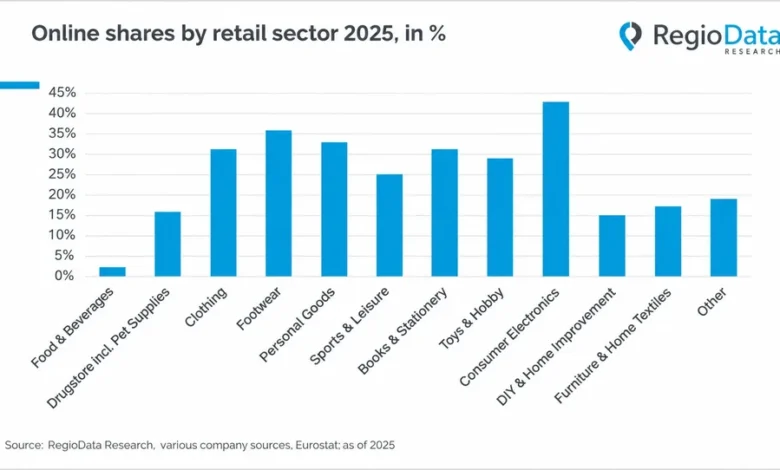
Consumer electronics currently lead the charge, with a staggering 43 percent of all spending in this sector occurring online. This trend is driven by the ease of comparing technical specifications, price transparency across platforms, and the reliability of logistics for high-value goods. Footwear follows closely, with an online share of 36 percent, likely buoyed by lenient return policies that mitigate the risk of purchasing items without trying them on.

Other sectors have also seen significant digital migration. Personal goods, including cosmetics and accessories, now see 33 percent of their sales occur online. Similarly, clothing and books both maintain a strong 31 percent market share in the digital sphere. These figures indicate that sectors characterized by high-volume, standardized, or easily searchable goods are best positioned to thrive in the digital age, while sectors requiring high-touch service or immediate, urgent fulfillment continue to rely more heavily on physical storefronts.
Comparative Analysis: Austria in the European Context
When viewed through a pan-European lens, Austria occupies a mid-tier position in terms of digital retail penetration. While the country’s growth is steady and significant, it remains behind the aggressive digital adoption seen in the United Kingdom, which leads the European market with an online share of 29.3 percent. The UK’s dominance is largely attributed to early infrastructure investments and a highly competitive, dense logistics network.
Austria’s figures are more closely aligned with Germany, which recorded an online share of 16.8 percent in the same period. This regional similarity is often attributed to shared cultural habits regarding consumer protection, data privacy concerns, and the lingering cultural preference for traditional high-street shopping in both nations. At the lower end of the spectrum, countries like Serbia continue to show lower digital integration, with an online retail share of 6.7 percent. This disparity highlights the "digital divide" that still exists across Europe, driven by varying levels of digital literacy, logistics infrastructure, and broadband accessibility.
The Dominance of Cross-Border Platforms
A critical finding in the 2025 data is the source of the capital flowing into Austrian e-commerce. Only about 40 percent of online spending remains within domestic borders, going to local online retailers. The remaining majority is captured by cross-border entities. This international influence is dominated by American tech giant Amazon, which commands a 35.1 percent share of the Austrian online market.
The landscape is further evolving with the emergence of Chinese e-commerce platforms. Temu, which currently holds a 5.1 percent market share, alongside competitors like Shein and AliExpress, represents a combined 7.9 percent of the total market. These platforms have successfully disrupted the market by leveraging aggressive pricing strategies and direct-to-consumer supply chains. eBay continues to maintain a presence with a 4.1 percent market share.
The reliance on international platforms raises important questions for the domestic retail sector. Local retailers are increasingly pressured to match the logistical capabilities and pricing of these global giants. Market analysts suggest that for Austrian retailers to regain lost ground, they must pivot toward "niche personalization"—offering localized customer service, curated inventories, and sustainability-focused branding that international platforms struggle to emulate.

Implications for the Austrian Retail Sector
The shift of 12.4 billion euros into the digital economy has profound implications for urban planning, employment, and fiscal policy. As consumers spend more online, the traditional high-street model is undergoing a painful but necessary evolution. Retailers are increasingly moving toward "phygital" models, where physical stores serve as showrooms or fulfillment centers for online orders, rather than just transaction points.
Economically, the dominance of cross-border players poses a challenge to local tax revenues and employment. While global platforms provide immense utility to the consumer, the flow of capital out of the domestic economy is a concern for trade unions and industry associations. There is a growing call among local trade groups for a more balanced regulatory framework that ensures fair competition between high-tax domestic SMEs and low-cost international digital entrants.
Looking Ahead: The Future of Retail
The trajectory for 2026 and beyond suggests that the "online share" will likely continue to grow, albeit at a more sustainable, incremental pace. As artificial intelligence and augmented reality (AR) begin to permeate the shopping experience, consumers can expect even greater integration of digital tools in the purchasing process. For instance, virtual fitting rooms and AI-driven personalized recommendations are expected to increase the online share in the clothing and apparel sectors, further closing the gap between the physical and digital retail experience.
Ultimately, the 2025 data from RegioData Research serves as a clear indicator: the Austrian consumer has firmly embraced the convenience of the digital marketplace. For the retail industry, the path forward requires a strategic blend of technological investment and the preservation of the unique value proposition that physical retail provides. The era of digital dominance is no longer a projection—it is the established reality of the Austrian economy.