WordPress Data Liberation and the Static Site Importer: Transforming the Future of Web Migration

The WordPress ecosystem is undergoing a significant architectural evolution aimed at dismantling the proprietary silos that have long characterized the web, with the introduction of the Static Site Importer tool representing a major milestone in this transition. As part of a broader initiative known as "Data Liberation," this project seeks to empower users to move their digital presence across platforms with unprecedented ease, turning the once-arduous process of website migration into a streamlined, automated experience. By leveraging advanced crawling technologies and automated block-based mapping, developers at Automattic are working to ensure that content ownership remains firmly in the hands of users, regardless of whether their original site was hosted on Wix, Squarespace, Drupal, or a custom-coded static environment.
The Genesis of Data Liberation and the Shift in Ownership Models
For decades, the web has been defined by proprietary platforms that utilize "walled garden" strategies, making it intentionally difficult for users to export their data or design architecture. Historically, the burden of migration fell on the user, often requiring manual copying of text, re-uploading of media assets, and the costly reconstruction of CSS and HTML layouts. The Data Liberation project, a multi-year effort within the WordPress community, was conceived to challenge this status quo.
Initially, the project was framed as a method for onboarding users from rival content management systems (CMS). However, the definition has since expanded to encompass a more universal goal: absolute portability. The project operates on the philosophy that a user’s digital footprint should be platform-agnostic. By creating tools that allow for the wholesale export and conversion of any URL into a functional, portable WordPress environment, the project is effectively setting a new standard for web interoperability.
The Technical Architecture of the Static Site Importer
At the heart of this migration strategy lies the Static Site Importer, a sophisticated WordPress plugin designed to automate the conversion of static HTML, CSS, and JavaScript into native Gutenberg block themes. Unlike manual migrations that rely on human intervention to map site elements to a new theme, the Static Site Importer employs a deterministic, machine-driven approach to interpret the structure of an existing website.
The process begins with a crawl of the target domain. The tool parses the underlying HTML and identifies core structural elements—such as headers, footers, and main content areas—mapping them directly to WordPress Core blocks. This ensures that when the site is imported, the resulting structure is not just a visual replica, but a functional, editable WordPress installation.
One of the most critical aspects of the tool is its ability to handle complex site architectures. The plugin uses a PHP-based "Block Engine" that functions as a translation layer. For common web components that do not have direct equivalents in standard Gutenberg, such as marquees, tickers, or specific dynamic UI elements, the engine creates custom blocks that mimic the original functionality. This approach effectively "raises the floor" for migration quality, ensuring that even complex, non-standard websites can be converted without losing their unique features.
Chronology of Development and the Role of Artificial Intelligence
The development of the Static Site Importer has accelerated significantly since late 2024. While the core engine is deterministic—meaning it does not use AI to "guess" how a page should look during the import process—AI has played a pivotal role in the development and refinement of the tool itself.
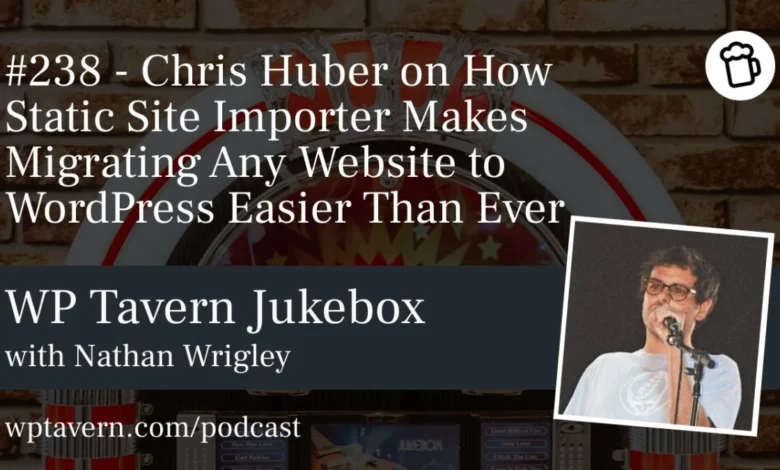
Software engineers, including Chris Huber, have utilized AI orchestration to iterate on the importer’s capabilities. By using large language models to compare source sites with their imported counterparts, developers can identify discrepancies in layout, styling, or functional elements. These AI agents are tasked with analyzing the output and suggesting code improvements, which are then integrated into the tool through automated pull requests. This "loop" of continuous improvement means that the importer becomes more capable with every site it processes.
In early 2025, the integration of this tool into the WordPress Studio CLI environment marked a turning point for accessibility. By allowing developers to execute a simple command—"studio create-from [URL]"—the entire migration pipeline is triggered, from the initial crawl to the final block-based theme generation. This has reduced the time-to-market for site migrations from weeks of manual labor to mere minutes of processing time.
Broader Industry Implications and Market Impact
The implications for the broader web development market are profound. For web agencies, the barrier to entry for taking on migration-heavy projects has historically been the high labor cost of re-platforming. By automating the conversion of static sites into editable block themes, agencies can pivot from "rebuilding" sites to "refining" them, allowing for higher profit margins and faster client onboarding.
Furthermore, this technology poses a competitive challenge to proprietary "drag-and-drop" website builders. If a user can move their entire site—complete with layout, branding, and assets—from a closed platform to an open-source WordPress environment with a single click, the "lock-in" effect that these proprietary platforms rely on is significantly diminished.
Data from the WordPress project suggests that while the tool currently succeeds in creating high-fidelity copies for brochure-style sites roughly 50% to 60% of the time, the success rate for complex e-commerce integrations, such as those involving WooCommerce, remains a work in progress. The current roadmap focuses on enhancing the integration of WooCommerce products, event calendars, and sophisticated form providers, aiming to make these features "native" to the migration process by late 2026.
Challenges and the Future of Web Interoperability
Despite the rapid progress, the team behind the Static Site Importer acknowledges significant hurdles. Large-scale websites, such as those with tens of thousands of pages or complex, highly dynamic JavaScript-heavy architectures, continue to push the boundaries of the tool’s current capabilities. Issues involving SVG rendering, complex form handling, and the management of large-scale product catalogs remain focal points for future updates.
There is also a broader question regarding the future of web standards. As AI-generated websites become increasingly common, the ability to convert these generated HTML outputs into manageable CMS environments will be critical. The Static Site Importer is positioned not just as a tool for "moving" sites, but as a bridge between the static web and the dynamic, block-based future of content management.
By aligning the tool with WordPress Core standards, the development team hopes to foster a culture of openness. While the project is currently driven largely by Automattic, there is a clear appetite for community contribution. Agencies that specialize in migrations have already begun experimenting with the code, providing feedback that helps shape the tool’s roadmap.
As of mid-2025, the tool is available via GitHub, allowing developers to contribute to the codebase and test it against a wide variety of edge cases. The ultimate vision is a web where content is truly liberated, where users have the autonomy to choose their CMS based on features and functionality rather than the fear of being unable to leave their current host.
In conclusion, the combination of Data Liberation and the Static Site Importer represents a fundamental shift in how the web is navigated. By removing the technical and economic barriers to platform migration, the WordPress project is not only securing its own future but is also advocating for a more open and flexible digital landscape. As the technology matures, it is expected that the "click-and-migrate" model will become the industry standard, effectively ending the era of proprietary platform entrapment and ushering in a new age of user-centric web ownership.