Jumplinks Flow Revolutionizes WordPress Collaboration by Bridging the Gap Between Human Feedback and AI Autonomous Agents

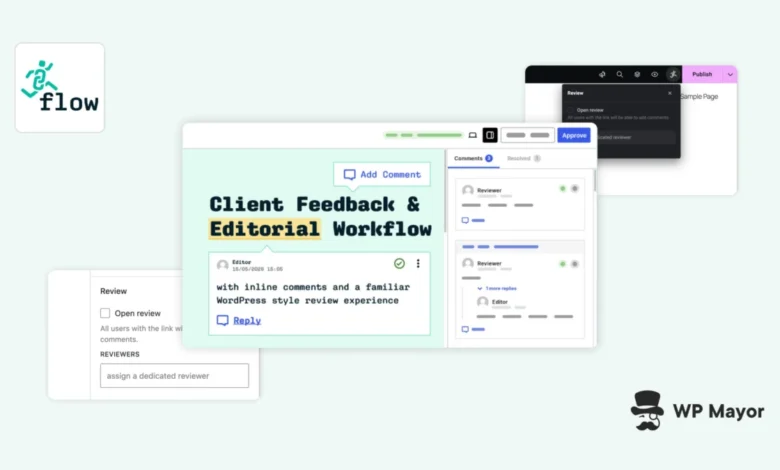
The traditional workflow for web development client reviews has long been plagued by inefficiency and ambiguity. Designers and developers frequently contend with a fragmented feedback loop: clients often submit requests via disparate channels, such as annotated screenshots, lengthy email threads, or imprecise phone calls. This disjointed process often leads to miscommunication, where the context of a revision request is lost by the third or fourth iteration. Jumplinks Flow, a sophisticated WordPress plugin developed by Jumplinks Systems, seeks to resolve this systemic friction by moving the review process directly onto the rendered web page, effectively digitizing the "red-pen" editorial experience.
The Evolution of Editorial Workflow in WordPress
The origins of Jumplinks Flow are rooted in the rigorous demands of editorial teams and professional agencies. Initially conceived as a workflow management tool, the plugin drew architectural inspiration from Git, the industry-standard version control system for software development. By adopting a "merge-request" style of review—where a page is drafted, subjected to a peer-review cycle, modified based on specific feedback, and ultimately approved—the developers successfully brought professional software development methodologies to the content management system (CMS) market.
The transition from an internal editorial tool to a client-facing application marked a pivotal shift for Jumplinks Systems. The company identified that the same logic governing code reviews was perfectly suited for agency-client handoffs. By allowing developers to send a secure, private magic link to clients, the need for clients to maintain WordPress user accounts—a common security and administrative hurdle—was eliminated. This streamlined approach allows for feedback to be pinned directly to the live environment, ensuring that the visual context of a request is never misinterpreted.
Architecture and Integration: How Flow Operates
Jumplinks Flow functions as a layer that sits alongside existing website builders, maintaining high compatibility with major WordPress page builders, including the native Block Editor, Elementor, Bricks, Beaver Builder, Divi, Avada, Breakdance, and Oxygen. A primary technical advantage of this implementation is that reviewers interact exclusively with the rendered front-end of the site. This ensures that the review process reflects the exact visual experience of an end-user, including headers, footers, and complex CSS spacing, without the reviewer ever needing to navigate the underlying builder interface.

From a data security and sovereignty perspective, Flow differentiates itself from third-party feedback platforms such as BugHerd or Marker.io. While many SaaS-based feedback tools rely on external servers to host metadata and screenshot storage, Flow operates within the WordPress environment. All comments, status updates, and historical review logs are stored directly within the site’s own database. The only external communication involves fetching Gravatar icons for user profiles, a design choice that appeals to agencies prioritizing data privacy and compliance.
The Integration of AI Agents and the Abilities API
The most significant recent update to the Flow ecosystem is its integration with the WordPress Abilities API and Model Context Protocol (MCP). As artificial intelligence becomes an increasingly integral part of site building, the challenge has shifted from "how to build" to "how to refine." Developers utilizing AI agents to generate page layouts often struggle to communicate specific adjustments to the model.
Flow addresses this by exposing its comment queue to AI agents. When a human reviewer leaves a comment anchored to a specific section of a page, the AI agent can ingest this feedback, interpret the request, execute the necessary changes, and report back. This creates a closed-loop system where the AI is not working in a vacuum but is instead responsive to human-in-the-loop oversight.
According to documentation provided by Jumplinks Systems, the AI is instructed to request clarification if a comment is ambiguous, ensuring that the model does not "hallucinate" changes or misinterpret instructions. Crucially, the system enforces a mandatory human approval gate; while an AI can perform the work, it lacks the administrative privilege to finalize or publish a page, thereby maintaining human control over the final output.
Comparative Analysis: Efficiency and Resource Allocation
In the context of the broader web development industry, the implementation of such tools has measurable impacts on project timelines. Industry data consistently suggests that the "revision phase" of a web project accounts for roughly 30% to 40% of the total production time. By centralizing feedback, agencies can theoretically reduce this time sink by eliminating the need to cross-reference multiple communication streams.

Furthermore, the pricing model of Jumplinks Flow is structured to address the scaling issues faced by agencies. Many competing feedback tools charge per-reviewer or per-seat, which can become prohibitively expensive during the final stages of a project when multiple stakeholders require access. Flow’s decision to adopt a per-site pricing model—which allows for unlimited reviewers—is a strategic move designed to encourage wider stakeholder participation without penalizing the agency’s overhead costs.
Chronology of Development and Future Outlook
The trajectory of Jumplinks Flow highlights a broader trend in the WordPress ecosystem: the transition from static site management to dynamic, AI-augmented workflows.
- Initial Phase: Development of the internal editorial workflow plugin based on Git principles.
- Expansion Phase: Introduction of the external "magic link" feature, enabling client-side collaboration without CMS access.
- Integration Phase: Deep-dive support for major page builders to ensure visual accuracy during the review process.
- AI-Readiness Phase: Deployment of the WordPress Agent Connector and MCP support, allowing autonomous agents to participate in the feedback loop.
The current landscape of supported connectors includes various AI-driven platforms such as the Elementor MCP beta, AI Engine, and Novamira. This list is expected to grow as the standards for AI-to-CMS communication continue to solidify. The ability for a developer to set up a site, connect an AI agent, and allow a client to provide visual feedback that is instantly processed by that agent represents a fundamental shift in web production.
Practical Implementation and Security Standards
For teams looking to adopt this workflow, the process is designed to be low-friction. After installing the plugin, administrators select the content types eligible for review. Once a reviewer is assigned via email, they receive a secure tokenized link. Mandatory review settings can be configured to "lock" the publish button on the server level, preventing any accidental deployments before the reviewer’s approval is recorded in the database.
This server-side enforcement is critical. Because the constraint is applied at the application layer, it cannot be bypassed through REST API calls or other programmatic workarounds, providing a robust security guarantee for teams working in high-stakes, enterprise-level environments.

Implications for the Digital Agency Market
The emergence of tools like Jumplinks Flow signals a move toward professionalization in the WordPress space. As clients demand higher levels of transparency and faster turnaround times, the agencies that survive will be those that can demonstrate a rigorous, documented, and error-proof production process.
By removing the reliance on scattered emails and screenshots, Jumplinks Flow provides a historical audit trail. In legal or contractual disputes regarding project scope and sign-offs, having a centralized, timestamped record of every piece of feedback, the corresponding revision, and the final approval serves as an invaluable asset for project managers.
In summary, the integration of visual feedback systems with AI agent capability is not merely a convenience—it is a functional necessity for modern development teams. By providing a platform that bridges the gap between human aesthetic judgment and machine efficiency, Jumplinks Flow establishes a new benchmark for how WordPress projects should be managed in the age of generative AI. Whether for a small freelance operation or a large-scale agency, the ability to automate the logistics of feedback allows developers to refocus their efforts on the core task of site architecture and design innovation.
Related posts: