The Rise of Agentic Commerce and AI Integration
The most significant trend currently reshaping the ecommerce industry is the transition from passive AI—which merely generates content or insights—to "agentic" AI, which is capable of executing complex, multi-step workflows.
Lightspeed Commerce has pioneered this shift with its new agentic capabilities for retail. Unlike traditional analytics platforms that present data for a human to interpret, Lightspeed’s system leverages AI to reason across a merchant’s entire ecosystem—including catalog data, inventory levels, and sales history. By recommending specific procurement actions and preparing them for merchant approval, the platform effectively reduces the manual labor associated with inventory management. This capability is currently being rolled out in an opt-in beta, signaling a broader industry move toward "autopilot" retail management.

Parallel to this, Oracle NetSuite has introduced QuickStart, a free, AI-first financial platform designed to assist early-stage startups. By embedding AI agents directly into accounting and subscription management workflows, NetSuite is addressing a critical pain point for founders: the need to establish a scalable financial foundation with limited resources. In a similar vein, the startup Loops has secured $3.5 million in seed funding to build what it terms an "AI operating system for commerce." The company’s focus on unifying shopper intent and product discovery into a single, cohesive workflow highlights the industry’s desire to move away from fragmented, multi-product AI stacks.
Global Payments and Cross-Border Complexity
As digital trade becomes more borderless, financial service providers are racing to simplify the complexities of international settlements and regulatory compliance.
Fiserv’s launch of Commerce Hub represents a significant development for global merchants. By consolidating onboarding, payment orchestration, and operational controls into a single API integration, Fiserv aims to mitigate the friction often associated with entering new markets. This is particularly relevant as merchants grapple with emerging local payment methods and the rising demand for fraud protection.

Simultaneously, Mastercard and BVNK have unveiled the Global Money Platform, a sophisticated infrastructure service that bridges the gap between traditional fiat currencies and the burgeoning stablecoin market. By allowing businesses to manage multiple currencies and stablecoin assets through a single point of integration, this platform provides a modern solution for international treasury management. This development arrives at a time when stablecoins are increasingly being recognized as a viable tool for lowering cross-border transaction costs and improving settlement speeds.
Enhancing Discovery and Customer Engagement
Search and discovery remain the primary battlegrounds for conversion. Algolia’s new native integration with Shopify B2B is a critical development for wholesale and distribution brands. By enabling account-specific search results, Algolia ensures that business buyers see only the products they are authorized to purchase at negotiated price points. This move effectively brings the sophisticated search capabilities of the B2C sector into the B2B space, where complexity and contractual obligations often hinder the digital customer experience.
Google is also expanding its influence on the path to purchase with the rollout of its Universal Cart in the United States. Integrated into Google Search and the Gemini app, the cart is powered by Google’s vast Shopping Graph, which catalogs over 60 billion product listings. By providing real-time notifications on price fluctuations and availability, and facilitating checkout via Google Pay, the tech giant is positioning itself as an essential intermediary in the consumer journey.
Marketing, Returns, and Operational Efficiency
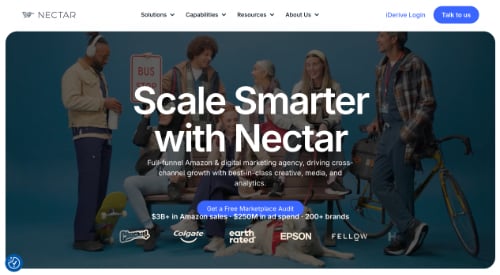
The marketing landscape is witnessing a pivot from keyword-centric bidding to audience-based targeting. Nectar’s launch of "Customer Atlas" for Amazon Marketing Cloud is a prime example of this evolution. By indexing brand purchase history against Amazon’s extensive audience segments, the platform allows marketers to move beyond simple keyword bidding, instead focusing on high-intent shopper segments. This shift is expected to improve return on ad spend (ROAS) by prioritizing efficiency in a highly competitive marketplace.
Returns management, a perennial challenge for online retailers, is also seeing technological disruption. Appriss Retail’s "Engage Insights" provides a unified view of returns data across multiple channels. By aggregating information on claims, SKUs, and customer behavior, the platform enables retailers to identify patterns of return fraud and operational inefficiency that were previously obscured by data silos.
For suppliers and manufacturers, TopDawg has upgraded its multichannel distribution hub to simplify the dropshipping process. By offering a centralized system to manage inventory, process orders, and synchronize catalogs across various sales channels, the platform aims to democratize access to the broader retail ecosystem, particularly for smaller U.S.-based suppliers.

Regional Developments and Startup Innovation
The global nature of these advancements is further evidenced by international rollouts. EasyShop has launched a multi-category marketplace across 21 European countries. By eschewing the traditional retail-led model—where the platform competes with its own sellers—EasyShop provides a neutral, retailer-focused marketplace that automates VAT calculation, a significant hurdle for cross-border trade within the European Union.
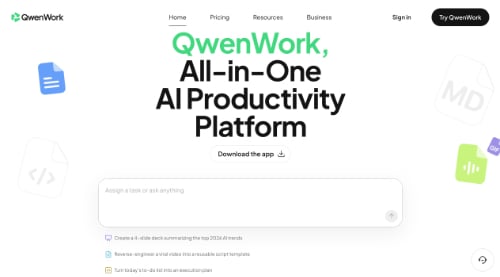
In China, Alibaba’s QwenWork platform is testing "QwenWork E-Commerce," an AI tool designed to boost operational efficiency for local merchants. By automating tasks ranging from content creation to cross-platform advertising management, this tool underscores the global demand for AI-driven productivity solutions in retail operations.
Meanwhile, the creative economy is being integrated into the sales funnel via ShopBack’s "SparkHub." This tool provides a structured environment for brands to partner with creators, allowing for the end-to-end management of campaigns—from brief creation to the tracking of purchases generated by influencer content. This reflects a maturation of the creator economy, where brands are increasingly demanding measurable ROI rather than just brand awareness.
Implications for the Future of Commerce
The rapid deployment of these tools suggests that the next phase of ecommerce will be defined by three key pillars:
- Workflow Automation: The shift toward "agentic" systems means that human oversight will increasingly move from manual execution to strategic review. As platforms like Marklo and Lightspeed AI gain traction, the role of the ecommerce manager will evolve into that of an orchestrator of AI agents.
- Financial Integration: The integration of stablecoins, tax compliance platforms like SalesTaxx, and automated accounting tools like NetSuite’s QuickStart suggests a move toward "embedded finance," where the financial infrastructure of a business is tightly coupled with its operational front-end.
- Data-Driven Personalization: Through tools like Algolia’s Shopify integration and Google’s Universal Cart, the customer experience is becoming hyper-personalized. This shift towards tailored discovery, based on individual authorization or behavior, is set to become the standard expectation for both B2B and B2C buyers.
As these technologies continue to mature, the barrier to entry for global commerce is lowering, but the complexity of managing an integrated, AI-driven tech stack is rising. Merchants who successfully adopt these tools will likely benefit from significant gains in operational efficiency and a more sophisticated understanding of their customer base. However, the success of these implementations will depend on the ability of retailers to maintain a cohesive strategy amidst the influx of new, specialized platforms.
This week’s developments illustrate a clear trajectory: the ecommerce industry is rapidly moving away from a collection of disparate tools and toward a unified, intelligent, and highly automated ecosystem. As companies like Miracly secure significant pre-seed funding and legacy players like Fiserv and Oracle iterate on their core offerings, the message to the market is clear: the future of retail is agentic, international, and data-centric. Merchants, whether they are individual entrepreneurs or global enterprises, must now contend with a landscape where speed, integration, and AI-enabled decision-making are no longer optional advantages, but fundamental requirements for growth.