The Chasm Between Algorithmic Guessing and True Personalization in Modern Marketing

Modern personalization has reached a point of technical sophistication where algorithms can predict a consumer’s next purchase with uncanny precision. Yet, despite the vast influx of data and the deployment of advanced machine learning models, a critical disconnect remains: consumers are increasingly feeling that brands do not actually know them. While recommendation engines are adept at identifying that a user has browsed a specific product three times, they frequently fail to recognize the human context—such as the customer’s profession, life stage, or community membership—that would transform a generic transaction into a meaningful relationship.
Recent research conducted by SheerID and Censuswide highlights this growing tension within the marketing landscape. According to the study, while 55% of consumers acknowledge that tailored offers are useful, only 36% feel that these offers demonstrate a genuine understanding of their identity. Even more concerning for brands is the negative sentiment generated by these efforts; nearly 30% of respondents reported that personalized offers feel intrusive, while a similar percentage noted that these communications are often based on inaccurate, algorithmically derived assumptions. This suggests that the current obsession with "relevance" may be missing the mark, leading to friction rather than loyalty.

The Limits of Inferred Data
For the past decade, the marketing industry has prioritized inference. By leveraging browsing history, click-stream data, and modeled intent, brands have sought to make offers feel timely and pertinent. However, this strategy is hitting a wall of diminishing returns. When a brand relies solely on behavioral observation, it lacks the context that transforms an ad from a nuisance into a service. A customer who has viewed five different laptops might be a student preparing for the upcoming semester, a graphic designer looking for a hardware upgrade, or a parent shopping for a child’s graduation gift. Without explicit data, the brand remains trapped in a cycle of guessing, which frequently results in misaligned messaging.
Data from the SheerID research reveals that consumers are not necessarily opposed to being tracked, but they are increasingly sophisticated about the value exchange. Approximately 30% of consumers prefer a hybrid approach, utilizing a combination of inferred behavioral data and explicit, consent-based attributes. Only 28% rely solely on inference, and 26% prefer to provide information directly to the brand. This indicates that the most successful personalization strategies of the future will likely be those that transition from "surveillance-based" guessing to "dialogue-based" recognition.
Friction and the Economics of Data Exchange
The core challenge for marketing operations teams is determining when to stop guessing and start asking. The traditional focus on "frictionless" forms—obsessing over whether a signup page has four fields or six—is largely misplaced. The real source of friction is not the time it takes to complete a form, but the perceived irrationality of the request.

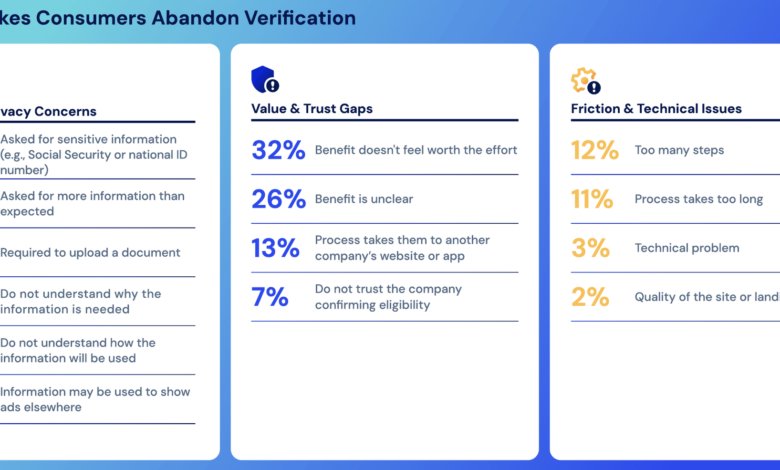
Consumers are generally willing to exchange personal information, provided the incentive is proportionate and transparent. The research found that the most effective drivers for data sharing include one-time savings, loyalty rewards, and access to exclusive trials. Conversely, the "abandonment rate" spikes when consumers feel their privacy is being encroached upon without a clear benefit. Specifically, 43% of consumers would abandon a verification process if asked for sensitive personal information, and 38% would disengage if the scope of the data request exceeded their expectations.
The "surprise factor" is a significant hurdle. More than half (57%) of surveyed consumers demand to know the benefit of sharing data before they begin the process, and 45% require a clear explanation of how their data will be utilized. This indicates that transparency is no longer just a legal requirement for GDPR or CCPA compliance; it is a fundamental requirement for consumer conversion. When a brand asks for data without clearly articulating the value proposition, the request is perceived as extractive rather than additive.
The Perils of Over-Collection and Third-Party Redirection
As organizations scramble to build comprehensive customer profiles, many are falling into the trap of collecting too much, or collecting it in the wrong way. There is a clear threshold for comfort: while most users are willing to share an email address or an age range, there is significant resistance to disclosing employment details, membership affiliations, or government-issued identification numbers.

Marketing operations teams must adopt a "necessity-first" rule: if the data point does not materially improve the customer experience or enable a higher tier of service, the brand should not be asking for it. Over-collection does not just pose a security risk; it creates an experience that feels bloated and untrustworthy.
Furthermore, the environment in which data is requested significantly impacts conversion. The research indicates that 67% of consumers prefer to confirm their status or eligibility directly on the brand’s own app or website. In contrast, only 11% are comfortable with being redirected to a third-party site to complete a verification process. Every time a consumer is redirected, the brand introduces doubt—forcing the user to wonder who is handling their data, why they have been pushed away from the main platform, and whether they are still interacting with the same trusted entity. These moments of hesitation are death knells for conversion funnels.
Long-Term Loyalty: Beyond the First Purchase
The value of genuine recognition becomes increasingly apparent after the initial transaction. When a brand demonstrates that it remembers a customer’s preferences or history, the likelihood of repeat business increases significantly. Sixty-two percent of respondents stated that being recognized would make them more likely to purchase again, and 56% said they would be more likely to recommend the brand to others.

The most effective form of recognition, according to consumers, is the automation of loyalty benefits. Sixty-one percent of those surveyed prioritize automatic rewards, while 33% value the brand’s ability to remember their historical preferences. Perhaps most importantly, 23% of consumers specifically value brands that exercise restraint—that is, not sending promotions for products they do not purchase or have no interest in.
This finding underscores a critical shift in modern marketing strategy: knowing what not to send is just as valuable as the decision of what to promote. Personalization teams often suffer from a "noise" problem, where the desire to show activity results in an overwhelming volume of irrelevant communication. True personalization is an exercise in curation.
Strategic Implications for the Future
The current state of the industry suggests that the next phase of personalization will be defined by "permissioned intelligence." As third-party cookies fade and privacy regulations tighten, the reliance on inferred, black-box behavioral modeling will become increasingly difficult to sustain. Brands that succeed in the coming years will be those that view their customers as active participants in the personalization process.
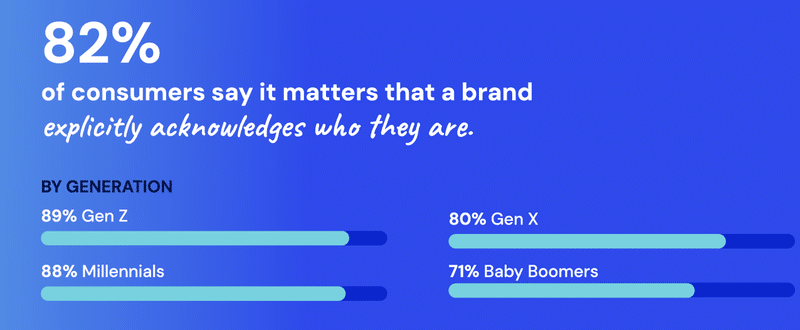
To achieve this, marketing leadership must prioritize the following:
- Transparency as a Feature: Make the "why" and "how" of data collection a front-and-center element of the user experience. If a brand wants to know a customer’s occupation to offer a professional discount, that benefit must be explicitly stated before the first field is filled.
- Rationalize Data Requests: Audit current lead-generation and profile-completion flows. Remove any fields that do not serve a specific, value-added purpose for the customer.
- Prioritize On-Site Experiences: Invest in integrated, embedded verification and profile management tools that keep the customer within the brand’s own digital ecosystem.
- Embrace Restraint: Use data to prune the communication strategy. If a customer has a clear history of purchasing only organic goods, stop sending them coupons for conventional products. This form of "negative personalization" builds trust more effectively than constant, scattershot engagement.
The evidence is clear: consumers are tired of being treated as a collection of data points to be manipulated by an algorithm. They are, however, willing to be treated as individuals by brands that are willing to earn that status through transparency, relevance, and respect for their boundaries. As the marketing industry matures, the brands that move away from the "guess and check" model of the early 2020s toward a more honest, consent-driven approach will be the ones that secure long-term loyalty in an increasingly crowded and skeptical marketplace.