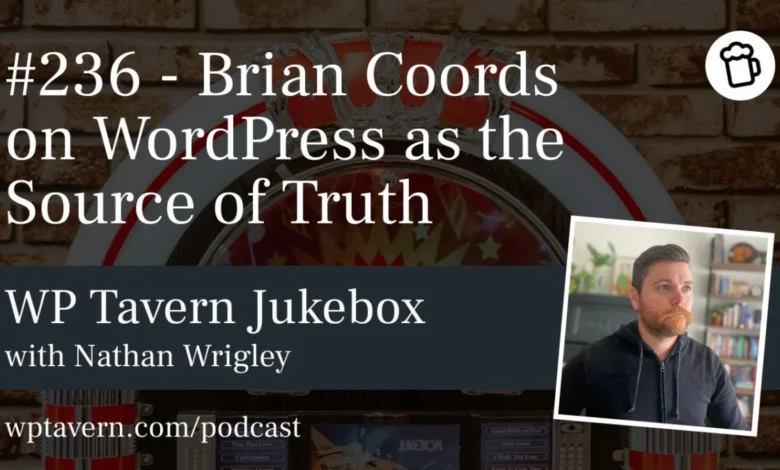
In an era defined by the rapid proliferation of artificial intelligence and the decentralization of web development tools, the WordPress ecosystem is currently grappling with a fundamental question of identity and utility. During the recent WordCamp US, a significant discourse emerged regarding the role of the WordPress platform not merely as a content management system, but as the central repository for organizational design, content integrity, and workflow management. Brian Coords, a developer advocate at WooCommerce and a veteran of the agency landscape, served as a primary voice in this discussion, positing that the platform’s survival in an AI-driven market depends on its ability to act as the "source of truth" for digital projects.
The Evolution of the Digital Agency Workflow
For the past two decades, web development agencies have operated in a fragmented environment. A typical project lifecycle involves managing assets across disparate platforms: design systems in Figma, technical specifications in Google Drive, project management in Jira, and the final implementation in WordPress. This siloed approach has historically been manageable, but the advent of generative AI has introduced a new layer of complexity.
AI tools, while proficient at generating code and content in isolation, often struggle with the granular consistency required by professional enterprises. When an agency allows generative AI to operate without a centralized framework, the resulting output frequently lacks cohesion. As agencies race to adopt AI to increase efficiency, they risk losing the brand consistency that clients pay for. Coords argues that the integration of block themes within WordPress offers a solution. By standardizing patterns, templates, and design tokens directly within the WordPress dashboard, agencies can create a "guarded" environment where AI is constrained by the established visual and linguistic standards of the brand.
WordPress and the Staying Power of Established Platforms
Critics of WordPress often point to the rise of static site generators and AI-native development tools as evidence that the platform is becoming obsolete. However, historical data suggests that mature platforms possess an inherent resilience, particularly when they support complex integrations and long-standing content archives.
The WordPress ecosystem currently powers over 40% of the internet. This massive market share is not merely a result of its accessibility, but of its reliability. Unlike experimental AI-built frameworks, WordPress offers a stable, battle-tested environment for e-commerce and enterprise publishing. For businesses that require high-availability infrastructure and complex database management, the transition to "AI-vibe coding"—where code is generated on the fly without a robust underlying architecture—presents an unacceptable level of risk.
The longevity of the platform is rooted in its ability to adapt. The transition from the classic editor to the block-based Gutenberg system, while controversial and lengthy, has laid the groundwork for a more modular, component-driven future. This shift is essential for agencies looking to automate repetitive tasks without sacrificing the architectural integrity of their builds.
Content Guidelines and the Human Element
A notable development in the WordPress core project is the exploration of "Content Guidelines." This feature, designed to standardize organizational rules, style guides, and prohibited terminology, reflects a broader shift toward ensuring that the software can manage human-authored and AI-assisted content with equal rigor.
While the project was recently paused to allow for further testing in real-world scenarios, its potential impact on newsrooms and large-scale enterprises is significant. By embedding content standards into the CMS, WordPress provides a failsafe that prevents the "drift" often seen in multi-author environments. Even if the AI integration remains secondary, the utility for human editors—who must maintain brand voice across hundreds of pages—is immense.
Industry observers note that there is a discernible trend toward the "artisan web." As AI-generated content saturates the internet, there is growing evidence of a consumer preference for provably human-authored material. This "human premium" is expected to influence how agencies market their services. Agencies that can demonstrate a hybrid workflow—using AI for structural efficiency while keeping human oversight for creative direction—are positioning themselves as the premium tier of the market.
The WooCommerce Pivot: Balancing Core Functionality
Within the WooCommerce ecosystem, the shift toward block-based building is part of a broader strategy to reduce "plugin sprawl." Historically, WooCommerce stores required a heavy load of third-party extensions to achieve basic functionality, such as custom headers, mini-carts, and product carousels. This dependence on numerous plugins created maintenance challenges and increased the likelihood of security vulnerabilities during updates.
By integrating these features directly into the core block system, WooCommerce is attempting to stabilize the environment for store owners. This move, however, creates a complex tension with the developer community. Many independent developers rely on the revenue generated by these small-scale utility plugins.
According to WooCommerce leadership, the strategy is not to dismantle the developer economy but to prioritize the reliability of the core platform. As AI lowers the barrier to entry for building simple plugins, the market for "set-it-and-forget-it" extensions is expected to diminish. The remaining value will lie in complex, bespoke integrations that require a human understanding of business logic—an area where AI is currently less capable.
Future Implications for Agency Business Models
The future of the agency business model appears to be trending toward a consultative approach. As the technical barrier to building a website lowers, the value of an agency shifts from the act of building to the act of architecting.
Agencies that thrive in the next decade will likely be those that treat the WordPress installation as a holistic product. This includes:
- Systematization: Moving away from bespoke code for every page and toward a library of reusable, approved blocks.
- AI Stewardship: Implementing internal AI guidelines that force the technology to adhere to the design tokens and content rules stored within the WordPress database.
- Dashboard-Centric Management: Recognizing that business owners value the ability to log into a familiar, centralized interface to manage their analytics, inventory, and content, rather than interacting with disparate, automated agents.
A Period of Consolidation
The current state of the WordPress ecosystem can be characterized as a period of consolidation. After years of rapid expansion and the introduction of transformative features, the community is now focused on refinement and stabilization. The hesitation to fully adopt block themes among some legacy agencies is less a rejection of the technology and more a reflection of the pragmatic nature of the e-commerce sector: if a system is operational and generating revenue, the risk of migration is often weighed heavily against the potential benefits.
However, as block themes become more sophisticated—offering granular control over style, typography, and layout without the need for custom CSS—the incentive to switch will increase. The goal for developers is to reach a point where the CMS serves as the primary source of truth, allowing for a seamless transition between the design phase and the live site.
In conclusion, the discourse surrounding WordPress, AI, and agency workflows highlights a significant shift in how the web is being built. While the lure of AI automation is strong, the need for stability, brand consistency, and human-led creative direction remains paramount. By positioning itself as a reliable, centralized platform that can both host content and enforce organizational standards, WordPress is reinforcing its relevance in an increasingly automated digital landscape. The coming years will likely prove that for high-stakes digital projects, the value of a trusted, "at-home" environment for developers and business owners alike is an asset that cannot be easily replaced by generative algorithms.
Related posts: