B2BKing Integrates AI Agent Capabilities Using WordPress Model Context Protocol for WooCommerce Store Management

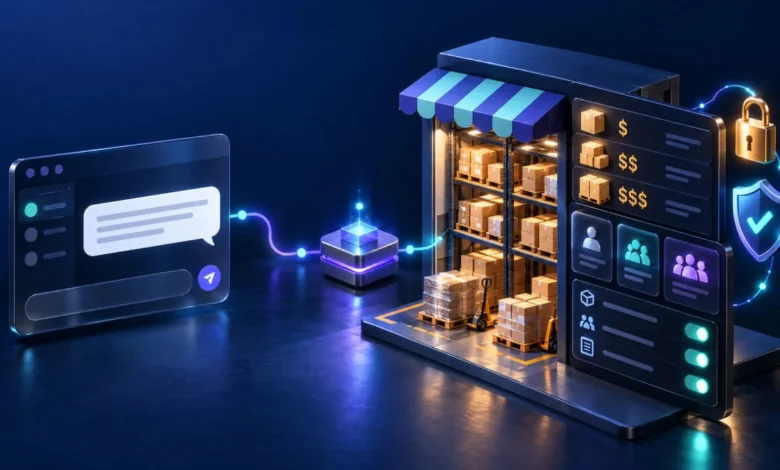
The landscape of e-commerce administration is undergoing a significant transformation as the integration of Artificial Intelligence shifts from simple content generation to active, systemic management of back-end infrastructure. B2BKing, a prominent plugin for WooCommerce B2B and wholesale operations, has officially adopted the Model Context Protocol (MCP) to allow AI agents to configure complex store settings directly. This development marks a departure from traditional "AI-powered" labels, which often denote superficial chat interfaces, moving instead toward a functional, agent-driven workflow that utilizes the official WordPress Abilities API.
The Evolution of AI in WordPress Development
For years, the WordPress ecosystem has seen a proliferation of AI tools designed primarily for drafting blog posts, summarizing data, or generating meta-descriptions. However, the maturation of large language models (LLMs) has necessitated a move toward "agentic" workflows—systems where an AI can perceive a state, reason through a set of requirements, and execute specific modifications.
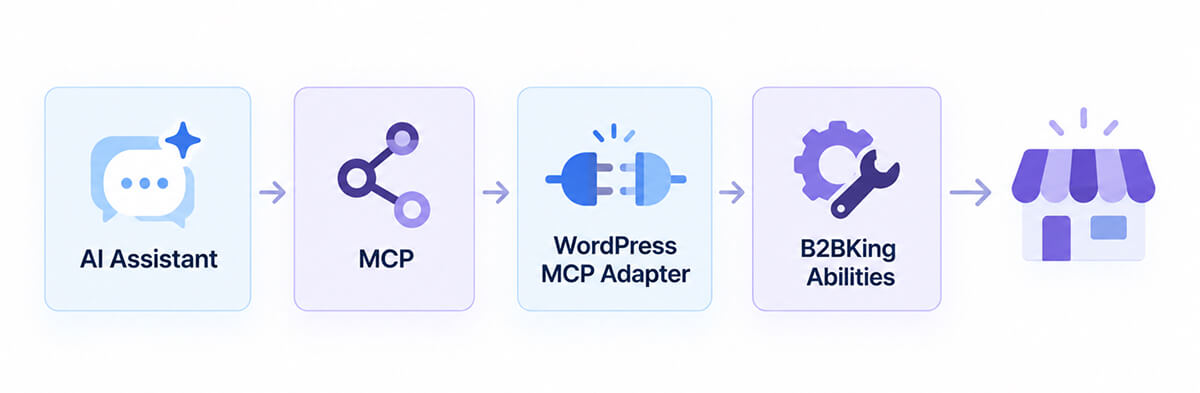
The introduction of the WordPress Abilities API in version 6.9 provided the foundational architecture for this shift. By allowing plugins to register their internal capabilities as standardized functions, the core WordPress software created a bridge between local database settings and external AI agents. B2BKing’s implementation leverages this by allowing assistants like Claude, Codex, and Cursor to read store configurations and execute adjustments without requiring the user to navigate complex, multi-layered settings menus.

Chronology of the Integration
The path toward this integration began in late 2025 with the formalization of the WordPress Abilities API, which was designed to standardize how AI agents interact with the WordPress REST API and WP-CLI. Following this, the development of the WordPress MCP Adapter—an open-source project designed to bridge the gap between AI protocols and WordPress core—provided the necessary framework for plugins to expose their functions.
B2BKing, which has supported over 15,000 WooCommerce stores since its inception seven years ago, identified a critical bottleneck in the B2B onboarding process: the sheer volume of manual configuration required. By integrating with the MCP in late 2026, the plugin transitioned from a static set of tools into an interactive agentic system. This timeline mirrors the broader industry trend of moving toward "infrastructure-as-code" or, in this case, "infrastructure-as-conversation," where administrative tasks are offloaded to intelligent systems that adhere to pre-defined security and permission constraints.
The Technical Framework: Abilities API and MCP
The technical efficacy of this integration rests on two pillars: the WordPress Abilities API and the Model Context Protocol (MCP). The Abilities API functions as an interface registry. When a plugin such as B2BKing registers a function—for instance, "Create Customer Group"—it includes a schema that defines the inputs required (e.g., group name, credit limit, discount percentage) and the permissions needed to execute that task.
The Model Context Protocol acts as the universal language for this communication. By using the official WordPress MCP Adapter, B2BKing ensures that its settings are not siloed within a proprietary dashboard. This allows for interoperability across various AI clients. Whether an administrator uses VS Code, Claude, or a bespoke terminal-based agent, the protocol translates the natural language command into the precise JSON payload required by the WordPress back end. This adherence to open standards ensures that store owners are not locked into a specific AI vendor, maintaining the decentralized ethos of the WordPress community.
Operational Benefits for Wholesale Retailers
Managing a wholesale store involves a highly structured set of parameters: managing logged-out user visibility, tiered pricing structures, minimum order quantities (MOQs), and credit limits. In a traditional environment, these settings are spread across dozens of tabs. An agency managing twenty different B2B clients would historically spend hours performing repetitive data entry to synchronize these settings.
With the B2BKing MCP integration, this process is condensed into a single natural language request. A user might prompt an assistant: "Configure this store for hybrid B2B/B2C access, restrict pricing to registered wholesale accounts, and apply a 15% discount to the ‘Electronics’ category for the ‘Gold’ customer tier." The AI agent then queries the store’s current state via the Abilities API, validates the existing categories and user groups, and executes the necessary database updates. This reduces the risk of human error—such as misconfigured tax settings or accidentally exposing wholesale pricing to retail customers—by ensuring that all changes pass through the plugin’s established logic filters.
Security and Data Integrity Protocols
A primary concern for any store owner granting an AI write-access to their database is the potential for system instability. B2BKing addresses this through several layers of security. First, the integration relies on the standard WordPress user role and capability system. An AI agent can only perform actions that the logged-in user is authorized to perform; it cannot bypass existing security permissions.
Furthermore, the integration employs a validation layer. Before a change is applied, the plugin validates the request against the store’s current constraints. For instance, if an AI attempts to set a 120% discount on a product, the plugin’s internal logic will reject the input, preventing the creation of negative or unsustainable pricing models. Additionally, developers have access to administrative filters, such as b2bking_mcp_enabled and b2bking_mcp_write_enabled, which allow for the granular restriction of AI capabilities. This ensures that in a production environment, an agency can restrict an AI to "read-only" status, effectively turning the agent into a reporting and diagnostic tool rather than an administrative one.

Broader Implications for E-commerce Agencies
The shift toward AI-configured plugins represents a fundamental change in the business model of digital agencies. As the cost of labor associated with routine store setup decreases, agencies are expected to pivot toward higher-level strategic consulting and custom development that AI cannot yet replicate.
Furthermore, this integration serves as a proof-of-concept for the "Smart Store" model. As more plugins adopt the Abilities API and MCP, the dream of a "self-healing" or "self-configuring" store becomes more plausible. In this future, an AI agent could monitor a store’s performance data and automatically suggest or implement changes to improve conversion rates, such as adjusting wholesale MOQs based on seasonal demand or updating shipping rules in response to carrier rate changes.
Conclusion and Future Outlook
The integration of B2BKing with the Model Context Protocol is an illustrative case study in the maturation of AI tools within WordPress. By focusing on configuration rather than "vibe-coding" new features from scratch, the developers have prioritized stability and reliability. The system respects the existing, battle-tested logic of the plugin while leveraging the flexibility of modern LLMs to simplify administration.
As the WordPress community continues to refine the MCP and Abilities API, it is likely that other major e-commerce plugins will follow suit, further commoditizing store configuration and pushing the boundaries of what is possible in automated retail management. The focus now shifts to the adoption rate among store owners and the potential for these agents to move beyond simple configuration into more complex, data-driven decision-making roles within the WooCommerce ecosystem.
Related posts: