The rapid proliferation of generative artificial intelligence has fundamentally altered the landscape of digital design, injecting both unprecedented efficiency and profound anxiety into creative industries. While tools like OpenAI’s DALL-E, Midjourney, and Leonardo.ai have unlocked new frontiers in automated content creation, they have simultaneously sparked intense industry debates regarding copyright, authorship, and the displacement of human artists. Amid a digital ecosystem increasingly saturated with faceless chatbots and rigid, text-based interfaces, the software development company MacPaw embarked on a counter-intuitive mission: to humanize the AI experience. Spearheaded by designer Oleksii Hrzhehorzhevskyi, the initiative resulted in the creation of Eney, a proactive AI assistant designed to challenge the ubiquitous textbox paradigm and restore empathy, personality, and human oversight to digital workflows.
The Evolution of AI Interfaces and the Monotony of the Textbox
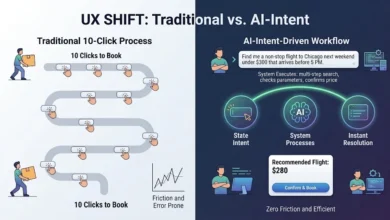
Since the mainstreaming of large language models, the primary mode of human-computer interaction has remained remarkably static. Whether utilizing conversational engines like ChatGPT or research-oriented platforms like Claude, users are predominantly greeted by a standardized interface: a blank text box set against a minimalist webpage. While this format offers familiarity and functional consistency, it inherently fosters a transactional, utilitarian dynamic between user and machine.
Industry analysts note that while text boxes excel at handling explicit prompts, they fail to integrate smoothly into complex, multitasking professional workflows. They remain passive tools waiting for input rather than proactive partners offering contextual assistance. Recognizing this limitation, design teams across the technology sector have begun investigating alternative interaction models. However, redefining AI interfaces requires a delicate balance between visual novelty and operational intuitiveness. A successful interface must transcend mere aesthetic overhaul to genuinely reduce cognitive load and enhance productivity.
Psychological Foundations of Character-Centric Design
To move beyond the transactional nature of traditional chatbots, MacPaw’s design team turned to evolutionary psychology for inspiration. Human beings are biologically and psychologically predisposed to connect with entities that exhibit recognizable traits, such as animals or animated characters. This inherent inclination forms the bedrock of character-driven design, a methodology that merges utilitarian functionality with relatable personality.
The conceptualization of Eney began with a core objective: to develop a proactive digital companion that could anticipate user needs within a workflow without becoming an intrusive distraction. Achieving this required meticulous calibration. The design team sought to imbue Eney with expressive, human-like emotions—cheerful and friendly yet restrained enough to avoid descending into juvenile or overly cartoonish territory.

Translating this vision into a functional user interface required rigorous prototyping and careful human animation. An overly animated or visually cluttered character risks fatiguing the user and obstructing workspace navigation. Consequently, the designers restricted Eney’s repertoire to a curated set of purposeful expressions and gestures. For instance, when processing complex computational tasks, Eney’s visual form transitions into a subtle loading indicator, utilizing minimal on-screen motion to prevent distraction.
After experimenting with various geometric configurations, the team selected a circular base shape. Circles inherently convey approachability, calmness, and fluidity, fostering the perception of a floating digital companion rather than a rigid, static application window. Furthermore, Eney’s minimalist facial architecture—specifically its expressive eyes—serves as the primary emotional conduit, allowing the assistant to convey nuance without relying on exaggerated facial features.
Color psychology also played a pivotal role in the development process. A vast majority of technology enterprises and AI developers predominantly utilize shades of blue, a color historically associated with intellect, corporate reliability, and technical precision. In a deliberate effort to differentiate Eney from competing market offerings while maintaining a warm, inviting atmosphere, MacPaw selected a distinctive pink palette. This strategic chromatic choice ensures high visual visibility and memorable brand association across diverse desktop environments.

The Broader Implications for Creative Professionals in the AI Era
The deployment of character-based AI assistants occurs against a backdrop of widespread apprehension within the creative sector. The emergence of generative models trained on vast datasets of copyrighted human art—frequently without explicit consent or compensation—has left many artists and designers feeling marginalized. Surveys conducted across design associations indicate that a significant majority of creative professionals harbor concerns regarding job security and the devaluation of manual craftsmanship.
Market analysts observe that while artificial intelligence drastically accelerates production timelines, it simultaneously highlights the irreplaceable value of human artistic direction, moral integrity, and emotional intelligence. The creation of Eney serves as a case study in this dichotomy. Although advanced algorithms and machine learning technologies supported the development pipeline, every qualitative decision—from stylistic nuances and behavioral parameters to nomenclature and chromatic harmony—was dictated by human designers.
Industry leaders emphasize that the integration of AI into creative workflows should be viewed as an augmentation of human capability rather than a total replacement. While prompt engineering enables rapid prototyping, the nuanced judgment required to curate, refine, and harmonize these outputs remains an exclusively human domain. Consequently, modern design curricula increasingly emphasize the cultivation of critical thinking and refined taste, asserting that these qualities appreciate in value as automated generation becomes commoditized.

Chronology of Development and Strategic Rollout
The conceptualization and realization of Eney progressed through several distinct phases, reflecting a methodical approach to human-centric software engineering:
- Initial Research and Conceptualization (Phase One): MacPaw design teams analyzed existing AI interface paradigms, identifying the limitations of the standard conversational text box and establishing the necessity for a proactive, contextual assistant.
- Psychological and Aesthetic Prototyping (Phase Two): Exploration of character archetypes, geometric forms, and emotional resonance. The team evaluated various animal and abstract shapes before standardizing the minimalist circular form and expressive eye architecture.
- Color Theory and Differentiation (Phase Three): Market analysis of competitor aesthetics leading to the intentional departure from conventional corporate blues in favor of an inviting, highly visible pink palette.
- Animation and Workflow Integration (Phase Four): Fine-tuning motion dynamics to ensure Eney’s expressions conveyed operational status without overwhelming the user or causing desktop distraction.
- Public Introduction and Industry Discourse (Phase Five): Official unveiling of Eney alongside critical reflections on the ethical responsibilities of designers navigating the generative AI era.
Industry Response and Expert Analysis
Technology analysts and UX researchers have largely praised initiatives that humanize software interactions, noting a growing consumer fatigue toward sterile, text-heavy interfaces. By embedding personality into background processes, developers can bridge the psychological gap between human users and complex algorithmic systems.
However, critics and ethicists caution that imbuing AI assistants with lifelike traits introduces new challenges, particularly regarding emotional attachment and data privacy. Anthropomorphic design can inadvertently encourage users to anthropomorphize algorithms, potentially leading to misplaced trust in software outputs. Transparent operational boundaries and rigorous data governance remain essential to mitigating these risks.

Ultimately, the introduction of tools like Eney illustrates a maturing philosophy within the tech sector. As artificial intelligence continues to reshape digital environments, the most successful innovations will likely be those that honor human agency, protect artistic integrity, and leverage technology to elevate rather than eclipse human creativity. Through deliberate design choices, creators can ensure that the future of technology remains fundamentally anchored in human empathy.