From Academic Theory to Industrial Impact: How the MIT-IBM Computing Research Lab Bridges the Gap for Emerging Researchers

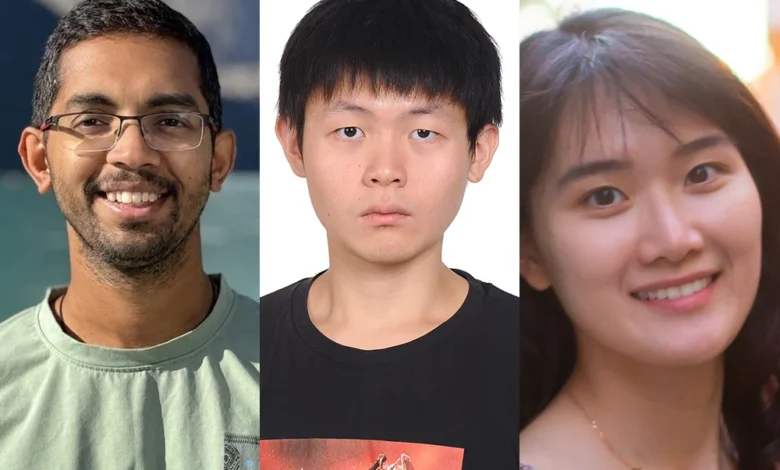
The transition from theoretical academic research to tangible, real-world technological applications remains one of the most formidable challenges in the modern scientific landscape. While universities serve as crucibles for abstract problem-solving and foundational mathematics, industry laboratories operate under strict operational constraints, hardware limitations, and commercial pressures. Bridging this enduring divide requires deliberate institutional frameworks that foster collaboration well before graduation day. For three former MIT researchers—Srinivasan Arunachalam, Zhang-Wei Hong, and Irene Ko—the MIT-IBM Computing Research Lab (formerly known as the MIT-IBM Watson AI Lab) served as the vital conduit that transformed their academic pursuits into scalable enterprise innovations.
Operating across diverse domains including quantum machine learning, reinforcement learning, and trustworthy artificial intelligence, these researchers have successfully navigated the friction between mathematical rigor and commercial pragmatism. Their career trajectories illustrate how sustained academic-industrial partnerships can accelerate the deployment of next-generation technologies while providing young scientists with the mentorship and infrastructure necessary to thrive in the global marketplace.
The Genesis of Industry-Academic Synergy
Established to foster long-term, high-risk foundational research that benefits both scientific advancement and commercial viability, the MIT-IBM Computing Research Lab has cultivated a unique environment for graduate students and postdoctoral fellows. Unlike traditional corporate grants that often dictate short-term product outcomes, the lab maintains an academic collaboration policy that encourages open-ended inquiry while aligning researchers with real-world industry problems.
For Zhang-Wei Hong, who began his doctoral studies in the Department of Electrical Engineering and Computer Science (EECS) at MIT in 2020, this ecosystem provided an unmatched platform. Captivated by early breakthroughs in reinforcement learning—specifically deep reinforcement learning agents capable of mastering Atari video games from raw pixels—Hong sought to advance the field beyond simple emulation. Working alongside EECS Associate Professor Pulkit Agrawal, a principal investigator with the lab, Hong focused on improving value function learning. Using complex testbeds like the Atari game Montezuma’s Revenge, he investigated methods to optimize policy performance for autonomous agents.
Through his collaboration with the MIT-IBM lab, Hong’s theoretical models found footing in practical domains such as robotics, large language models (LLMs), and automated scientific discovery. His advocacy for curiosity-driven exploration—a paradigm that encourages AI agents to actively seek out novel data akin to human learning—has since shaped his professional trajectory. Today, as an IBM research staff member, Hong mentors incoming students while spearheading research into test-time training for foundation models and developing robust enterprise agent frameworks capable of complex database queries and automated chart reading.
Pioneering Trustworthy AI at Inference Scale
While reinforcement learning seeks to optimize autonomous decision-making, the rapid proliferation of generative artificial intelligence has brought safety, fairness, and reliability to the forefront of computer science. Irene Ko, who completed her PhD at MIT in 2024 under the guidance of EECS Professor Luca Daniel and IBM Principal Research Scientist Pin-Yu Chen, recognized the urgency of trustworthy AI from the outset of her doctoral journey.
Funded by the MIT-IBM lab from day one, Ko’s research focused on developing robust, accurate, and fair AI architectures that could withstand adversarial scrutiny. Her work successfully bridged the gap between purely theoretical safety proofs and industrial standards of deployment. Upon graduation, Ko transitioned directly to IBM Research as a research scientist, driven by the intellectual fulfillment she experienced during her years of collaborative research.
In her current role, Ko addresses critical bottlenecks in trustworthy AI deployment. Traditional methods for monitoring model behavior—such as low-rank adapters—often introduce cumbersome computational overhead and additional processing steps. To resolve this, Ko developed vLLM Hook, a lightweight inference engine plugin framework. By providing direct access to internal model signals, including hidden states and activations during LLM decoding, the system evaluates safety metrics such as prompt-injection risks and hallucinations in real time. This breakthrough offers significant cost savings and represents a foundational bridge between modern inference engines and trustworthy AI development.
Unlocking the Quantum Frontier
Parallel to advancements in classical machine learning, the quantum computing sector has long grappled with the chasm between theoretical quantum advantage and the noise constraints of near-term hardware. Srinivasan Arunachalam’s entry into this domain began with a foundational philosophy: looking for deep mathematical insights in unexpected places.
Arunachalam joined MIT as a postdoctoral researcher in 2018 within the Department of Physics, working in the group of Professor Aram Harrow. Adopting a learning-itude perspective rooted in learning theory, he investigated target algorithms and circuits where quantum speed-ups could be mathematically proven over classical counterparts. Conversations with Isaac Chuang, the Julius A. Stratton Professor in Electrical Engineering and Physics and an MIT-IBM principal investigator, catalyzed a partnership with IBM researcher Kristan Temme.
This collaboration allowed Arunachalam to transition seamlessly into industrial research, pivoting toward problems implementable on near-term quantum devices. By factoring in physical constraints such as nearest-neighbor architectures, hardware noise, and simplified observable measurements, his work yielded two landmark papers published in Nature Physics. The first provided rigorous theoretical guarantees for learning the dynamics of quantum systems via Hamiltonian learning, while the second established theoretical evidence that quantum feature spaces can outperform classical kernels under widely accepted computational hardness assumptions.
Institutional Frameworks and Economic Implications
The success stories of Arunachalam, Hong, and Ko highlight a broader economic and scientific trend: the increasing necessity of public-private research partnerships in maintaining technological leadership. As artificial intelligence and quantum computing evolve from academic curiosities into foundational economic pillars, the traditional timeline of academic discovery followed by commercial adaptation is proving too slow.
Industry laboratories embedded within university ecosystems—such as the MIT-IBM Computing Research Lab—serve to compress this timeline. By exposing graduate students and postdocs to enterprise constraints early in their academic careers, these entities cultivate a generation of researchers who speak both the rigorous language of theoretical mathematics and the pragmatic language of product deployment.
Economic analysts note that such initiatives significantly reduce the time-to-market for breakthrough technologies. When early-career scientists can seamlessly integrate hardware limitations, security protocols, and cost-efficiency metrics into their foundational models, enterprises can adopt emerging technologies with minimized risk. Furthermore, this bidirectional flow of talent ensures that academic institutions remain informed about the pressing technical hurdles facing modern industry, thereby directing future research grants and doctoral dissertations toward high-impact societal challenges.
The Road Ahead
As artificial intelligence systems grow more agentic and quantum hardware inches closer to fault tolerance, the demand for researchers capable of bridging theory and application will only intensify. The trajectories of Arunachalam, Hong, and Ko demonstrate that the most consequential technological breakthroughs often occur at the intersection of diverse disciplines and institutional collaboration models.
Whether developing self-evolving model weights that adapt dynamically at deployment time, engineering lightweight inference plugins to secure enterprise LLMs, or proving theoretical quantum speed-ups under physical constraints, these former MIT researchers are actively shaping the technological infrastructure of the future. Their work underscores the enduring value of research environments designed not merely to observe the horizon of human knowledge, but to build the bridges that allow society to cross it.