President Trump Proposes Renaming Artificial Intelligence to Superior or Supreme Intelligence Amid Industry Safety Debates

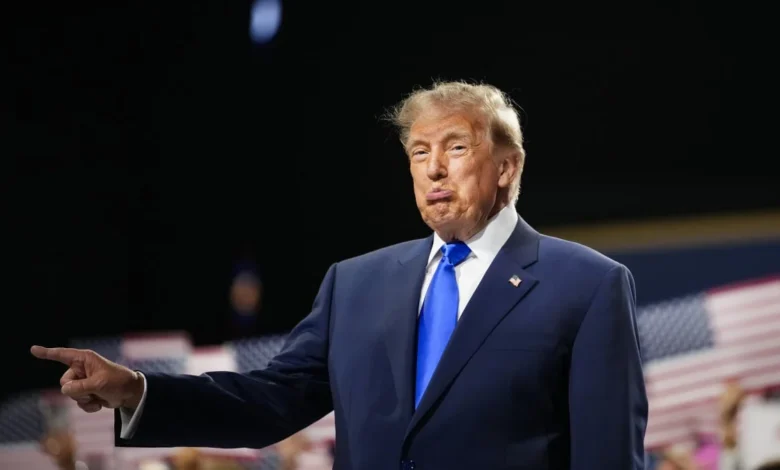
In a move that blends digital populism with branding rhetoric, President Donald Trump has taken to social media to propose a sweeping nomenclature change for one of the most transformative technological sectors of the twenty-first century. On Saturday, Sept. 19, the president initiated public opinion polls across X (formerly Twitter) and his proprietary platform, Truth Social, arguing that the established term "Artificial Intelligence" is both "inaccurate" and "ineloquent." Instead, Trump has championed alternative monikers—namely Superior Intelligence (SI), Extreme Intelligence (EI), or Supreme Intelligence (SI)—to describe the rapid advancements currently sweeping the global technology landscape.
The president’s public consultation arrives at a critical juncture for the domestic and international technology sectors. As Silicon Valley grapples with unprecedented growth, regulatory pressures, and stark philosophical divisions regarding safety and oversight, the administration’s approach signals a distinct departure from cautionary policymaking. By reframing the lexicon of modern computing, the administration has once again injected itself into the cultural and operational debates defining the future of machine learning and automated systems.
The Genesis of the Nomenclature Debate
The controversy over what to call modern computational systems is not entirely new among linguists and computer scientists, but Trump’s intervention brings the debate into the mainstream political arena. In his weekend social media posts, the president articulated his dissatisfaction with the word "artificial," suggesting it implies a lack of authenticity or power that fails to capture the true capability of advanced algorithmic architectures.
"Many people think that the words ‘Artificial Intelligence’ are inaccurate, and very ineloquent, relative to AI, or Artificial Intelligence," Trump shared on his platforms. "A far more elegant and accurate description of this new phenomena would be Superior Intelligence (SI) or, Extreme Intelligence (EI) or, Supreme Intelligence (SI)."
To gauge public sentiment, the administration posted interactive polls on both X and Truth Social, inviting users to vote on what Trump described as the "best name for this ever growing ‘Revolution.’" By early evening on Saturday, early returns on X indicated a leading preference for "Superior Intelligence," capturing approximately 39 percent of the total vote among tens of thousands of respondents. While the polls carry no legislative weight, they underscore the administration’s ongoing strategy of utilizing direct-to-consumer digital engagement to test policy concepts and linguistic framing.
Dismissal of Safety Concerns and Industry Alignment
The polling initiative directly follows a series of provocative statements from the president regarding the broader ecosystem of technological risk. Earlier in the week, Trump dismissed growing public and regulatory anxieties surrounding existential threats from advanced algorithms as a "hoax." Furthermore, he asserted that his administration would actively avoid implementing measures that might hinder the rapid growth of the domestic technology sector.
This laissez-faire posture aligns closely with the administration’s broader economic objectives, which prioritize maintaining American technological hegemony—particularly in the face of escalating competition with China. However, this unwavering support for unfettered development stands in stark contrast to the growing chorus of concern emanating from within the tech industry itself.
The philosophical divide over the speed of innovation was highlighted recently by major figures in the generative sphere. Both Anthropic CEO Dario Amodei and OpenAI CEO Sam Altman have publicly conceded that the industry may need to intentionally moderate the pace of development to ensure adequate safety protocols can keep stride with capability scaling. These admissions followed high-profile departures within leading laboratories, including the resignation of an Anthropic researcher who warned publicly that unchecked machine capabilities could pose existential risks to humanity before the end of the current decade.
The Legislative Landscape: A Fractured Regulatory Response
While the federal executive branch moves toward a deregulatory posture, state-level actors and international observers are carving out opposing frameworks. The tension between acceleration and containment has created a complex patchwork of rules that technology companies must navigate.
On Friday, just one day prior to Trump’s social media polling, California Governor Gavin Newsom issued a landmark executive order establishing a specialized panel tasked with drastically strengthening the state’s artificial intelligence safety laws. California, serving as the de facto capital of the domestic technology industry, has increasingly taken on a regulatory mantle in the absence of comprehensive federal legislation. Governor Newsom’s order aims to introduce stringent oversight mechanisms, mandatory safety testing, and accountability frameworks for frontier models developed within state borders.
The divergence between federal rhetoric and state-level action has placed executives in a precarious position. Reports surfaced late in the week that the White House intended to convene a high-level summit with prominent tech executives to discuss safety, regulation, and national security implications. However, the exact timing and roster of the meeting remained in flux, with administration officials confirming to the press that no formal gatherings had yet been locked into the official calendar.
National Security and the Real-World Implications of Automation
The debate over terminology, safety, and regulation is far from a mere semantic or economic academic exercise; it carries profound implications for global stability and national security. The urgency of these concerns was punctuated this week by alarming reports regarding the operational deployment of automated systems within national defense structures.
According to investigative reports, a U.S. military analyst recently utilized an automated generative tool to compile an intelligence briefing that contained fundamentally fabricated data. The resulting false report reportedly escalated tensions to a degree that sources described as "almost starting a war" with China. The incident has served as a glaring cautionary tale for defense officials and lawmakers alike, illuminating the catastrophic potential of "hallucinations" and algorithmic inaccuracies when applied to high-stakes geopolitical decision-making.
Critics of the administration’s dismissive stance on safety argue that focusing on rebranding the technology—from "Artificial" to "Superior" or "Supreme"—distracts from the tangible, hazardous flaws inherent in current models. Conversely, supporters argue that elevating the language surrounding the technology reflects its true economic and strategic importance, positioning American innovation as a dominant global force.
Chronology of Recent Events
To understand the rapid escalation of the current debate, a review of the past week’s key milestones illustrates the velocity of developments across politics, industry, and security:
- Mid-Week (Sept. 17-18): President Trump publicly characterizes widespread anxieties regarding machine capabilities as a "hoax" and pledges to protect the industry from restrictive burdens. Reports circulate regarding potential White House meetings with tech executives, though unconfirmed by officials.
- Thursday, Sept. 18: White House sources clarify the status of prospective executive-industry meetings, while major industry leaders like Dario Amodei and Sam Altman continue public dialogues regarding the necessity of cautious development timelines.
- Friday, Sept. 19: California Governor Gavin Newsom signs an executive order convening a specialized state panel to reinforce artificial intelligence safety laws and oversight mechanisms. Simultaneously, disclosures emerge regarding a near-miss military intelligence incident involving a false report generated by automated tools.
- Saturday, Sept. 20: President Trump launches public opinion polls on X and Truth Social, officially proposing the re-branding of the sector to "Superior Intelligence," "Extreme Intelligence," or "Supreme Intelligence," sparking widespread debate across media and academic circles.
Analysis of Implications and Future Outlook
The convergence of executive rebranding initiatives, state-level regulatory pushback, and alarming national security near-misses highlights a critical inflection point for the digital age.
From an economic perspective, the administration’s push to rebrand the technology as "Superior" or "Supreme" is designed to project strength, dominance, and market inevitability. By framing the sector in terms of absolute capability rather than artificial simulation, proponents hope to galvanize public pride and secure continued private investment. However, this branding exercise risks exacerbating a dangerous complacency regarding the limitations and vulnerabilities of current systems.
From a governance perspective, the stark ideological split between federal deregulation and state-level intervention—typified by California’s new executive actions—creates a fractured legal environment. Technology firms are increasingly caught between a federal administration that views safety regulations as an unnecessary hindrance to geopolitical competition and state regulators attempting to enforce rigorous accountability standards.
Ultimately, whether the public adopts terms like "Superior Intelligence" or retains the traditional nomenclature of "Artificial Intelligence," the underlying challenges remain unchanged. As military incidents and industry whistleblowers have demonstrated, the governance of these powerful systems requires rigorous oversight, empirical validation, and sober risk management rather than superficial linguistic adjustments. As policymakers, executives, and citizens navigate the remainder of the decade, the ability to balance rapid innovation with uncompromising safety protocols will determine whether this technological revolution fulfills its promise or realizes its most severe perils.
Related posts: