Snapchat Launches Bold B2B Campaign Titled Spend Smarter to Capture Enterprise Advertising Budgets


Snapchat is making a strategic pivot to court business-to-business (B2B) marketing budgets through a new international promotional campaign designed to challenge conventional media-buying habits. Titled Spend Smarter, the multi-market campaign aims to persuade enterprise-level advertisers, media planners, and corporate decision-makers to rethink where professional audiences spend their time and attention. By leveraging recognized industry voices and presenting verified customer success stories, the social media platform is attempting to dismantle the long-standing misconception that its app is strictly reserved for younger consumers and casual personal communications.
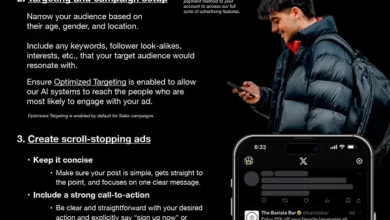
The initiative builds directly upon the core themes introduced during Snapchat’s recent Performance Summit. At that event, company executives and product leads emphasized the necessity for marketers to optimize their digital ad spend by tapping into high-engagement conversational spaces within the platform. Rather than viewing advertising strictly through the narrow lens of immediate, bottom-of-the-funnel conversions, Snapchat is positioning itself as a vital discovery channel capable of influencing executive-level decision-makers long before a contract is signed.
The Disconnect Between Audience Attention and Media Budgets
At the heart of the Spend Smarter campaign is a persistent structural inefficiency in modern advertising: the gap between where business professionals actually consume content and where corporate marketing budgets are deployed. Traditional B2B marketing strategies have heavily favored legacy desktop networks, search engine optimization, and professional-centric platforms like LinkedIn. While these channels remain essential for bottom-funnel lead generation, Snapchat argues they often capture audiences only after the consideration phase has already begun.
According to internal research and messaging from the platform, enterprise decision-makers are increasingly difficult to reach through traditional, highly saturated channels because they suffer from ad fatigue and banner blindness. Conversely, mobile-first environments characterized by immersive, friend-to-friend communications command undivided attention. By deploying a campaign that highlights real-world case studies through trusted industry creators and analysts, Snapchat aims to prove that corporate buyers are reachable in consumer-centric environments if the creative approach is tailored appropriately.
Furthermore, Snapchat is heavily promoting the concept of the "halo effect." During its Performance Summit, the company presented qualitative and quantitative insights showing that brand impressions generated within the app exert an outsized influence on subsequent searches and conversions across other channels. Even though Snapchat may not always serve as the final point of purchase, it frequently acts as the primary catalyst for product and service awareness among professional cohorts.
A Chronology of Strategic Expansion into Enterprise Verticals
Snapchat’s latest B2B push did not materialize in a vacuum; it represents the culmination of a multi-year structural evolution aimed at diversifying revenue streams beyond standard direct-to-consumer mobile advertising.
The groundwork for this enterprise push was laid as early as 2020 and 2021, when the platform began rolling out advanced self-serve ad managers, dynamic product ads, and more sophisticated measurement tools designed to appeal to performance-driven brands. As global economic pressures intensified in 2022 and 2023, causing corporate marketing budgets to contract, social media platforms faced mounting pressure to prove tangible return on investment (ROI) to skeptical chief marketing officers (CMOs).
By early 2024, Snapchat began refining its messaging to focus aggressively on performance marketing, culminating in its landmark Performance Summit. This event served as a launching pad to recalibrate market perception, shifting the narrative away from ephemeral messaging toward measurable business outcomes.
Following the momentum of the Performance Summit, Snapchat expanded its vertical-specific outreach. A notable milestone in this timeline was the recent FinServ Summit, an exclusive event held in New York City designed specifically to pitch the platform’s advertising capabilities to financial services providers, insurance firms, and wealth management institutions. Financial services represent a traditionally conservative sector characterized by stringent regulatory requirements and rigid media-buying habits. By successfully engaging financial institutions, Snapchat demonstrated its growing capacity to handle complex, high-consideration enterprise categories.
The rollout of the Spend Smarter campaign represents the current phase of this chronology. By taking the insights from the Performance Summit and packaging them into a cross-platform creator-led campaign, Snapchat is operationalizing its enterprise pitch on a global scale.
Multi-Platform Distribution and Competitive Strategy
To maximize the reach and impact of Spend Smarter, Snapchat has opted for a sophisticated cross-platform distribution strategy. Rather than restricting the promotion to its own ecosystem, the campaign is actively running across competing and complementary digital spaces, including Instagram, TikTok, and Substack, targeting professional audiences in the United States and the United Kingdom.
This cross-channel approach highlights a pragmatic understanding of the modern media landscape. By advertising on platforms where enterprise marketers and agency executives spend their working and reading hours, Snapchat is meeting its target audience directly in their professional environments. The inclusion of Substack—a platform favored by industry analysts, thought leaders, and independent journalists—indicates a deliberate effort to engage intellectual and strategic decision-makers who influence multi-million-dollar media allocations.
The campaign relies heavily on recognized industry voices—influential figures in marketing, advertising, and brand strategy—to validate its claims. By utilizing peers and respected commentators to share success stories, Snapchat bypasses traditional corporate skepticism. These creators break down complex metrics and share granular details about how brands successfully integrated Snapchat into their broader omni-channel media mix.
Industry Implications and Future Outlook for B2B Advertising
The broader implications of Snapchat’s enterprise push extend far beyond the company’s quarterly earnings reports; they signal a fundamental shift in how digital platforms perceive the boundaries between consumer and enterprise marketing.
Historically, B2B marketing was viewed as a rational, data-driven exercise insulated from the emotional, fast-paced trends governing consumer social media. However, as the demographic makeup of corporate decision-makers shifts toward younger generations of digital natives—Millennials and Gen Z professionals now occupying C-suite and procurement roles—the mechanisms of business influence are changing. These executives do not check their consumer behaviors at the door when they log into their enterprise networks; they expect seamless, highly visual, and engaging brand experiences regardless of the product category.
If Snapchat succeeds in convincing major media buyers to allocate a portion of their B2B budgets to the platform, it could permanently alter media-planning playbooks across the advertising industry. Competitors in the social media and short-form video space will likely follow suit, intensifying the competition for enterprise marketing dollars that have traditionally flowed almost exclusively to search engines and professional networking sites.
For corporate marketers and agency planners, the campaign serves as an invitation to audit existing assumptions regarding audience behavior. As digital fragmentation accelerates, the brands capable of identifying and capturing attention in unexpected channels will likely capture a distinct competitive advantage. Snapchat’s Spend Smarter campaign challenges the industry to look beyond legacy habits, suggesting that the most effective path to a business decision-maker may run directly through the consumer spaces they inhabit every day.