Web Platform Updates for May 2026: Chrome 148, Firefox 151, and Safari 26.5 Deliver Major Baseline Features


The modern web ecosystem experienced a significant architectural shift throughout May 2026, driven by stable and beta releases across major browser engines. Developers worldwide received powerful new tools to optimize performance, enhance design flexibility, and bridge the gap between desktop and mobile capabilities. Major stable releases arrived in the form of Google Chrome 148, Mozilla Firefox 151, and Apple Safari 26.5, bringing several long-awaited specifications into the Baseline "Newly Available" tier. Simultaneously, upcoming browser iterations—specifically Chrome 149 and Firefox 152 in beta—offered a glimpse into the future of user interface design and asynchronous programming paradigms.
These May updates arrive at a crucial time for web engineering teams, who are increasingly tasked with delivering high-performance, responsive experiences across an ever-expanding array of hardware form factors. By standardizing features like the :open CSS pseudo-class, name-only container queries, and native lazy loading for audio and video assets, the browser vendors continue to minimize the need for heavy JavaScript polyfills and workaround stylesheets.
Chronology and Stable Release Rollout
The May 2026 release cycle followed the standard concurrent deployment model utilized by the major browser vendors, ensuring synchronized support for web standards where possible. Safari 26.5 spearheaded the month’s stable updates, focusing heavily on internal security patches, stability fixes, and code maintenance. Despite its emphasis on under-the-hood refinements, Safari 26.5 introduced critical front-end capabilities that instantly elevated them to cross-browser standards.
Shortly after Apple’s deployment, the Mozilla Foundation pushed Firefox 151 to the stable channel, bringing advanced layout capabilities, desktop support for the Document Picture-in-Picture API, and expanded hardware interfaces via the Web Serial API. Concurrently, Google rolled out Chrome 148 to desktop and mobile environments, introducing high-impact performance optimizations such as native media lazy loading and Android-based serial port communication.
Together, these deployments mark a milestone in cross-platform consistency, reducing the engineering overhead previously required to handle divergent browser behaviors.
Enhancing Layout and Semantics: The Stable Highlights
Front-end developers witnessed the formal transition of several prominent styling mechanisms into Baseline status, ensuring that these features can now be safely deployed in production environments without fear of fragmentation.
The :open CSS pseudo-class reached Baseline availability following its inclusion in Safari 26.5. Historically, styling elements that toggle between active and inactive states—such as interactive disclosure widgets (<details>), modal dialogs (<dialog>), and expanded form inputs (<select> or color pickers)—required attribute selectors like details[open]. The new pseudo-class standardizes this behavior, offering a cleaner, semantics-driven approach to state-based styling that aligns with modern CSS architecture.
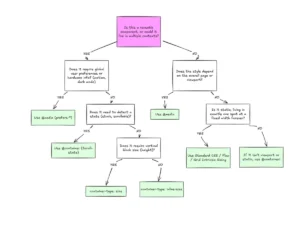
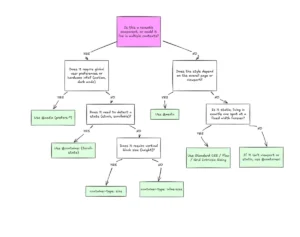
Furthermore, CSS name-only container queries became Baseline with the rollout of Chrome 148. Prior specifications demanded that developers define explicit size or style query conditions alongside container names, while also forcing the explicit declaration of a container-type property on ancestral elements. Developers can now query named containers directly by their identifier alone. This streamlines responsive design patterns for modular components, particularly within complex layout structures like sidebars and multi-pane dashboards.
In Firefox 151, container style queries for custom properties likewise achieved cross-browser Baseline status. By introducing comprehensive support for style() queries within @container rules, developers gained the ability to apply localized styles based on parent CSS custom properties—such as dynamically adapting child components when a parent container switches to a dark theme. This capability moves component styling away from global document states and toward truly encapsulated, context-aware design systems.
Performance Gains and Hardware Interoperability

Beyond layout engines, the May 2026 stable releases focused intently on resource management and peripheral connectivity.
Performance optimization took a major leap forward in Chrome 148 with the introduction of native lazy loading for <video> and <audio> elements. By appending the standard loading="lazy" attribute, developers can now instruct browsers to defer the loading of heavy media binaries until the elements approach the active viewport. Industry telemetry from early adopters indicates that this native approach significantly curtails unnecessary bandwidth consumption on mobile networks, accelerates initial page rendering times, and aligns multimedia delivery with established image and iframe optimization practices.
Simultaneously, Firefox 151 expanded the horizon for desktop-to-hardware interactions by launching support for the Document Picture-in-Picture API. Unlike traditional picture-in-picture implementations—which are strictly confined to isolated <video> tags—the Document API allows applications to spawn always-on-top browser windows populated with arbitrary HTML content. Engineering teams can now construct persistent, highly interactive overlays, such as multi-party video conference participant grids, real-time financial trading tickers, and persistent utility timers that remain fully functional even when the user navigates away from the primary tab.
Hardware integration also saw a notable boost through the Web Serial API. While Chrome 148 extended its existing serial communication capabilities to Android devices, Firefox 151 introduced desktop support for the API. To address potential security vulnerabilities inherent in direct hardware communication, Firefox implemented a controlled verification model requiring users to install a synthetically generated site permission add-on. This balances raw hardware access with stringent user-consent protocols, opening doors for web-based IDEs, 3D printing software, and microcontroller programming environments.
Previewing the Horizon: Beta Browser Releases
Looking toward the immediate future, May’s beta releases—Chrome 149 and Firefox 152—offered an advanced look at upcoming specifications currently undergoing pre-release testing.
Chrome 149 Beta introduced CSS gap decorations, enabling developers to style the whitespace gutters explicitly between flexbox and grid layout items without relying on nested wrapper elements. It also expanded the shape-outside property to accept native geometry functions like path(), shape(), rect(), and xywh(), alongside path-length as a standalone CSS property. On the JavaScript and application logic side, programmatic scrolling methods (scrollTo(), scrollBy(), and scrollIntoView()) were updated to return Promises that resolve precisely when smooth-scrolling animations conclude. Additionally, pages maintaining active WebSocket connections are now eligible for the Back/Forward Cache (BFCache), drastically improving navigation speed when users return to dynamic, real-time applications.
Firefox 152 Beta focused heavily on form ergonomics and animation tooling. The release brings full support for the field-sizing property, allowing native form controls to automatically adjust their dimensions to fit their dynamic text contents. Furthermore, Firefox 152 enhanced the Notification interface by introducing native actions and maxActions properties, while adding options.pseudoElement support to the Element.getAnimations() method for finer control over pseudo-element transitions.
Fact-Based Analysis of Industry Implications
The continuous evolution of the web platform through monthly releases underscores a fundamental shift in how software is delivered to end-users. By shortening the feedback loop between standard drafting and stable browser deployment, vendors are minimizing the lag time that historically plagued web development.
The widespread adoption of features like name-only container queries and the :open pseudo-class demonstrates a concerted industry effort to reduce boilerplate code and eliminate reliance on heavy, third-party JavaScript frameworks. As native performance primitives—such as media lazy loading and document picture-in-picture—reach ubiquity, web applications continue to narrow the functional gap traditionally held exclusively by native desktop and mobile binaries.
Engineering organizations are advised to audit their legacy codebases against these newly minted Baseline standards. Retiring custom JavaScript intersection observers in favor of native media lazy loading, and refactoring state management logic to utilize native CSS container and style queries, will yield immediate dividends in maintainability, accessibility, and overall execution speed across the modern web ecosystem.