Lightspeed eCom has long served as a bridge for brick-and-mortar merchants looking to expand their footprint into the digital marketplace. However, as the retail landscape shifts toward omnichannel operations and leaner operational costs, many businesses are re-evaluating their reliance on the platform. The recent strategic shift by Lightspeed—moving away from a standalone ecommerce product in favor of bundling eCom with its more robust, and significantly more expensive, Lightspeed Retail software—has left many business owners searching for more flexible, cost-effective solutions.
This transition marks a departure from the "all-in-one" simplicity that originally drew small retailers to the brand. With entry-level pricing for the bundled Retail package now sitting at $89 per month (billed annually), the cost-to-value ratio has become a point of friction for boutiques, hobby shops, and local merchants who do not require high-level supplier management or enterprise-grade multi-location procurement tools. As companies weigh the necessity of their current tech stack against their actual operational needs, the search for alternatives that offer better design flexibility, superior storefront tooling, and more predictable pricing has accelerated.

The Changing Retail Tech Environment
To understand why retailers are migrating, one must look at the evolution of ecommerce over the last decade. Early retail software was focused on inventory stability—ensuring that a physical sale at a register was reflected in the online store. Today, that is a baseline requirement. Modern retailers now prioritize customer experience (CX), aesthetic customization, and the ability to deploy AI-driven marketing tools.
Lightspeed’s current architecture, while powerful for inventory-heavy operations, often lags in the "storefront experience." Its design templates are functional but lack the fluidity and modern visual appeal of platforms like Shopify or Wix. Furthermore, the integration of third-party apps—often essential for scaling marketing or customer loyalty programs—can become cumbersome and expensive within the Lightspeed ecosystem.
Comparative Analysis: A Strategic Overview
When assessing alternatives, retailers should look beyond the monthly subscription fee and consider the "Total Cost of Ownership" (TCO). This includes transaction fees, the cost of essential apps, the price of premium themes, and the labor hours required for maintenance.

1. Shopify: The Gold Standard for Omnichannel
Shopify remains the industry leader for a reason: it bridges the gap between physical retail and digital storefronts more seamlessly than any other provider. For a merchant transitioning from Lightspeed, Shopify offers a familiar, unified dashboard.
- The Advantage: The Shopify App Store is unmatched, allowing retailers to scale their operations as they grow. Whether it is advanced SEO, automated email marketing, or specialized loyalty programs, the ecosystem is built for expansion.
- Pricing Structure: Shopify starts at $29/month, but power users often find their monthly bill increasing as they add POS Pro subscriptions ($89/month per location) and premium apps.
- Strategic Implication: Shopify is best for brands that prioritize growth and digital marketing. While it may not be the cheapest option, the return on investment through increased conversion rates and operational efficiency is typically higher than its competitors.
2. Square Online: The Budget-Conscious Disruptor
For the small merchant, café owner, or pop-up shop, Square Online is the most compelling financial alternative. By offering a free tier that integrates directly with the Square POS, it removes the primary barrier to entry for businesses with tight margins.
- The Advantage: Simplicity. The platform is designed to be set up in an afternoon. If a business needs a basic, functional online store that syncs perfectly with a physical register without a recurring monthly subscription fee, Square is the logical choice.
- The Limitation: It lacks the granular control and deep, complex inventory management found in Lightspeed or Shopify. It is a "what you see is what you get" platform.
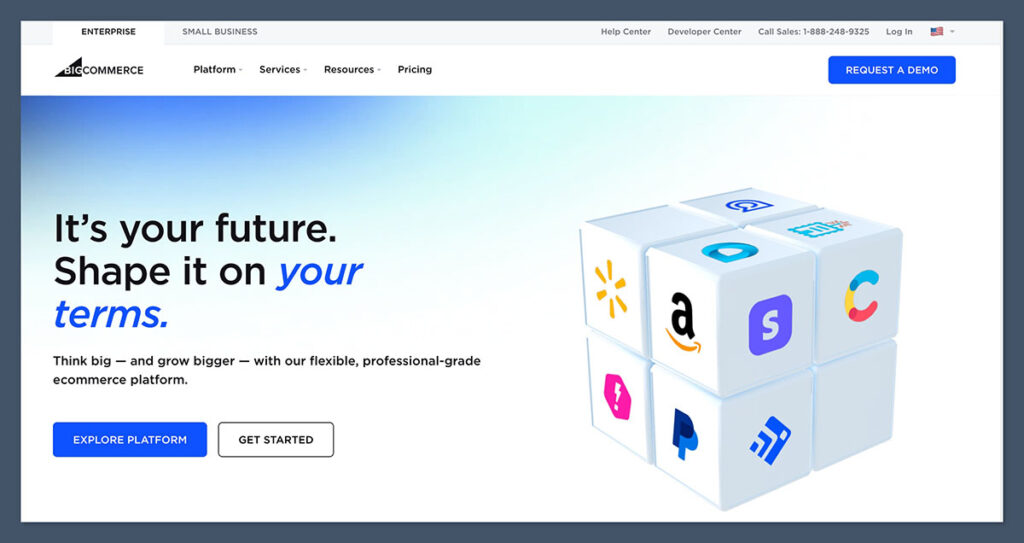
3. BigCommerce: The Powerhouse for Large Catalogs
Retailers who manage thousands of SKUs, complex product variants, or B2B pricing tiers often find Lightspeed too restrictive. BigCommerce was built to handle high-volume data without the need for constant app-patching.

- The Advantage: Feature depth. Unlike Shopify, where you might need an app for complex product filtering or multi-currency support, BigCommerce includes these tools out of the box. Furthermore, they charge zero transaction fees on any plan.
- Strategic Implication: BigCommerce is an enterprise-lite solution. It is ideal for retailers who have outgrown the "small shop" vibe and are moving toward becoming mid-market players.
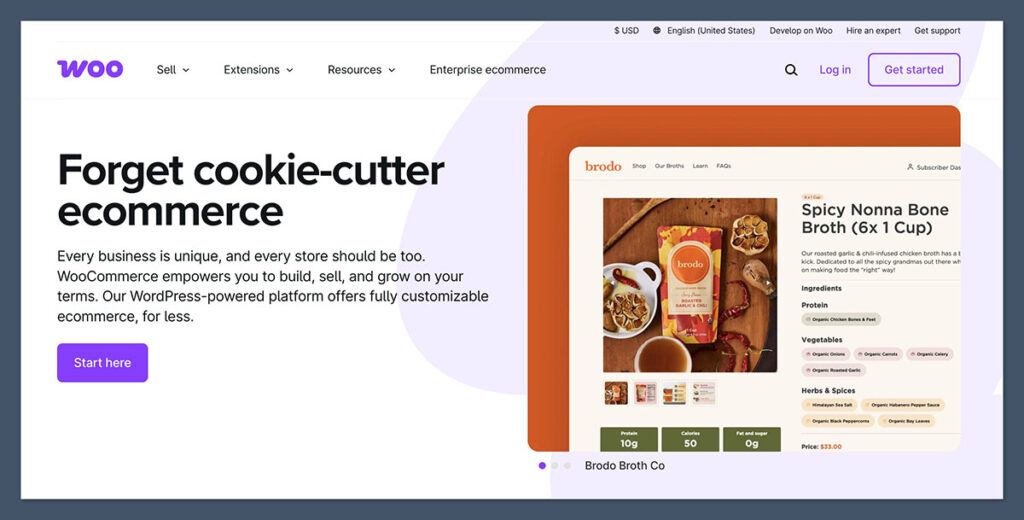
4. WooCommerce: Total Control for WordPress Users
WooCommerce is not a SaaS (Software as a Service) platform; it is a plugin for the WordPress content management system. This offers the ultimate level of customization, provided the user has the technical capacity—or the budget for a developer—to manage it.
- The Advantage: Ownership. Because the store resides on your own server, you are not subject to the pricing whims or platform limitations of companies like Shopify or Lightspeed.
- The Risk: Maintenance. The merchant is responsible for security, hosting, updates, and PCI compliance. For a retailer who wants to focus on selling rather than troubleshooting server issues, this is a significant hurdle.
5. Wix: The Design-Led Choice
Wix has successfully transitioned from a website builder to a capable ecommerce player. Its drag-and-drop editor allows for a level of visual creativity that even Shopify struggles to match.
- The Advantage: User Interface. For brands where the "vibe" and visual narrative are the primary selling points, Wix is unmatched. Its AI-driven design tools allow for the rapid creation of high-converting, beautiful storefronts.
- The Limitation: Wix is still playing catch-up in the retail space. Its POS functionality is currently limited to the US market, and its inventory tools are not built for complex, multi-location retail chains.
Data-Driven Selection Criteria
When evaluating these platforms, management should utilize a decision matrix based on four critical KPIs:
- Direct Costs: The combined total of monthly subscriptions, credit card processing fees, and mandatory app subscriptions.
- POS Integration Depth: Does the platform sync inventory in real-time? Can it handle partial refunds, store credit, and cross-channel returns?
- Scalability: Can the platform support a 50% increase in traffic or a doubling of the product catalog without requiring a platform migration?
- Support Accessibility: Does the vendor provide 24/7 human support, or are you relegated to AI bots and community forums?
The Migration Roadmap: How to Transition
The decision to migrate is not one to be taken lightly. Data from recent industry reports suggests that poorly planned migrations can result in a 10% to 15% dip in revenue during the transition month due to broken links, inventory discrepancies, or customer confusion.
A standard 4-step migration protocol includes:
- Data Audit: Before moving, clean your existing Lightspeed database. Remove inactive products, duplicate customer profiles, and outdated pricing.
- Parallel Running: Keep your Lightspeed account active for 30 days while your new site is live. This allows for manual verification of stock levels and order routing.
- SEO Preservation: Ensure that all product URLs are mapped correctly to the new platform. Use 301 redirects to prevent a drop in search engine rankings.
- Staff Training: The most overlooked aspect of a migration is the internal learning curve. Allocate time for staff to become comfortable with the new POS interface to avoid friction at the point of sale.
The Broader Market Implication
The migration of retailers away from Lightspeed reflects a broader trend in the software industry: the "unbundling" of complex enterprise tools. As businesses become more sophisticated, they are choosing "best-of-breed" solutions—using one tool for their storefront, another for their POS, and a third for their marketing—rather than relying on a single, expensive, and potentially rigid ecosystem.
Ultimately, the choice of platform should be dictated by the business’s current maturity. A startup or small boutique may find the low barrier to entry of Square Online or Wix sufficient. A growing regional brand will likely find the robust ecosystem of Shopify or the catalog-handling power of BigCommerce to be the catalyst for their next phase of growth. For the technically inclined, WooCommerce offers a path to complete independence.
In the current economic climate, where every dollar of operational overhead counts, the decision to migrate is not just a technical upgrade—it is a strategic move toward leaner, more agile, and more profitable retail operations. Before committing to a new contract, business owners should leverage free trials to test not just the storefront, but the backend inventory management, ensuring that the chosen platform can handle the realities of their daily operations.