FBI Director Kash Patel Faces Intense Senate Scrutiny Over Revised Hiring Standards and Personnel Shifts

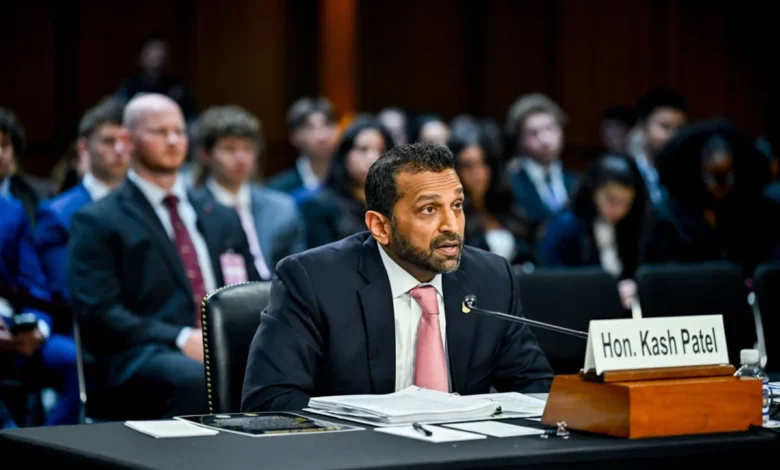
The Federal Bureau of Investigation is currently navigating a period of profound organizational transition, marked by a contentious shift in recruitment protocols that has drawn sharp criticism from members of the Senate Judiciary Committee. On Tuesday, FBI Director Kash Patel appeared before the committee to address mounting concerns regarding the agency’s updated hiring standards, which have moved away from formerly rigid, automatic disqualifiers. Among the most debated changes is a policy adjustment that removes an automatic bar for applicants with a history of bestiality or animal cruelty, provided the conduct occurred during the individual’s minority.
The hearing served as a flashpoint for a broader, ongoing dispute between the legislative and executive branches regarding the integrity of federal law enforcement under the current administration. As the FBI grapples with significant turnover and a fundamental restructuring of its human resources philosophy, the debate over background checks has become a proxy for deeper disagreements about institutional standards and the definition of suitability for federal service.
A Chronology of Policy Shifts
The controversy stems from a quiet policy revision implemented in February 2025. According to correspondence from Senate Democrats, the updated guidelines recalibrated the agency’s approach to evaluating an applicant’s "suitability"—a multifaceted assessment that considers character, reliability, and security risks.
Under previous protocols, a history of bestiality, the solicitation of sex work, or instances of employer theft were viewed as absolute bars to employment, regardless of the timeline or circumstances. These standards were designed to mitigate potential blackmail risks—a critical concern for personnel holding security clearances. However, the current administration’s shift allows for a more nuanced review. Under the new guidelines, individuals who engaged in theft more than three years ago, or who solicited sex work fewer than three times more than a decade ago, may be considered for employment, provided they were not in a position of "public trust" at the time of the incident.
The most intense scrutiny, however, has been reserved for the provision regarding bestiality. Critics have argued that the policy appears to overlook behaviors previously deemed disqualifying. In contrast, the FBI maintains that the change is intended to ensure that victims of past trauma—specifically those who were coerced or forced into abusive situations as minors—are not unfairly penalized during the vetting process.
The Congressional Oversight Hearing
During Tuesday’s session, Senator Dick Durbin (D-IL) directly challenged Director Patel on the semantic interpretation of the new rules. "You dropped automatic disqualification for applicants who have been engaged in bestiality," Durbin noted. "Not victims of bestiality, applicants who have been engaged. Do you disagree with that?"
Patel’s response, which shifted the framing from active participation to victimization, highlighted the tension in the room. "Applicants who have engaged in bestiality means they were victims of bestiality because they were forced to do so," Patel asserted. "At this FBI, we are not going to criminalize and prevent victims from serving."
The exchange intensified when Senator John Kennedy (R-LA) questioned the logic of the previous, stricter regulations. When Patel noted that past policies disqualified participants on "either side" of the act, Kennedy retorted, "So you disqualified the animal?" The lightheartedness of the quip underscored the gravity of the Senator’s broader criticism: that the FBI is effectively lowering the bar for entry at a time when institutional credibility is of paramount importance. Kennedy concluded that the policy shift had "really hurt the FBI," questioning why the agency would move to normalize such a specific and historically disqualifying behavioral indicator.
Data and Institutional Context
The controversy over hiring standards cannot be decoupled from the significant staffing crisis currently affecting the Bureau. Since the beginning of the second term of the Trump administration, the FBI has experienced an unprecedented exodus of senior leadership and specialized agents.
According to documentation provided by Senate Democrats, the internal "purge" attributed to the current administration’s directives has resulted in the departure of more than 5,000 nonpartisan career personnel. This includes all six former Executive Assistant Directors and at least 18 Special Agents in Charge (SACs). The departure of more than 1,000 special agents represents a loss of institutional memory and investigative expertise that experts suggest will take years to replace.
The recruitment policy changes are, according to some internal reports, a direct response to this attrition. By broadening the applicant pool, the FBI aims to accelerate hiring and fill the vacuum left by the mass departure of long-serving staff. However, critics argue that the trade-off—a potential reduction in the stringency of background vetting—is a dangerous gamble for an agency responsible for domestic intelligence and federal law enforcement.
Official FBI Response and Clarification
Following the hearing, the FBI issued a formal statement to address the ambiguity surrounding the "bestiality" policy. The agency emphasized that media characterizations of the policy have been inaccurate and that the new rules do not greenlight applicants with histories of criminal sexual conduct.
"The FBI has and always will maintain the highest suitability standards for its applicants and employees in the US Government," the press office stated. The Bureau clarified that the policy change is designed to evaluate "the whole of a person." They cited instances in which individuals suffered sexual abuse as minors, which resulted in records—or "questions"—regarding prostitution or other prohibited activities that would have previously triggered an automatic rejection.
The FBI’s statement asserted: "It is false to suggest criminal behavior like this is no longer disqualifying at the FBI—any applicant who has engaged in criminal sexual acts like those referenced would of course not be eligible for employment." The agency maintains that the updated language is intended to allow investigators to distinguish between true criminal behavior and the results of victimization, ensuring that the Bureau does not disqualify candidates based on circumstances beyond their control.
Implications for Future Investigations
The debate highlights a fundamental conflict regarding the role of the FBI in modern society. One school of thought, favored by the current administration, suggests that federal agencies must be more flexible to attract a diverse workforce and that rigid, decades-old standards may inadvertently exclude otherwise qualified candidates who have overcome past trauma or minor youthful indiscretions.
Conversely, legal analysts and retired federal agents warn that the FBI’s authority relies entirely on the public’s perception of its unimpeachable character. The "suitability" process is not just about identifying criminals; it is about identifying individuals who are invulnerable to coercion. By loosening standards, even for what are described as humanitarian reasons, the agency risks creating potential vulnerabilities that foreign intelligence services or criminal organizations could exploit.
Furthermore, the rapid turnover of senior leadership has created a culture of uncertainty. When career officials who have managed vetting processes for decades are replaced by appointees with different priorities, the administrative continuity of the Bureau is disrupted. The Senate Judiciary Committee has signaled that it will continue its oversight, likely demanding a full audit of recent hires to determine if the new standards have indeed resulted in the vetting of compromised individuals.
As the FBI enters this new chapter, the challenge for Director Patel will be to demonstrate that the agency can maintain its investigative edge while navigating the political pressures of a deeply polarized nation. The controversy over hiring standards is unlikely to subside until the committee receives definitive data on how many applicants have been cleared under the new rules and whether those candidates possess the requisite background to serve in the nation’s premier law enforcement agency. For now, the rift between the Senate and the FBI remains wide, with the future of the Bureau’s institutional integrity hanging in the balance.