Elon Musk Teases Potential Consolidation of Tesla and SpaceX Amid Global Regulatory Scrutiny

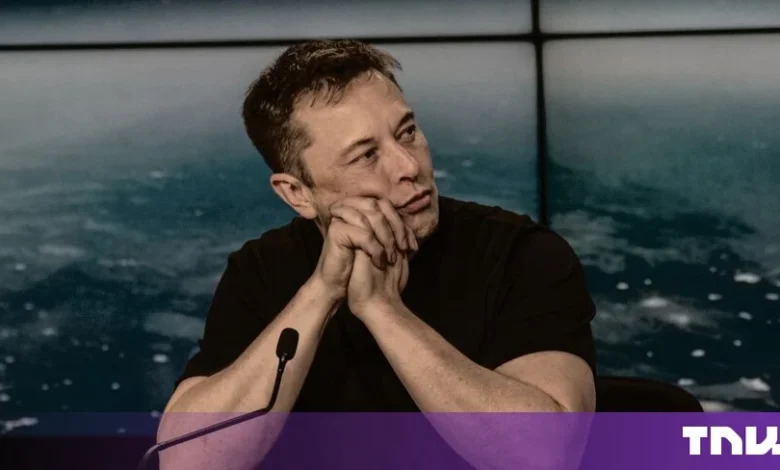
The prospect of a formal merger between electric vehicle giant Tesla and aerospace pioneer SpaceX has moved from the realm of corporate speculation to a topic of serious boardroom discussion following recent comments by Elon Musk. Speaking via video link at the All-In Summit in Los Angeles, Musk addressed the increasingly intertwined operations of his two flagship companies, suggesting that their current level of collaboration could eventually necessitate a unified corporate structure.
The inquiry, posed by moderator David Friedberg, struck a chord regarding why the two entities remain legally and operationally distinct. Musk’s response—"Who could imagine what action one might take when there’s so much close collaboration in so many areas?"—has reignited debates among analysts and investors about the feasibility, legality, and strategic rationale behind such an unprecedented corporate consolidation.
The Evolution of Operational Synergy
While Tesla and SpaceX operate in vastly different sectors—consumer automotive and clean energy versus space exploration and satellite telecommunications—their underlying technological foundations have converged significantly over the last decade. This integration is no longer merely conceptual; it is being cemented by massive capital expenditures in shared infrastructure.
A primary example of this synthesis is Terafab, a colossal chip manufacturing facility currently under construction in Grimes County, Texas. With an initial investment phase totaling $16.8 billion, the project is designed to provide high-performance computing hardware to both Tesla’s automotive and robotics divisions and SpaceX’s orbital computing requirements. By pooling resources for hardware development, the companies are effectively creating an internal vertical integration that bypasses traditional third-party supply chain vulnerabilities.
This technological overlap is further evidenced by the June public listing of SpaceX, which followed its February absorption of xAI. The listing raised $75 billion at a valuation of approximately $1.75 trillion, setting a record for the largest initial public offering (IPO) in history and surpassing the benchmark set by Saudi Aramco’s $29.4 billion debut in 2019. The availability of liquid stock—a currency for corporate acquisitions—has transformed the theoretical possibility of a merger into a plausible financial strategy.
Regulatory Hurdles in the European Union
Should Musk proceed with a consolidation, the deal would immediately trigger complex regulatory reviews, most notably within the European Union. Under the EU Merger Regulation (EUMR), any transaction exceeding specific turnover thresholds must be cleared by the European Commission before implementation.
The criteria for mandatory notification are stringent: the combined worldwide turnover of the parties must exceed EUR 5 billion, and at least two of the entities must each generate more than EUR 250 million within the EU bloc. Tesla, with its robust European sales network, easily satisfies these requirements. While SpaceX does not publicly disclose its European revenue, the widespread deployment of the Starlink satellite network across almost every EU member state suggests that the company’s turnover likely eclipses the threshold, though this remains unconfirmed by public financial filings.
The European Commission’s review process is far from a formality. A Phase I investigation typically lasts 25 working days, but if the Commission identifies potential anti-competitive concerns, it can launch an in-depth Phase II investigation, which may extend the process for up to 125 working days. Failure to adhere to these mandates or attempting to implement a merger prior to approval could result in fines reaching 10% of the combined worldwide turnover of the entities.
Geopolitical Dimensions and Strategic Friction
The complexity of a potential merger extends well beyond the borders of the European Union. Both Washington and Beijing maintain significant interests in the activities of Musk’s companies. Tesla’s extensive manufacturing footprint in China has previously prompted rumors—categorically denied by Musk—that the company might seek to divest or spin off its Chinese operations to facilitate a merger that might otherwise be blocked by international security concerns.
Furthermore, the European Commission faces a unique conflict of interest regarding the regulation of a combined Tesla-SpaceX entity. The EU is currently investing EUR 15.6 billion into its own sovereign satellite constellation, IRIS², explicitly designed to reduce reliance on non-European providers. If the Commission were tasked with regulating a SpaceX that holds a dominant position in satellite communications, the inherent tension between protecting the EU’s domestic space program and ensuring fair market competition would create a historically difficult regulatory file.
Chronology of Recent Developments
- February: SpaceX completes the integration of xAI, consolidating artificial intelligence research capabilities under the aerospace firm’s umbrella.
- June: SpaceX undergoes a record-breaking IPO, raising $75 billion and establishing a valuation of $1.75 trillion.
- September: During the All-In Summit, Elon Musk signals that the deep operational collaboration between Tesla and SpaceX could lead to a future merger.
- Ongoing: Construction of the $16.8 billion Terafab facility continues in Texas, serving as a physical anchor for the shared technological future of the two companies.
Leadership and Corporate Strategy
During the All-In Summit, SpaceX President Gwynne Shotwell offered little insight into the specific acquisition strategy, maintaining a measured tone when asked about future corporate expansion. When pressed on whether she holds an affinity for the electric vehicle sector, Shotwell confirmed, "I have a bunch," underscoring the personal and professional ties that permeate the executive leadership of the Musk-led companies.
From an analytical perspective, a merger would likely be framed as a play for "total system integration." By combining the energy storage and battery management expertise of Tesla with the propulsion and satellite connectivity of SpaceX, the merged entity would arguably become the most vertically integrated industrial force in the global economy. However, the sheer scale of such an entity raises significant antitrust concerns. Regulators in both the United States and the EU would likely scrutinize whether a combined company could leverage its dominance in satellite data to give its automotive products an unfair advantage, or vice versa.
Economic and Market Implications
The market impact of a merger of this magnitude would be seismic. With Tesla currently serving as a pillar of the automotive and clean energy markets and SpaceX dominating the private space and telecommunications sectors, a single entity would command a market capitalization that could potentially exceed $2.5 trillion, depending on the terms of the deal.
However, the path to such a merger is fraught with "regulatory friction." The necessity of securing approval from multiple global jurisdictions—each with its own specific antitrust guidelines—means that any move toward consolidation would be a multi-year project. Investors are currently left to weigh the benefits of increased operational efficiency against the high risk of regulatory intervention or forced divestitures of key business units.
As the corporate landscape continues to evolve, the distinction between "Tesla" and "SpaceX" appears increasingly fluid. Whether this trend culminates in a formal merger or remains a model of extreme collaborative autonomy, the technological footprint being built in Texas and the global reach of Starlink ensure that these companies will remain at the center of international regulatory discourse for the foreseeable future. For now, the "Great Question" posed at the All-In Summit remains open, with the answers dependent as much on the corridors of power in Brussels and Washington as they are on the engineering prowess of the companies themselves.