Can You REALLY Make Money Blogging? 7 Things I Know About Making Money from Blogging


The prospect of turning a personal blog into a sustainable, income-generating business has become a pervasive narrative in the digital age. As the creator economy continues to evolve, the distinction between hobbyist blogging and professional digital entrepreneurship has narrowed, yet significant confusion remains. While internet marketing campaigns often portray blogging as a fast-track to financial independence, data and industry veterans suggest a more nuanced reality defined by patience, strategic diversity, and significant labor.
The Evolution of the Blogging Economy
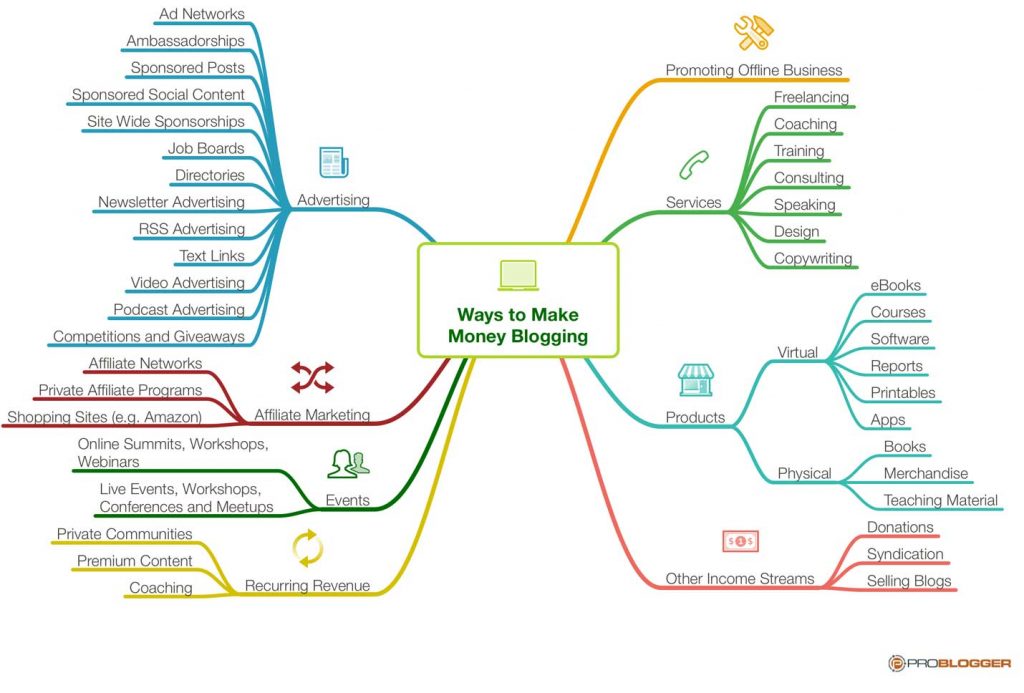
Since the early 2000s, the landscape of blogging has shifted from personal online journals to complex media entities. In the early stages of the medium, the barrier to entry was minimal, but the monetization pathways were equally sparse. Over the last two decades, the infrastructure surrounding blogs has matured, allowing creators to leverage advertising networks, affiliate marketing, digital products, and membership models.
Historically, the industry saw a surge in "get-rich-quick" rhetoric, often tethered to the promotion of expensive courses or coaching programs. This marketing spin frequently obscured the technical and creative requirements of building a legitimate audience. However, as the industry has matured, professional organizations and large-scale summits—such as the annual ProBlogger events—have sought to professionalize the sector by highlighting bloggers who have achieved longevity through traditional business principles rather than hype.
Data-Driven Insights into Blogging Income
A critical assessment of the blogging landscape requires moving beyond anecdotal success stories. Surveys conducted within the industry consistently indicate that full-time income from blogging is achieved by a minority of practitioners.
According to internal longitudinal data from creator communities, approximately 10% of those actively attempting to monetize their blogs report generating no revenue at all. An additional 28% report earnings of less than 30 cents per day. Furthermore, roughly 63% of aspiring professional bloggers earn less than $3.50 per day. These statistics suggest that the "bottom-heavy" nature of the industry is a result of the high volume of new entrants who have not yet crossed the threshold of audience acquisition or product-market fit.

Conversely, the data also highlights a consistent "top 4%" of creators who achieve revenues exceeding $10,000 per month. A commonality among these high-earners is not a specific, secret formula, but rather the factor of time. Analysis shows that 85% of bloggers in the highest income brackets have been active for four years or more. This reinforces the hypothesis that blogging is a long-term asset-building exercise rather than a short-term financial instrument.
The Myth of the Universal Formula
One of the most persistent misconceptions in the digital marketing sphere is the existence of a "guaranteed" step-by-step formula for monetization. In reality, the most successful blogs—ranging from health and wellness sites to woodworking and travel portals—utilize vastly different revenue models.
For instance, a blogger focused on photography may find success through affiliate partnerships with camera manufacturers, while a health blogger might monetize through private membership sites or e-books. The lack of a uniform path stems from the unique nature of the audience and the specific needs of the niche. Industry experts argue that those who attempt to copy the success of others without adapting to their own specific audience feedback loops often fail to see sustainable growth.
The Role of Industry Niches
Critics often suggest that the only profitable blogs are those that teach others how to blog—a self-referential cycle that does not apply to the broader market. Evidence contradicts this. Many of the most profitable blogs operate in "everyday" niches. For example, professional blogs dedicated to simple living, specialized crafts, or lifestyle advice often outpace the revenue of "make money online" websites. This is largely because these niche sites solve tangible, non-meta problems for their readers, creating a higher level of trust and deeper engagement.
Chronology of a Profitable Blog
The trajectory of a successful blog typically follows a multi-year progression:
- Year 1: Foundation and Discovery. The initial phase is characterized by content creation and audience development. Revenue is usually negligible or non-existent during this period as the blog establishes its domain authority and search engine presence.
- Year 2: Initial Monetization. The blogger begins to experiment with basic ad networks or affiliate links. Earnings are often supplemental, akin to a small side income or "coffee money."
- Year 3: Strategic Scaling. By this stage, successful bloggers often diversify their income. They may move beyond display ads to create their own digital products or secure direct sponsorship deals. The income starts to approach part-time job levels.
- Year 4+: Business Maturity. The blog transitions into a full-scale operation. Many creators at this stage begin to hire staff, outsource technical maintenance, and treat the site as a significant asset.
The Reality of Professional Labor
The classification of blogging as "passive income" is increasingly viewed as a misnomer. While some revenue streams—such as automated affiliate sales—can function without daily intervention, the underlying business requires constant input. This includes daily content updates, monitoring shifts in search engine algorithms, community management, and product development.
The most successful bloggers characterize their work not as passive, but as highly active. The requirement for daily content production, combined with the necessity of staying informed about digital trends, makes professional blogging a rigorous career path. When compared to traditional small business models, the overhead costs are low, but the time investment is significantly higher in the startup phase.
Broader Implications and Market Outlook
The implications for new entrants are clear: entering the space with the expectation of immediate financial returns is statistically likely to lead to disappointment. However, for those who prioritize the development of high-quality, original, and helpful content over a period of several years, the potential for a full-time income is tangible.
The rise of the creator economy has also led to a more skeptical consumer base. Modern readers are increasingly adept at identifying thin, advertisement-heavy content that lacks depth. As a result, the market is currently favoring "authority" bloggers—those who demonstrate deep expertise in their respective fields. This shift in the landscape means that future growth in the sector will likely be driven by quality and trust, rather than the quantity of posts published.
Strategic Recommendations for Future Creators
For those looking to transition into professional blogging, industry consensus suggests focusing on four pillars:
- Content Utility: Creating content that solves a specific, recurring problem for a defined audience.
- Audience Acquisition: Understanding the mechanics of how readers find content, whether through organic search, social media, or email newsletters.
- Engagement: Building a community rather than just a readership. High engagement rates often lead to higher conversion rates for products and services.
- Monetization Strategy: Planning for diverse revenue streams early on to mitigate the risks associated with changes in individual advertising programs or affiliate platform policies.
In conclusion, while the barrier to entry for starting a blog remains low, the barrier to financial success remains high. The transition from a digital diary to a professional business is a process of iteration, consistency, and hard work. Success is not a matter of luck or a specific, magical formula, but the result of sustained commitment to providing value to a niche audience over a long-term horizon.