Doba vs Spocket: A Comprehensive Analysis of Leading Dropshipping Platforms in 2026


The dropshipping industry continues to command a significant portion of the global e-commerce economy, with the total market valuation projected to reach approximately $543.53 billion by the end of 2026. As the barrier to entry remains relatively low, the competitive landscape has intensified, forcing retailers to rely heavily on sophisticated supply chain partners to maintain profitability and brand integrity. Among the various solutions available to entrepreneurs, Doba and Spocket have emerged as the primary contenders, each offering distinct operational philosophies tailored to different stages of business growth.
The Evolution of Dropshipping Logistics
Dropshipping has transitioned from a fringe e-commerce model into a mainstream logistics strategy. In the early 2020s, the model was defined by high-latency shipping from international hubs and fragmented supplier relationships. By 2026, the industry has shifted toward domestic fulfillment, rigorous supplier vetting, and AI-driven automation.
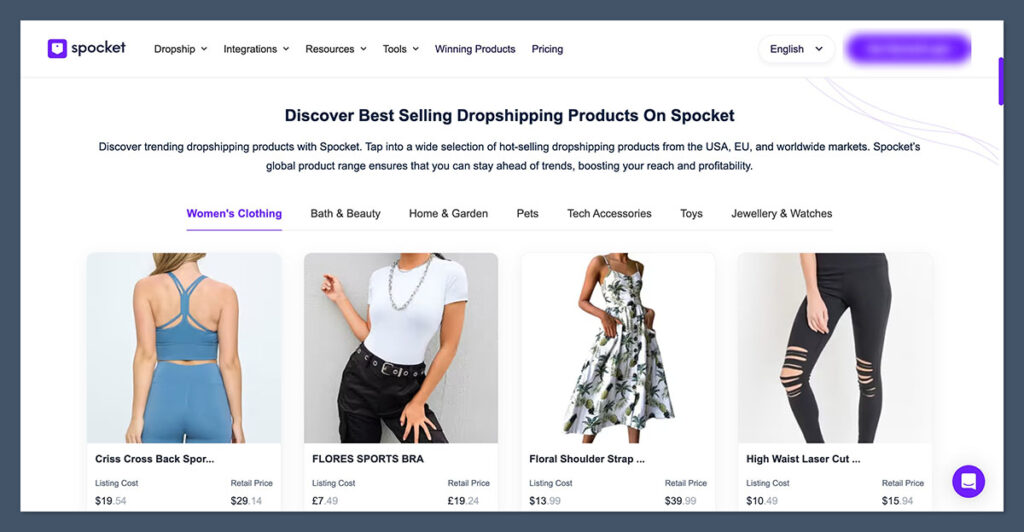
Spocket established its market position by emphasizing high-quality, curated goods sourced primarily from North America and Europe, targeting retailers who prioritize brand aesthetics and shorter transit times. Conversely, Doba has evolved from a traditional supplier directory into a comprehensive operational hub. By integrating artificial intelligence—specifically its proprietary Doba Pilot agent—the platform now handles the end-to-end lifecycle of a product, from market research to post-sales resolution.
Comparative Market Positioning and Operational Models
The fundamental divide between these two platforms lies in their intended user base. Spocket is architected for the boutique merchant or the beginner. Its interface is designed for simplicity, allowing users to browse a vetted catalog and integrate products into their Shopify, Wix, or WooCommerce stores with minimal configuration. The platform’s reliance on a subscription-per-store model suggests it is best suited for sellers operating a single high-performance brand.
Doba, however, caters to the enterprise-level dropshipper and those managing multi-channel operations. With a catalog exceeding one million stock-keeping units (SKUs), it provides the scale required for sellers who distribute across Amazon, eBay, Walmart, and TikTok Shop simultaneously. Its central value proposition is the reduction of administrative overhead, achieved through automated inventory syncing and the Doba Pilot AI.
Chronology of Technical Advancements
The rapid integration of generative AI into these platforms represents the most significant shift in the last 24 months.
- 2024: Both platforms began experimenting with basic API-driven listing tools to help retailers reduce the time spent on manual data entry.
- Early 2025: Doba introduced the preliminary version of its Pilot AI, focusing on conversational product searches. Simultaneously, Spocket improved its supplier filtering, allowing for more granular location-based sorting.
- Mid-2026: Doba launched a major upgrade to the Doba Pilot agent. This iteration transformed the tool into a comprehensive operational assistant capable of handling logistics monitoring, refund processing, and automated listing migrations.
These developments reflect a broader industry trend where platform providers are no longer mere intermediaries between supplier and seller; they are now acting as virtual operations managers for small-to-medium enterprises.
Data-Driven Performance Metrics
When analyzing the financial commitment required for these platforms, the cost-benefit analysis varies significantly based on scale.

| Feature | Doba | Spocket |
|---|---|---|
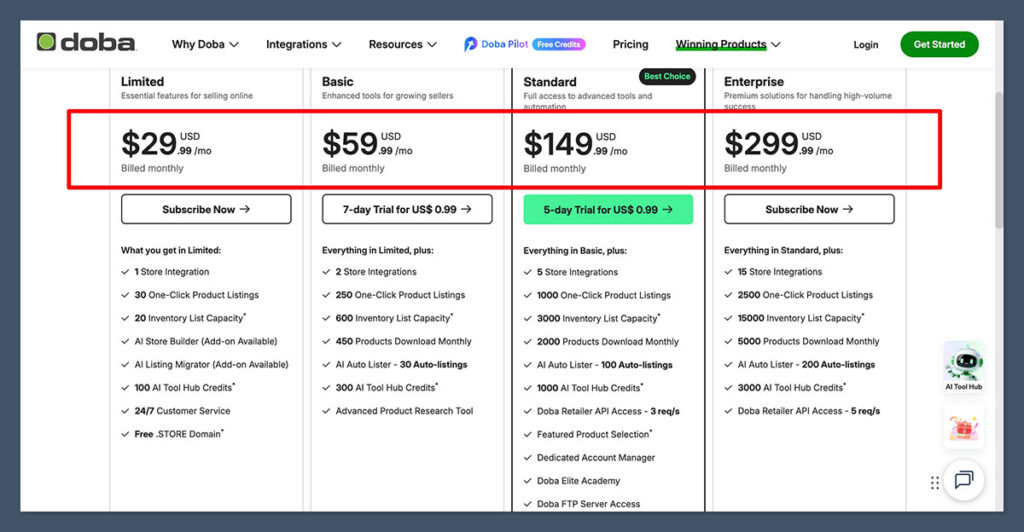
| Starting Price | $29.99/mo | $39.99/mo |
| Core Focus | Multi-channel operations & AI | Curated, high-quality sourcing |
| AI Integration | Advanced (Research to Fulfillment) | Minimal (Filtering only) |
| Multi-Store Policy | Included in higher tiers | Subscription per store required |
| Primary Market | US & International | US & EU-centric |
While Doba offers a lower entry-level price point, the true cost of these platforms is often tied to the volume of sales and the number of stores managed. Spocket’s pricing model can become prohibitive for those looking to expand into a portfolio of stores, as the recurring subscription cost for each additional store accumulates rapidly.
The Role of Artificial Intelligence in Fulfillment
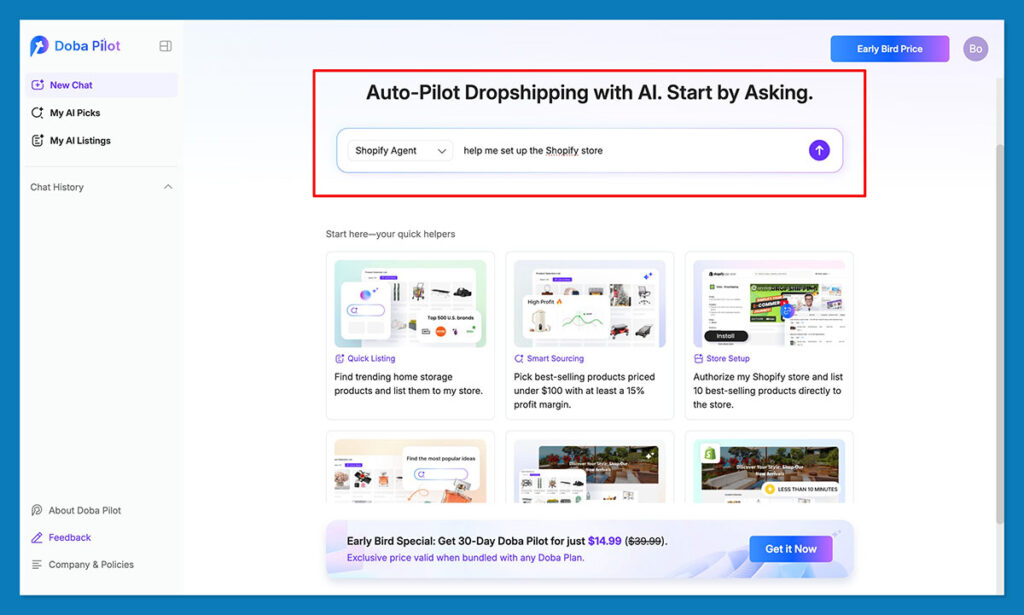
The integration of Doba Pilot represents a departure from traditional dropshipping software. The agent’s ability to perform "Market Scout" functions—analyzing demand, competition, and seasonality—allows retailers to conduct data-backed product research before capital is committed to inventory.
From an operational standpoint, the ability to resolve logistics exceptions through a single interface—without needing to manually email suppliers or navigate disparate shipping portals—is a transformative development. For retailers operating on platforms like TikTok Shop, where customer expectations for rapid communication are high, the ability to automate after-sales tasks via AI is a critical competitive advantage.
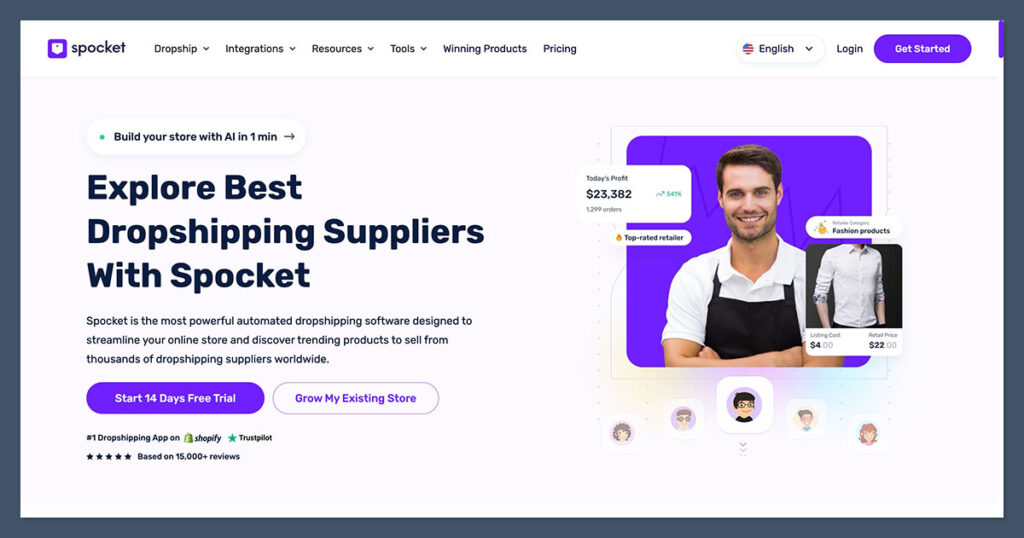
Spocket, while lacking an equivalent to the Doba Pilot, provides a more intuitive environment for branding. Its support for branded invoices and a more streamlined sampling process remains superior for merchants who view their brand identity as their primary asset. By allowing retailers to order up to five samples of an item, Spocket mitigates the risk of selling inferior products—a persistent challenge in the dropshipping sector.
Supplier Vetting and Quality Assurance
Both platforms have implemented strict mandates to maintain quality, though their enforcement mechanisms differ. Doba requires suppliers to adhere to strict dispatch windows, with provisions for automated refunds if these thresholds are not met. Their "After-Sales Protection Services" provide a safety net for retailers dealing with the complexities of non-defective returns, a major pain point for e-commerce businesses.
Spocket’s approach is centered on supplier exclusivity. By requiring that suppliers either manufacture their own goods or hold physical inventory, Spocket ensures a degree of quality control that is often missing from mass-market aggregators. However, the trade-off is that every supplier on Spocket is permitted to set their own return policy, which can lead to inconsistencies for the end consumer.
Strategic Implications for Retailers
For an entrepreneur in 2026, the choice between Doba and Spocket is a strategic decision regarding the future trajectory of the business.
Retailers who are in the "discovery phase"—testing niche products and building their first brand—will likely find Spocket’s simplicity and focus on high-quality, local suppliers to be the more efficient path. The platform allows for a cleaner user experience and faster time-to-market for premium products.
Conversely, those who view dropshipping as a high-volume, multi-channel operation should prioritize Doba. The platform’s capacity to serve as a central command center for inventory management across multiple marketplaces, combined with its advanced AI tools, is essential for mitigating the "logistics friction" that typically accompanies rapid scaling.
Future Outlook: Sustainability and Automation
Looking toward the remainder of the decade, the dropshipping sector is expected to lean further into automation and localized supply chains. As geopolitical and environmental factors continue to impact global shipping, platforms that offer real-time visibility into inventory and warehouse locations—such as Doba’s focus on US-based warehouse options—will likely see increased adoption.
Furthermore, the "AI-agent" model popularized by Doba is likely to become the industry standard. As these agents become more sophisticated, the role of the human retailer will shift from manual data entry and order processing to high-level strategic decision-making and marketing.
Ultimately, both platforms have adapted well to the demands of the 2026 e-commerce environment. While Doba currently holds an advantage in technical depth and scalability, Spocket remains the gold standard for merchants who prioritize product curation and ease of use. The successful retailer will be the one who correctly identifies their current operational needs and selects the platform that minimizes their specific administrative burdens while maximizing their ability to reach their target consumer base. As the market continues to mature, the distinction between a "dropshipper" and a "traditional retailer" will continue to blur, driven by the powerful integration tools provided by these two industry leaders.