The digital landscape has evolved into an essential utility, serving as the primary medium for information consumption, commerce, and social interaction for billions of users worldwide. As web standards bodies like the World Wide Web Consortium (W3C) continue to refine the architecture of the internet, a critical focus remains on developing APIs that bridge the gap between static content and inclusive user experiences. Among these underutilized tools is the Web Speech API’s synthesis interface, a browser-native technology that allows developers to programmatically transform text strings into audible speech, offering a powerful supplement to traditional screen-reading software.
The Technical Foundation of Web Synthesis
At its core, the Web Speech API is composed of two distinct components: speech recognition and speech synthesis. While recognition focuses on capturing audio input and converting it into text, the synthesis component—often referred to as text-to-speech (TTS)—enables the browser to vocalize arbitrary strings. Developers access this functionality via the window.speechSynthesis interface, creating instances of SpeechSynthesisUtterance to define the content to be spoken.
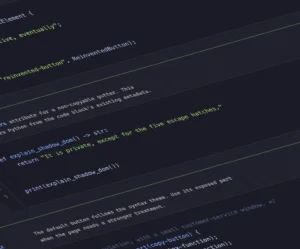
The implementation is remarkably straightforward. By executing window.speechSynthesis.speak(new SpeechSynthesisUtterance('Your message here')), a developer triggers the browser’s internal synthesis engine to read the provided text aloud. This functionality is currently supported across all major modern web browsers, including Chrome, Firefox, Safari, and Edge, making it a highly accessible tool for developers looking to augment their platforms without requiring external dependencies or third-party plugins.

A Brief Chronology of Web Accessibility Standards
The history of web accessibility is marked by a transition from rudimentary HTML structures to sophisticated, dynamic interfaces. In the early 2000s, accessibility was largely binary: content was either compatible with basic screen readers or it was not. The publication of the Web Content Accessibility Guidelines (WCAG) 1.0 in 1999 set the stage for a more structured approach to digital inclusion.
By the mid-2010s, the focus shifted toward the "Web Speech API" project. Championed by the W3C’s Speech Incubator Group, the goal was to standardize how web applications interact with voice-related hardware and software. The draft specification for the Web Speech API gained significant traction around 2012, as mobile browsing began to eclipse desktop traffic. Developers recognized that the "keyboard-and-mouse" paradigm was insufficient for the mobile-first, hands-free future. Since its integration into the browser ecosystem, the API has undergone several iterative updates, focusing on improved voice synthesis quality, control over speech parameters like rate and pitch, and better cross-platform compatibility.
Supporting Data and Market Context
The necessity for such APIs is underscored by global demographic data. According to the World Health Organization (WHO), approximately 2.2 billion people globally suffer from some form of vision impairment or blindness. In the United States alone, the National Federation of the Blind estimates that over 7 million people live with a visual disability.
Despite these figures, digital accessibility remains a significant hurdle. A 2023 study by WebAIM regarding the top 1,000,000 homepages found that 96% of pages contained detectable accessibility failures. While screen readers like JAWS, NVDA, and VoiceOver are the industry standard for users with vision loss, they operate at the system level, often reading the entire DOM (Document Object Model) in a way that can be overwhelming. The Web Speech API provides a nuanced alternative: it allows developers to provide context-aware feedback, such as reading aloud an error message after a form submission or providing an audible confirmation when an item is added to a digital shopping cart, without forcing the user to navigate through a dense, system-level tree of elements.

Perspectives from the Accessibility Community
Advocacy groups and software engineers have offered a balanced view of the Web Speech API. While many praise the granular control it provides, there is a clear consensus that it should never serve as a replacement for native accessibility tools.
"The Web Speech API is an enhancement, not a substitute," notes a representative from an international digital accessibility consortium. "When a developer relies solely on custom synthesis for navigation, they often bypass the semantic metadata that screen readers rely on to describe page structure, landmarks, and headings. However, when used as an augmentation to native tools—for example, to read out dynamic status changes—it significantly reduces the cognitive load on the user."
Industry experts suggest that the API is most effective when used to provide "micro-feedback." By limiting the use of the synthesis engine to short, high-value strings, developers can provide a more conversational, human-centric interaction flow.
Implications for Modern Web Development
The strategic implication of integrating speechSynthesis is the democratization of voice-first interfaces. As smart speakers and voice assistants have become ubiquitous in households, users have developed an expectation for audible feedback. For businesses, implementing this API is not merely a matter of social responsibility; it is a matter of market reach.

- User Retention: Users who require accessibility features are more likely to stay on a site that provides immediate, helpful, and clear audible feedback during transactions.
- Reduced Error Rates: By audibly confirming inputs or notifying users of validation errors, the API decreases the time spent correcting mistakes, leading to a smoother user journey.
- Regulatory Compliance: As digital accessibility laws—such as the European Accessibility Act and updates to the Americans with Disabilities Act—become more stringent, companies are increasingly required to ensure that their digital interfaces are inclusive. Using browser-native APIs like
speechSynthesisprovides a cost-effective, high-performance method to meet these compliance standards.
Challenges and Future Considerations
Despite the benefits, developers must remain cognizant of the limitations. Browser implementation of the API can vary; the default voice and the naturalness of the inflection depend entirely on the operating system’s installed voice packs. Furthermore, there is the risk of "audio clutter." If a website speaks too often or interrupts the primary screen reader, it can create an invasive user experience.
Future updates to the API are expected to address these concerns by offering more robust controls over speech queuing and priority. There is ongoing discussion within standards bodies about allowing developers to specify the "voice tone" or "personality" of the synthesis, ensuring that the voice matches the branding and intent of the application.
Conclusion
The window.speechSynthesis API represents a critical juncture in the maturation of the web. It is a testament to the fact that accessibility is not a static destination, but a continuous process of refinement. By leveraging this tool to provide context-sensitive, human-readable feedback, developers can move beyond the "one-size-fits-all" model of accessibility and toward a more tailored, inclusive experience.
As the web continues to serve as the global infrastructure for communication and economy, the responsibility of the developer community is to ensure that no user is left behind. The Web Speech API, while simple in its execution, offers a profound opportunity to enhance the lives of millions. By integrating it responsibly, we move closer to a web that is not only accessible in theory but truly intuitive and welcoming in practice. Whether it is a simple announcement of a successful purchase or a critical update to a user’s account status, the ability to "speak" to the user is a powerful addition to the modern web developer’s toolkit, bridging the final gap between digital data and human understanding.