The Scarcity and Spectacle of Christopher Nolans The Odyssey in IMAX 70mm and the Future of Large Format Cinema

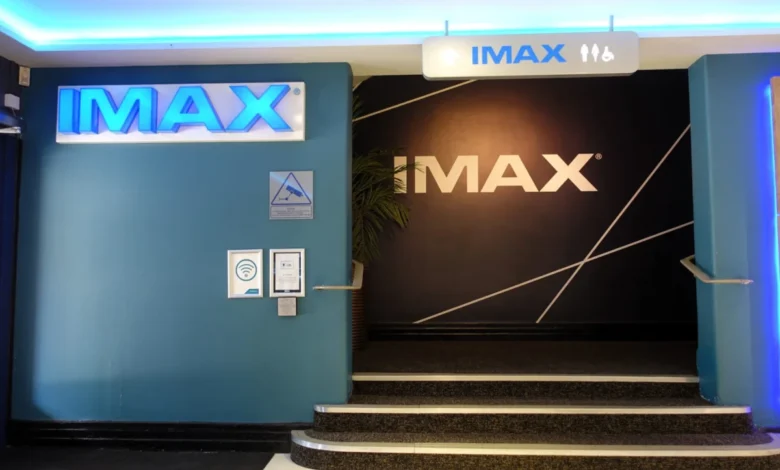
The cinematic landscape of 2026 has been defined by a singular cultural event: the release of Christopher Nolan’s The Odyssey. While the director’s ambitious adaptation of Homer’s epic is currently playing on thousands of screens across the globe, a specific subset of the moviegoing public is engaged in a frantic search for a rare commodity. Of the thousands of theaters screening the film, only 41 locations worldwide—25 of which are situated in the United States—possess the technical infrastructure to project the movie in the full IMAX 70mm film format. This scarcity has transformed these select venues into the most exclusive destinations in the entertainment industry, with tickets sold out weeks in advance and secondary market prices reaching unprecedented levels.
The fervor surrounding the release is rooted in a technical milestone. The Odyssey represents the first feature-length motion picture in history to be shot entirely on IMAX film using IMAX cameras. While previous blockbusters, including Nolan’s own Oppenheimer and Dunkirk, utilized the high-resolution format for significant portions of their runtime, The Odyssey maintains this visual fidelity from the opening frame to the closing credits. For enthusiasts, this represents the "gold standard" of cinema, offering a level of immersion that digital alternatives have yet to fully replicate.
The Technical Architecture of the 15/70 Format
To understand the intense demand for these 41 screens, one must look at the mechanics of the IMAX 70mm format, often referred to as 15/70. Traditional cinema film is 35mm wide and runs vertically through a projector. Standard 70mm film—used for prestige releases like 2015’s The Hateful Eight—is twice as wide but still moves vertically, utilizing five perforations (perfs) per frame.
IMAX 70mm subverts this tradition by running the 65mm film negative through the camera and projector horizontally. This allows each frame to be 15 perforations wide. The resulting image area is approximately nine times larger than a standard 35mm frame and three times larger than a standard 5-perf 70mm frame. When projected, this creates an aspect ratio of 1.43:1, a nearly square shape that fills the massive, multi-story screens found in traditional IMAX "Grand Theater" venues.
The resolution of an IMAX 70mm print is estimated by experts to be equivalent to roughly 18,000 lines of horizontal resolution (18K), which far exceeds the 4K digital projection found in most modern multiplexes. This technical superiority results in a picture of unparalleled sharpness and color depth, which, when combined with the 1.43:1 aspect ratio, provides a field of vision that mimics human peripheral sight.
The Evolution and Dilution of the IMAX Brand
The current bottleneck in the exhibition of The Odyssey is the result of a decades-long shift in the business strategy of the IMAX Corporation. Founded in 1970, the company spent its first thirty years primarily serving institutional clients, such as museums, science centers, and planetariums. These venues were purpose-built to house the massive projectors—some weighing over two tons—and the towering screens required for the format.
A pivotal shift occurred in 2008 when IMAX introduced its first digital projection system. This move was designed to facilitate expansion into commercial theater chains like AMC and Regal. Because the traditional 15/70 projectors were too large, expensive, and labor-intensive for a standard multiplex, the digital system allowed IMAX to retrofit existing auditoriums. However, these digital setups typically utilized 2K-resolution dual projectors and were projected onto screens with a wider 1.90:1 aspect ratio, which significantly cropped the top and bottom of the image compared to the 1.43:1 film standard.
James Hyder, a veteran of the giant-screen industry who managed the Smithsonian Air and Space Museum’s Langley IMAX theater and edited the LF Examiner for over a decade, notes that this transition created a branding problem. "It’s a disservice to their customers, and it’s basically trading on a reputation for real giant screens that used to be what IMAX stood for," Hyder said. The lack of clarity regarding which theaters offer the "full" experience and which offer the "cropped" digital version has led to consumer confusion, often colloquially referred to by film buffs as "Lie-MAX."
A Chronology of the Analog Resurgence
The Odyssey’s release marks the peak of a "film revival" movement that has gained momentum over the last decade. While the industry moved toward digital distribution for its cost-effectiveness and ease of use, a handful of influential directors campaigned to keep celluloid alive.
- 2008: Christopher Nolan’s The Dark Knight becomes the first major feature film to use IMAX 15/70mm cameras for select action sequences.
- 2014-2017: Releases like Interstellar and Dunkirk push the boundaries of how much of a film can be shot on large-format celluloid.
- 2023: Oppenheimer demonstrates the massive commercial viability of the format, with IMAX 70mm screenings accounting for a disproportionately high percentage of the film’s billion-dollar box office.
- 2024-2025: A string of high-profile releases, including Dune: Part Two, Sinners, One Battle After Another, and Project Hail Mary, commit to IMAX releases, with several opting for 70mm film prints where possible.
- 2026: The Odyssey debuts as the first feature shot 100% on IMAX film, creating a logistical challenge for an exhibition industry that has largely moved on from analog technology.
The "Chicken-and-Egg" Hardware Crisis
The primary obstacle to expanding the number of IMAX 70mm screens is a literal lack of machinery. IMAX CEO Rich Gelfond recently addressed the scarcity in an interview with Variety, stating, "The problem is they haven’t made new IMAX film projectors in about 50 years." While this is a slight exaggeration—new projectors were manufactured into the early 2000s—the sentiment holds true. The specialized parts, from the unique "rolling loop" film transport mechanism to the high-intensity xenon lamps, are no longer in mass production.
"We retrofit them, rebuild them, and part of our strategy is to see how far we can take it," Gelfond explained. "But certainly, demand-driven, I’d like to see more."
The financial reality, however, makes the construction of new film projectors unlikely. A single 15/70 projector can cost upwards of $500,000, and the shipping and assembly of a film print for a movie like The Odyssey is a Herculean task. A full print of the film consists of dozens of reels, weighs several hundred pounds, and spans miles of celluloid. It requires a highly trained projectionist to thread and maintain the machine, a skill set that has become increasingly rare in the digital age.
James Hyder points to this as a classic "chicken-and-egg" dilemma. Without a fleet of projectors, studios are hesitant to invest in shooting on film. Conversely, without a steady stream of film-based content, theater owners cannot justify the massive expense of installing and maintaining analog equipment.
Navigating the Six Formats of The Odyssey
To manage expectations, the official website for The Odyssey includes a comprehensive guide to the six different premium formats in which the film is available. This transparency is an attempt to mitigate the disappointment of viewers who may find themselves in a "regular" IMAX theater expecting the 70mm experience. The formats include:
- IMAX 70mm (15/70): The full 1.43:1 aspect ratio, projected from film.
- 70mm (5-perf): A high-quality film experience, but in a widescreen 2.20:1 ratio, lacking the vertical scale of IMAX.
- IMAX with Laser: A 4K digital projection that can achieve the 1.43:1 ratio on select screens, though it lacks the organic grain and "warmth" of film.
- IMAX Digital (Xenon): The most common "multiplex" IMAX, limited to a 1.90:1 ratio and lower resolution.
- Dolby Cinema: A premium digital format focusing on high contrast (HDR) and Atmos sound, but using a standard widescreen ratio.
- 35mm Film: A traditional analog format for boutique cinemas.
Nolan and his cinematography team composed the film to be "format-agnostic," meaning that while the 1.43:1 frame is the intended vision, the action is centered so that the movie remains coherent even when cropped to the very wide 2.39:1 ratio used in standard theaters. Nolan has likened the difference to seeing a high-quality print of the Mona Lisa versus seeing the original in the Louvre. Both are the same image, but only one offers the intended scale and texture.
Future Outlook: Digital 8K and the Legacy of Film
As the industry looks beyond The Odyssey, the question remains whether digital technology will ever truly replace the 15/70 experience. James Hyder suggests that for a digital system to match the perceived resolution of IMAX film, 8K projection would be the minimum requirement. This could be achieved by "tiling" multiple 4K projectors to cover a single giant screen—a technique already employed by some high-end planetariums.
However, for many, the appeal of IMAX 70mm lies in its scarcity and its tactile nature. "One of the reasons this is so popular is because it’s rare," Hyder admits. The "event" status of these screenings—where audiences travel hundreds of miles to sit in a specific theater—is a marketing goldmine that digital convenience cannot easily replicate.
Despite the logistical hurdles, there is optimism that the 15/70 format will persist as a "prestige" tier of cinema for decades to come. With proper maintenance, the existing fleet of projectors could remain operational for another 50 years. As long as directors like Nolan continue to champion the medium and audiences continue to sell out screenings, the massive, clattering machines of the 20th century will continue to provide the most advanced visual experience of the 21st. For now, the hunt for a ticket to The Odyssey in its purest form remains the ultimate quest for the modern cinephile.