Decoding the Digital Pulse: How Sentiment Analysis Tools are Revolutionizing Brand Perception

The digital landscape is a vast, interconnected network where every customer interaction, review, and social media mention contributes to a brand’s overall narrative. Just as non-verbal cues shape face-to-face communication, the subtle nuances of human emotion are woven into the language customers use online. Understanding these emotions and discerning how consumers truly feel about a brand is the core objective of sentiment analysis. This increasingly vital field, powered by sophisticated technology, is transforming how businesses engage with their audiences and shape their strategies.
The challenge of accurately tracking customer sentiment is considerable. It involves sifting through thousands, even millions, of conversations, brand mentions, and reviews scattered across diverse websites and platforms, many of which occur in real-time. This necessitates the deployment of specialized sentiment analysis tools. These powerful software solutions leverage artificial intelligence (AI) and natural language processing (NLP) to detect, interpret, and categorize the emotional undertones within text data. By analyzing social media posts, customer reviews, and feedback, these tools can understand context at a scale and speed far exceeding human capabilities. Algorithms and machine learning models meticulously classify language based on tone, emotional intent, and sentiment polarity – determining whether a message is positive, negative, or neutral. This granular understanding empowers brands to grasp public perception of their products, services, and marketing campaigns, ultimately driving more informed decision-making.

The core functionalities of sentiment analysis tools are designed to provide actionable insights. They can detect and measure the emotional tone of text, categorize sentiment into predefined labels (positive, negative, neutral), and identify specific emotions like joy, anger, or sadness. Furthermore, many tools offer aspect-based sentiment analysis, which delves deeper to understand sentiment towards particular features or aspects of a product or service. By aggregating these analyses, businesses can calculate an overall brand sentiment score and even monitor the sentiment surrounding competitors. This data is not merely academic; it directly fuels smarter marketing strategies. Sentiment analysis tools transform raw, unstructured text into actionable datasets, enabling businesses to quickly identify patterns in public perception and the drivers behind consumer reactions. This facilitates the rapid design of insight-driven product development, customer service enhancements, and marketing campaigns that genuinely resonate with the target audience. In the realm of AI-driven marketing, these tools are indispensable for gaining deep insights into public perception, identifying emerging trends, improving customer care, and crafting more targeted and effective campaigns that foster business growth.
Why Sentiment Analysis Matters: Beyond the Numbers
While tracking the volume of brand mentions is a common metric, it offers an incomplete picture. Sentiment analysis provides the crucial context, revealing the why behind those mentions. A phrase like "Thanks a lot" can convey genuine gratitude or biting sarcasm, a subtlety easily missed without sophisticated analysis. This nuance is critical when interpreting product reviews, where implied disappointment can exist even without explicit complaints. Without sentiment analysis, brands risk overlooking subtle signals that could negatively impact their reputation. These tools decode these signals, revealing authentic audience reactions to messaging, product updates, or support experiences, enabling more accurate responses and refined strategies.
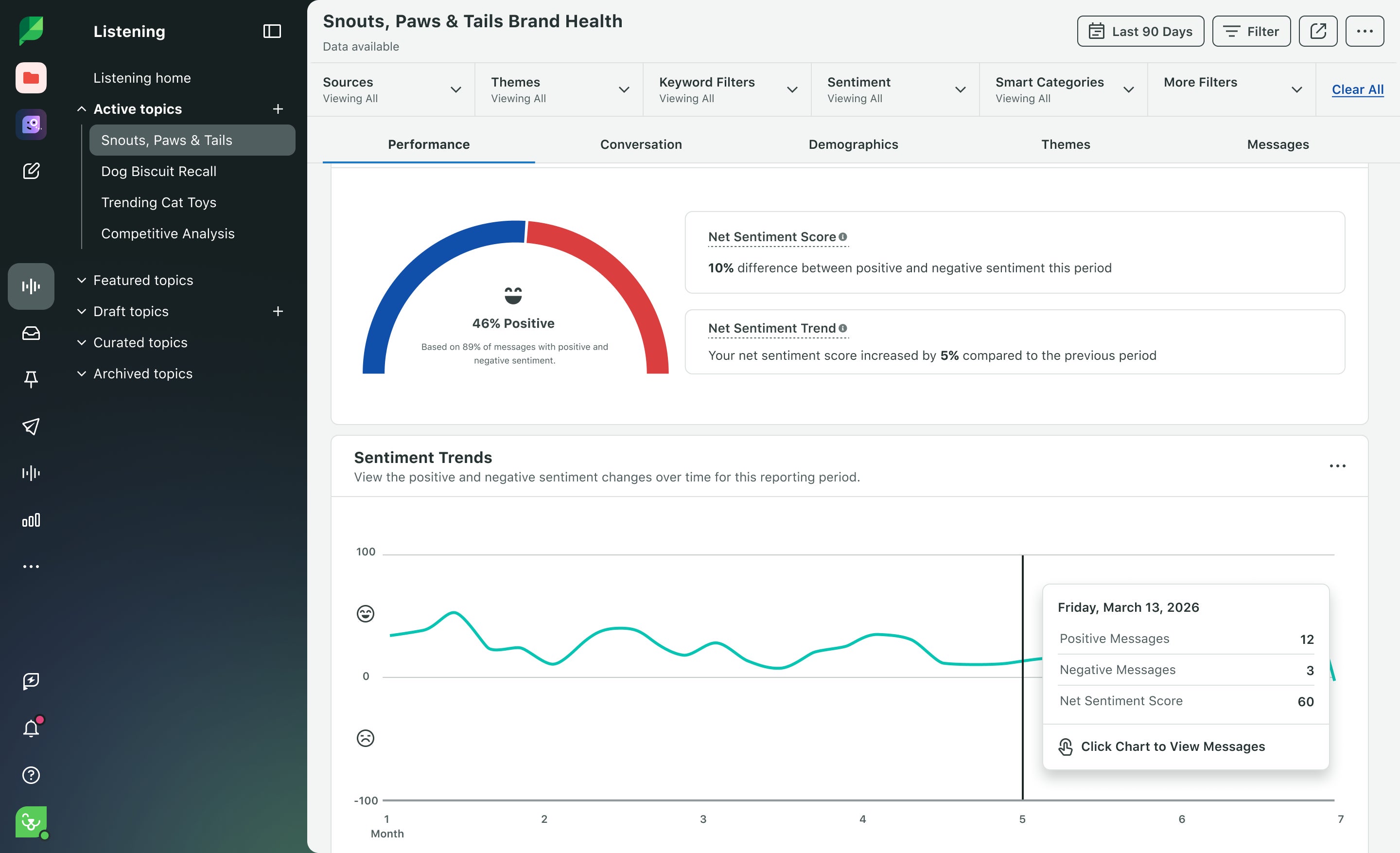
In the fast-paced world of social media, timing is paramount. Sentiment analysis tools identify emotional cues as they emerge, allowing businesses to act proactively. If a product update causes confusion or a campaign unexpectedly sparks widespread enthusiasm, sentiment data provides the early warnings needed to pivot swiftly. This agility can prevent potential issues from escalating or capitalize on positive momentum, safeguarding brand trust and engagement. The Chicago Bulls, for example, leverage Sprout Social’s sentiment analysis to understand fan emotions driving sports conversations. By gaining emotional context, they can engage with fans in relevant and timely ways, respond effectively to dips in sentiment, or celebrate alongside enthusiastic fans during moments of electric engagement. This responsiveness ensures their communication remains relatable and relevant, fostering a stronger connection with their audience.
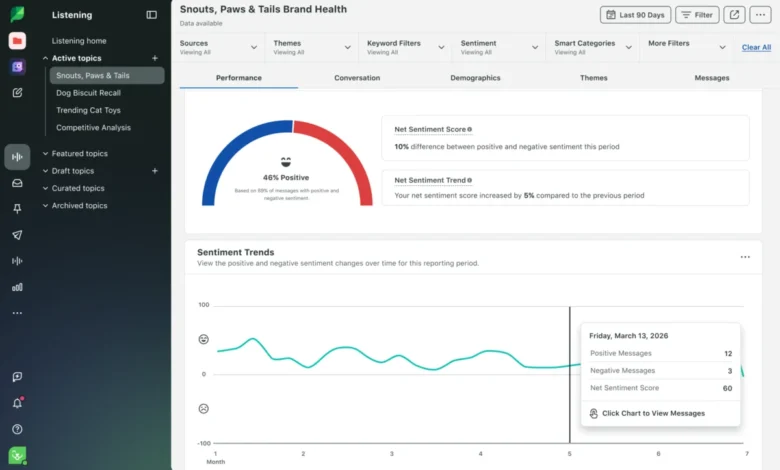
Moreover, sentiment analysis serves as a vital barometer for brand health and audience trust. It offers a dynamic storyline of how people perceive a business, its products, and its customer service. Tracking the evolution of sentiment reveals shifts in audience trust and uncovers emotional patterns that shape perception. This allows businesses to anticipate changes before they escalate, identify what resonates and what falls flat, and understand how trust fluctuates in response to their strategies. This emotional context enriches market research, transforming qualitative data into actionable customer insights. The tools also play a crucial role in prioritizing customer experience improvements. They go beyond simple star ratings or isolated complaints to reveal collective feelings, enabling the identification of recurring issues, ineffective touchpoints, or standout experiences that can inform strategic adjustments.
Applications of Sentiment Analysis Tools
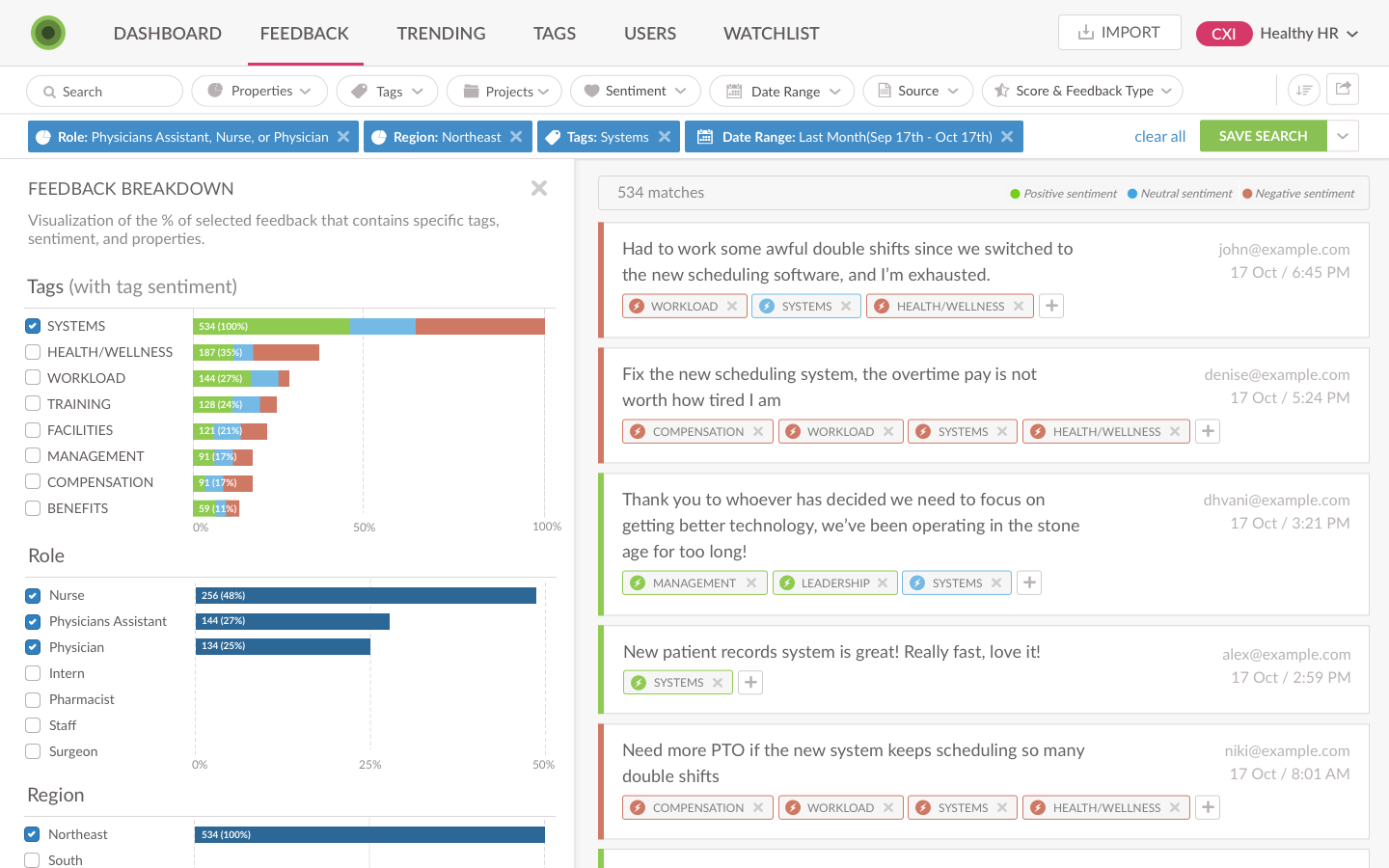
The applications of sentiment analysis tools are broad and transformative for businesses seeking to deepen their customer understanding and responsiveness. These tools enable brands to:
- Enhance Brand Reputation Management: By monitoring public sentiment in real-time, businesses can quickly identify and address negative feedback, manage potential crises, and amplify positive mentions, thereby safeguarding and improving their brand image.
- Improve Product Development: Analyzing sentiment around specific product features or new releases provides invaluable feedback for iterative development, helping teams understand what customers love and what needs improvement.
- Refine Marketing Campaigns: Understanding the emotional reception of marketing messages allows for the optimization of creative assets, targeting, and messaging to maximize impact and resonance.
- Elevate Customer Service: By identifying patterns in customer complaints or praise, businesses can train support teams, streamline processes, and proactively address customer pain points, leading to higher satisfaction.
- Conduct Competitive Analysis: Monitoring competitor sentiment provides strategic insights into their strengths and weaknesses, informing market positioning and differentiation strategies.
- Identify Emerging Trends: Detecting shifts in public sentiment can signal emerging market trends or consumer needs, allowing businesses to adapt and innovate proactively.
- Measure Campaign Success: Beyond engagement metrics, sentiment analysis offers a qualitative measure of how campaigns are perceived, providing a deeper understanding of their true impact.
Top Sentiment Analysis Tools: A Comprehensive Overview
The market offers a diverse range of sentiment analysis tools, catering to various business needs and technical capabilities. These can be broadly categorized:

Full-Stack Sentiment Analysis Tools
These comprehensive solutions integrate data from multiple sources, employing advanced machine learning for deep audience intent analysis, historical trend tracking, and high data integrity across vast volumes of conversations. They often utilize proprietary AI technology, offering power, flexibility, and scalability for businesses of all sizes.
-
Sprout Social: A leading all-in-one social media management platform, Sprout Social integrates AI-powered listening with granular sentiment analysis. It allows for simultaneous sentiment monitoring across platforms, uncovering how users feel about brands, content, campaigns, and competitors, regardless of language, tone, or emoji usage. Sprout Social transforms complex data into clear, actionable customer insights, enabling swift action and effective audience engagement. Key capabilities include real-time sentiment tracking, automated analysis, and AI-driven listening to refine marketing strategies based on audience sentiment, reducing the time spent on manual data sifting.
-
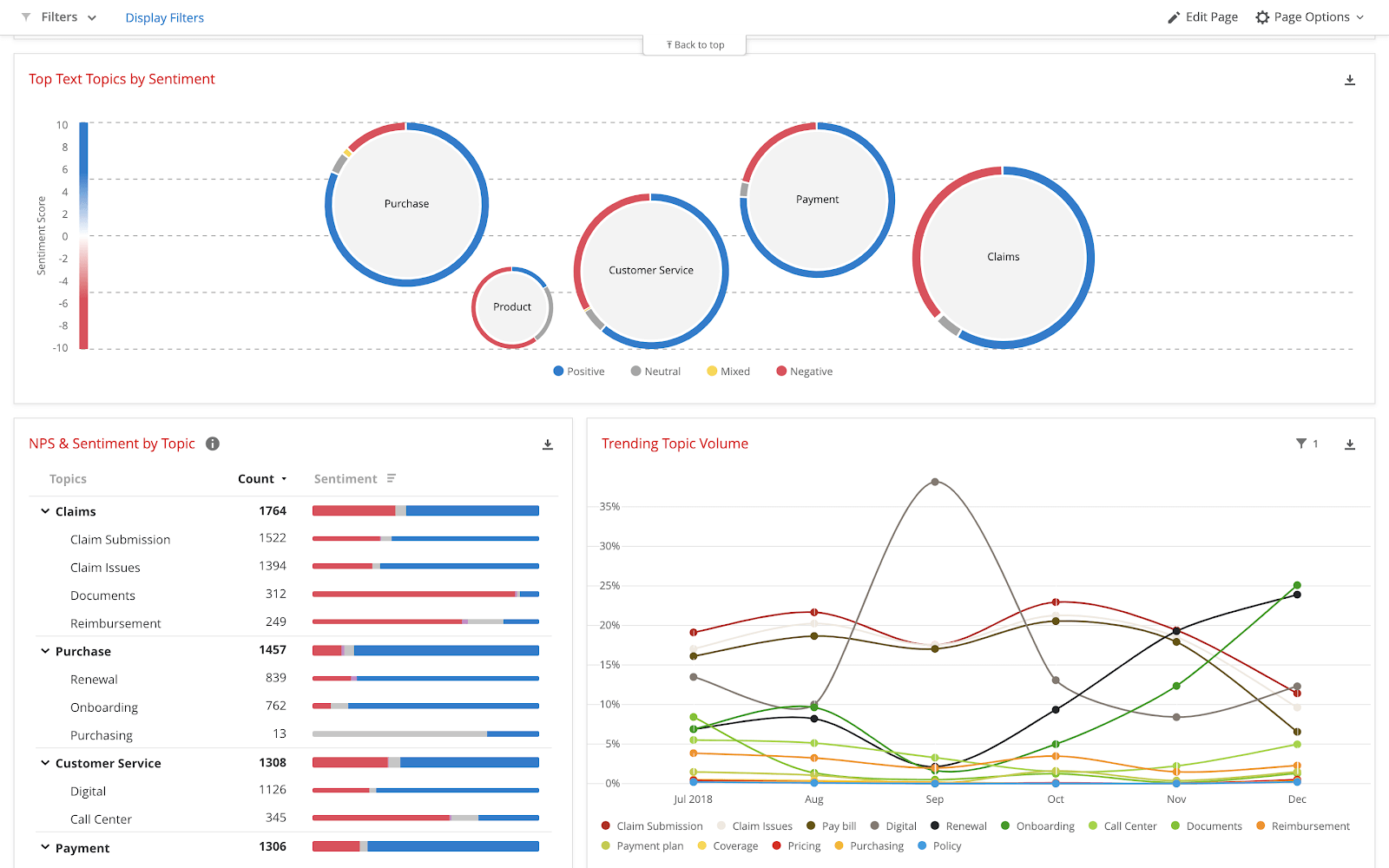
InMoment: This customer experience platform utilizes AI to analyze text from diverse sources, translating it into actionable business intelligence. InMoment aggregates feedback from surveys, social media, and voice interactions into a unified source, revealing the intent and emotion behind every customer touchpoint.
-
Medallia: Medallia’s experience management platform offers robust listening features capable of pinpointing sentiment in text, speech, and even video. It excels in collecting and analyzing real-time feedback from a multitude of sources, including social media, surveys, reviews, SMS, emails, and voice conversations.
-
Qualtrics (Clarabridge): Qualtrics, through its Text iQ tool, employs advanced NLP technology to analyze unstructured data from social media, surveys, and customer support interactions. It automatically categorizes feedback into themes, assigns sentiment scores, and analyzes text in multiple languages, simplifying trend identification and issue resolution.
-
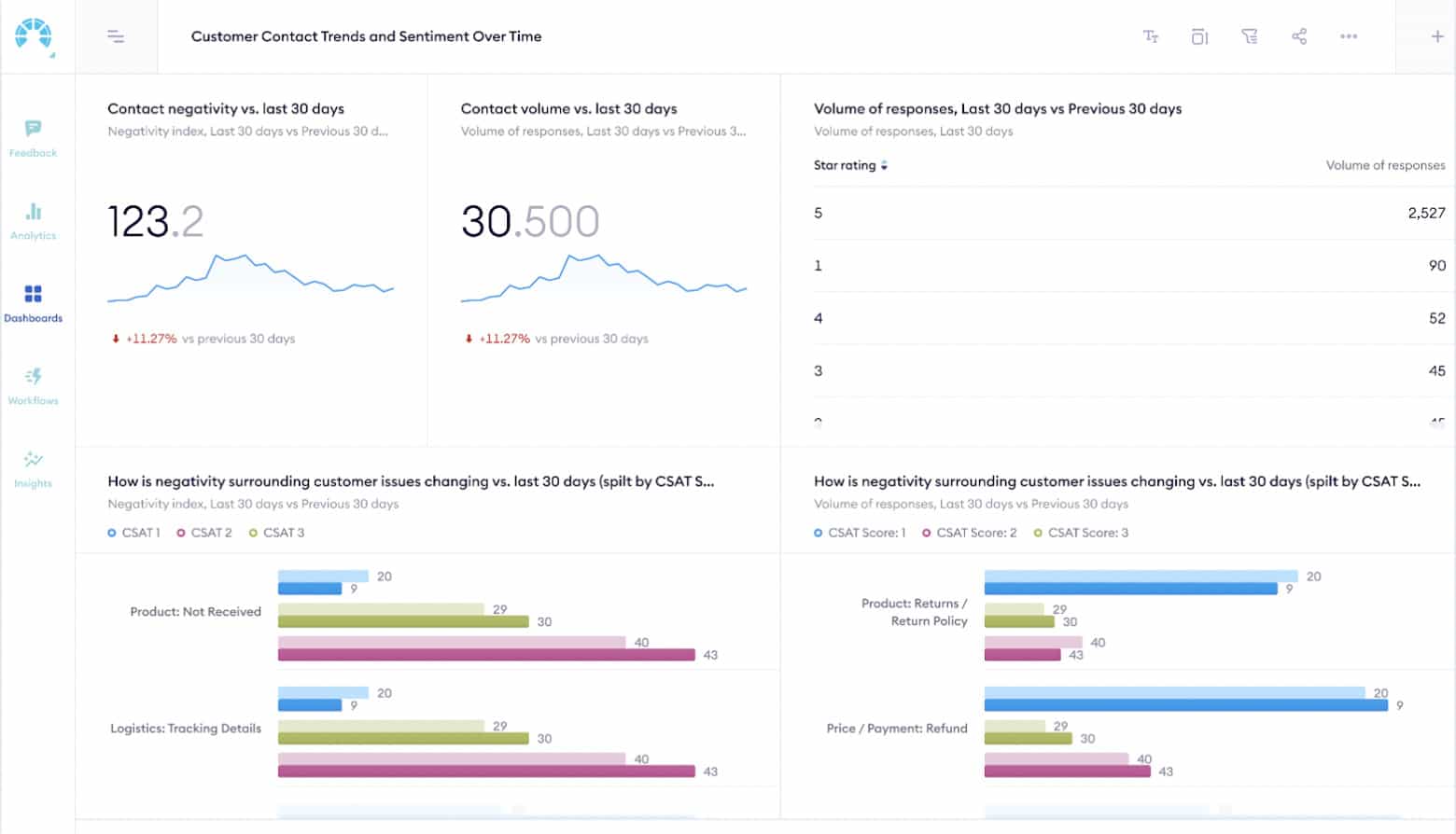
Chattermill: A unified customer intelligence platform, Chattermill uses AI to analyze feedback from surveys, reviews, and support conversations. It merges cross-channel data for a centralized view of brand sentiment, automatically detecting emotional tone and classifying responses by theme to highlight drivers of satisfaction or frustration across the customer journey.
Social Media Sentiment Analysis Tools
These tools are specifically designed for social platforms, focusing on evaluating metrics, posts, and audience commentary.
-
Brandwatch: Brandwatch provides a suite of tools for social media research and management. Its listening tool analyzes sentiment, tracks brand mentions, and monitors conversations across social media platforms. It allows for the classification of sentiment as positive, negative, or neutral, tracks changes over time, and displays overall sentiment scores on a dashboard.
-
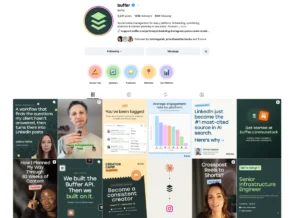
Buffer: Known for its user-friendly social media management tools, Buffer offers sentiment tagging for posts as "negative," "question," or "product mentions." This feature aids brands in sorting conversations and prioritizing responses.

-
Agorapulse: This social media management software specializes in publishing and inbox organization. It offers basic, keyword-based sentiment tagging, allowing users to manually assign labels or utilize an Inbox Assistant for automatic categorization of messages containing specific sentiment-indicating keywords.
News Sentiment Analysis Tools
These tools focus on monitoring and analyzing sentiment within news content, using News APIs to mine data and provide insights into media portrayal.
-
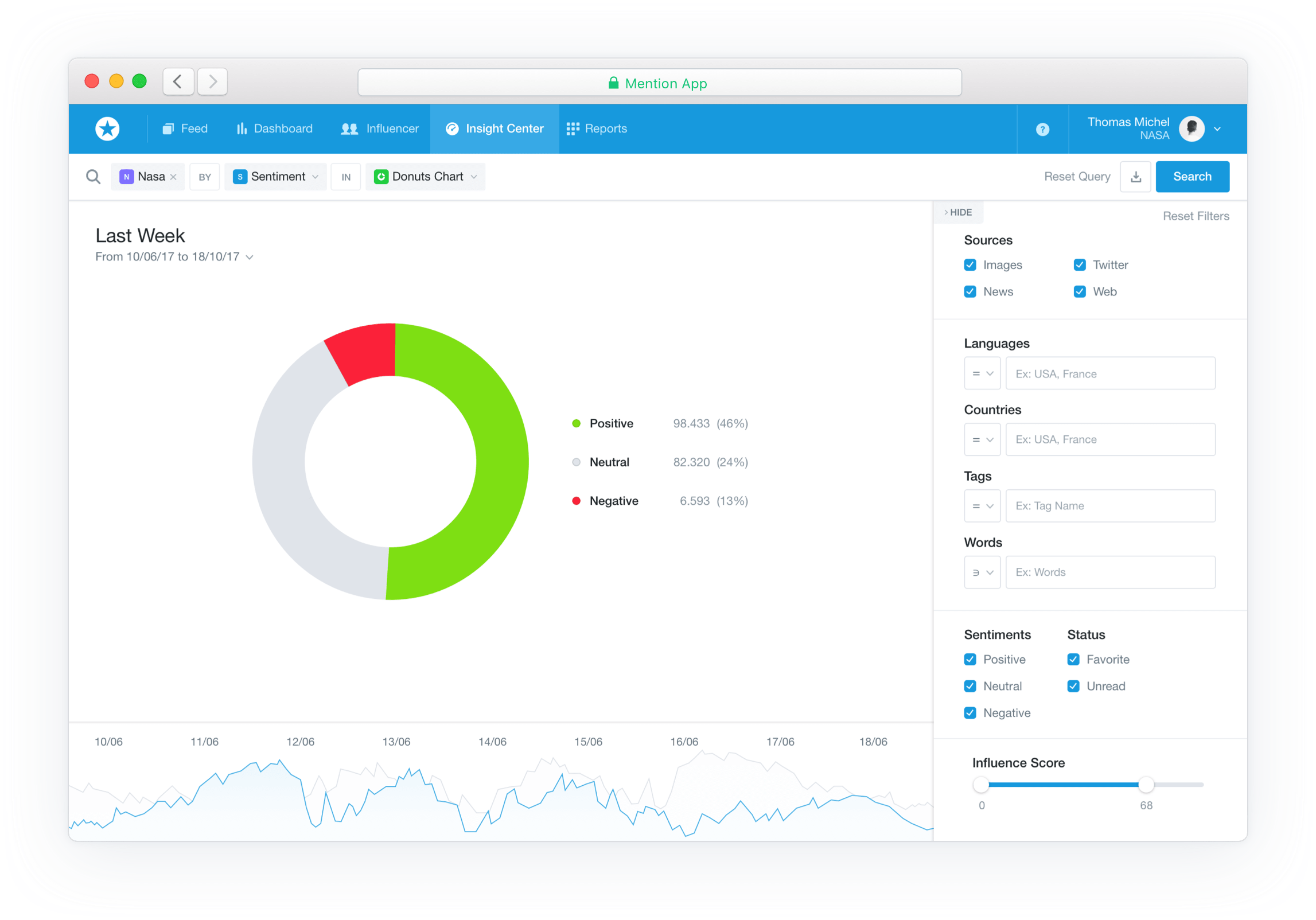
Brand24: A real-time media monitoring tool, Brand24 scans the web, including major news outlets and niche blogs, to deliver automated sentiment data. Its Volume Chart overlays mention spikes with sentiment shifts, illustrating the emotional impact of news events and aiding in crisis management and capitalizing on positive press.
-
Meltwater: Meltwater’s AI-powered tools monitor trends and public opinion. Its sentiment analysis feature breaks down news content tone into positive, negative, or neutral using deep-learning technology and supports over 100 languages, making it a versatile tool for global news sentiment tracking.
Text Sentiment Analysis Tools
These tools operate on proprietary AI marketing technology and often require integration to access specific data sources.
-
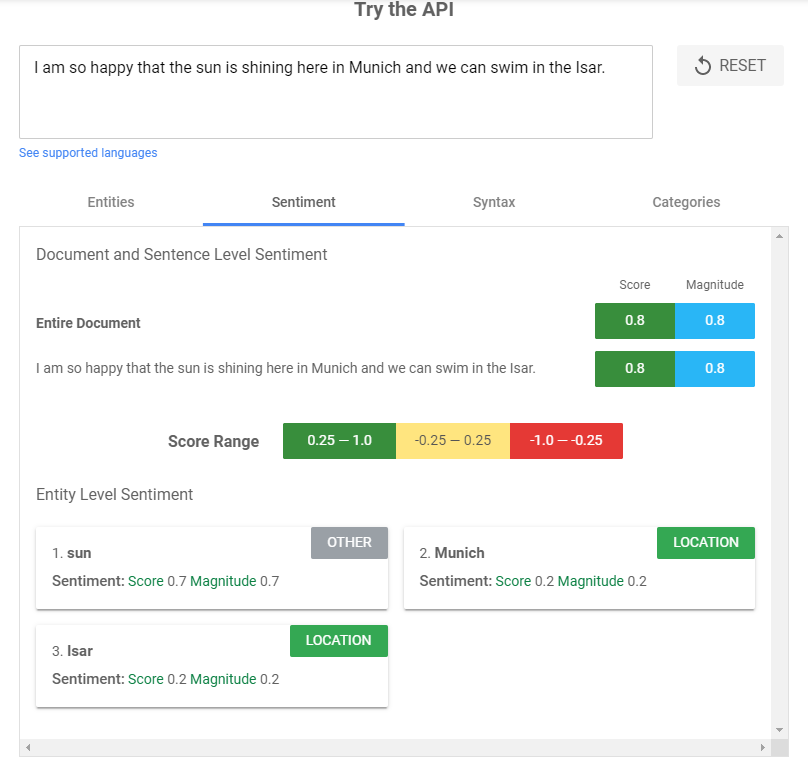
Google NLP API: This text analysis tool extracts insights and opinions from various documents through entity and sentiment analysis. It supports multimedia content integration and can analyze sentiment across multiple languages via its Translation API.

-
Amazon Comprehend: Amazon’s text analysis tool identifies key elements like phrases, sentiment, and topics within documents, emails, social media, and customer support tickets. It allows businesses to train custom models and includes features for identifying and redacting Personally Identifiable Information (PII) to maintain data privacy.
Choosing the Right Tool: Key Considerations
Selecting the optimal sentiment analysis tool is a strategic decision. Businesses should prioritize solutions that align with their specific needs by considering:

- Data Sources: Does the tool integrate with the platforms where your audience is most active (social media, review sites, news outlets, etc.)?
- Accuracy and Granularity: How accurate is the sentiment classification? Does it offer nuanced analysis beyond simple positive/negative, such as emotion detection or aspect-based sentiment?
- Scalability: Can the tool handle your current and future data volume without performance degradation?
- Ease of Use and Integration: Is the interface intuitive? Does it integrate seamlessly with your existing CRM, helpdesk, or marketing automation tools?
- Reporting and Visualization: Does it offer clear, customizable dashboards and reports that translate data into actionable insights?
- Cost and ROI: Does the pricing model align with your budget, and does the expected return on investment justify the expenditure?
- Language Support: For global brands, comprehensive multi-language support is crucial.
- Customization: Can the tool be trained or customized to understand industry-specific jargon or nuances?
Sentiment Analysis in Action: The Atlanta Hawks Case Study
The Atlanta Hawks faced the challenge of deeply understanding their social media audience’s sentiment to optimize content and meet corporate partner commitments. Moving beyond basic metrics, they sought to grasp the emotional reactions and preferences of their predominantly young fan base, particularly concerning content and marketing campaigns. By integrating Sprout Social’s Social Listening tool, the Hawks could monitor real-time conversations around their brand, content pillars, and major initiatives like jersey launches. Sprout Social’s sentiment analysis provided a "Sentiment Summary" and "Topic Insights Word Cloud," allowing them to gauge the emotional tone of fan discussions. For instance, a new jersey launch registered 99% positive sentiment. This deep dive, coupled with content tagging and A/B testing, enabled them to identify what truly resonated.
The impact of this sentiment-driven approach was significant. The Hawks experienced a 127.1% increase in video views and a 170.1% growth in their Facebook audience. The ability to present clear sentiment data in reports, demonstrating tangible fan enthusiasm, strengthened trust with over 35 corporate partners, leading to more flexible and impactful content strategies. This case exemplifies how sentiment analysis transforms raw data into a strategic advantage, fostering stronger audience relationships and driving measurable business outcomes.
The Future of Customer Understanding
AI-powered sentiment analysis tools are making it more accessible than ever for businesses to understand and effectively respond to customer emotions and opinions. While numerous tools exist, platforms like Sprout Social, with their proprietary AI and advanced listening features, are at the forefront of transforming customer sentiment into decision-ready intelligence. By embracing these technologies, businesses can move beyond guesswork and engage with their audiences on a deeper, more empathetic level, ultimately fostering loyalty, driving growth, and building stronger, more resilient brands in an increasingly complex digital world. The ability to accurately gauge the pulse of public opinion is no longer a luxury but a necessity for sustained success.