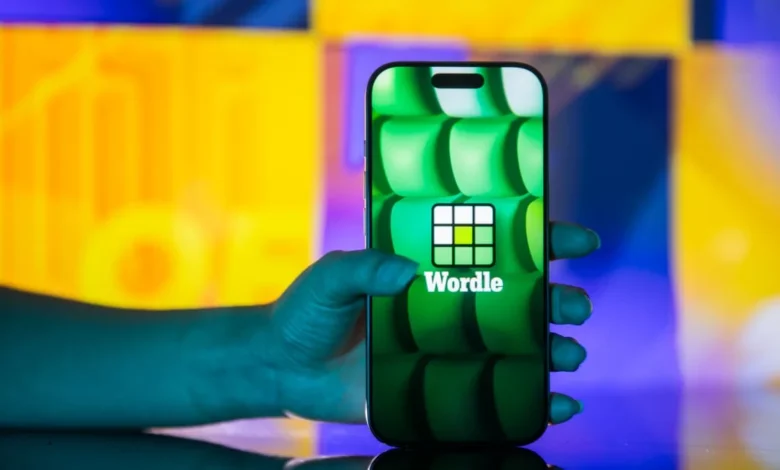
The global phenomenon known as Wordle continues to captivate millions of daily users, maintaining its position as a cornerstone of the digital morning routine for puzzle enthusiasts worldwide. What began as a private gift between a software engineer and his partner has evolved into a cultural touchstone, now managed by The New York Times Games department. As players approach the challenge for July 21, 2026, the complexity of the daily word serves as a reminder of the game’s enduring appeal and the sophisticated linguistic strategies required to maintain a long-standing "streak." Today’s puzzle requires a blend of vocabulary depth and deductive reasoning, particularly for those looking to solve the grid in fewer than four attempts.
The Evolution of a Digital Phenomenon
The history of Wordle is a testament to the power of minimalist design and social connectivity. Created by Josh Wardle, a Brooklyn-based software engineer originally from Wales, the game was developed during the COVID-19 pandemic. Wardle, who had previously gained notoriety for social experiments like "Place" and "The Button" on Reddit, designed Wordle specifically for his partner, Palak Shah, who shared a love for word games. The game was released to the public in October 2021 after gaining traction within Wardle’s family circles.
The growth trajectory of Wordle was unprecedented. In November 2021, the game had approximately 90 daily players. By early January 2022, that number had surged to over 300,000, eventually reaching millions within weeks. This rapid expansion was fueled largely by a unique sharing feature that allowed users to post their results on social media using a grid of colored square emojis. This feature allowed players to communicate their success or frustration without spoiling the day’s answer for others, creating a sense of communal participation that dominated platforms like Twitter and Facebook.
In January 2022, The New York Times Company announced its acquisition of Wordle from Josh Wardle for a price "in the low seven figures." The acquisition was a strategic move by the Times to bolster its digital subscription offerings and expand its gaming portfolio, which already included the iconic Crossword and the popular Spelling Bee. Since the transition, the Times has integrated Wordle into its dedicated Games app, introducing features like "WordleBot"—an AI-driven tool that analyzes a player’s choices to provide a statistical breakdown of their performance.
Mechanics and Strategic Approaches
Wordle’s brilliance lies in its simplicity: players have six attempts to guess a five-letter word. Feedback is provided through colored tiles: green indicates a correct letter in the correct position, yellow indicates a correct letter in the wrong position, and gray indicates a letter that is not in the word at all. While the rules are straightforward, the mathematical optimization of the game has been the subject of extensive study by data scientists and linguists.
A critical component of success is the "starting word." Experts suggest that the most effective first guesses are those that utilize high-frequency letters. According to linguistic data, the letters E, T, A, O, I, N, S, R, H, and L are the most common in the English language. Consequently, words like "ADIEU," "CRANE," "STARE," and "AUDIO" are frequently cited as optimal openers because they maximize the probability of revealing multiple vowels or common consonants in a single turn.
For players seeking a more rigorous challenge, the game offers a "Hard Mode." In this setting, any revealed hints must be used in subsequent guesses. This prevents players from using "burner words"—guesses intended solely to eliminate letters without attempting to solve the puzzle—thereby requiring a more disciplined and narrow deductive path.
The Archive and the Expanding Wordle Universe
As Wordle’s popularity peaked, a secondary ecosystem of fan-made variations emerged. These "Wordle clones" catered to niche interests or offered increased difficulty. Notable examples include "Squabble," a battle-royale version where players compete against others in real-time; "Heardle," which challenged users to identify songs from short introductory clips; and "Dordle," "Quordle," and "Octordle," which require players to solve two, four, and eight puzzles simultaneously.
The availability of past puzzles has also been a point of contention and evolution. Originally, independent developers created "Wordle Archives" that allowed new players to catch up on months of missed content. However, following the New York Times acquisition, many of these third-party sites were shuttered due to intellectual property concerns. To satisfy the demand for past content, the New York Times eventually launched its own official Wordle Archive, though access is currently restricted to NYT Games subscribers. This move reflects the broader trend of "gamification" as a driver for premium digital subscriptions in the modern media landscape.
Analysis of Today’s Challenge: July 21, 2026
The puzzle for July 21 presents a specific set of challenges that may trip up even seasoned players. Today’s solution is a five-letter word that begins with the letter "S." Furthermore, the puzzle utilizes a phonetic and structural hurdle: a double letter. Specifically, the letter "L" appears twice in the word.
Double letters are statistically more difficult for players to identify because the standard deductive process often focuses on eliminating unique letters. When a player identifies a yellow or green "L," their cognitive bias may lead them to search for other remaining consonants rather than considering the possibility of a second "L." This "repetition trap" is a common reason for the loss of long-standing winning streaks.
The hint provided for today—"a decoy"—points toward the deceptive nature of the word itself. In a linguistic context, the term refers to a person who acts as a decoy or an enthusiastic supporter for a seller, often to induce others to buy something or to create a false impression of popularity or value.
The Solution Revealed
For those who have exhausted their attempts or are seeking confirmation before their final guess, the answer to the Wordle puzzle for July 21, 2026, is SHILL.
The word "SHILL" has a fascinating etymological background, likely originating in the early 20th century as a shortened form of "shillaber," a term used in carnival and circus slang. A shill was someone who would stand in the crowd and pretend to win prizes or buy tickets to encourage the "marks" (the public) to do the same. In the modern era, the term has found renewed relevance in digital spaces, particularly concerning cryptocurrency promotions, influencer marketing, and online reviews, where "shilling" refers to the act of promoting a product or service under the guise of an objective consumer while actually being compensated by the provider.
Broader Impact and the Future of Digital Puzzles
The continued dominance of Wordle highlights a shift in how audiences consume media and interact with digital platforms. In an age of "infinite scroll" and constant notifications, the once-a-day limitation of Wordle creates a rare form of digital scarcity. It forces a "slow media" approach, where the engagement is brief but intense, and the gratification is delayed until the following day.
Furthermore, the success of Wordle has paved the way for other New York Times hits like "Connections" and "Strands." "Connections," which asks players to find groups of four items that share a common category, has recently rivaled Wordle in daily traffic. "Strands," a more recent addition, blends word-search mechanics with thematic clues, further diversifying the "brain training" options available to users.
For media outlets like Mashable and the New York Times, these games are more than just entertainment; they are essential tools for user retention. Data suggests that users who engage with puzzles are more likely to spend time on other sections of a news site, thereby increasing ad revenue and the likelihood of subscription conversions. As the digital landscape becomes increasingly fragmented, the "daily ritual" of the word puzzle remains one of the few unifying experiences in the online world.
Whether players solved today’s puzzle in two tries or six, the journey through the grid remains a testament to the complexity of the English language and the universal human desire for problem-solving. Tomorrow will bring a new word, a new set of tiles, and a new opportunity for players to test their linguistic mettle against the most famous five-letter grid in history.