HubSpot vs Zendesk: A Candid Review of Both Tools for E-commerce Support Teams

In today’s interconnected business landscape, virtually every company relies on some form of customer support software. Even nascent e-commerce ventures recognize the critical importance of tracking customer tickets, order histories, and issue resolutions. Navigating the myriad of service tools available can be a daunting task, with some platforms demonstrably understanding the intricacies of support workflows better than others. Among the frontrunners consistently lauded for their robust capabilities are HubSpot and Zendesk, two companies that have carved out significant niches in the customer service technology market.
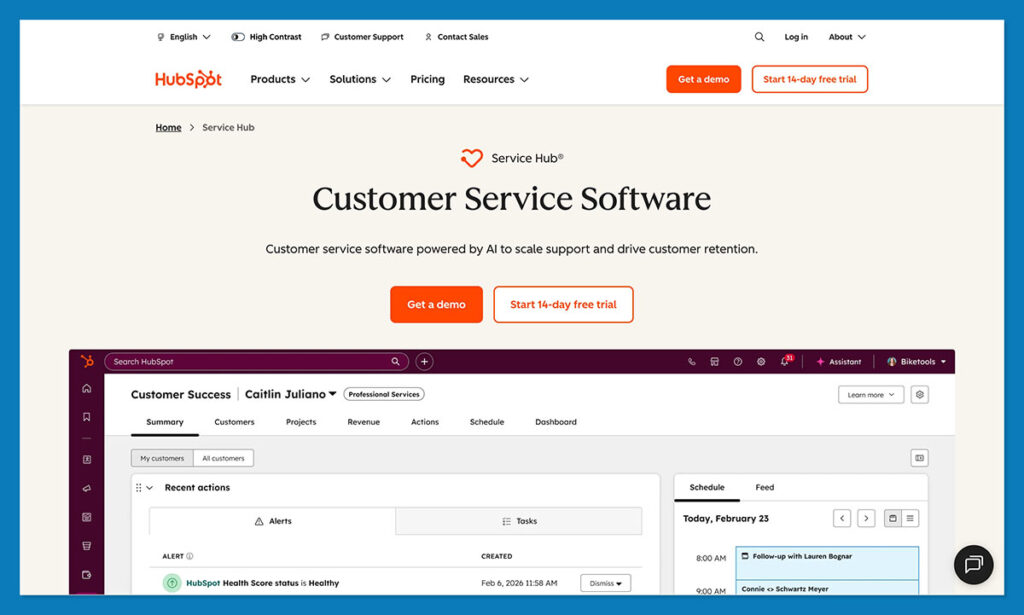
Historically, HubSpot was primarily recognized as a pioneer in inbound marketing, a strategy focused on attracting customers through valuable content and experiences rather than intrusive advertising. However, the company has significantly broadened its scope, now offering a comprehensive suite of tools that includes its powerful HubSpot CRM and the integrated Service Hub. Bolstered by an expanding array of artificial intelligence (AI) capabilities, HubSpot is now driving substantial results for businesses of all sizes. A notable example is Liquidity Services, which reportedly reduced its support costs by an impressive 50% by consolidating its operations onto HubSpot’s interconnected platform, underscoring the platform’s efficacy in streamlining operations and reducing overhead.
Zendesk, conversely, presents a distinct operational philosophy. It is primarily recognized as a mature and highly effective ticket management system, meticulously engineered for high-volume service teams. For organizations operating contact centers or grappling with perpetually growing ticket queues, Zendesk often serves as an indispensable extension of the support team. The fundamental decision between these two leading platforms hinges on a clear understanding of the specific challenges an organization aims to address.
HubSpot Service Hub vs. Zendesk: A Strategic Overview
HubSpot’s foundational strength lies in its origins within the marketing sector, where it championed inbound marketing principles centered on empowering and delighting customers. This customer-centric ethos has seamlessly translated into its customer service offerings. At the core of HubSpot’s ecosystem is its CRM, which, augmented by advanced AI functionalities like Breeze AI, serves as the data bedrock for its various hubs, including Service Hub. This integration ensures that every facet of the customer journey is linked, facilitating seamless task automation.
The AI tools being progressively rolled out by HubSpot, such as its customer agent, intelligent reply suggestions, and sophisticated routing logic, are particularly impactful. These tools are designed to be deeply integrated with the CRM, enabling them to generate responses and provide assistance that accurately reflects a company’s brand voice and operational context. This deep integration aims to create a cohesive and personalized customer experience, reducing the need for manual intervention and speeding up resolution times.
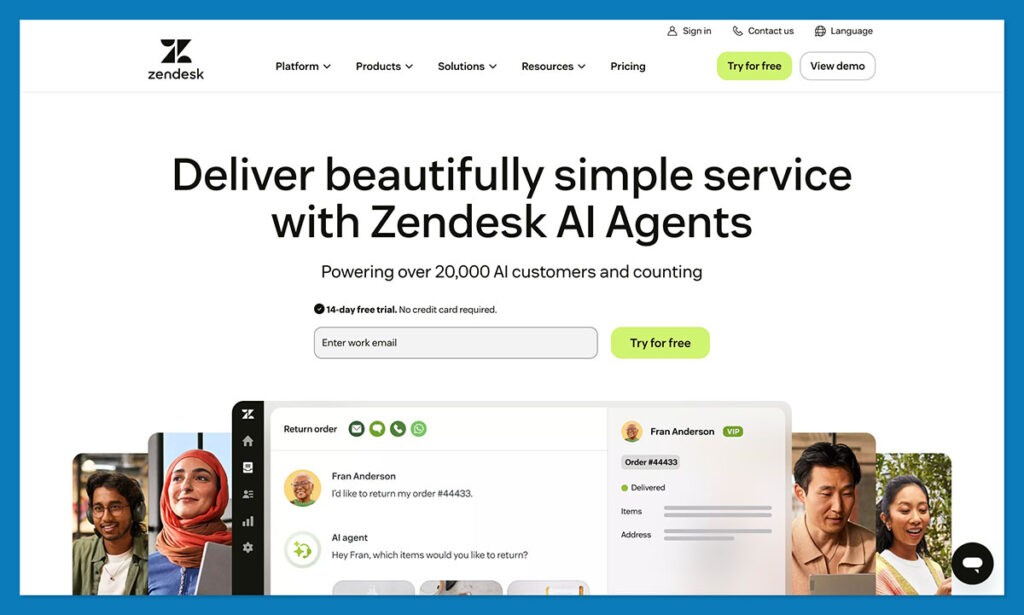
Zendesk, on the other hand, is generally regarded as the platform of choice for teams prioritizing sheer volume management. Veteran support managers often attest to its reliability, citing its clean, fast, and predictable interface as crucial for teams that spend their entire day managing customer queues. The Zendesk Suite serves as the central nervous system, unifying various communication channels, including email, chat, SMS, social media messages, and phone calls. Its voice support capabilities are particularly noteworthy, offering a robust experience for teams heavily reliant on phone interactions.
While Zendesk does offer Zendesk Sell, its CRM component, it is often perceived as less seamlessly integrated than HubSpot’s native CRM. Acquired from Base CRM, Zendesk Sell can sometimes feel like an add-on rather than an intrinsic part of the ecosystem. This can lead to agents having to toggle between different interfaces to access comprehensive customer history, a process that can be time-consuming and inefficient during peak operational periods.
Testing the Platforms: A Comparative Approach
In evaluating these two leading customer service platforms, a focused approach was taken to highlight their core differences and strengths. While both HubSpot and Zendesk aim to enhance customer support, their underlying architectures and primary use cases diverge significantly. The testing methodology centered on key aspects crucial for modern e-commerce support operations.
HubSpot vs. Zendesk: Feature Comparison at a Glance
| Feature Category | HubSpot Service Hub | Zendesk Suite |
|---|---|---|
| Core Positioning | Integrated with HubSpot CRM, marketing, and sales tools; emphasizes end-to-end customer journey connection. | Primarily built for high-volume support, with ticketing and voice capabilities at its core. |
| AI & Automation | Breeze AI: Reply generation, ticket routing, CRM context analysis, cross-platform workflow automation. | Service AI: AI agents, voice automation, call summarization, QA scoring, Workforce Management (WFM) tools. |
| Ticketing & Channels | Help desk embedded within CRM; unified inbox for email, chat, WhatsApp, Messenger, forms. | Broader channel support including SMS and in-app messaging; comprehensive management of social media interactions. |
| CRM Connection | CRM is the foundational element; instant access to full customer history with every ticket. | Zendesk Sell CRM is a separate entity; agents often need to switch between applications for complete context. |
| Reporting | Service analytics integrated with CRM, sales, and marketing data; holistic customer lifecycle insights. | Dashboards optimized for contact center performance metrics; detailed ticket and agent productivity analysis. |
| Integrations | Robust ecosystem with a Data Hub for clean two-way syncing with e-commerce and sales systems. | Extensive marketplace, but integrations with Zendesk Sell may require additional configuration; potential for "glue work." |
| Voice Support | Basic calling features with CRM logging; lacks advanced AI voice functionalities. | Highly developed voice capabilities, including IVR, queue management, and call summarization. |
| Pricing | Free CRM with scalable paid tiers; costs increase with advanced features and higher user counts. | No free tier; entry-level pricing is higher, with incremental increases for advanced functionalities. |
| Ideal Use Case | E-commerce teams seeking a unified platform for customer history, marketing, and service integration. | Support-intensive organizations prioritizing high-volume ticket management, voice support, and QA tools. |
Deep Dive into Key Differentiators
Ease of Use, Onboarding & Support
Both HubSpot and Zendesk are frequently lauded for their user-friendliness, a key factor attracting businesses of all sizes. Zendesk offers a highly intuitive, workshop-like environment where tools are logically placed and the system performs efficiently even under heavy load. This makes onboarding new agents straightforward, and the mobile application is surprisingly capable, allowing agents to manage responses, reassign tickets, access customer information, and even handle voice calls while on the go, without compromising on functionality. Zendesk’s commitment to providing access to all core support channels—email, chat, and phone—on every paid plan ensures immediate human support is readily available.
HubSpot, while perhaps appearing slightly busier due to its integrated nature, excels in its onboarding processes. The platform’s consistent design logic—a single CRM, a unified timeline, and a singular customer record—significantly shortens the learning curve, making it accessible even for users less comfortable with technology. However, HubSpot’s direct support model differs: free users do not receive one-on-one assistance, and phone support is reserved for higher-tier plans. Nevertheless, HubSpot Academy offers an extensive library of resources, often enabling teams to resolve queries independently and efficiently.
AI & Automation: HubSpot’s Breeze AI vs. Zendesk’s Service AI
The role of AI in customer service is rapidly evolving, and both HubSpot and Zendesk have made significant investments in this area. HubSpot’s AI initiative, Breeze AI, is a comprehensive intelligent system designed to operate seamlessly across the entire platform. The Breeze Assistant aids in information retrieval and response generation, while HubSpot Agents, such as the customer agent, are capable of automating end-to-end customer service tasks. HubSpot claims its customer agent can resolve up to 65% of conversations autonomously for many teams.
A particularly impressive aspect of Breeze Intelligence is its ability to unify and cleanse data, simplify forms, and uncover insights that would otherwise require extensive manual analysis.
Zendesk’s AI capabilities are more heavily concentrated on traditional customer service functions. This includes suggested replies, automated ticket triage, call summarization, quality assurance scoring, and workforce management tools designed to keep large teams organized. These features are highly beneficial for organizations managing substantial ticket volumes. The voice features, in particular, are a standout for teams that spend a significant portion of their day on calls.
The fundamental distinction lies in Zendesk’s laser focus on the support queue versus HubSpot’s holistic approach, which spans the entire customer journey and integrates AI tools across sales, marketing, and customer support.
Omnichannel Support & Ticket Management
The concept of a shared inbox is fundamental, and HubSpot excels in consolidating various communication channels—email, chat, WhatsApp, Messenger, and form submissions—into a single, unified view within the CRM. This allows agents to seamlessly transition between addressing inquiries about shipping status and product sizing without losing critical context. The platform’s ticket pipelines are intuitively managed, enabling teams to effectively segment returns, complaints, VIP messages, and general inquiries.
Zendesk offers a broader array of supported channels, including SMS, in-app messaging, and an extensive selection of social media platforms. For businesses that manage customer interactions across multiple fronts—chat, email, direct messages on platforms like Instagram, and phone calls—Zendesk’s workspace can feel more comprehensive. However, the full CRM history is not automatically integrated into Zendesk’s workspace unless specific integrations are implemented. This means that while channel coverage is extensive, the necessary contextual information may not always be readily available without additional configuration.
CRM Strength and Product Extras
The distinction in CRM capabilities is a defining factor between these two platforms. HubSpot’s CRM is the central engine of its operations, with all activities flowing through it. When a ticket arrives, agents instantly access the customer’s complete history, including past purchases, abandoned carts, email engagement, service interactions, and even notes from the sales team.
Zendesk Sell, while functional, lacks this deep integration. Its history as a standalone CRM means it operates somewhat independently, sometimes requiring agents to navigate between the support workspace and the CRM to retrieve comprehensive customer data. This can lead to inefficiencies, particularly during high-demand periods.
Beyond core CRM and support functions, HubSpot offers supplementary features that enhance the perception of a connected business ecosystem. These include a customer success workspace for proactive customer management, health scoring for identifying at-risk accounts, Net Promoter Score (NPS) tracking for customer satisfaction, and playbooks that provide structured guidance for service teams.
Zendesk’s supplemental features are primarily geared towards operational efficiency within the support department. This includes robust reporting dashboards focused on key performance indicators (KPIs) such as average response times, resolution rates, and agent productivity. These tools are invaluable for managers overseeing large contact centers and aiming to optimize operational workflows.
Pricing & Scalability: HubSpot vs. Zendesk
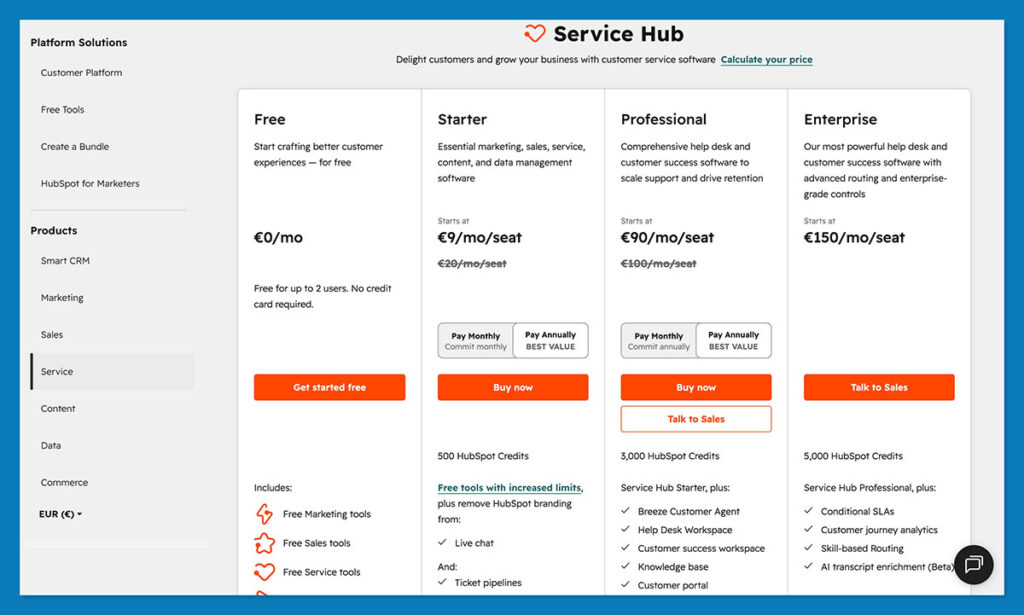
The interconnectedness of pricing and scalability is a crucial consideration for businesses seeking long-term solutions. HubSpot offers a free CRM that provides genuine utility, along with free basic service tools like a knowledge base and customer feedback surveys. Paid tiers for Service Hub start with the Starter package, followed by Professional and Enterprise levels, with pricing increasing based on feature sets and user volume. While there can be a notable jump between tiers, HubSpot’s integrated approach can lead to significant cost savings by consolidating disparate tools into a single platform.
Zendesk does not offer a free tier but provides demo access. Its entry-level pricing begins at a higher point, typically around $19 per user per month, with a more incremental price structure across its various plans. However, the cost of Zendesk Sell, if required for CRM functionality, is additional. When factoring in the combined cost of the Suite, Sell, and necessary integrations, the total expenditure can approach enterprise-level pricing, even for mid-sized businesses.
Scalability: Platform Performance Under Growth
HubSpot scales exceptionally well for businesses building an integrated system around a single customer record. Adding users, workflows, and data is a streamlined process, as the CRM is designed for expansive growth. The primary constraint at higher tiers can be the cumulative cost, especially if an organization adopts multiple HubSpot hubs.
Zendesk’s scalability is primarily demonstrated in its ability to handle exceptionally high ticket volumes. It is engineered to manage significant influxes of customer inquiries without performance degradation. However, as a business grows and its needs extend beyond pure support, Zendesk’s "service-first" architecture can reveal limitations. While scaling the support team is seamless, other business functions might continue to rely on disconnected tools, potentially creating silos.
Integrations & App Ecosystems

In e-commerce, customer support cannot operate in isolation. Seamless integration with e-commerce platforms, marketing automation tools, and sales systems is paramount. HubSpot’s app ecosystem is robust, featuring the HubSpot App Marketplace and a Data Hub that facilitates efficient, two-way data synchronization. The platform offers numerous connectors for popular e-commerce solutions like Shopify, WooCommerce, and BigCommerce, with a particular emphasis on clean and reliable data syncing. The Data Hub ensures that updates made in one system are accurately reflected in others, and because Service Hub is part of the broader HubSpot CRM, integrations automatically benefit sales and marketing teams as well.
Zendesk also boasts a substantial marketplace, allowing for integration with a wide array of third-party applications. However, the quality and depth of these integrations can vary. While many apps integrate seamlessly with the support workspace, fewer offer the same level of cohesive integration with Zendesk Sell. Given that Sell operates as a distinct tool, integrations can feel fragmented. Many businesses using Zendesk often operate with a combination of separate CRM, marketing, and support stacks, necessitating custom scripting or middleware solutions that can become fragile during peak operational periods. While these connectors perform their function, they can introduce latency and occasional bugs, especially when order volumes surge.
HubSpot vs. Zendesk: The Definitive Verdict
The choice between HubSpot Service Hub and Zendesk often distills to an organization’s primary operational focus. For e-commerce teams that prioritize a unified view of the customer journey—integrating support, marketing, and sales—HubSpot Service Hub emerges as the superior option. Its strength lies in its ability to keep all facets of a customer-centric business interconnected, providing a level of cohesion that other platforms struggle to match. Liquidity Services’ documented 50% reduction in support costs serves as a compelling testament to HubSpot’s efficiency-driving capabilities through platform consolidation.
Zendesk indisputably excels in its core competency: managing high-volume customer support. If an organization’s daily operations revolve around processing vast numbers of tickets and providing extensive voice support, Zendesk’s robust and reliable infrastructure is hard to beat. Its dedicated focus on queue management and service workflows makes it a powerful tool for such environments.
However, for businesses that aim to foster deeper customer relationships through a holistic understanding of customer interactions, HubSpot offers a more natural, manageable, and ultimately more time-efficient solution. Its integrated CRM provides unparalleled context, enabling teams to understand the "why" behind customer inquiries and tailor responses accordingly, thereby enhancing customer retention and lifetime value.
For businesses leaning towards HubSpot, initiating the process with a free HubSpot CRM account is a practical first step. Testing the platform with real customer data and support scenarios will provide invaluable insights into its suitability for specific e-commerce needs.
Frequently Asked Questions
How does HubSpot compare to Zendesk?
HubSpot integrates customer support directly with the entire customer lifecycle, linking it to marketing and sales activities. Zendesk primarily focuses on the efficiency of ticket flow and queue management. For organizations prioritizing contextual understanding of customer interactions, HubSpot generally holds an advantage. For teams whose operations are heavily centered on managing high ticket volumes, adhering to strict service level agreements (SLAs), and extensive voice support, Zendesk remains a highly competitive choice.
When should an e-commerce business use HubSpot?
HubSpot is an ideal choice for e-commerce businesses that depend on repeat customers and require clear visibility across all customer touchpoints. When support, marketing, and sales teams operate from a unified CRM, they gain a comprehensive understanding of customer behavior, enabling more informed and effective service delivery. This integrated approach is particularly beneficial for businesses aiming to enhance customer retention and increase customer lifetime value (LTV).
Is HubSpot affordable for small businesses?
Yes, HubSpot offers affordable solutions for small businesses. Its free CRM includes essential contact management and basic ticketing capabilities for up to two users. The Service Hub Starter plan is priced competitively, beginning at $15 per user per month. Costs increase at the Professional and Enterprise tiers, reflecting expanded functionality and support. This tiered pricing structure allows small businesses to scale their usage and investment as their needs and resources grow.