The Return of Jensen Huang to Nvidia Ignores Towering Geopolitical and Legal Risks, Says Yale Expert

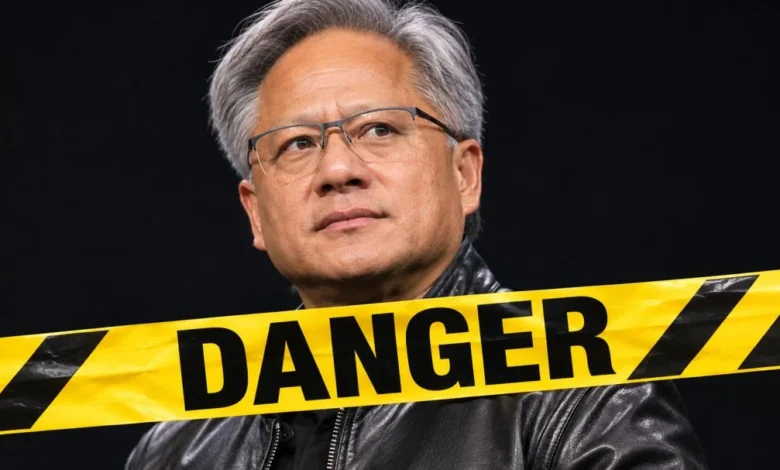
The reinstatement of Jensen Huang as the Chief Executive Officer of Nvidia has triggered widespread celebrations across global technology markets, yet prominent business scholars and legal experts warn that the move masks profound corporate governance failures and escalating geopolitical liabilities. While investors and overseas markets cheered his rapid return, Yale School of Management professor Jeffrey Sonnenfeld contends that the corporate board has capitulated to political pressure, severely compromising the company’s long-term standing and exposing directors to unprecedented levels of personal and professional liability.
The high-stakes corporate drama unfolds against a backdrop of tightening U.S. export controls, severe regulatory scrutiny, and mounting shareholder litigation. Nvidia, once universally hailed as the undisputed champion of American industrial might, now finds itself at the center of a complex web of national security concerns, antitrust investigations, and allegations regarding the unauthorized diversion of advanced semiconductor technology to foreign adversaries.
A High-Pressure Reinstatement Orchestrated from Washington
The sequence of events leading to Huang’s return highlights an extraordinary degree of friction between corporate governance standards and executive political lobbying. Just days before the reversal, Nvidia’s chairman had publicly and effectively ruled out Huang’s return following his initial ouster, which was prompted by an admitted extramarital relationship with a subordinate that violated corporate codes of conduct.
However, the corporate resistance crumbled following a concerted lobbying campaign led from the highest levels of the federal government. Over the course of a single weekend, top administration officials, spearheaded by Vice President JD Vance, leaned heavily on Nvidia’s board of directors. The pressure culminated in a direct telephone call from President Donald Trump, who personally vouched for Huang. Speaking to financial media on Monday, Trump bluntly summarized the intervention by stating, "I made the deal."
This unusual political intervention bypassed conventional corporate governance protocols, prompting sharp criticism from legal and academic observers. Sonnenfeld argues that the board demonstrated both incompetence and corporate cowardice by capitulating to political demands without exercising proper fiduciary diligence. Unlike defense contractors whose operations depend heavily on federal procurement—such as SpaceX, where government contracts comprise a massive share of revenue—Nvidia generates less than one percent of its business from the U.S. government. Consequently, analysts note that the board lacked any compelling business justification to yield to political coercion regarding an executive matter.
Mounting Legal Perils and Shareholder Revolt
The decision to reinstate Huang, particularly while active federal inquiries examine whether foreign intelligence operations targeted him, has triggered an immediate and aggressive legal backlash. Nvidia and its directors now face an unprecedented deluge of litigation in Northern California, where the company is headquartered.
The legal challenges span multiple fronts, categorized primarily into class-action lawsuits and shareholder derivative actions. The class-action filings are designed to secure financial compensation for investors who suffered losses amid the recent volatility and governance turmoil. Concurrently, shareholder derivative suits are being litigated on Nvidia’s behalf directly against the members of the board. These derivative complaints allege that directors ignored glaring red flags concerning Huang’s relationship with individuals suspected of intelligence ties, such as Alice Huang.
Legal experts estimate that the number of separate shareholder suits could eventually approach thirty, carrying catastrophic financial and administrative costs. Compounding this exposure is the structure of Nvidia’s directors and officers (D&O) liability insurance policy, which analysts describe as inadequate to cover the staggering magnitude of potential litigation and settlement costs facing the board. Furthermore, fourteen prominent Republican senators, including figures such as Pete Ricketts, Josh Hawley, Tom Cotton, and John Cornyn, have voiced strong opposition to the administration’s handling of the matter, signaling that the backlash transcends traditional partisan divides.
Geopolitical Fallout and the Export Control Crisis
Beyond the courtroom and the boardroom, Nvidia’s operational practices face intense scrutiny from federal regulators and international trade authorities. The core of the controversy centers on whether the company’s most advanced artificial intelligence hardware—specifically cutting-edge processors like the Blackwell B300 chips—has found its way into restricted foreign markets in circumvention of stringent U.S. export controls.
Recent investigations and research reports have identified advanced Nvidia components within networks and institutions in China, including entities linked to military research such as Northwestern Polytechnical University. Independent trade analysts and intelligence monitors have noted instances where sophisticated hardware has been integrated into autonomous drone systems and other military applications deployed by foreign actors.
Nvidia has consistently maintained that smuggling and unauthorized diversion are negligible factors in its global distribution network. Nevertheless, mounting documentation has prompted swift regulatory countermeasures. The U.S. Department of Commerce recently placed key distribution partners, such as Megaspeed, on official trade blacklists, signaling a broader crackdown on supply chain loopholes.
Simultaneously, the geopolitical implications have reverberated through the competitive landscape of generative artificial intelligence. Market analysts have linked recent turbulence in the valuation of prominent U.S. AI labs, such as Anthropic, to revelations regarding the mechanics behind foreign open-source models. Observers suggest that certain celebrated foreign models achieved advanced capabilities not through independent technological breakthroughs, but by employing a process known as "distillation"—leveraging high-performance Nvidia chips to effectively replicate and distill the intellectual property of top U.S. research institutions.
Regulatory Investigations Across Multiple Jurisdictions
The legal and regulatory burdens confronting Nvidia extend far beyond shareholder lawsuits and export controls. The technology titan is currently managing a multi-pronged enforcement sweep involving several federal and state agencies:
- Department of Justice: An ongoing antitrust investigation focusing on market dominance and competitive practices within the artificial intelligence hardware sector.
- Securities and Exchange Commission (SEC): A formal probe examining the company’s financial accounting practices and disclosures amid shifting market conditions.
- Federal Bureau of Investigation (FBI): Preliminary evaluations concerning security protocols and executive conduct.
- California Attorney General: An active investigative subpoena issued by the state’s top prosecutor regarding corporate compliance and trade practices.
- Congressional Oversight: Multiple inquiries scheduled across both chambers of Congress, highlighted by an upcoming Senate Banking Committee hearing where Jensen Huang has agreed to testify regarding export controls and national security protocols.
The Core Drivers of Innovation: Beyond the Chief Executive
As the public debate focuses intensely on Huang’s leadership status, industry insiders and technology historians emphasize that Nvidia’s foundational innovations are the product of a deep bench of engineering talent rather than a single individual.
Corporate observers point out that the revolutionary architecture of Nvidia’s graphics processing units (GPUs) was engineered by co-founder Chris Malachowsky alongside advanced chip design teams led by figures like Jonah Alben. Similarly, the software ecosystem that unlocked the parallel processing potential of these chips—most notably the CUDA computing platform—was developed and championed by Ian Buck. Analysts stress that these foundational technological assets remain secure within the organization regardless of executive turbulence, raising questions regarding the strategic necessity of reinstating a CEO mired in severe legal and ethical controversies.
Internal Dissent and Corporate Culture
The controversy has also inflicted significant strain on Nvidia’s internal corporate culture. Huang’s original departure was triggered by an acknowledged consensual relationship with a subordinate. While some commentators have attempted to frame the enforcement of corporate conduct policies as excessive administrative overreach, ethics experts and internal employees argue that unpunished executive misconduct undermines the entire framework of corporate accountability.
Governance specialists note that a chief executive officer who cannot be held to the organization’s established code of conduct renders compliance guidelines entirely unenforceable. Furthermore, workplace dynamics within hierarchical engineering teams are severely disrupted when leadership engages in romantic relationships with direct subordinates, introducing elements of perceived favoritism and subjective resource allocation that compromise organizational objectivity. Employee surveys and reports from media outlets indicate deep internal discontent, with numerous personnel expressing alienation over the board’s decision to prioritize executive reinstatement over institutional integrity.
Broader Industry Implications and Outlook
The unfolding crisis at Nvidia serves as a watershed moment for the global technology sector, illuminating the volatile intersection of corporate governance, national security, and political intervention. As regulatory hearings approach and shareholder litigation moves through the judicial system, the long-term impact on Nvidia’s market dominance remains uncertain.
While the immediate return of Jensen Huang has satisfied short-term market sentiment in specific trading circles, the broader institutional consensus—reflected by the silence of major corporate leaders across banking, retail, and manufacturing sectors—suggests profound disquiet regarding the normalization of political influence in corporate governance. As federal investigators continue their inquiries and international trade restrictions evolve, Nvidia faces a prolonged period of legal vulnerability that threatens to redefine its role in the global industrial economy.