Universal Architecture of Thought: MIT Researchers Discover the Human Brain Processes All Languages Through a Shared Neural Mechanism

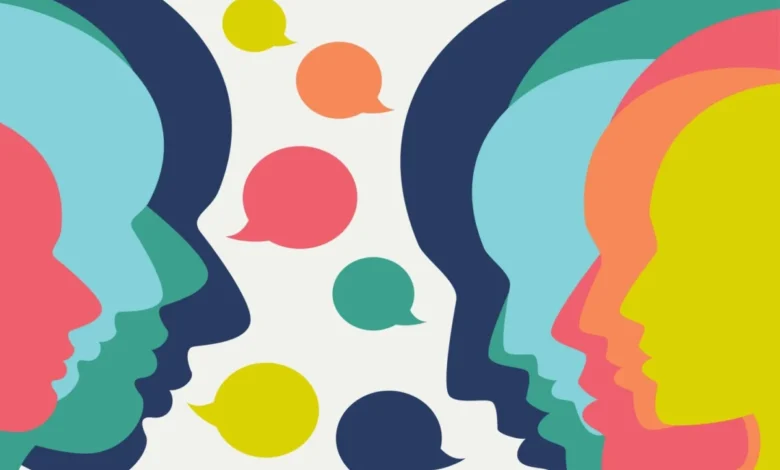
The human capacity for language manifests in thousands of distinct forms across the globe, creating a rich tapestry of cultural and communicative expression. While tonal languages like Vietnamese rely heavily on pitch shifts to convey entirely different lexical meanings, and languages like English depend on strict, rigid word orders, others—such as Russian—permit fluid word swapping without fundamentally altering the intended message. Despite these vast structural, phonetic, and grammatical diversities observed within the global linguistic landscape, a groundbreaking study conducted by researchers at the Massachusetts Institute of Technology (MIT) has revealed that the human brain processes this multitude of languages through a strikingly universal mechanism.
Published today in the peer-reviewed journal Nature Neuroscience, the research demonstrates that artificial intelligence, specifically advanced multilingual language models, can successfully predict and map neural responses across an expansive array of 21 diverse human languages. This major scientific milestone not only bridges a long-standing knowledge gap in cognitive neuroscience regarding how the brain manages disparate linguistic systems, but it also opens new horizons for inclusive clinical diagnostic tools and potential preservation frameworks for endangered languages.
Chronology of the Investigation: From Single-Language Models to a Global Neural Lens
For decades, cognitive neuroscientists have understood that human language processing is largely centralized within a specific network of specialized brain regions located primarily in the left hemisphere. Dr. Evelina Fedorenko, an investigator at MIT’s McGovern Institute for Brain Research, an associate professor of brain and cognitive sciences, and the senior author of the study, notes that regardless of whether an individual speaks English, Korean, or Arabic, these core neural real estate areas are consistently engaged during communication. However, knowing that the same anatomical regions activate across languages left a more fundamental question unanswered: Do these distinct linguistic inputs trigger identical operational computations within the human mind?
Answering this question previously proved exceptionally difficult due to a lack of computational tools capable of establishing a unified, cross-linguistic common code. The turning point arrived with the rapid evolution of artificial intelligence, particularly Large Language Models (LLMs) such as those powering modern generative AI systems. Although these computational frameworks were originally designed for tasks like natural language processing rather than mimicking human biology, researchers have increasingly recognized striking functional similarities between how LLMs represent linguistic elements—such as grammar, syntax, and meaning—and how the human brain appears to handle them.
Early exploratory studies linking AI to neuroscience were largely restricted to single-language paradigms, typically focusing on dominant global tongues like English. To transcend this limitation, MIT postdoc and lead study author Andrea Gregor de Varda, alongside Fedorenko and colleagues at the K. Lisa Yang Integrative Computational Neuroscience (ICoN) Center, turned to multilingual language models. These advanced architectures possess the capacity to ingest hundreds of languages simultaneously, translating words and phrases into numerical vector representations.
By employing a machine learning methodology, de Varda synthesized two massive streams of data: the multidimensional numerical codes generated by multilingual AI models and functional neuroimaging scans of human subjects performing language comprehension tasks. This integration gave rise to sophisticated "encoding models." Initially, these encoding models existed for only a handful of well-documented languages. The MIT research team systematically expanded this capability, curating brain imaging data from speakers of 12 previously analyzed languages—including Afrikaans, Dutch, Farsi, French, Lithuanian, Marathi, Norwegian, Romanian, Spanish, Tamil, Turkish, and Vietnamese—while actively recruiting native speakers of nine additional languages, namely Italian, Portuguese, German, Russian, Polish, Hindi, Arabic, Mandarin, and Korean.
During the trials, participants listened to spoken audio recordings of chapters from Lewis Carroll’s classic literary work Alice in Wonderland in their respective native tongues while undergoing brain activity monitoring.
Supporting Data and Empirical Findings
The empirical results generated by the encoding models exceeded initial expectations within the research community. According to Fedorenko, the encoding models accurately predicted neural activation patterns across all 21 languages studied. Crucially, this predictive accuracy held firm even for lower-resourced languages with sparse baseline data sets, such as Marathi and Lithuanian, demonstrating that the underlying architectural similarities between the AI models and human biology transcended variations in data volume.
Perhaps the most astonishing discovery during the experimental phase was the cross-lingual predictive capability of the models. The researchers found that an encoding model trained exclusively on data from a single language—such as French—could accurately forecast brain activity responses in speakers of a completely different language it had never been trained on, such as Vietnamese.
According to de Varda, this phenomenon could only occur if the human subjects across all 21 linguistic groups were utilizing a fundamentally shared neural framework to process and represent language—a universal thread binding human communication at the biological level. Upon dissecting the specific linguistic features captured by this shared component, the research team determined that the common denominator heavily correlates with semantic processing, or the extraction and transmission of meaning.
Official Responses and Scientific Reactions
The publication of this study has drawn significant attention from the broader fields of cognitive science, artificial intelligence, and neurolinguistics. Independent neuroscientists have lauded the methodological innovation of combining multilingual AI embeddings with functional neuroimaging data, calling it a vital leap forward in comparative linguistics.
"Of course, there are many differences in the ways humans converse with each other," Fedorenko emphasized while discussing the implications of the findings. "But our team found that there is something fundamentally similar in how the brain communicates."
Andrea Gregor de Varda underscored the cooperative synergy between machine learning and human biology that made the discovery possible. "It’s extremely hard to answer that question if you lack the right tools," de Varda stated, highlighting how artificial intelligence provided the necessary computational bridge to compare fundamentally disparate linguistic structures under a unified analytical framework.
Beyond theoretical validation, the findings have profound implications for future scientific inquiry. While the study successfully mapped the universal semantic core of language processing, the researchers are careful to acknowledge that significant structural differences between languages do exist and are demonstrably represented within both human neural tissue and advanced AI systems. Future research phases will aim to isolate and define these specific divergences, further completing the intricate puzzle of the human linguistic mind.
Broader Impact, Clinical Applications, and Future Implications
The intersection of artificial intelligence and human neuroimaging validated by this MIT study holds transformative potential for multiple societal sectors, ranging from advanced clinical medicine to the preservation of endangered cultural heritage.
In the realm of healthcare, clinicians and researchers are actively exploring diagnostic applications for AI language tools. Patterns of brain activity and linguistic degradation during speech tasks can serve as early biomarkers for various neurological and psychiatric disorders, including neurodegenerative conditions like Alzheimer’s disease and forms of cognitive decline. Historically, however, diagnostic tools developed using machine learning have suffered from a severe linguistic bias, heavily favoring English and a small subset of major global languages. By demonstrating that AI and human brain mappings share an overlapping architecture across a diverse range of 21 languages, this research lays the foundational groundwork for developing inclusive clinical instruments capable of diagnosing patients equitably across linguistic demographics.
Furthermore, the theoretical framework established by the Fedorenko lab suggests innovative avenues for cultural preservation. If standard encoding models can predict brain activity from AI outputs, reversing the methodological pipeline offers a theoretical solution for saving dying or extinct languages. Fedorenko postulated a future scenario wherein researchers could record the brain activity of the final remaining native speaker of a vanishing language, input those neurological scans into a suitably trained reverse-translation model, and successfully decode the surviving linguistic knowledge embedded within that individual’s mind.
As artificial intelligence continues to mature as both a technological utility and a scientific instrument, studies of this caliber underscore its unexpected utility as a mirror for human cognition. By charting the universal neural architecture that enables billions of people across thousands of cultures to share thoughts, emotions, and information, MIT’s research marks a monumental step forward in understanding the fundamental biology of what it means to communicate.