Taming the Chaos: MIT Researchers Develop Groundbreaking Physics-Constrained AI to Prevent Unrealistic Predictions in Complex Systems

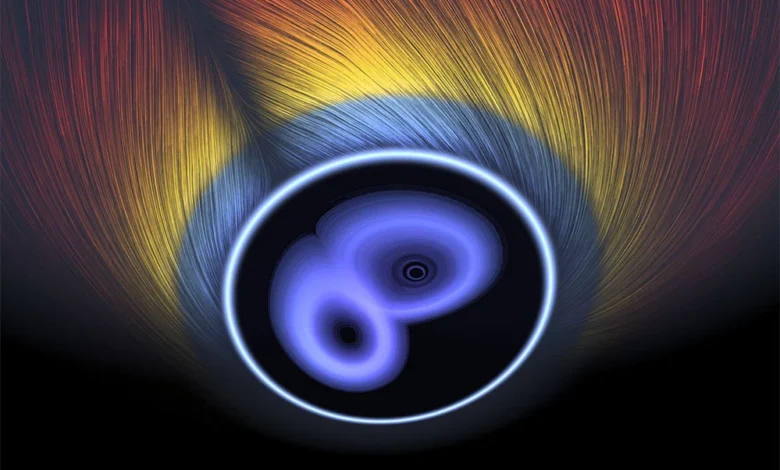
For decades, the pursuit of modeling complex, chaotic processes—ranging from the volatile physics of turbulent airflow over aircraft wings to unpredictable global climate shifts and deep ocean currents—has remained one of computational science’s highest hurdles. While recent advancements in artificial intelligence and machine learning have dramatically accelerated our ability to simulate these intricate systems, a persistent flaw has continually undermined their long-term reliability. Even the most sophisticated neural networks have remained notoriously prone to “drifting,” over extended simulation periods, into physically impossible predictions that violate the fundamental laws of nature.
Now, a team of researchers at the Massachusetts Institute of Technology’s (MIT) Laboratory for Information and Decision Systems (LIDS) has engineered a pioneering solution. By embedding rigorous, physics-based boundaries directly into machine learning frameworks, the MIT researchers have created a method that ensures data-driven models never exceed realistic bounds, strictly adhering to what is physically possible in the natural world. Published in the Proceedings of the National Academy of Sciences (PNAS), this breakthrough promises to fundamentally reshape how predictive modeling is executed across aeronautics, meteorology, hydrology, and heavy industrial engineering.
The Core Dilemma: Why Chaotic Systems Break Traditional AI
At the heart of the challenge is the inherent nature of chaos. In dynamical systems, minute differences in starting conditions can trigger exponentially divergent outcomes—a phenomenon famously referred to in meteorology as the butterfly effect. In practical terms, this means forecasting the behavior of the atmosphere or fluid dynamics far into the future is extraordinarily difficult.
However, researchers emphasize that chaos does not mean lawlessness. In the real world, physical systems operate under strict conservation laws. Energy is conserved or dissipated, temperatures fluctuate within thermodynamic limits, and fluid velocities remain constrained by viscosity and pressure gradients. Real systems remain bounded, and their digital simulations logically should as well.
Traditional machine learning models, however, are fundamentally pattern-matching engines optimized to minimize error over short training horizons. When deployed on chaotic systems over long forecast windows, small, seemingly negligible cumulative errors compound. Over time, these residual discrepancies snowball, causing simulated values to grow without limit. The model produces a runaway trajectory—such as predicting atmospheric temperatures soaring into millions of degrees or pressures dropping to negative infinity—outputs that could never materialize in reality.
Until now, mitigating this vulnerability has required compromise. Prior attempts to constrain machine learning models typically relied on soft-constraint strategies. During the training phase, engineers would introduce penalty functions or mathematical incentives designed to discourage the model from straying into unrealistic zones. However, because these penalties are only active during training, they offer zero guarantees once the model is deployed in the wild and confronted with entirely novel test data. Alternatively, researchers attempted to hard-code arbitrary caps—such as rigidly bounding temperature readings at 100 degrees. While this prevents runaway values, it simultaneously strips the neural network of its core utility: the flexibility to learn complex, non-trivial features directly from observational data.
The MIT Breakthrough: Hard-Constrained Neural Networks and Energy Dissipation
The MIT team—comprising graduate student Sunbochen Tang, alongside professors Navid Azizan and Themistoklis Sapsis—bypassed these limitations by shifting the paradigm from soft incentives to hard-constrained neural architectures anchored in thermodynamic principles.
Instead of imposing arbitrary thresholds, the researchers’ approach empowers the neural network to learn an energy-like function modeled after the actual energy dissipation dynamics found in physical systems. In real-world chaotic systems, energy dissipation acts as a natural friction that keeps trajectories contained within specific boundaries despite erratic internal behavior.
The team achieved this by introducing a modular component known as a projection layer into the neural network architecture. This projection layer acts as a real-time mathematical guardian. Specifically, the model learns both the system’s internal dynamics and the geometric boundary within which its behavior must be confined. Outside this designated boundary, the learned energy-like quantity is mathematically forced to decrease, actively pulling the simulated system back toward the bounded region.
By enforcing this energy dissipation as a hard constraint, the researchers established rigorous theoretical guarantees that model predictions will remain bounded over arbitrarily long forecast windows—marking the first time such formal guarantees have been successfully established for machine learning models of chaos.
Rigorous Testing Across Diverse Physical Systems
To validate their theoretical framework, the research team subjected their physics-constrained architecture to a battery of rigorous tests, pitting their approach against conventional machine learning models across a spectrum of well-known physical systems. These ranged from foundational textbook physics problems to highly complex, multidimensional, chaotic fluid dynamics simulations.
The results were stark. While conventional machine learning models quickly degraded, accumulating errors until their trajectories flew off into impossible physical states, the MIT framework closely tracked the true, empirically observed outcomes of the systems. Even when extended across prolonged forecast horizons, the models maintained complete physical fidelity.
Crucially, the research team designed the projection layer to be entirely model-agnostic. Because it functions as a modular component rather than a wholesale rewrite of underlying algorithms, it can be integrated seamlessly into a wide variety of existing neural network architectures without requiring specialized retraining from scratch.
Broader Implications for Industry, Weather Forecasting, and Trustworthy AI
The implications of this research extend far beyond academic fluid dynamics. In fluid mechanics, turbulent flows are responsible for generating aerodynamic drag that reduces fuel economy in ground transportation, dampens the power-generation efficiency of massive wind turbine farms, and creates dangerous turbulence that disrupts commercial aviation. Reliable, bounded simulations allow engineers to optimize aerodynamic designs with unprecedented confidence.
In meteorology and climate science, long-term predictive accuracy is a matter of critical societal importance. As extreme weather events increase in frequency and severity due to global climate shifts, meteorologists rely increasingly on machine learning to forecast atmospheric patterns. However, climate models that drift into physically impossible states are useless for long-term planning. By anchoring AI models in physical reality, the MIT approach removes a major barrier to utilizing advanced neural networks for climate forecasting.
Furthermore, the breakthrough addresses a critical bottleneck in data science: data scarcity. While artificial intelligence excels in domains like natural language processing and computer vision—where billions of data points are readily scraped from the internet—many physical sciences suffer from limited observational datasets. By embedding physical laws directly into the model architecture, researchers can effectively compensate for sparse training data, utilizing fundamental physics as an alternative, highly reliable source of structural information.
Moving Forward: Open-Source Collaboration and Next Steps
Reflecting on the broader philosophy driving the research, Professor Azizan emphasizes that trustworthy artificial intelligence requires more than empirical observation of past success. For high-stakes applications—ranging from aerospace engineering to disaster prediction—engineers require absolute mathematical guarantees regarding properties that must never fail.
The team’s paper, alongside the complete open-source code for their projection layer methodology, has been made freely available to the global scientific and engineering community via PNAS, empowering researchers worldwide to test the architecture on even larger, more complex datasets. Additionally, building upon this momentum, members of the research team presented related findings at the prestigious Learning for Dynamics and Control conference, where their follow-up work earned the event’s Best Paper Award.
Moving forward, the MIT team is scaling their ambitions. Having proven the framework on theoretical and moderately complex systems, the researchers are actively testing their data-driven models on realistic, large-scale global weather systems. By making fundamental physical principles an immutable component of how artificial intelligence models are built—rather than an afterthought applied during testing—MIT researchers have taken a monumental step toward bridging the gap between abstract machine learning and the immovable laws of the physical universe.