The landscape of small business operations is undergoing a profound transformation as generative artificial intelligence moves beyond simple text generation into the realm of complex, autonomous task execution. At the center of this shift is the integration of Grok Bot and the Grok Voice API—technologies developed by xAI—which are enabling lean organizations to achieve operational efficiency levels previously reserved for large enterprises with significant headcount. By automating customer service, data aggregation, and content management, these tools are effectively acting as a force multiplier for entrepreneurs, allowing for the consolidation of administrative overhead into a single, scalable digital infrastructure.
The deployment of these tools by companies like Beardbrand serves as a primary case study in the transition from traditional outsourcing to AI-driven workflows. For a small team, the financial and temporal costs of maintaining 24/7 human-staffed phone support, managing marketing flows, and reconciling disparate data sets are often prohibitive. However, the introduction of voice-enabled AI agents has demonstrated that high-fidelity customer interactions can be managed with minimal manual intervention.
Chronology of AI-Driven Operational Integration
The integration of advanced AI agents into retail and service-oriented businesses has accelerated significantly over the last 18 months. Early implementations were primarily limited to basic chatbots that relied on decision-tree logic, which often frustrated users with rigid, pre-programmed responses. The introduction of large language models (LLMs) fundamentally changed this paradigm.
In early 2024, xAI began rolling out more robust enterprise-grade API capabilities, specifically targeting the integration of voice and structured data processing. By mid-2024, early adopters began testing these agents in live retail environments. The process typically follows a three-stage timeline:
- Pilot Phase (Days 1–7): Businesses initiate the integration by defining the scope of the agent. In the case of Beardbrand, this involved configuring the Grok Voice API to handle common customer inquiries, such as shipping status, product descriptions, and basic return policy information.
- Internal Expansion (Weeks 2–6): Once the voice agent achieves a baseline level of accuracy, businesses begin integrating the bot with back-end systems like Shopify or Klaviyo. This allows the bot to pull real-time customer data, enabling it to provide personalized responses rather than generic FAQ-style answers.
- Autonomous Scaling (Months 3 and beyond): At this stage, the AI agent is tasked with complex, multi-step workflows. This includes generating weekly performance reports by aggregating data from various APIs, such as Amazon, Meta, and proprietary survey tools, effectively replacing the role of a manual data analyst.
Data-Driven Efficiency and Productivity Gains
The primary metric for the success of these AI integrations is the "human-equivalent output." Industry analysts suggest that for a team of 10 employees, the effective deployment of AI agents can increase individual productivity by a factor of 10, theoretically allowing the team to output the work of 100 people. This is achieved through the automation of routine, repetitive, and high-latency tasks.
Consider the time allocation for a standard e-commerce marketing manager. Setting up complex email or SMS flows—which include logic for abandoned carts, post-purchase follow-ups, and win-back campaigns—can traditionally take several months if outsourced to an agency or require dozens of hours of internal labor. With the current iteration of Grok Bot, these flows can be configured in a matter of hours. The reduction in setup time from months to hours represents a cost-savings ratio of approximately 90% in terms of billable hours.
Furthermore, the capability for AI to act as an email screener has fundamentally altered the management of executive time. By filtering, flagging, and categorizing thousands of emails based on urgency and relevance, the AI reduces the "context switching" tax—a psychological phenomenon where productivity drops significantly when a worker constantly shifts between unrelated tasks. Research into workplace productivity suggests that minimizing such interruptions can improve deep-work focus by up to 40%.
Strategic Implications of AI as a Single Source of Truth
A critical challenge for growing digital businesses is the maintenance of a "single source of truth." As businesses scale, information often becomes siloed across various platforms—customer support tickets live in one system, inventory data in another, and product documentation in a third. This often leads to conflicting information, such as contradictory instructions on product usage or outdated pricing on landing pages.
Grok Bot’s ability to crawl an entire domain and identify internal inconsistencies is a significant development in digital quality assurance. By flagging conflicting instructions—such as varying advice on how to apply grooming products—the bot acts as an automated auditor. This not only preserves the integrity of the brand but also mitigates potential customer dissatisfaction that arises from contradictory information.
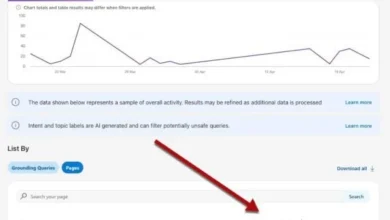
From a technical standpoint, the integration with tools like Google Search Console is particularly notable. By bypassing traditional analytics dashboards, which can be bloated and difficult to interpret, the AI agent provides actionable insights—such as specific search rankings and click-through rates—directly to the stakeholders. This move toward "AI-as-interface" suggests that the future of business management may involve conversational interactions with data rather than the manual manipulation of spreadsheets.
Official Perspectives and Market Responses
While xAI has not released specific performance data for every client, the general reception within the software-as-a-service (SaaS) and e-commerce sectors has been one of rapid adoption. The sentiment among entrepreneurs is that the operational components of business—once considered the "boring" but necessary burden of growth—are now being commoditized by AI.
However, industry experts caution that this transition is not without risk. The reliance on AI to manage customer-facing touchpoints requires strict adherence to privacy and data protection standards. Furthermore, there is a clear strategic distinction between using AI for operational execution and using it for strategic decision-making. Business owners who have successfully integrated these tools emphasize that the bot should remain a "force multiplier" rather than a decision-maker. Strategic direction, brand vision, and high-level crisis management remain firmly within the domain of human leadership.
Broader Economic Impact
The broader implications of this technological shift are far-reaching. As small businesses adopt these tools, the barrier to entry for competing in sophisticated e-commerce markets decreases. A decade ago, a company needed a significant marketing budget and a dedicated IT team to manage the infrastructure now handled by a single, well-trained AI agent.
The economic shift is characterized by a "democratization of leverage." Small teams can now manage complex multi-channel advertising, sophisticated email automation, and 24/7 customer support without the traditional capital requirements. This shift is likely to lead to an increase in the number of high-output "micro-enterprises"—businesses that generate substantial revenue with extremely small, agile teams.
Ultimately, the successful integration of Grok Bot into business workflows highlights a pivotal moment in the digital economy. The focus has shifted from the accumulation of human capital to the intelligent orchestration of artificial intelligence. By automating the mundane and the repetitive, businesses are finding that they can preserve their human resources for the creative and strategic work that defines their brand, effectively creating a more efficient, accurate, and responsive business environment. As these tools continue to evolve, the distinction between a "small" team and a "large" team will likely be measured not by headcount, but by the sophistication and effectiveness of their AI infrastructure.