From Pointe Shoes to Prediction Markets: How Luana Lopes Lara Became the World’s Youngest Self-Made Female Billionaire

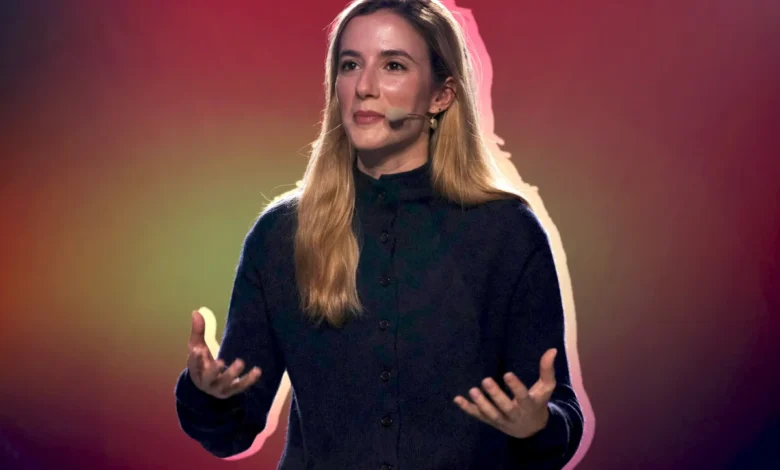
The trajectory of modern entrepreneurship rarely follows a straight line, but few journeys match the dramatic pivot experienced by Luana Lopes Lara. Long before she was reviewing venture capital funding rounds or negotiating regulatory frameworks in Washington, D.C., Lopes Lara was navigating a vastly different kind of high-stakes pressure: the elite, unforgiving world of professional ballet. Today, at 30 years old, she stands as a towering figure in the financial technology sector, having claimed the title of the world’s youngest self-made female billionaire with an estimated net worth of $2.6 billion, according to Forbes. Unseating high-profile cultural and technological icons such as pop superstar Taylor Swift and tech entrepreneur Lucy Guo, Lopes Lara’s ascension marks a significant milestone for women in fintech and underscores the expanding mainstream influence of prediction markets.
Her story is one of relentless discipline, accidental discovery, and an unyielding refusal to let analytical doubt paralyze decisive action. By co-founding Kalshi—the first federally regulated financial exchange in the United States dedicated exclusively to event-based trading—Lopes Lara transformed a casual conversation about celebrity gossip into a multi-billion-dollar enterprise that is reshaping how society evaluates and prices future uncertainties.
The Crucible of Elite Ballet and Early Ambition
Long before writing lines of code or building algorithmic trading models, Lopes Lara’s childhood in Brazil was defined by grueling physical and mental endurance. As a teenager, she studied at the prestigious Bolshoi Theater School in Brazil, an institution renowned for producing some of the world’s finest dancers through a regimen of absolute perfectionism.
The environment at the Bolshoi was notoriously cutthroat. In interviews, Lopes Lara has recounted the intense psychological pressure of the academy, where competition among teenage students was occasionally so fierce that rivals would resort to sabotage, such as hiding glass fragments inside each other’s dance shoes. Balancing this hostile environment required extraordinary organizational and mental fortitude. Lopes Lara’s daily schedule involved attending technical school classes in the early morning hours, followed immediately by rigorous ballet training that stretched from the afternoon late into the night.
This punishing routine instilled a profound level of resilience that would later define her career in technology and finance. Reflecting on her early mindset during a recent appearance on the podcast Confession with Ali Partovi, Lopes Lara noted, “Since I was very little, I wanted to do big things.” That foundational discipline enabled her to transition seamlessly from the artistic discipline of the dance studio to the rigorous intellectual demands of higher education and quantitative finance.
Academic Origins and the Spark of Innovation
Lopes Lara’s path into the tech ecosystem crystallized when she relocated to the United States to pursue higher education. She enrolled in a rigorous academic track, ultimately graduating in 2018 with a degree in computer science and mathematics. It was during her undergraduate studies that she crossed paths with Tarek Mansour, who was majoring in electrical engineering, computer science, and mathematics.
Their meeting was serendipitous yet functional. Known for her academic focus, Lopes Lara consistently sat in the front row of their shared classes. Mansour, eager to emulate her study habits and academic rigor, deliberately chose to sit beside her, sparking a professional partnership that would eventually birth Kalshi.
The conceptual genesis of Kalshi emerged during one of Lopes Lara’s collegiate summers while she was interning at Five Rings, a prominent proprietary trading firm based in New York. During her time at the firm, social media channels were consumed by rampant speculation surrounding whether reality television star and entrepreneur Kylie Jenner was pregnant. Observing the impassioned debate online, Lopes Lara experienced a moment of entrepreneurial clarity.
“I was like, ‘I want to make a bet with you on this,’” Lopes Lara recalled during an interview with Bloomberg. The fundamental obstacle she encountered was stark: despite the millions of people holding intensely passionate, predictive views about cultural, political, and economic outcomes, there existed no legal, centralized, and federally regulated mechanism for everyday individuals to put capital behind those convictions. She realized that human curiosity and predictive instinct regarding future events constituted an untapped, massive asset class.
The Birth and Regulatory Evolution of Kalshi
Armed with this insight, Lopes Lara and Mansour formally launched Kalshi in 2018. The core mission of the platform was revolutionary yet straightforward: to build a federally regulated financial exchange where users could buy and sell yes-or-no contracts tied to the outcomes of real-world future events. Unlike traditional gambling platforms, Kalshi positioned itself as a financial market, functioning similarly to a stock exchange or commodity market, but trading on metrics such as macroeconomic data releases, weather patterns, Federal Reserve interest rate decisions, sports outcomes, and political elections.
However, bringing such a novel financial instrument to market required navigating a complex and often skeptical regulatory landscape in the United States. Because Kalshi operated at the intersection of traditional finance, betting, and forecasting, it fell under the jurisdiction of the Commodity Futures Trading Commission (CFTC).
For years, the startup engaged in exhaustive legal and regulatory battles to secure the necessary authorizations. Proponents argued that prediction markets provide valuable aggregate data that can often forecast future outcomes more accurately than traditional polling or expert consensus. Conversely, critics and regulators initially expressed concerns regarding market manipulation, election integrity, and the potential crossover into consumer gambling.
Through persistent advocacy, meticulous legal positioning, and strategic compliance frameworks, Kalshi eventually achieved landmark regulatory status. It became the first federally regulated exchange in the U.S. dedicated exclusively to trading event outcomes. This stamp of regulatory approval served as a massive catalyst for institutional adoption and consumer trust, paving the way for explosive corporate growth.
Scaling to Billions: Valuation and Market Impact
By late 2025 and into 2026, Kalshi’s trajectory shifted from a promising startup to an economic juggernaut. Driven by high-profile macroeconomic shifts, global elections, and an increasing public appetite for alternative asset classes, trading volume on the platform surged.
Market valuations reflected this unprecedented momentum. By mid-2026, reports indicated that Kalshi’s private valuation had skyrocketed to approximately $22 billion, with subsequent funding rounds pushing discussions toward a staggering $40 billion valuation as the company reportedly began laying groundwork for a potential initial public offering (IPO).
This meteoric financial expansion directly propelled Lopes Lara into the upper echelons of global wealth. In December 2025, Forbes calculated her net worth at $2.6 billion, officially crowning her the world’s youngest self-made female billionaire. This milestone not only marked a personal triumph for Lopes Lara but also represented a broader cultural shift, as tech founders and modern market architects increasingly eclipse traditional entertainment and legacy industry magnates in generational wealth generation.
Leadership Philosophy: Guarding Against the "Probability Trap"
Despite managing a multi-billion-dollar enterprise, Lopes Lara has remained remarkably vocal about the psychological pitfalls that frequently derail young technology founders. During her podcast and media appearances, she has frequently warned entrepreneurs against falling into what she defines as the "probability trap."
According to Lopes Lara, hyper-analytical founders often become so obsessed with calculating the exact statistical probabilities of failure that they paralyze their own operational momentum.
“You can psych yourself out of doing anything,” she observed. “I think that going for it, taking the risk, believing that things will work out, is very important.”
She has cautioned that if a startup’s corporate culture becomes exclusively fixated on the mathematical probability of survival, it fosters an environment of chronic anxiety where teams overreact to every microscopic piece of new data. To counteract this, Lopes Lara emphasizes the necessity of cultivating a corporate culture grounded in optimism and constructive action. Building a resilient enterprise, in her view, requires surrounding oneself with individuals who are fundamentally driven to construct and create, rather than merely audit risks.
Broader Implications and Future Outlook
The rise of Luana Lopes Lara and Kalshi signals a fundamental evolution in how society processes information and values future outcomes. By formalizing prediction markets and bringing them under strict federal oversight, Kalshi has effectively institutionalized crowd-sourced forecasting. Economists and financial analysts increasingly look to these platforms as reliable barometers for real-world events, viewing them as sometimes superior alternatives to conventional polling and expert forecasting models.
As Kalshi continues to scale its operations, expand its product offerings, and navigate international interest, Lopes Lara’s leadership remains central to its trajectory. From the intensely competitive ballet studios of Brazil to the high-stakes boardrooms of American finance, her journey illustrates a unique synthesis of artistic discipline, quantitative brilliance, and unshakeable entrepreneurial courage. At only 30 years old, Lopes Lara has not only redefined her own destiny but has permanently altered the landscape of modern financial markets, proving that the future, much like a well-designed contract, is something that can be measured, priced, and built.