MIT Researchers Unveil Self-Organizing Neural Networks That Bridge the Gap Between Artificial Intelligence and the Human Brain

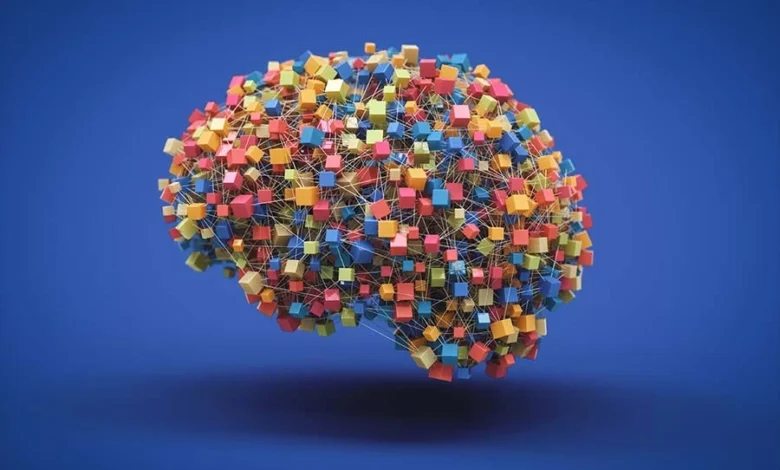
The rapid evolution of artificial intelligence has fundamentally altered the technological landscape, producing machine learning systems capable of generating natural language, composing complex computer code, and recognizing intricate visual patterns with superhuman precision. At the heart of these modern AI applications lie artificial neural networks—computational frameworks modeled loosely on the architecture of the human brain. Much like biological neural circuits, these synthetic networks dynamically adjust the strength of their internal connections, known as weights, to process information and optimize performance through iterative training.
Yet, a profound conceptual chasm continues to separate artificial intelligence from neurobiology. While mainstream machine learning models achieve astonishing feats of computation, they typically rely on engineering approaches and learning algorithms that bear little resemblance to the biological mechanisms governing the human mind. Addressing this fundamental disconnect, a team of researchers at the Massachusetts Institute of Technology (MIT)—specifically based at the McGovern Institute for Brain Research and the K. Lisa Yang Integrative Computational Neuroscience (ICoN) Center—has published groundbreaking research in the journal PNAS. Their study demonstrates that artificial neural networks can successfully build their own learning machinery, offering a vital new framework for understanding how biological brains develop and learn.
The Architectural Divide: Engineering Versus Evolution
To appreciate the significance of the MIT team’s findings, one must first examine the core methodological difference between how artificial intelligence and biological brains acquire knowledge. In contemporary AI development, computer scientists act as external architects. Engineers explicitly program the rules that dictate how an artificial neural network modifies its internal connections as it ingests training data and receives feedback regarding its errors. This top-down engineering approach has proven extraordinarily effective for commercial applications, powering everything from facial recognition software to advanced large language models.
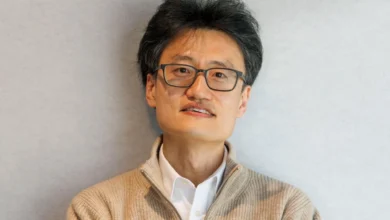
However, neuroscientists argue that this paradigm renders standard AI models largely uninformative when applied to the study of actual human cognition. "Current AI technology is working very well, but it doesn’t necessarily use a learning algorithm that is used by the brain," explains Qianli Liao, a K. Lisa Yang ICoN Center Postdoctoral Fellow and co-first author of the PNAS paper. Liao conducts his research within the laboratories of MIT professors and McGovern Institute members Tomaso Poggio and Mark Harnett. He is joined as co-first author by MIT Research Scientist Liu Ziyin and graduate student Yulu Gan.
Unlike a silicon-based computer program, the human brain possesses no external developer, architect, or software engineer to fine-tune its circuitry. Biological systems must inherently organize themselves from the ground up. The microscopic rules governing how neuronal connections—or synapses—adapt and rewire during learning can vary across different regions of the central nervous system, and these rules evolve as an individual matures from infancy to adulthood. Deciphering these biological mechanisms is not merely an academic exercise; it represents an essential prerequisite for addressing neurodevelopmental disorders, mitigating cognitive decline associated with aging, and developing advanced clinical interventions such as high-resolution brain-computer interfaces (BCIs). These neuroprosthetic technologies aim to restore communication pathways for paralyzed individuals or compensate for lost linguistic capabilities, feats that remain impossible without a precise understanding of neuron-to-neuron interactions.
Chronology and Methodology of the MIT Study
The journey toward bridging this scientific divide culminated in the October 9 publication in PNAS, but the theoretical groundwork represents years of interdisciplinary collaboration at the intersection of computer science and systems neuroscience. The MIT research team set out to construct a computational model that dispensed with the traditional top-down engineering paradigm, opting instead for bottom-up self-organization.
In their experiments, Liao, Ziyin, Gan, Poggio, and Harnett designed a computational network structured around multiple layers of randomly interconnected, neuron-like processing units. Crucially, the researchers did not hardcode a complex global optimization algorithm into the system. Instead, every individual component within a given layer was subjected to the same baseline set of local rules dictating how connections should be modulated.
"They just interact with each other using that rule, and they develop some type of behavior," Liao notes.
This approach mirrors foundational principles of neurobiology, most notably Donald Hebb’s famous 1949 postulate that "neurons that fire together, wire together." In both the brain and the MIT research team’s synthetic network, when two connected units are activated simultaneously, the functional strength of the connection between them increases. By applying these simple, decentralized rules, the network was able to spontaneously form self-assembling motifs—micro-circuits that served as building blocks for more complex information processing.
As the network processed training data, these self-assembled motifs autonomously reorganized themselves using an optimization strategy functionally parallel to gradient descent. In standard machine learning, gradient descent involves gradually tweaking parameters to minimize prediction errors. While standard AI achieves this through back-propagation—an algorithm that neuroscientists widely agree the human brain does not utilize—the MIT team demonstrated that a purely self-organizing network could achieve comparable performance levels without relying on back-propagation.
Biological Plausibility and Quantitative Performance
A central debate in computational neuroscience concerns whether the brain performs back-propagation. Because back-propagation requires the transmission of error signals backward through deep neural hierarchies in a mathematically precise manner that lacks an obvious biological substrate, most experts consider it biologically implausible.
By comparing their self-organizing architecture against networks trained via traditional back-propagation, the MIT researchers discovered that the self-assembled network matched the pattern-recognition and image-classification capabilities of conventionally trained models. This finding challenges the assumption that complex, centrally engineered optimization algorithms are strictly necessary to achieve high-level computational competence.
Tomaso Poggio emphasizes that finding a biological equivalent to back-propagation could revolutionize both fields of study. "If the synaptic motifs we propose are, in fact, used by the brain to do what back-propagation does for artificial neural networks, then we will have a strong connection at the level of fundamental mechanisms between artificial and natural networks—between machines and brains," Poggio states.
Despite this exciting parallel, the researchers maintain a rigorous scientific caution. Liao stresses that a self-organizing artificial network does not necessarily replicate the exact biochemical pathways of human learning down to every molecular detail. Rather, self-organization serves as a vital conceptual stepping stone. "Self-organization is the first high-level framework," Liao explains. "Once we are good with self-organization as a measure, then we can talk about the next thing."
Broader Implications for Medicine, AI, and Neurotechnology
The publication of this research arrives at a pivotal moment in both artificial intelligence and neurobiology, carrying far-reaching implications across multiple scientific disciplines.
First, in the realm of basic neuroscience, establishing self-organization as a benchmark for computational plausibility provides researchers with a powerful new tool to simulate neurological disorders. By altering the local rules governing network rewiring within these computational models, scientists can simulate neurodegenerative conditions such as Alzheimer’s disease, schizophrenia, or the aftermath of traumatic brain injuries. Observing how self-organizing networks degrade or fail under altered parameters could yield novel hypotheses regarding pathological brain states that are difficult or impossible to test directly in living neural tissue.
Second, the findings hold immense potential for the advancement of neurotechnology, specifically brain-computer interfaces (BCIs). As companies and academic institutions race to develop neural implants capable of translating cortical activity into digital commands—enabling locked-in patients to type, speak, or manipulate robotic limbs—the efficacy of these systems relies entirely on how well algorithms can interpret complex neural signals. Incorporating biologically inspired self-organizing principles into BCI decoding software could allow prosthetic devices to dynamically adapt to the user’s brain over time, creating a more seamless, resilient symbiosis between human cognition and external hardware.
Finally, the research offers a reciprocal benefit to the field of artificial intelligence engineering. Modern AI models are increasingly criticized for their massive energy consumption, data hunger, and brittleness when encountering novel environments outside their training distributions. By studying how decentralized, self-organizing systems achieve robust pattern recognition through local interactions alone, computer scientists may unlock new pathways for creating neuromorphic hardware—computer chips designed to mimic biological nervous systems. These next-generation AI systems could operate with significantly lower power consumption, adapt continuously in real-time without requiring massive centralized retraining datasets, and exhibit more human-like cognitive flexibility.
As the boundary between machine intelligence and biological neuroscience continues to blur, the work from MIT’s McGovern Institute and the K. Lisa Yang ICoN Center demonstrates that the future of AI may lie not in engineering smarter algorithms from the top down, but in understanding how intelligence naturally emerges from the bottom up.
Related posts: