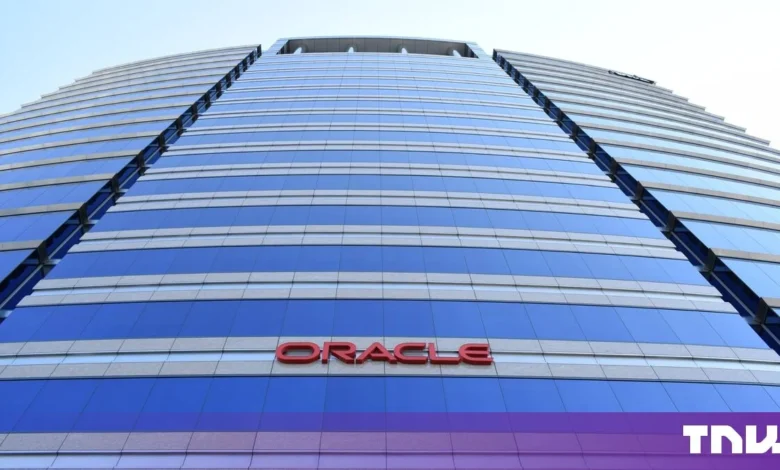
The landscape of digital media production and distribution is undergoing a seismic shift as Oracle officially enters the fray with its newly announced Media Fabric platform. Unveiled at the annual AI World conference in Las Vegas on Tuesday, the platform represents a significant departure from traditional media workflows by collapsing the historically siloed processes of content creation and high-capacity streaming into a single, unified ecosystem. Oracle plans to roll out the full suite of Media Fabric tools within the next 12 months, aiming to democratize high-end production capabilities for a broader spectrum of users, ranging from independent content creators to global broadcasting networks.
Integrating the Media Workflow
At the core of the announcement is the philosophy of total workflow integration. Historically, media companies have relied on a fragmented stack of third-party software for creative production, followed by separate, often incompatible, infrastructure for distribution. Clay Magouyrk, Executive Vice President of Oracle Cloud Infrastructure, emphasized the inefficiency of this status quo during his keynote address at AI World. "Creating content and delivering it to viewers were separate processes," Magouyrk stated. "With Oracle Media Fabric, we’re bringing content creation and streaming together, using AI across the entire production and distribution workflow."
The platform is structured into three primary pillars: Creative Studio, an integrated generative AI suite for video and image manipulation; a cross-platform model orchestration layer; and Oracle Video Edge, the infrastructure component designed for high-concurrency live events.
Creative Studio and AI Orchestration
Creative Studio serves as the engine room for the platform, housing Oracle’s proprietary generative AI models. These models are designed to handle complex tasks such as automated video editing, visual effects generation, and real-time asset optimization. A distinguishing feature of this suite is its vendor-agnostic orchestration layer. Recognizing that a "one-size-fits-all" model rarely suffices for high-stakes enterprise media, Oracle allows users to select models from a curated list of third-party providers. This selection process is driven by an AI-assisted interface that evaluates potential models based on cost efficiency, computational security, and copyright compliance.
This focus on copyright risk mitigation is particularly timely. In August, industry players like ByteDance sought to address legal volatility by entering into agreements with Hollywood studios regarding AI training data. Oracle’s approach aims to mitigate these risks at the infrastructure level, embedding "guardrails" that prevent the unintentional replication of protected intellectual property—a growing concern for major studios and advertising agencies alike.
Oracle Video Edge: Solving the Scale Problem
Beyond creation, the delivery component—Oracle Video Edge—addresses the persistent technical challenges of live-stream distribution. In the era of high-definition, low-latency streaming, the "buffer" remains the enemy of user engagement. Video Edge utilizes real-time telemetry data to dynamically route viewer traffic to the most efficient server nodes. By predicting traffic surges before they occur, the platform aims to maintain seamless stream quality even during massive spikes in viewership, such as global sporting events or live product launches.
Industry Context and Strategic Timing
The announcement of Media Fabric occurs against a backdrop of intensifying competition within the cloud media sector. For years, companies like Netflix have pioneered the use of generative AI to enhance recommendation engines and content discovery, as documented in various industry reports throughout 2026. However, Oracle’s move signals a shift from using AI for discovery to using AI for the industrial-scale creation of content.
This launch is a cornerstone of a broader series of announcements made by Oracle during AI World. The company also confirmed a strategic partnership with Cerebras to offer specialized AI inference hardware through its cloud services, as well as the unveiling of a $1 billion partner ecosystem fund. These initiatives suggest a clear strategy: Oracle is not merely providing software, but is attempting to capture the entire vertical of AI-driven media, from the hardware layer provided by partners like Cerebras to the final consumer-facing stream.
Implications for Advertising and Broadcasting
The implications for the advertising industry are substantial. Media Fabric allows for hyper-personalization at scale. Brands can take a single core advertisement and, through the platform’s generative capabilities, produce hundreds of variations tailored to specific demographics, languages, or regional cultural norms. This capability could fundamentally change the economics of ad production, significantly lowering the barrier to entry for highly targeted, high-quality campaigns.
For broadcasters, the platform offers the potential for "dynamic programming." Shows could be tailored in real-time, with segments or visual elements being swapped or updated based on the viewer’s preferences or location, all without requiring a separate post-production workflow for every version.
The Challenges Ahead: Copyright and Control
Despite the technological promise, the road to implementation will likely face hurdles. The primary challenge remains the legal and ethical landscape surrounding generative AI. While Oracle’s built-in safeguards aim to protect users, the broader industry is still grappling with legislative developments concerning "fair use" and the training of models on proprietary content.
Furthermore, the adoption of such a comprehensive platform requires a high degree of trust. Media firms, which consider their production pipelines to be their most valuable intellectual property, must be convinced that migrating these workflows to a cloud-native, AI-heavy environment will not compromise the security or integrity of their content. Oracle’s emphasis on "security-first" architecture is a direct attempt to preempt these concerns, but the company will face scrutiny from stakeholders regarding data privacy and the transparency of its AI-driven decision-making processes.
Timeline and Future Outlook
Oracle has committed to a 12-month development and release cycle for Media Fabric. In the coming months, the company is expected to release developer previews and pilot programs with select enterprise partners. Industry analysts will be watching closely to see how the platform’s model-agnostic approach fares against more proprietary, closed-loop systems offered by competitors.
As the lines between production, distribution, and consumption continue to blur, Oracle’s attempt to consolidate these stages into one "fabric" mirrors the broader industry trend of vertical integration. If successful, Media Fabric could set a new standard for how media is conceptualized and delivered in the late 2020s. The convergence of infrastructure and creativity, underpinned by the computational power of the cloud, suggests that the next generation of entertainment and advertising will be defined by the agility with which creators can manipulate digital assets in real-time.
For now, the industry awaits further technical documentation regarding the specific AI models included in the Creative Studio and the geographic reach of the Video Edge network. Should the platform deliver on its promise of stability, security, and scalability, Oracle may find itself at the center of the next great evolution in digital media—a transformation that moves AI from a background tool to the very fabric of the content itself.