Migrating to Blocks with Artisanal Care and Industrial Scale: Modernizing Enterprise Content Management Systems

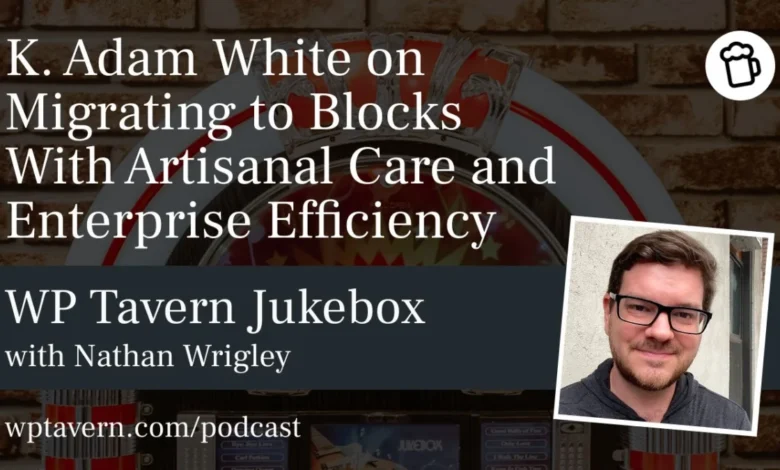
The shift toward block-based editing has redefined the landscape of web development, particularly for large-scale organizations transitioning from legacy content management systems (CMS) to WordPress. At the recently concluded WordCamp US, K. Adam White, Principal Engineer at the enterprise WordPress consultancy Human Made, presented a technical framework for managing these high-stakes migrations. As organizations increasingly prioritize the flexibility and editorial efficiency of the WordPress block editor, the challenge lies in balancing the manual precision required for design fidelity with the industrial-scale automation needed to process hundreds of thousands of content entries.
The Evolution of Enterprise Content Migration
For nearly two decades, WordPress has grown from a blogging platform into a robust enterprise CMS. However, the introduction of the Gutenberg editor in 2018 marked a significant inflection point, forcing developers and agencies to reconsider how they architect sites. Human Made, an agency with over 14 years of experience, has been at the forefront of this transition. Having supported enterprise-level clients since 2010, the firm has navigated the shift from classic editor environments to the block-based, Full Site Editing (FSE) capabilities that currently define the platform.
The core challenge identified by White is not merely the technical transfer of data, but the preservation of visual fidelity during the migration process. While a simple "convert to blocks" function suffices for individual posts, it fails when applied to massive databases where structural integrity, custom styling, and layout consistency are paramount. Enterprise clients moving from proprietary or closed-source systems like Sitecore require a methodology that ensures the resulting WordPress environment is both future-proof and functionally identical to, or an improvement upon, their previous digital footprint.
Methodology: Artisanal Care Meets Industrial Scale
The strategy presented at WordCamp US centers on a dual-pronged approach. "Artisanal care" refers to the bespoke design and layout work that defines the user experience, while "industrial scale" addresses the programmatic automation necessary to execute the migration of tens or hundreds of thousands of individual records.
This process involves a sophisticated audit of legacy content. By analyzing the source database, developers can identify recurring content patterns—such as hero sections, FAQ accordions, or press release layouts—and map these to specific, pre-built block patterns within the new WordPress theme. This approach leverages the "leaf-to-trunk" system, where individual blocks serve as the granular "leaves" that compose larger, reusable "trunk" patterns.
To streamline this, Human Made has utilized experimental tools such as "rehydrator," an open-source utility available via GitHub. This tool allows developers to inject source data into pre-defined theme patterns, ensuring that elements like background colors, font treatments, and image alignments are programmatically preserved. By automating the mapping of source metadata to the block editor’s structure, the firm significantly reduces the manual labor traditionally associated with large-scale site migrations.
The Role of Artificial Intelligence in Migration Workflows
A notable development in recent migration projects is the integration of AI-powered agents, specifically large language models (LLMs) like Claude. These tools have fundamentally altered the timeline and accuracy of content audits. In the past, identifying edge cases within a database of 100,000 posts—such as a single page utilizing a unique accordion feature—was a time-consuming manual task.
Current workflows involve feeding export files from legacy systems into LLMs to generate queries, build local SQLite databases, and identify patterns in the content tree. This allows engineering teams to perform "spot checks" and identify structural anomalies in minutes rather than weeks. The ability to programmatically validate the output before the final migration has become a cornerstone of modern enterprise service delivery, providing stakeholders with the confidence that the platform will perform correctly upon launch.
Addressing the Enterprise Gap: Permissions and Workflow
Despite the maturity of the WordPress block editor, White acknowledges that enterprise clients often identify a "control gap" when compared to traditional, restrictive CMS platforms. In many enterprise environments, content management requires granular, role-based access control (RBAC) that restricts users not just by post, but by specific block or element.
While block locking—a feature introduced in recent WordPress versions—offers some utility, it remains a binary "locked or unlocked" instrument. For large organizations, the need for workflow management, such as multi-stage editorial reviews and granular permissions, remains a critical requirement. Currently, these capabilities are often addressed through bespoke plugin development or third-party workflow solutions. White advocates for a more opinionated, native approach to editorial workflow within the WordPress core, suggesting that the platform would benefit from default features that support complex, multi-user approval processes.
Broader Market Implications
The push toward block-based migration is symptomatic of a broader trend: the commoditization of web architecture and the demand for standardized, scalable editorial tools. As agencies move away from proprietary page builders—which often introduce vendor lock-in and performance bottlenecks—the block editor has emerged as the industry standard.
For the WordPress ecosystem, this shift signifies a move toward "pattern-first development." By prioritizing patterns over individual blocks, developers can ensure consistency across global brand assets. This is particularly relevant for international organizations where maintaining brand guidelines across thousands of pages is a constant operational challenge.
Chronology of Adoption
- 2007–2011: Early adoption phase; WordPress primarily viewed as a blogging tool.
- 2018: Introduction of the Gutenberg editor, signaling a move toward block-based architecture.
- 2020–2022: Maturation of Full Site Editing (FSE) and the adoption of block patterns in enterprise environments.
- 2023–2024: Integration of AI-assisted migration tools and advanced pattern-based development workflows.
- 2025 and beyond: Focus on native workflow features and granular permissions within the core software.
Conclusion
The transition to a block-based WordPress environment is no longer merely a technological upgrade; it is a strategic business decision for enterprise organizations. By combining artisanal design principles with the efficiency of automated, AI-augmented migration pipelines, agencies like Human Made are demonstrating that WordPress can handle the most complex requirements of the modern web. As the project continues to evolve, the inclusion of more sophisticated native workflow and permission tools will likely be the next frontier in solidifying WordPress’s position as the dominant enterprise CMS. The success of these migrations serves as a benchmark for the industry, proving that large-scale technical complexity can be managed effectively through disciplined, pattern-driven architecture.